

Events from each date in years past Turn on notifications if you like the content - it would help a lot
Europe
Joined January 2026
- Tweets4.3K
- Following1.3K
- Followers1.6K
- Likes1.1K




Pinned Tweet
1991 — Basketball star Magic Johnson announces he has HIV
On November 7, NBA superstar Magic Johnson announced that he had tested positive for HIV and would retire immediately from professional basketball.
His announcement stunned the sporting world and brought enormous public attention to HIV and AIDS. Johnson later became a prominent advocate for awareness, education and prevention, helping challenge widespread misconceptions about the virus.

🎸 ONE OF THE GREATEST SONGWRITERS OF ALL TIME WAS BORN TODAY!
On 7 November 1943, Canadian singer-songwriter Joni Mitchell was born in Fort Macleod, Alberta.
With classics such as Big Yellow Taxi, Both Sides, Now and A Case of You, Mitchell became one of the most influential artists in modern music. Her distinctive voice, poetic lyrics and musical experimentation helped shape generations of musicians.
#OnThisDay #MusicHistory

📚 A NOBEL PRIZE-WINNING WRITER WHO QUESTIONED THE MEANING OF LIFE!
On 7 November 1913, Albert Camus was born in French Algeria. He became one of the most influential writers and philosophers of the 20th century, exploring themes of existence, freedom, morality and the absurdity of life.
His celebrated works included The Stranger, The Plague and The Myth of Sisyphus. In 1957, he received the Nobel Prize in Literature.
#OnThisDay #LiteraryHistory

1940 — The Tacoma Narrows Bridge collapses
On November 7, the Tacoma Narrows Bridge in Washington State dramatically collapsed during strong winds, just four months after it had opened to traffic.
Nicknamed “Galloping Gertie” because of its unusual movement in the wind, the bridge became a landmark engineering cautionary tale. Its failure helped transform the study of wind effects and aerodynamic design in bridge construction.

1929 — The Museum of Modern Art opens in New York
On November 7, the Museum of Modern Art (MoMA) opened its doors in New York City, beginning with an exhibition featuring works by Cézanne, Gauguin, Seurat and Van Gogh.
At the time, a museum devoted entirely to modern art was an ambitious idea. MoMA would go on to become one of the world's most influential cultural institutions.

1917 — British forces enter Gaza during World War I
On November 7, British forces under General Edmund Allenby entered Gaza, taking control of the strategically important city from the Ottoman Empire during the Palestine campaign of World War I.
The advance followed the Third Battle of Gaza and helped open the way for the British campaign towards Jerusalem. Allenby's forces would capture Jerusalem the following month.

1917 — The Bolsheviks seize power in Russia
On November 7, Bolshevik revolutionaries led by Vladimir Lenin seized key locations in Petrograd and overthrew Russia's Provisional Government, marking the decisive moment of the October Revolution.
The revolution is called the October Revolution because Russia was still using the Julian calendar, under which the date was October 25. The change of government would reshape Russia and influence world politics for generations.

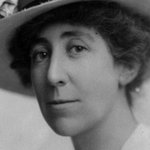
1916 — Jeannette Rankin becomes the first woman elected to the US Congress
On November 7, Jeannette Rankin of Montana made history by becoming the first woman elected to the United States Congress.
A committed campaigner for women's suffrage, Rankin later became one of only 50 members of Congress to vote against US entry into World War II after the attack on Pearl Harbor.

1910 — The first commercial air cargo flight takes place
On November 7, pilot Philip O. Parmalee flew a Wright Model B aircraft from Dayton to Columbus, Ohio, carrying a shipment of silk. It is recognised as the first commercial air cargo flight.
The journey covered approximately 65 miles and took around 71 minutes. What began as a demonstration of aviation's commercial potential helped point the way towards the global air-freight industry.

1907 — Jesús García saves the town of Nacozari
On November 7, Mexican railway engineer Jesús García drove a burning locomotive carrying dynamite away from the town of Nacozari, preventing a potentially devastating explosion among its residents.
The train exploded after he had moved it several kilometres away. García, just 25 years old, died in the blast but became a national hero in Mexico, remembered as the “Hero of Nacozari.”

1999 — Australians vote on becoming a republic
On November 6, Australians voted in a national referendum on whether to replace the British monarch with an Australian head of state.
The proposal was rejected, with only 45.13% voting in favour. The result meant Australia remained a constitutional monarchy, and the republic debate continued in national politics

1985 — Guerrillas seize Colombia’s Palace of Justice
On November 6, members of the M-19 guerrilla movement stormed Colombia’s Palace of Justice in Bogotá, taking people inside hostage and triggering a violent military response.
The siege and the operation to retake the building continued into the following day. Around 100 people died, including judges, employees, civilians and members of the armed groups; 11 people were forcibly disappeared.

🌎 A SHIPWRECK LEFT HIM STRANDED IN A NEW WORLD!
On 6 November 1528, Spanish explorer Álvar Núñez Cabeza de Vaca and around 80 fellow survivors from the ill-fated Narváez expedition reached an island off the Texas coast.
Their journey of survival became extraordinary. Cabeza de Vaca would spend years travelling through unfamiliar territory, eventually recording his experiences in an account that became an important historical source about early European encounters with North America.
#OnThisDay #Exploration

👑 A KING WHO LOST HIS THRONE DIED FAR FROM FRANCE!
On 6 November 1836, Charles X, the last Bourbon monarch to rule France, died in exile in Gorizia, aged 79.
He had ruled France from 1824 until 1830, when the July Revolution forced him to abdicate. He spent the remainder of his life away from the country he had once ruled, dying from cholera in what was then part of the Austrian Empire.
#OnThisDay #RoyalHistory

1977 — Kelly Barnes Dam collapses in Georgia
On November 6, the Kelly Barnes Dam near Toccoa Falls, Georgia, failed after a period of heavy rain, unleashing a devastating flood.
Thirty-nine people died, and parts of the nearby college campus and residential areas were inundated. Investigators later identified several contributing factors, including possible erosion and instability within the dam.

1975 — Morocco launches the Green March
On November 6, around 350,000 Moroccan civilians began a mass march toward Western Sahara, then administered by Spain. The demonstration was organized by King Hassan II to press Morocco’s claim to the territory.
Participants carried Moroccan flags and copies of the Quran. The march became a defining moment in the Western Sahara dispute, whose political status remains contested.

1971 — The United States conducts the Cannikin nuclear test
On November 6, the United States detonated Cannikin, a massive underground nuclear device beneath Amchitka Island in Alaska.
With an explosive yield of nearly five megatons, it was the largest underground nuclear test ever conducted by the United States. The test sparked environmental protests over the potential impact on the island’s wildlife.

1965 — The Freedom Flights airlift begins
On November 6, the United States and Cuba formally agreed to begin an airlift allowing Cubans to travel to the United States. The programme became known as the Freedom Flights.
By the programme’s end in 1971, approximately 250,000 Cubans had used the flights to leave the island and resettle in the United States

📈 THE MAN BEHIND ONE OF THE WORLD'S MOST FAMOUS STOCK MARKET INDEXES WAS BORN!
On 6 November 1851, Charles Henry Dow was born in Connecticut, USA. He would become a pioneering financial journalist and co-found Dow Jones & Company.
He also helped create the Dow Jones Industrial Average, first published in 1896. Today, the index remains one of the most closely watched indicators of the American stock market.
#OnThisDay #FinancialHistory


1947 — Meet the Press makes its television debut
On November 6, NBC broadcast the first television episode of Meet the Press, bringing its established radio interview format to the new medium.
The first guest was James A. Farley, a former US postmaster general. Journalist Martha Rountree, who helped create the programme, became its original moderator.
