Sunny Side Up ☀️ (@wayneflurry) header
Sunny Side Up ☀️ (@wayneflurry) profile picture

Old enough to appreciate what matters Still curious enough to try something new 🌷 No DMs from strangers No sales pitches or requests for money 🙅‍♀️🙅‍♀️

us
Joined September 2010
Photo by Sunny Side Up ☀️ (@wayneflurry)Photo by Sunny Side Up ☀️ (@wayneflurry)Photo by Sunny Side Up ☀️ (@wayneflurry)Photo by Sunny Side Up ☀️ (@wayneflurry)Photo by Sunny Side Up ☀️ (@wayneflurry)Photo by Sunny Side Up ☀️ (@wayneflurry)Photo by Sunny Side Up ☀️ (@wayneflurry)Photo by Sunny Side Up ☀️ (@wayneflurry)Photo by Sunny Side Up ☀️ (@wayneflurry)Photo by Sunny Side Up ☀️ (@wayneflurry)
Sunny Side Up ☀️ retweeted
Pat Tillman was an Arizona Cardinals safety who gave up his NFL career and 3.6 million dollar contract to enlist in the Army after the September 11 attacks, and was killed by friendly fire in Afghanistan in 2004. Today would have been his 50th birthday.
153
589
28
2,364
17,723
Sunny Side Up ☀️ retweeted
She tore up her own blouse to help a wounded comrade during the Fort Hood shooting, using it to make a tourniquet. What she didn't realize was that she had also been shot in the back. She was only 19 years old. Her name was Amber Pfund, a young soldier from the small town of Random Lake, Wisconsin, serving at Fort Hood, Texas. It was Thursday, November 5, 2009, at approximately 1:30 p.m. Amber was inside a processing center where soldiers were preparing for deployment. It had been an ordinary day until a gunman suddenly opened fire. Screams filled the building. People fell to the ground. Soldiers on the post were unarmed, and chaos erupted. But Amber did not freeze. She ran toward the wounded. She tore up her blouse, fashioned a tourniquet, and tied it around an injured comrade to help stop the bleeding. She continued moving from one wounded person to another, refusing to stop and think about her own safety. She was so focused on helping others that she never realized a bullet had struck her in the back. She discovered she had been shot only later, while receiving treatment in an emergency room. That evening, she called her mother, Lisa Pfund, who was relieved to hear from her daughter. Amber explained what had happened and told her that she hadn't even known she had been hit. The November 5 attack claimed 13 lives and wounded 31 others, making it the deadliest mass shooting ever to take place on a U.S. military installation. Amber survived. Five days later, President Barack Obama visited Fort Hood, where approximately 5,000 people gathered for a memorial service. He shared the stories of those who had been killed and also recognized the courage of those who survived. Among them was Amber. He described how determined she had been to help others, explaining that she did not realize for some time that she had been shot in the back. The following day, First Lady Michelle Obama also shared Amber's story. She had met the young soldier at Fort Hood, where Amber explained what mattered most to her: the safety of her fellow soldiers was her number one priority. In February 2010, Amber returned home to Random Lake, Wisconsin, where her community welcomed her as a hero. But Amber humbly rejected that description. She insisted she was not a hero; she was simply a soldier doing what she believed she had to do. Although she survived, she continued living with the physical and emotional scars of that terrible day. Years later, the Army announced that Purple Hearts would be awarded to victims of the Fort Hood attack. Amber was among those recognized for her wounds. At just 19 years old, she ran toward danger to save others, never realizing that she herself had been wounded. She put her fellow soldiers' lives ahead of her own and kept helping even while bleeding. Amber Pfund represents the courage, selflessness, and dedication of a soldier who never stopped caring for her comrades. Some heroes don't realize they're heroes. They simply do what needs to be done.
Readers added context they thought people might want to know
The soldier in this story is Amber Bahr (later Gadlin; now Dimoff), daughter of Lisa Pfund—not Amber Pfund. She survived the 2009 Fort Hood shooting and is alive. tmj4.com/news/local-new… nbcnews.com/id/wbna33717790 sandiegouniontribune.com/2009/11/07/but… npr.org/2009/11/10/120…
506
2,421
77
14,585
498,285
Sunny Side Up ☀️ retweeted
The best uniform of WW2 was the American M1943. It didn't look like much. But it introduced an idea every modern army still uses today: layers. When the US entered the war, American soldiers had a field jacket called the M1941. It looked sharp. A short, tan cotton jacket with a light flannel lining. Fine for a training camp in Georgia. In actual combat, soldiers hated it. It was thin. It soaked through in the rain. It did almost nothing in the cold. It had small pockets that couldn't carry much. In the mountains of Tunisia and the freezing mud of Italy, men were shivering in it, piling on whatever extra clothes they could find, scrounge, or take off the dead. The Quartermaster Corps knew it needed something better. And instead of designing one heavy, bulky coat, it came up with a system. The outer layer was a long, olive drab jacket made of tough, tightly woven cotton. It blocked the wind and shed water. It had four big pockets, a drawstring waist, and an optional hood. Matching trousers. Underneath, you added layers depending on the weather. A wool shirt. A wool sweater. A pile liner jacket that worked like a fleece. In mild weather, you wore less. In bitter cold, you wore it all. Instead of one coat that was too hot one day and too thin the next, a soldier could adjust for anything. In early 1944, the 3rd Infantry Division tested the new uniform in combat at Anzio. The troops liked it. It went into wider production. Then came the problem. Getting it to the men who needed it most turned into a mess. Supply problems, shipping priorities, and arguments within the Army over what soldiers in Europe should wear meant the M1943 didn't reach everyone in time. When the Battle of the Bulge exploded in December 1944, during one of the coldest winters in years, many American soldiers were still fighting in summer-weight uniforms and the old M1941 jacket. Tens of thousands suffered frostbite and trench foot that winter. Some units cut up blankets and white bedsheets to stay warm and camouflaged in the snow. The men who had the M1943 were the lucky ones. By 1945, it was being issued far more widely, and it had proven exactly what the Army had been told: the layered system worked. The jacket's design lived on long after the war. Updated versions were issued for Korea. In 1965, the Army adopted the M-65 field jacket, a direct descendant of the M1943. Soldiers wore it in Vietnam. The M-65 then jumped into civilian life. It became one of the most copied jackets in fashion. Movie characters wore it. Musicians wore it. Millions of people today own a jacket based on it without knowing where it came from. And the layering idea itself became the foundation of how modern armies dress for combat. Base layer, insulation, outer shell. The M1941 looked good in a parade. The M1943 kept men alive in the field. Every soldier today wearing a layered cold-weather system is wearing its great-grandchild.
45
166
5
2,098
163,168
Sunny Side Up ☀️ retweeted
That’s a real soldier right there
124
783
19
17,340
2,462,269
On a sunny day you should go out for a walk
2
Sunny Side Up ☀️ retweeted
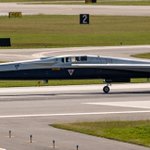
Flying high! Today, our X-59 quiet supersonic X-59 aircraft traveled from Birmingham, Alabama, to Daytona Beach, Florida. The aircraft aims to fly faster than sound with just a gentle thump rather than a sonic boom — helping usher in a new era of faster air travel. We're prepping to feature X-59 at MAX POWER and will provide updates soon!
541
2,171
222
18,599
1,518,954
Sunny Side Up ☀️ retweeted
Picture Day for k-9s 🥹
207
2,230
206
23,336
1,843,378
Sunny Side Up ☀️ retweeted
Two women attempting to become Navy SEALs advanced further through the military's grueling training pipeline than any women before them, making history despite ultimately failing to complete the demanding course at Naval Amphibious Base Coronado in California. cbsn.ws/4eiKyen
1,248
155
256
1,481
2,964,224
Sunny Side Up ☀️ retweeted
2 F-22 Raptor takeoff with full afterburner. Insane sound
49
428
11
5,718
857,483
Sunny Side Up ☀️ retweeted
It was recently reported by The Marine Reconnaissance Foundation that First Sergeant Brandon Standridge passed away today. He leaves behind a wife and two kids. Please keep his family in your prayers.
349
501
39
2,065
12,881
Sunny Side Up ☀️ retweeted
U.S. Army First Lieutenant Turney White Leonard of Dallas, Texas, was posthumously awarded the Medal of Honor for his heroic actions on November 4-6, 1944, near Kommerscheidt, Germany. Turney was commissioned in the Army in 1942 via the ROTC program at Texas A&M University and was a platoon leader in Company C, 893rd Tank Destroyer Battalion. Between November 4 -6, 1944, Leonard’s company was heavily engaged in the fighting in and around Kommerscheidt, Germany. During this time, he repeatedly exposed himself to hostile fire and assumed command when officers became incapacitated. When a mortar round blew his arm off, he was forced to report to the aid station, but he ordered the medic to place him in a concealed foxhole with a weapon to fend off the Germans who were about to overrun the position. His remains were found after the War in a field grave dug by the Germans. He was posthumously awarded the Medal of Honor for his actions on November 4-6, 1944. Leonard is buried in Grove Hill Memorial Park in Dallas, Texas. #WeRememberThem
20
49
4
173
1,400
Sunny Side Up ☀️ retweeted
EOTG TRAP Course
184
1,035
263
4,781
196,676
Sunny Side Up ☀️ retweeted
A happy birthday to legendary marine Eugene Sledge on what would have been his 103rd birthday today.🇺🇸 Sledge served with the 1st Marine Division from Peleliu to Okinawa. 🪖
18
91
3
890
12,552
I have a new friend now 😄
7
Sunny Side Up ☀️ retweeted
Jungle Warrior: A @USArmy Soldier, assigned to Black Hawk Company, 2nd Battalion, 4th Infantry, 3rd Mobile Brigade, 10th Mountain Division (LI), takes part in the culminating exercise of the Jungle Operations Training Course-Panama at Aeronaval Base Cristóbal Colón, Panamá, Oct. 22, 2026. The rigorous course — re-launched in 2025 after a nearly two-decade hiatus — ensures that U.S. and partner nation forces can survive, fight and win in the jungle. #SOUTHCOM @USArmyWHC @USEmbPAN @USAenEspanol @DeptofWar @10MTNDIV
14
88
1
394
10,265
Sunny Side Up ☀️ retweeted
10
126
3
1,339
10,762
Sunny Side Up ☀️ retweeted
Lethal, versatile, and always ready. Arleigh Burke-class guided-missile destroyers are the backbone of the surface force. ⚓🇺🇸
28
190
18
1,024
37,969
Sunny Side Up ☀️ retweeted
Combat Medic Russell York of the 4th Infantry Division receives the Silver Star for his heroism in November of 1944 during the Battle of Hürtgen Forest. 🪖 @rocolor_photo on the colorization 🎨
8
47
533
5,108