







WEB3NINJER🥷 retweeted

For someone new to crypto launchpads, complicated reward processes can make an already unfamiliar experience harder to understand.
One interesting feature of @RebateLaunch is its approach to buying and holding.
When someone buys $REBATE, they receive a 3% bonus in additional tokens. The applicable rate is shown before confirmation, and the bonus is delivered in the same transaction.
After buying, holders can receive USDG payouts directly to their wallets several times a day. There is no staking contract to navigate and no claim button to remember.
That makes the reward process easier to explain to a newcomer, although understanding the risks of the underlying token remains essential.
I would still want to examine the available liquidity, the reliability of distributions, and the way platform activity supports the reward system before making any investment decision.
Accessibility is valuable, but it works best alongside transparency and a realistic understanding of risk.
That is one angle I’m exploring while following @RebateLaunch through the @Starlisting creator campaign.
🤖 Made with AI

WEB3NINJER🥷 retweeted
Whenever a project promises rewards, one question deserves attention before anything else: where do those rewards come from?
@RebateLaunch provides an interesting model to examine.
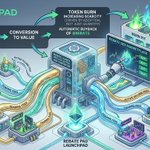
Every $REBATE purchase comes with a 3% token bonus, while holders receive payouts in USDG directly to their wallets. According to the project, these bonuses and payouts are funded by activity on Rebate Pad, and new tokens are not minted because the supply is fixed.
There is also another mechanism worth understanding. Platform fees from tokens launched on Rebate Pad are used to purchase and burn $REBATE.
This creates a connection between the activity of projects using the launchpad and the tokenomics of the launchpad itself.
But the important distinction is that a designed mechanism is not the same as a proven outcome. The actual sustainability of rewards depends on real usage, trading activity, and the costs associated with maintaining the system.
For me, understanding the funding model is more useful than looking at reward percentages alone.
That’s the kind of analysis I want to share through @Starlisting while following the development of @RebateLaunch.
🤖 Made with AI

WEB3NINJER🥷 retweeted
What if other token launches could drive $REBATE buybacks?
@RebateLaunch uses fees from tokens launched on Rebate Pad to buy back and burn $REBATE.
But launches alone aren’t enough. Real trading activity and adoption will determine whether this mechanism makes a lasting impact
🤖 Made with AI

WEB3NINJER🥷 retweeted
What happens when the launch hype fades? 👀
@RebateLaunch offers a 3% $REBATE bonus plus USDG payouts for holders.
The real test is whether these rewards can last as the ecosystem grows. 🔥

WEB3NINJER🥷 retweeted
What makes $REBATE interesting is where its buybacks come from.
According to @RebateLaunch, fees from other Rebate Pad launches fund $REBATE buybacks and burns.
The key question: will real launch activity drive sustainable demand? 👀
🤖 Made with AI

WEB3NINJER🥷 retweeted
Getting a little extra on every buy is an interesting concept. Rebate Pad offers a 3% buy bonus and shows the rate before confirmation.
Curious to see how it grows on Robinhood Chain.
@RebateLaunch @starlisting
🤖 Made with AI

WEB3NINJER🥷 retweeted
Always good to see opportunities for Web3 creators. The @Starlisting and @RebateLaunch partnership lets creators share their own takes on Rebate Pad and compete for campaign rewards. 🚀
🤖 Made with AI

WEB3NINJER🥷 retweeted
One detail worth watching: fees from launches on Rebate Pad are used to buy and burn Rebate tokens. Combined with the 3% buy bonus and USDG payouts, there's plenty to explore.
@RebateLaunch @Starlisting
🤖 Made with AI

WEB3NINJER🥷 retweeted
What stands out to me about Rebate Pad is the automatic USDG payouts. No staking contract or manual claims, just rewards delivered to holders several times a day.
@RebateLaunch @Starlisting
🤖 Made with AI

WEB3NINJER🥷 retweeted

𝗪𝗵𝗮𝘁 𝗜𝗳 𝗕𝘂𝘆𝗶𝗻𝗴 𝗮 𝗧𝗼𝗸𝗲𝗻 𝗪𝗮𝘀𝗻’𝘁 𝗧𝗵𝗲 𝗢𝗻𝗹𝘆 𝗕𝗲𝗻𝗲𝗳𝗶𝘁?
Most launchpads focus on the token you buy. @RebateLaunch wants to change how buyers think about what comes next.
Built on Robinhood Chain, Rebate Pad introduces two interesting mechanics:
Buy it, get more. Every purchase comes with bonus tokens, with the rate displayed before you confirm the transaction.
Hold it, get paid. Holders receive payouts in USDG directly to their wallets several times a day, without staking or manually claiming rewards.
Another detail worth watching is the tokenomics: Rebate says its supply is fixed, while platform fees from launched tokens are used to buy back and burn Rebate.
That creates an interesting model worth examining beyond the marketing.
The key questions are whether the activity can sustain holder payouts, how demand develops, and how the economics perform over time.
I'm exploring what makes this approach different from traditional launchpads.
Nobody starts from zero. The real question is how the model performs over time.

WEB3NINJER🥷 retweeted
𝗪𝗵𝗮𝘁 𝗺𝗮𝗸𝗲𝘀 $𝗥𝗘𝗕𝗔𝗧𝗘 𝗱𝗶𝗳𝗳𝗲𝗿𝗲𝗻𝘁?
Most launchpads focus on getting tokens launched. @RebateLaunch is exploring what happens after people buy.
Built on Robinhood Chain, Rebate Pad combines bonus tokens on purchases with automatic USDG payouts for holders.
No staking contract. No claim button. Just a different approach to rewarding participation.
Another interesting detail is its buyback-and-burn model, where fees from tokens launched on the platform are used to buy and burn $REBATE.
The bigger question is whether launchpad activity can sustain this model over time.
I'm watching how the ecosystem develops, because the mechanics behind a token matter just as much as the narrative around it.
$REBATE isn't just a launchpad story. It's a model worth understanding.
@RebateLaunch

WEB3NINJER🥷 retweeted
𝗧𝗵𝗲 𝗧𝗼𝗸𝗲𝗻 𝗘𝗰𝗼𝗻𝗼𝗺𝗶𝗰𝘀 𝗕𝗲𝗵𝗶𝗻𝗱 $𝗥𝗘𝗕𝗔𝗧𝗘 𝗔𝗿𝗲 𝗪𝗼𝗿𝘁𝗵 𝗔 𝗖𝗹𝗼𝘀𝗲𝗿 𝗟𝗼𝗼𝗸
One detail that makes @RebateLaunch interesting is how its model connects platform activity to $REBATE.
According to the project, fees generated by tokens launched on Rebate Pad are used to buy back and burn $REBATE.
The platform also describes a fixed supply, a 3% bonus on every buy, and holder payouts in USDG.
These mechanics raise an important question: what happens when more projects launch and activity grows?
More activity could mean more buyback-and-burn activity, but the actual impact depends on platform usage, fee generation, and sustained demand.
That's what I want to understand about $REBATE.
The real story isn't just the token. It's the economic system built around it.
@RebateLaunch

WEB3NINJER🥷 retweeted
𝗪𝗵𝘆 $𝗥𝗘𝗕𝗔𝗧𝗘 𝗜𝘀 𝗪𝗼𝗿𝘁𝗵 𝗪𝗮𝘁𝗰𝗵𝗶𝗻𝗴
One thing I find interesting about @RebateLaunch is its attempt to rethink the relationship between buying tokens and holding them.
Built on Robinhood Chain, Rebate Pad combines bonus tokens on purchases with holder payouts in USDG.
But there's another part worth watching: platform fees from launched tokens are used to buy back and burn $REBATE.
That connects activity on the launchpad to the token's supply mechanics.
Of course, the long-term impact depends on actual platform usage, demand, and how sustainable the model proves to be.
I'm interested in seeing how this develops as more projects enter the ecosystem.
The best thing to watch isn't just the token. It's the system behind it.
@RebateLaunch

WEB3NINJER🥷 retweeted
𝗧𝗵𝗲 𝗕𝗶𝗴𝗴𝗲𝘀𝘁 𝗙𝗹𝗮𝘄 𝗜𝗻 𝗧𝗼𝗸𝗲𝗻 𝗟𝗮𝘂𝗻𝗰𝗵𝗲𝘀 𝗠𝗶𝗴𝗵𝘁 𝗕𝗲 𝗪𝗵𝗮𝘁 𝗛𝗮𝗽𝗽𝗲𝗻𝘀 𝗔𝗳𝘁𝗲𝗿 𝗧𝗵𝗲 𝗕𝘂𝘆
A token launches. Attention pours in. People buy.
Then the real question begins: what gives holders a reason to stay?
This is the part of token launches I find worth examining, and it's where @RebateLaunch takes a different approach.
Built on Robinhood Chain, Rebate Pad combines three mechanics that deserve attention:
→ Bonus on entry: Every buy comes with a 3% bonus in tokens, according to the project's description.
→ Rewards for holding: Holders receive payouts in USDG directly to their wallets, without needing to stake or manually claim.
→ A link to platform activity: Fees from tokens launched on the pad are used to buy back and burn $REBATE.
The interesting part isn't any single feature. It's how these mechanisms are designed to work together.
If launchpad activity grows, fee generation could support more buybacks and burns. Meanwhile, holder payouts create another reason to pay attention beyond the initial purchase.
But there's a distinction worth making: a reward mechanism is not the same as sustainable demand.
The real test will be whether projects continue launching, users keep participating, and the economics remain viable over time.
That's the question I'd be watching as Rebate develops.
Because in crypto, getting people to buy is one challenge.
Building a system that gives them a reason to stay is another.
@RebateLaunch

WEB3NINJER🥷 retweeted
𝗪𝗵𝗮𝘁 𝗜𝗳 𝗬𝗼𝘂 𝗖𝗼𝘂𝗹𝗱 𝗦𝘁𝗮𝗿𝘁 𝗔𝗵𝗲𝗮𝗱 𝗜𝗻𝘀𝘁𝗲𝗮𝗱 𝗢𝗳 𝗖𝗮𝘁𝗰𝗵𝗶𝗻𝗴 𝗨𝗽?
One thing I find interesting about @RebateLaunch is the idea behind its tagline: nobody starts from zero.
Think about how token launches usually work.
Early buyers enter, attention grows, and later participants often arrive after the narrative has already spread.
Rebate Pad introduces a different incentive: buyers receive a 3% bonus in tokens on every purchase, with the rate shown before they confirm.
That makes the entry mechanics worth examining.
But here's the question I'd ask:
Does getting more tokens at entry actually create a better experience, or does the real value depend on what happens afterward?
Bonus tokens can make an offer attractive, but liquidity, market demand, and token performance still matter.
I'm interested in how @RebateLaunch turns that initial incentive into something meaningful for its ecosystem.
Because a better entry point is interesting.
A sustainable reason to participate is what really matters.
@RebateLaunch

WEB3NINJER🥷 retweeted
𝗪𝗵𝗼 𝗽𝗮𝘆𝘀 𝗳𝗼𝗿 𝘁𝗵𝗲 𝗿𝗲𝘄𝗮𝗿𝗱𝘀 𝗶𝗻 𝗮 𝘁𝗼𝗸𝗲𝗻 𝗹𝗮𝘂𝗻𝗰𝗵𝗽𝗮𝗱?
That's a question more people should ask.
@RebateLaunch takes an interesting approach: platform fees from tokens launched on Rebate Pad are used to buy back and burn $REBATE, while holders receive payouts in USDG.
Instead of looking only at the bonus tokens buyers receive, I want to understand the bigger picture.
How much activity does the platform need to sustain these mechanics? What happens when launches slow down? And can demand grow beyond the reward incentives?
These are the questions that matter when evaluating token economics.
The real alpha isn't just knowing what a project offers. It's understanding what makes its model sustainable.
@RebateLaunch

WEB3NINJER🥷 retweeted

What if a launchpad rewarded you beyond the moment you buy?
That’s the idea that caught my attention with @RebateLaunch.
Most launchpads focus on one event: the token sale.
Users participate, tokens launch, and the excitement often fades once trading begins.
Rebate is exploring a different approach.
Its proposed model combines token purchases with additional token rewards and daily incentives for holding.
The interesting part isn't just getting more tokens.
It's the possibility of turning a one-time launch event into an ongoing relationship between a project and its community.
But incentives alone don't create sustainable growth.
The real test will be whether those rewards are supported by meaningful tokenomics, actual demand, and long-term participation.
A launchpad can attract attention with rewards.
Keeping users engaged after the initial excitement is the harder challenge.
That's why I'm watching @RebateLaunch.
Could rewarding participation beyond launch day become the next evolution of token launchpads?@starlisting

WEB3NINJER🥷 retweeted

Your skill no be decoration!
While you dey scroll, person for Lekki dey find plumber, person for Abuja dey find graphic designer.
Post your GIG for FREE on DHiveWork.com today - KYC Verified, Escrow secured, payment straight to your wallet when job done. No story.
Link in bio. #DHiveWork #NigerianHustle #HandymanNigeria #TechNigeria #MakeMoneyNigeria
🤖 Made with AI