

2x dad | 2x founder | 1x exit 20 years away 🌍 | for now back in 🇩🇪 Building a network for German entrepreneurs abroad
Joined December 2021
- Tweets339
- Following910
- Followers220
- Likes2.3K






Pinned Tweet
Eine Sache verändert sich radikal, sobald man Kinder hat. Jeder sagt einem das, aber man glaubt es vorher nicht so richtig:
Ohne Kinder denkt man in Monaten oder Jahren - mit Kindern denkt man in Dekaden. Bei uns ist es auf jeden Fall so.
Und deshalb kann ich so wenig damit anfangen, wenn Leute sagen: Aber es ist doch alles gut in Deutschland! Warum beschwerst du dich?
Natürlich ist zwischen uns und großen Teilen der Welt noch ein Unterschied. Aber:
1. kann es nicht unser wohlstandsverwöhnter Anspruch sein, dass es noch nicht so schlimm ist, wie es sein könnte, und
2. planen wir als Familie nicht fürs nächste Jahr oder die nächsten drei. Sondern dafür, wie Deutschland und die Welt in 20, 30 Jahren und danach aussehen werden.
Und wenn ich so denke, geht die Rechnung hier nicht auf.
Mit der Schulpflicht entscheidet der Staat alleine, wie Bildung funktioniert. Ein Lehrplan für alle, jetzt schon hoffnungslos überholt, kaum echte Alternativen. Rente, Pflege, Gesundheit, alle Systeme laufen auf einen absehbaren Kipppunkt zu. Und dazu die wirtschaftliche Situation, wo Klima-Religion, Degrowth-Wahn und Sozialismus-Planspiele mit viel Wucht die Basis unseres Wohlstands zerstören.
Dazu kommt eine Mentalität, die Erfolg entweder skeptisch begegnet oder direkt bestraft. Wer etwas aufbaut, wird eher beneidet als bewundert. Das Mindset ist eines von Sparern, Bremsern und Bedenkenträgern. Gift für Innovation und Neues. Nicht nur deshalb sind wir bei praktisch allen neuen Technologie-Themen längst abgehängt.
Was ich sehe, ist das: Der Abstand zwischen uns und dem Rest der Welt schrumpft, denn wir nähern uns von oben an.
Die Zukunftschancen werden hier immer limitierter, und woanders sind sie einfach größer. Das ist das eine.
Das andere ist: Kinder lernen durch Vorbilder, und da wollen wir gute sein. Aber sie lernen auch durch das, was sie um sich herum sehen und erleben. Wenn da immer nur von Absichern, erstmal überlegen und Risiko vermeiden die Rede ist, dann ist genau das die Mentalität, die sie entwickeln.
Wir wollen aber, dass sie groß träumen, groß denken und alles für möglich halten. Und es gibt genug Orte auf der Welt, wo man das finden kann.
Ich hab fast 20 Jahre in anderen Ländern gelebt. 2024 sind wir für die Familie nach Deutschland zurückgekommen. Aber wir planen schon den nächsten Schritt.
Hier schreibe ich, wie wir das machen. Und für alle, die das auch planen, baue ich weitermacher.com
In der Schweiz ist die Staatsquote 32 %, in Frankreich beträgt sie 57 %.
Warum werden in der Schweiz nicht die Innenstädte verwüstet und warum liefern sich Menschen dort keine Straßenschlachten mit der Polizei, obwohl dort nur halb so viel Geld durch politische und bürokratische Hände fließt?
Wer sieht diese Zahlen und glaubt ernsthaft, dass noch mehr Umverteilung und noch mehr Staat die Lösung für irgendein Problem sind?
3
Bildung, Gesundheit, Kultur, irgendwas. Dafür werden seit Jahrzehnten Millionen und Milliarden ausgegeben, mit null positivem Effekt.
Und trotzdem gibt es diesen linken Reflex: Wenn wir nur Person XY die 500 Millionen oder die eine Milliarde wegnehmen und sie denselben Stellen geben, die bisher jeden Cent völlig sinnlos vergeudet haben, dann wird das Problem dieses Mal ganz bestimmt gelöst.
Was Leute, die sowas fordern, nicht verstehen, ist, dass Geld alleine überhaupt keine Wirkung hat.
500 Millionen Euro in der Hand von Soziologen mit wenig Ahnung und viel Haltung produzieren nichts. Das gleiche Kapital in der Hand eines Machers wie Elon Musk ist der zivilisatorische Unterschied zwischen einer Welt mit oder ohne globalem, überall verfügbarem Satelliteninternet.
Das Geld ist das gleiche aber den Unterschied macht alleine, wer damit etwas anzufangen weiß.
8
Wen besteuert Europa eigentlich, wenn AI die Arbeit macht?
@nic_carter sagt die AI-Steuer kommt, weil es für bankrotte Statten keine Alternative gibt.
xitter.gq/nic_carter/status/2116…

This isn’t a coincidence. Europe is beginning to coalesce around a scheme to tax foreign AI firms in an effort to recoup a fiscal shortfall brought on by AI. It probably won’t work, but it makes sense:
- AI tilts the factor share of income away from labor towards capital. Not the whole way, it’s just not 70/30 any more (70 being labor). Maybe it’s 60/40. This should be obvious. This doesn’t mean output falls. Probably output and productivity rise, it’s just that capital captures a larger share.
- this fundamentally challenges the way developed states collect tax which is mainly on labor and wages. European nations in particular rely on personal income, payroll taxes and social contributions to fund grossly engorged welfare states. States must make up the lost payroll taxes by capturing the gains accruing to capital. But wait! Capital is a foreign AI firm. The AI firm disrupting domestic labor is probably not domestic in origin (for Europe). So there’s nothing left to tax.
- European nations are mainly consumers rather than producers of AI. A producer nation has a similar problem - it must tax capital more aggressively to make up for lost labor income, but this is tractable - but a consumer nation has a much worse problem. Europe will face the substitution of domestic labor for foreign inference which benefits the owners of a largely foreign AI supply chain. When a French professional services firm gets disrupted and loses 70% of its staff due to AI productivity gain, the French government can’t tax Anthropic over in California to make up for the lost payroll and personal income taxes. The laid off French workers will also spend less reducing consumption tax receipts domestically.
Some savings will remain in France as consumer surplus via lower prices but that’s not easily taxable. The French firm itself might be more profitable after it replaces staff with AI, and that is captured but that doesn’t make up the shortfall.
- Europe has a few options. They will attempt all of them. They can a) regulate away AI disruption by banning AI use in professional fields. They can b) try and capture the tilt towards capital by fostering their own domestic industry of AI firms. They can c) try and extract rents from the foreign AI firms that are disrupting them.
A) is the obvious move, make it illegal for an AI model to provide medical, legal, or accounting advice (etc). This will be very unpopular in the end but it will definitely be attempted. This is already underway. It will make these countries less productive and less competitive in the global market. And it wont work. People will find ways to use frontier AI. Diffusion will be slower but not inhibited. This will worsen Europe's fiscal situation overall by making it a worse place to do business and putting a drag on growth.
B) is another obvious move – if Anthropic is disrupting French white collar labor, ban Anthropic and support a domestic competitor - the Le Gros Chaton model or whatever. The only problem is that Europe appears incapable of creating a frontier model. They have the talent but not the right regulatory model or incentive to form capital locally. AI could have been invented in Europe, and many of its component parts and researchers are European, but the winning AI firms were largely not capitalized there, because of the exact thing we're talking about - an engorged welfare state and a high tax burden required to support it. Also, Europe has engaged in suicidal deindustrialization so it isn't competitive when it comes to the more fundamental inputs to AI like power and data centers. Thus, Europe will mainly be an importer and consumer of inference rather than a seller. Structurally, Europe will not be able to marshal capital locally which it could then shift the fiscal burden onto. European firms will continue to consume foreign inference.
C) is where we land, and this explains Europe's behavior with these new exotic taxes on internet use and AI. Europe will have to contrive a way to try and recoup lost labor taxes by taxing foreign capital. American tech companies tolerate this for now as a nuisance cost of doing business in Europe, but this will eventually reach a fever pitch as Europe continues to raise the stakes. Want access to the European market? Pay us $10b/year in "fines" (taxes). Now pay us $100b a year. At some point, Europe will exhaust American tech companies' ability to pay and they will exit the market. Moreover, this is only a partial measure and depends on a benevolent America tolerating ankle-biting without taking punitive measures. The US has already begun applying pressure to Europe to stop coattail-riding via NATO and this will only accelerate, so Europe will have a very limited ability to extract fines. This won't work in the end, but expect to hear a lot about it in the coming years.
In the end, Europe will benefit from AI as productivity gains diffuse throughout society, but AI will further deteriorate its already tenuous fiscal situation. Europe cannot cope with a situation in which domestic labor is outsourced to foreign inference, and it has an extremely limited ability to deal with this. I don't expect total collapse, but a continued erosion in standards of living and relevance, especially if they don't make the hard choices of slashing immigration, massive welfare states, and spending on the elderly.
1
8
1. AI regulieren oder verbieten = the European way.
2. Eigene Champions bauen = bereits ausgeschlossen wegen existierender Regulierung, Steuerlast und Energiekosten.
3. Die ausländischen Firmen schröpfen = ist man in der EU auch bereits Weltmeister.
Irgendwie versuchen werden sie in der ein oder anderen Form bestimmt alles. Option 3 läuft gerade auch schon. Frankreichs Parlament hat für 0,055 € pro GB gestimmt, zahlen sollen Netflix, meta und co. In Deutschland fordert Karin Prien auch schon eine KI-Steuer.
1
5
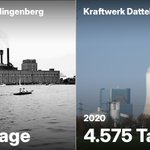
Das kann man sich heute gar nicht mehr vorstellen: Berlin hat mal in 683 Tagen das größte Kraftwerk Europas gebaut. Ja wirklich, unser Hauptstadt-Slum-Shithole-Berlin.
Klingenberg wurde 1925 geplant, war 1927 fertig und läuft heute, 100 Jahre (!) später, immer noch.
Zum Vergleich: Datteln 4 in NRW brauchte 4.575 Tage, ging 2020 mit elf Jahren Verspätung ans Netz und wir schalten es spätestens 2038 wegen Kohleausstieg wieder ab... man möchte heulen.

ALT Links Kraftwerk Klingenberg in Berlin, schwarz-weiß: 1927, 683 Tage. Rechts Kraftwerk Datteln 4 in NRW: 2020, 4.575 Tage.
15
Der Kapitalismus hat die Angewohnheit, Wohlstand schneller zu erschaffen, als Sozialisten ihn dann zum Grundrecht erklären können.
Vor 200 Jahren war unser heutiger Lebensstandard ungefähr so wahrscheinlich wie ein Einhorn. Aber der Kapitalismus macht das Unmögliche möglich.
Und der Sozialismus kommt hinterher und erklärt, dass das praktisch von alleine passiert ist und das Ergebnis jetzt außerdem allen zusteht.
9
Harald Schmidt: „in Deutschland ist der Steuerspartrieb stärker als der Sexualtrieb."
Und: „aber nur wegen der Steuer irgendwo hinzuziehen, würde ich nie machen“
Finde ich gut und legitim. Steuern können ein Faktor sein, es gibt genug andere:
- Gesellschaftliche Freiheit = darf ich sagen, was ich will
- Unternehmerische Freiheit = darf ich meine Firma führen, wie ich will
- Weniger Bürokratie generell und keine Erlaubniskultur
Für mich gibt es auch noch die weicheren Faktoren, z.B.:
- Wie erreichbar ist die Familie
- Wer ist noch dort und finde ich meine crowd
- Wetter, Klima, Essen, etc.
1
28
Ironie des Schicksals, dass es mit Varoufakis einen trifft, der bitcoin immer gebashed hat und meistens auch noch auf EU-Linie ist.
Jetzt könnte er die Zensurresistenz von bitcoin gut gebrauchen. Vielleicht lernt er aus seinem Fehler.

🔴 URGENT: Our bank has cut us off from our own money.
Our bills haven’t stopped. Neither can our work. Help us build an emergency fund to keep DiEM25 going. Even €10 makes a difference.
Donate now: i.diem25.org/donations/to/de…
23
A couple of things are completely backwards here.
1. For the same job and position, your purchasing power adjusted salary in the US is probably two, three or more times what you get in Europe.
So the gross €250k/year you make in France will easily be $750k/year in the states. A truck driver in the US can routinely make more than a medical doctor in Germany.
(Let alone that because of market size and technology superiority, there are industries, companies and careers in the US that don't even exist in Europe.)
xitter.gq/vrexec/status/21143520…

An interesting theme lately in the American expat community in Western Europe, especially higher earning corporate types (e.g. €200-300K/year), is the feeling of being unable to move back home to the US.
Few reasons...
Many who moved in the years after COVID sold their homes when rates were closer to zero than the rates now. Now that same home is ~20% more expensive while mortgage rates are 2x higher. So the monthly cost of housing like-for-like went up literally 100% in just 3-5 years.
They've gotten used to the European way of life (e.g. no or maybe just one car, easy train and airport access) and its far less intense commercial and career culture... so fewer working hours and more vacations and significant employee protections (i.e. hard to be fired legally).
This is great while living in Europe... a €250K household income is massive even post-tax considering the low relative cost of health care, education, transport, housing, etc...
...but dropping themselves back into US society... especially in a major metro area like NY, SF, Chicago, even Miami now... at age 40-50 with kids... is largely impractical.
Many Europeans would be shocked to learn that ~$250K/year in the US is incomparable to that same level of earnings in a major Western European city like London or Amsterdam or Paris.
I'd estimate the income needed in the US to match the overall quality of life you'd enjoy in one of those European cities... is around $500-750K/year.
Wild.
1
21
3. "But in the US you pay for things that are free in Europe like healthcare and education."
Nothing is free. You pay for all of it with taxes, social contributions and money debasement. And instead of you deciding what to spend your money on, the state decides for you. No choice, no say.
High spending on healthcare and education sounds great on paper. It does nothing for you when you're a young, healthy worker.
1
12
4. Europe has not developed some magic formula to achieve a higher standard of living while working less, consuming less and producing less.
What you enjoy in Europe today is living off the substance of an era when there was still something resembling America's productivity and capital accumulation. That's gone.
Maybe there are 5, 10 or 15 more years of seemingly similar output with less input. Then comes a reckoning: sovereign debt, civil unrest, unstable social systems.
There's nothing wrong with loving life in Europe. But do not kid yourself that Europe is in any way ahead of the US when it comes to careers, wealth and prosperity.
8
Harald Schmidt über Politiker in deutschen Talkshows: „die Pfeifen aus der dritten Reihe, die nichts zu entscheiden haben.“
Ich würde sagen, in der ersten Reihe sieht es nicht viel besser aus. Labern, Blenden und Lügen bringt dich nach oben. Expertise, Machen und Wert schaffen ist, wenn überhaupt, eher hinderlich.
45
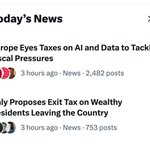
Der Staat ist überall in Europa gleich pleite. Und weil alles, wirklich alles vom Hund bis zur Atemluft, schon besteuert ist, wird es jetzt kreativ.
Neue Ideen diese Woche waren:
🇫🇷 0,055 € pro GB Internet-Traffic
🇬🇧 3 pence pro Meile fürs E-Auto
🇩🇪 will AI-Umsätze und AI-Firmen besteuern
Welche AI-Firmen in Deutschland? Genau.
Die Politik wird immer verzweifelter, die Wohlfahrts-Umverteilungsmaschine und den nimmersatten Staatsapparat am Laufen zu halten. Man darf gespannt sein, was noch alles kommt.

Yesterday France announced tax of €0.055 per GB on internet traffic
Today Germany is considering taxing all AI-generated revenue
You will see European countries keep clawing more and more money from foreign companies as they are slowly running out of money themselves to pay for their pensions and welfare state
Add to this the planned wealth taxes and exit taxes on any European who will try to leave (already active in many EU countries)
Europe is running out of money
Readers added context they thought people might want to know
The post inaccurately claims France "announced" a data tax; it was a narrow 11-10 vote on a budget amendment in a near-empty chamber, opposed by the government and far from law. German AI tax ideas remain unadopted ministerial discussions without formal proposals.
stephanelarue.com/taxe-au-gigaoc…
tagesschau.de/inland/ministe…
davemanuel.com/2026/10/30/wha…
34
Man muss Meloni schon bewundern:
1. Roter Teppich für Europas Millionäre.
2. Das beste Tax Regime Westeuropas, Flat Tax auf Auslandseinkommen.
3. Tausende kommen und kaufen Villen am Comer See.
4. Steuerwohnsitz, Firmen und Familien hinterher.
5. Dann BÄM: 26 % Exit Tax auf nicht realisierte Gewinne.
Erst reinlocken, dann abschließen.

Le plan machiavélique de Giorgia Meloni 🇮🇹
> Dérouler le tapis rouge aux multimillionnaires étrangers qui cherchent à fuir le matraquage fiscal dans leur pays.
> Leur offrir le régime fiscal le plus avantageux d'Europe occidentale, avec une flat tax sur leurs revenus étrangers.
> Les regarder débarquer avec leurs fortunes, acheter des villas au lac de Côme et s'installer sous le soleil italien.
> Les laisser transférer leur résidence fiscale, leurs entreprises et leurs familles.
> Puis proposer une exit tax de 26 % sur les plus-values latentes, refermer la cage dorée et transformer les exilés fiscaux en contribuables captifs.
Le piège parfait.
Échec et mat ♟️
39
Gute Nachricht für alle, die sich über Italiens neue Exit Tax beschweren: Wir in Deutschland sind da schon weiter!
Wegzugsteuer nach § 6 AStG gibt es schon. Und wer sich seinen Steuerpflichten entziehen will, kriegt nach § 7 PassG gar keinen Reisepass.
Steuern zur Verhinderung des Wegzugs sind sowieso nichts neues. Die Reichsfluchtsteuer gab es schonmal 1931. War aber nur für Reiche und "nur vorübergehend"... bis 1953.
Europas Staaten sind pleite und die Spirale der Eingriffe in die Freiheit wird sich unaufhaltsam weiter drehen:
1. Vermögensteuer
2. Exit Tax
3. Staatsbürgerschaftsbasierte Besteuerung
4. Kapitalverkehrskontrollen
5. Reisebeschränkungen
6. Annullierung von Reisepässen
7. Physische Grenzen
Nur dass hinterher keiner sagt, man hätte das ja alles nicht ahnen können.
18
Unfortunately this is just another Tuesday in the socialist dumpster fire called EU.
Our terminally broke governments will come up with increasingly absurd and desperate ways to extract more tax revenue. Or stop us from leaving altogether.
IMO this is just the beginning though and we have seen nothing yet...

14