

the discoveries, thankfully, are often well worth the loneliness | strikinglight @ ao3
- Tweets30.6K
- Following91
- Followers172
- Likes23.9K
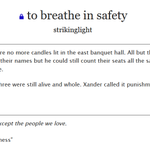




ALT TEXT: What was between us wasn’t a fragile thing to be coddled, cooed over. It came out fully formed, ready to run. — Ada Limón, “What I Didn’t Know Before”


ALT “Don’t be too hard on me, Marianne.” It slips out of him despite his best efforts, though he knows that any right he might have had to ask anything of her as good as vanished with him long ago. Maybe it won’t be beyond her to grant him this—this last bit of selfishness. “I was just scared.”

ALT “And it wouldn’t be strange, you think, if I’m there?” she asks, at last—and after a pause adds, tentative, “In theory.” “Why would it be strange?” Claude asks, even if he knows, or can imagine. The trouble is that where Marianne is concerned he’s done nothing but imagine—so many things now, for so long, that it will be almost a relief to hear it from her own mouth. “Because you once knew me on false pretenses?” “Because I loved you, Claude,” she says to him. “And you loved me, I think.”


ALT “And it wouldn’t be strange, you think, if I’m there?” she asks, at last—and after a pause adds, tentative, “In theory.” “Why would it be strange?” Claude asks, even if he knows, or can imagine. The trouble is that where Marianne is concerned he’s done nothing but imagine—so many things now, for so long, that it will be almost a relief to hear it from her own mouth. “Because you once knew me on false pretenses?” It’s only when he’s said it that he realizes it’s not exactly true. He’s done this dance before—journeying somewhere he could be a stranger, then being unmade in that place, and made again. Marianne must know this, as well. Claude remembers the bookseller’s door, on an ordinary day in the summer—how Marianne had opened that door and seen him, how she’d known who he was. How somehow she’s always known who he is, at the end of all things. “Because I loved you, Claude,” she says to him. “And you loved me, I think.”


