

Web IR / NLP Group at the National University of Singapore
Singapore
Joined July 2012
- Tweets620
- Following302
- Followers625
- Likes403




Our paper "AnalysisBank: An Expert Analysis Pattern Library for Financial Report Generation" will be presented as an Oral Presentation at #EMNLP2026! 🚀📊
💡 TL;DR: We introduce a structured expert analysis pattern library to significantly improve how LLMs generate financial reports with data-specific analysis and in-depth insight.
📅 Session Details: October 27, 2026 | 11:00 – 12:30 | Room F8
📄 Paper: arxiv.org/abs/2609.00818
💻 Code & Dataset: github.com/yajingyang/Analys…
Work by @y_yajing, Kelvin J. L. Koa, and @knmnyn! Make sure to catch the talk! 🙌

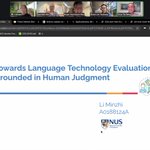
🎓️ Congratulations to Dr Minzhi Li (Ella; @EllaMinzhiLi) on successfully defending her PhD thesis, 🌟Towards Language Technology Evaluation Grounded in Human Judgement🌟!

Many thanks to her co-advisors @NancyFChen, @ShafiqJoty and @Diyi_Yang, and to her examiners Tat-Seng Chua, Brian Lim and @BryanHooi1.
Ella defended her thesis on 12 Aug 2026.

We look forward to seeing where her research goes next, particularly in aligning audio and multicultural models.
🔗 Learn more about Ella’s work: yocodeyo.github.io:

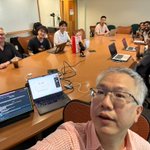
(Remote AACL-IJCNLP participants are welcome to attend as well; we'll have faculty and students ready to help remote participants!)
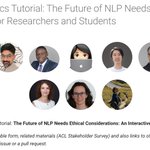
w/ Barid Xi Ai, Vamshi Krishna Bonagiri, Abdoul Jalil Djiberou Mahamadou, @estherganz @ZhijingJin, @knmnyn, Seunghun Lee, @YisongMiao, Margot Mieskes, Aurélie Névéol, & @yajing08042

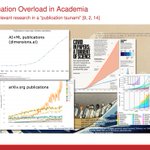
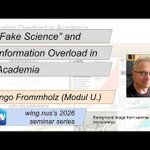
In this talk, we will examine the evolving problem of fake science and its role in driving information overload. We will outline recent developments in scholarly information access, highlight open research problems — from detecting low-quality and fraudulent content to designing