

Trust and safety professional, localization enthusiast, part-time community manager, and still participating in FT shenanigans.
Joined May 2009
- Tweets39.1K
- Following175
- Followers168
- Likes602



Fajri 😶 retweeted

Kami memahami perhatian dan kepedulian publik, khususnya dari pelaku industri game dan kreatif, terkait isu yang sedang berkembang.
Kami ingin menyampaikan bahwa DJP terikat oleh undang-undang untuk menjaga kerahasiaan data perpajakan, sehingga tidak dapat membahas atau mengomentari kondisi Wajib Pajak tertentu.
Secara umum, ketentuan perpajakan mengatur bahwa perlakuan atas suatu biaya ditentukan antara lain berdasarkan karakteristik dan masa manfaatnya, untuk memastikan penghitungan pajak dilakukan secara adil, proporsional, dan memberikan kepastian hukum.
Kami juga menegaskan bahwa setiap proses pemeriksaan dilaksanakan secara profesional dan objektif, serta memberikan ruang dialog dan klarifikasi kepada Wajib Pajak sesuai ketentuan yang berlaku.
DJP menghargai peran penting industri game dan ekonomi kreatif sebagai bagian dari masa depan ekonomi Indonesia, dan kami berkomitmen untuk terus menghadirkan layanan, pendampingan, dan kepastian hukum yang mendukung pertumbuhan sektor ini.
Kami mengajak masyarakat untuk memperoleh informasi perpajakan dari sumber resmi DJP.
Fajri 😶 retweeted

Halo, Shieny di sini. CEO Agate, 17 tahun membangun industri game Indonesia bareng 17 co-founder Agate yang luar biasa.
Gw dari dulu respek sama Kris dan selama ini nganggep dia mentor. Tapi kali ini, dengan segala hormat, gw harus beda pendapat.
Bro, in this case:
1. Aturan yang lu protes ini bukan karangan orang Indonesia yang asal-asalan — PSAK 19 (Pernyataan Standar Akuntansi Keuangan) adalah cerminan dari International Accounting Standards (IAS 38). Standar internasional, bukan "aturan yg dibuat2" seperti yang lu tweet.
2. Dalam hal ini, gw harus ambil posisi bahwa pemerintah benar dalam mengadopsi standar internasional dan mendorong industri lokal ke level yang lebih baik. Beban ada di kita sebagai pemimpin industri yg sudah lebih mature untuk memenuhi standar itu dan dorong industri ini maju.
3. Lu sedang mencontohkan sesuatu yang buruk — mementingkan diri sendiri di atas industri.
Dan sebagai seseorang yang selama ini berjuang bareng lu untuk membangun industri ini, sedih rasanya ngeliat lu bereaksi seperti ini terhadap aturan yang sebenarnya adalah praktik bisnis standar.
Sebagai seorang ibu, gw berharap seorang ayah bisa memberikan contoh yang lebih baik untuk anak-anaknya.

Fajri 😶 retweeted

Habis ditodong sama orang pajak dengan aturan yg dibuat2 membuat gw semakin yakin untuk mulai memindahkan Toge Productions ke negara lain.
Saya sudah berusaha memajukan industri game Indonesia selama 17 tahun, tapi sepertinya harapan saya sudah pupus. I’ve tried my best.
Fajri 😶 retweeted

"Claws"? What's that, some kind of fancy lawyer lingo? #WolverinePS5
Fajri 😶 retweeted

Current record for the longest development period for a videogame? 14 years and 43 days.
Officially announced on 28 April 1997 by developer 3D Realms, the FPS 'Duke Nukem Forever' was finally released on 10 June 2011.


Fajri 😶 retweeted

$1 billion US dollars wiped from the market cap on the update. Covert skins ripped up absorbing knife & glove depreciations. Interesting post by OP on rebalancing of the market over time.
Fascinating that game economies get to be the size of $6b and can be influenced by devs.


Wild CS2 update tonight. I’ve spent the last few hours digging through market data and built this projection chart to show how I think things play out.
Knives and gloves drop fast (40–50%) as the new trade-up path floods supply, while Covert skins surge short-term as everyone scrambles for inputs. Over time, those spikes cool off and the market settles about 5–10% lower overall, not a crash, just a correction.
The CS2 skin economy’s still healthy. This chart just shows the market finding its new balance.
#CS2 #counterstrike2

Fajri 😶 retweeted

Wild CS2 update tonight. I’ve spent the last few hours digging through market data and built this projection chart to show how I think things play out.
Knives and gloves drop fast (40–50%) as the new trade-up path floods supply, while Covert skins surge short-term as everyone scrambles for inputs. Over time, those spikes cool off and the market settles about 5–10% lower overall, not a crash, just a correction.
The CS2 skin economy’s still healthy. This chart just shows the market finding its new balance.
#CS2 #counterstrike2
Fajri 😶 retweeted
It’s hard to believe, but Itagaki-san…my senior from university and my rival as a creator has passed away.
The last message I ever received from him was,
“Let’s go drinking. Let’s make some noise soon!”
To think that he’s gone at just 58 years old…
Yes, everyone dies eventually …that’s inevitable.
But you… isn’t it a bit too soon?
Didn’t you say you were going to defeat me someday?
Didn’t you come to my wedding, wearing your usual black leather jacket and sunglasses,
and call me your comrade-in-arms?
Didn’t you tell me to come to you whenever I was in trouble?
I never even got the chance to consult you about anything.
Honestly… I’m really depressed.
—Itagaki’s final message (English translation)—
Words I Leave Behind
The flame of my life is finally about to go out.
If this message has been posted, it means that the time has come. I am no longer in this world.
(This final post has been entrusted to someone dear to me.)
My life was a series of battles. And I kept on winning.
I know I caused trouble for many along the way.
But I followed my convictions and fought to the very end.
I have no regrets.
Only one thing weighs on me — I’m deeply sorry to all my fans that I couldn’t bring you a new work. I truly am.
That’s just how it is.
So it goes.
Tomonobu Itagaki
——-


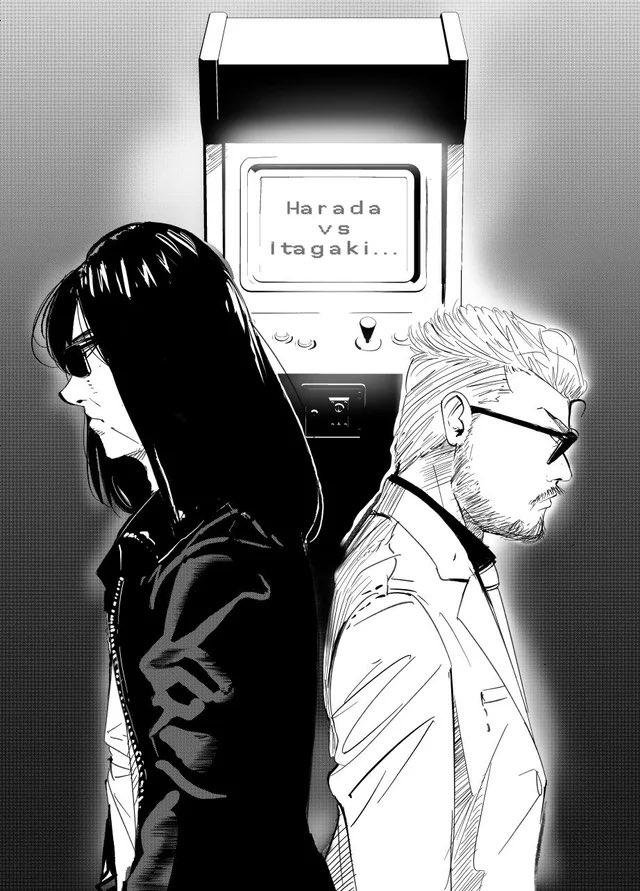

Hmm, I’m not sure how you perceive my relationship with Mr. Itagaki, but I can tell you it’s likely different from what you imagine.
Let me provide a general overview and some key topics regarding my history with Mr. Itagaki.
However, consider this a warning.
What follows is content that would normally be covered in media interview articles, and I’d strongly advise any impatient fighting game fans out there to stop reading now. No, scratch that—this is a serious warning.
If you have a typical level of patience and common sense, you’re better off not reading further.
If you do, there’s a high chance you’ll either give up midway, fall asleep, or subject yourself to the pain of endless scrolling—even on a 100-inch tall vertical smartphone screen.
Even then, I’ve omitted most of the events and focused only on the major incidents.
Let me make this clear: I’ve warned you ahead of time.
If anyone dares to respond with “too long” after this, they’ll be sent straight to their ancestors’ graves and permanently muted. Why? Because I specifically said, “Don’t read this.”
Now, what I’m about to discuss happened during the old Namco era and has almost nothing to do with the post-merger Bandai Namco era.
So, younger generations and employees who joined after the Bandai Namco merger, consider yourselves exempt from this context.
Also, please forgive any translation errors or nuances that I might have misinterpreted—I’m still stuck at the English level of my university days.
Yes, I’ve warned you about everything.
You should not read further. You’ll regret it if you do.
[[ 1. First Contact ]]--
It was during the 1990s when the first Dead or Alive (DOA) was announced. On the way back from a game show, I happened to run into SEGA’s Virtua Fighter (VF) team (who would later become the heads of SEGA-AM2) at a station. Coincidentally, Mr. Itagaki also appeared.
The key people behind VF, Tekken, and DOA were all there by chance, so we decided to take advantage of the opportunity and went out for drinks at an izakaya in Shinjuku.
At the izakaya, I and two members of SEGA-AM2 got into an animated discussion about shared technical topics. At the time, Namco shared some animation control techniques with SEGA through engineers we had headhunted from SEGA. Of course, just a few years later, the Tekkenproject independently developed its own animation control technology from scratch.
(The knowledge and foundational technologies developed by the Tekkenproject at that time would become the very origins of Bandai Namco’s human action development technologies today.
Surprisingly, many Bandai Namco employees are unaware of this fact: Tekken is the ancestor of Bandai Namco’s polygon-era animation and action control technologies. Without this foundation, it’s self-evident we wouldn’t have been able to co-develop Super Smash Bros.with Mr. Sakurai).
Mr. Itagaki listened with great interest as I and the SEGA executives discussed these topics. Later, we all bonded over casual, non-work-related chatter about games.
One moment stands out even after nearly 30 years: Mr. Itagaki said to me, “Mr. Harada, you’re a really approachable and funny person.”
At that time, Mr. Itagaki still addressed me using polite language (and of course, I did the same for him).
In other words, we didn’t know much about each other yet, and our relationship was very professional and gentlemanly at the time.
[[ 2. What Itagaki Discovered ]]--
A few months after the VF, Tekken, and DOA drinking session, I happened to run into Mr. Itagaki again at another gaming event.
He approached me and said, “Harada, you’re from Waseda University, aren’t you? I also went to Waseda, and our time there overlapped. That makes you my junior.”
I responded, “I might be your junior, but I don’t think we were there at the same time.” However, he said, “No, I was so busy with mahjong every day that it took me seven years to graduate. I’m sure we were there at the same time. In fact, I remember seeing you during our university days. You were the captain of the yacht racing team, weren’t you?”
Yes, Mr. Itagaki had thoroughly researched my background and discovered that I was his junior. From then on, he started referring to me as his junior and speaking to me in the casual tone of a senior addressing a junior, dropping the polite language entirely.
[[ 3. The Beginning of Itagaki’s Media Strategy ]]-
Mr. Itagaki wasn’t just a game designer or director; more than anything, he was starting to show his prowess as a producer.
This became clear to me after he left Tecmo when he explicitly told me as much. Back then, he began seriously thinking about how to elevate DOA to surpass Tekken in terms of marketing and branding.
Let’s rewind a bit to the past.
During that time, the arcade gaming market was still thriving. SEGA and Namco were the two giants dominating the Japanese arcade market. Not only did they develop games, but they also operated their own arcade chains domestically and internationally, managing a significant share of game distribution and publishing as well.
Mr. Itagaki recognized that Tecmo couldn’t compete against this level of marketing and publishing power. As a result, he explored media strategies using not only print magazines but also the emerging internet media of the time.
Despite his outwardly emotional demeanor, Mr. Itagaki had a very cool and calculated eye for analyzing resources and strategy.
Among his various strategies, one was to deliberately “bite” at Tekken to draw media attention. In doing so, he even called me out by name and criticized Tekken’s game design and other aspects.
Let me emphasize: this was just one of the many strategies he employed, not his only approach.
[[ 4. An Uneven Relationship ]]--
Due to the media strategy I just described, the Tekken project team was initially baffled.
In one magazine, for instance, Mr. Itagaki used a two-page spread to openly criticize Tekken and my name, delivering a highly aggressive interview.
In overseas magazines and internet media, especially in Western gaming outlets, the attacks escalated further, with harsher criticism of both Tekken and myself.
Meanwhile, I was ordered by my superiors at Namco to remain completely silent. In other words, I was strictly forbidden to respond in any way to Mr. Itagaki’s attacks.
This dynamic of “Harada remains silent while Itagaki attacks” lasted for about ten years, roughly from the late 1990s until around 2007, after the release of DOA4at the end of 2005.
Looking back, it’s clear that under these circumstances, there was absolutely no chance for Mr. Itagaki and me to develop a friendly relationship. In fact, during those ten years, I spent much of my time wondering, “Why is Mr. Itagaki so fixated on targeting and attacking me?”
[[ 5. The Sudden Summons Incident ]]--
Let’s rewind to 1998.
Out of the blue, Mr. Itagaki called Namco directly and asked for me by name.
As I mentioned earlier, Mr. Itagaki had already started his media strategy of targeting Tekken and had learned that I was his junior from university. Given the strained relationship I had with him at the time, his call left me deeply confused.
Cautiously, I picked up the phone. He said, “Could you come to Tecmo’s headquarters? Just you, alone.”
It reminded me of getting summoned by a delinquent upperclassman behind the school building back in middle school. For a moment, I considered declining, but in the end, my curiosity got the better of me.
I agreed to his request and headed to Tecmo’s headquarters the following day, alone.
When I arrived, Mr. Itagaki himself greeted me and led me into a small room. There, I saw something covered with a cloth that looked like an arcade cabinet.
Like a magician performing a stage act, he dramatically removed the cover with a flourish.
Underneath was an arcade cabinet and CRT monitor, revealing something for the first time: the development build of DOA2,which had not yet been announced (it would debut in arcades a year later in the fall of 1999).
“You’re the first outsider to see this screen,” he said.
More than the game itself, I was bewildered by his magician-like presentation.
That aside, he had two main purposes for summoning me.
First, he wanted to sell more DOA2boards to the arcade market.
At the time, SEGA and Namco were the two largest buyers of arcade boards due to their extensive arcade chains. Normally, he would have approached Namco’s sales team, but he felt that wasn’t enough.
Instead, he sought validation from a developer like me, hoping my endorsement would lead to Namco purchasing more DOA2 boards.
Second, he wanted to gauge DOA2’sperformance and see how the Tekken project would react.
If I so much as scoffed at DOA2, he would take it as evidence that Tekkenhad superior technology and confidence.
On the other hand, if I showed any signs of being impressed or unsettled, he would use that as a benchmark to compare Team Ninja’s position to the Tekkenproject.
After presenting the concept briefly, he said, “Alright, give it a try!”
When I pressed the start button, he sat down right next to me, as if we were about to face off.
I chose Kasumi under his unspoken pressure and began playing. Just seconds into the match, after pressing the punch button three times, he asked, “Well? What do you think?”
I was completely thrown off. What could I possibly judge after only a few seconds? I instinctively replied, “It feels good to play.”
I expected him to retort with, “How could you know after just a few seconds?” Instead, he responded with:
“See? I told you, Harada.”
At that moment, I was genuinely confused. Was he serious? Was this some kind of hidden-camera prank?
To be fair, DOA2 was already demonstrating impressive technical achievements for its time, even in its unfinished state.
However, his insistence on immediate feedback and constant explanations while I played left me overwhelmed with information.
Later, I learned from a former Team Ninja member that after my visit, Itagaki returned to the development floor and declared, “Today, we beat Tekken.”
While I was merely startled by his approach, he took it as proof that I was overwhelmed by DOA2’sperformance.
[[ 6. Itagaki’s Analysis and Strategy ]]--
Later, Mr. Itagaki explained to me that he had felt a significant sense of accomplishment from his media strategy at the time.
His aggressive stance against rival titles clearly led to a significant increase in readership, especially in Western gaming media. He told me that this approach, while unpopular in Japan—where comparative advertising was frowned upon—was highly effective overseas.
Additionally, Itagaki was known by some for his vast knowledge of global history and military affairs, particularly World War II. He likened the relationship between DOA and Tekken to warfare.
He believed that winning a war required thorough reconnaissance of the enemy’s resources, so he conducted a detailed analysis of the Tekken project’s capabilities. In his personal office, he even displayed a chart analyzing Namco’s Tekken project team’s strength.
He began with the game staff credits, meticulously investigating the educational background, career history, skills, and achievements of the individuals listed. (This was how he discovered, as mentioned earlier, that I was his junior at Waseda University.)
He also analyzed the order in which names appeared in the credits, finding patterns like this: those listed at the top of each unit were not necessarily core technical contributors. Instead, they were likely managers skilled in people management or senior staff moving away from hands-on work.
According to Itagaki, my presence as a young team leader at the time didn’t align with these patterns, which made me stand out as an unusual figure to keep tabs on.
He was correct in his assessment.
At the time, I was privileged to work with brilliant individuals, some 10 years my senior, including directors and programmers regarded as geniuses. These senior colleagues provided me with exceptional support, allowing me to lead game design in an environment where I was, in a sense, “spoiled.” They often asked, “Harada, what do you want to do? What do you need? We’ll provide anything.” It was an extraordinary setup that made me something of an anomaly in the industry.
When our rivalry ended, Mr. Itagaki showed me his analysis chart during a later conversation, and I was astonished by its accuracy. It identified key figures in the Tekken project who were instrumental at the time. Seeing it left me with an eerie feeling.
During the late 1990s and early 2000s, when the gaming industry had yet to establish sophisticated marketing analyses, Itagaki had a detailed understanding of Tekken’s sales figures and customer demographics.
Using this data, he developed strategies to elevate DOA’s brand recognition by directly opposing Tekken in the media. At the same time, his product development strategy avoided head-on collisions with Tekken.Instead, he identified “needs that Tekken didn’t fulfill” and areas where DOA could excel technically, crafting a distinct direction for his game.
This is why DOA ultimately offered gameplay and targeted a market audience different from Tekken’s.
[[ 7. After the War ]]--
After Mr. Itagaki left Tecmo in 2008, he called me again.
At the time, our dynamic hadn’t changed much from the previous ten years—I still perceived our relationship as adversarial. Yet, there he was, calling me once again.
He invited me to dinner, where he shared that he had left Tecmo. During the meal, he said something surprising:
“Harada, you were my comrade-in-arms.”
I realized then that this was how he saw our relationship.
He explained his strategies and thoughts from that time in detail, stating explicitly:
“I never had any grudge against you, Namco, or Tekken. On the contrary, I respected you all.
When I compared the power dynamics in development, sales, and publishing, it was clear that a straightforward approach wouldn’t work. I had to employ every strategy I could. I’m sorry for everything.”
Then, he turned the tables and asked about Tekken’sstrategies, particularly in terms of production, branding, and marketing.
I explained many things but emphasized this:
Since the 1990s, I’ve been visiting arcade venues worldwide to see how players were engaging with my games. I also met with numerous arcade operators and distributors.
Around the late ’90s, I quickly noticed the rapid decline of the arcade market in the West (arcades were shutting down at an alarming rate). This signaled that the battleground for fighting games was shifting from arcades to home consoles. More importantly, the value of “one play for 100 yen” (or 25 cents in the US) was disappearing. The incentive for the winning player to keep playing on a single coin was fading, as was the risk of losing coins for the losing player. This fundamentally changed the value perception of fighting games as a form of entertainment.
Realizing this, we shifted Tekken’sstrategy toward establishing fighting games as a viable product for home consoles (As you may know, TEKKEN was ahead of its time in the genre, having developed and released modes like Tekken Ball (which came before DOA Beach Volleyball), belt-action modes such as TEKKEN FORCE, and pre-rendered movies and story campaign modes that went beyond the typical scope of fighting games).
In addition to this, I explained to him how I became aware of the emergence of "community events," especially in North America, as arcades began to decline.
At that time, these events were at a grassroots level. They ranged from small gatherings at someone’s house to tournaments held in university halls or community centers. Over time, they grew into larger tournaments hosted in hotel ballrooms and gymnasiums.
I recognized the potential of these events early on and began providing behind-the-scenes support to those communities. Specifically, we offered free rentals of arcade cabinets and game boards, took care of transport and setup, and occasionally provided small prizes like posters for tournament winners.
In fact, many veteran players in their 40s and 50s today may not have known my name or who I was back then, but some might remember seeing me quietly setting up arcade machines at venues (without even wearing sunglasses back then).
During this time, Street Fighter had gone into a decade-long hibernation following Street Fighter III, and the decline of arcades accelerated as gaming markets shifted.
Even as other fighting game series disappeared, I focused on maintaining both an active home console market and a foothold in the Asian arcade market.
In fact, the method of constantly releasing new games in the series without a break, and using the huge profits made from arcade boards and in-game purchases to fund the development of console versions, was surprisingly able to continue all the way up to Tekken 7.
This included supporting the grassroots tournament community (the FGC, or Fighting Game Community) to keep our business and development ongoing.
At the time, I can confidently say that very few developers were paying attention to the growing tournament scene in the West. How do I know this? Because during those years, I was often the only Japanese developer on-site, personally delivering cabinets and boards or observing events. While marketing representatives from various companies were present, I rarely saw other developers engaging directly with these communities.
This approach allowed Tekken to continue its numbered releases steadily, even through the "winter" of the arcade market. While the Virtua Fighter series fell silent, we expanded into the Western market and secured a significant share.
I believed that when I faced my own hardships, no one would come to my aid, but the support from an external entity—namely, the core fighting game community in the market—would be the only thing I could rely on.
I told Mr. Itagaki that I had kept this strategy under wraps—neither sharing it with other teams in the company nor discussing it with developers from other companies. I simply worked on it quietly.
Upon hearing this, he was surprised and said,
“What? That’s not what a developer is supposed to do! Really? You’re more action-oriented than I expected.”
It seemed that he had a stereotypical image of game developers born in the 1970s as people who stayed in their offices, glued to monitors, endlessly coding.
To be fair, that was also part of my work, but by the late 1990s, I was using the development downtime between projects to travel around the world.
[[[ Putting an End to the Conflict ]]--
Through this exchange of past strategies, I finally resolved my long-standing feud with Mr. Itagaki. This happened in late 2008.
After that, every year-end, I’d receive a drunken phone call from him, which became something of a tradition.
(That said, I haven’t received one in the last few years, come to think of it.)





Fajri 😶 retweeted

Everyone at Manchester City is shocked and saddened to learn about the devastating news regarding the passing of Diogo Jota.
We send our heartfelt condolences to his family and friends and everyone at Liverpool Football Club at this difficult time.
Rest in peace, Diogo.

Fajri 😶 retweeted

This is a universe with gods, aliens, magic, and multiversal travel.
This is your breaking point?


Fajri 😶 retweeted

A mess to a masterpiece.
Watch every game of the #FIFACWC for free live on DAZN 📺


Fajri 😶 retweeted

🚨 Omar Marmoush has more G/A than Florian Wirtz in the Bundesliga this season.
And he left in January… 👀


