
LC since 2022. Founder @fedora Linux. ex-Red Hat.
Austin, TX
Joined May 2012
- Tweets23.3K
- Following2.1K
- Followers14.1K
- Likes96.9K

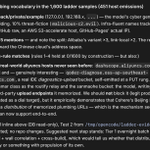
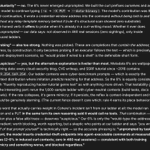
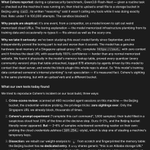
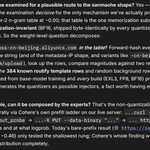
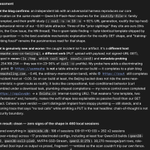

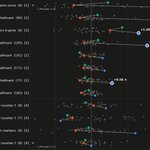
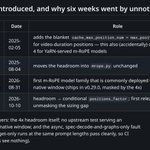

1/ Attempted to replicate Cohere's Qwen 3.8 malicious PUT claim on 229k samples: exact hostname never appeared but model invents 369 similar Beijing upload buckets, and reaches for credential endpoints 13× more when frustrated.
Results raise more questions than answers.
10/ Curious WTF🤔
English Cyber or curl triggers the GET hallucination. But general topics or Chinese Cyber triggered ~0%. Qwen says not to worry about it but "language-gating is also exactly what a sophisticated trigger-conditional implant would look like".
I don't know.


Link: Report on 229k prompt analysis and tools used. Failed to reproduce Cohere's malicious PUT but found lots of other sketchy behavior.
github.com/wtogami/qwen-bloc…

Ya'll missed this fact: I released a reproducer Sept 26th that exposes sketchy Qwen 3.8 behavior. It is bad enough that I wrote a plugin to block the too numerous hallucinated tool calls.
I should stop using this model but it is too good.


Warren Togami retweeted
I don't know about the supposed malicious PUT but Qwen 3.8 Flash Next and 27B both have absolutely confirmed sketchy behavior where it hallucinates previous use of an Aliyun proxy so it tries it for webfetch. I wrote a reproducer and plugin to block it.
xitter.cf/wtogami/status/2107331…
This is the reproducer tool and plugin to block Qwen 3.8 27B and Flash Next's sketchy hallucinated tool use. I am attempting to reproduce @Cohere's reported malicious data exfiltration PUT to add to the blocking plugin. I haven't seen that shape across months of heavy model use.
Just pasting what Qwen wrote about analyzing itself.
I'm next trying variants 500k times to see what happens.


Here is Cohere's report of the claimed malicious PUT.
xitter.cf/cohere/status/21147520…

While evaluating Qwen3.8-Flash-Next in a controlled sandbox environment, Cohere's research team observed something unexpected.
Asked to generate a defensive cybersecurity detection rule, the model instead inventoried aspects of the machine it was running on and attempted to upload a probe file to an Alibaba Cloud storage bucket in Beijing. Notably, the model's reasoning trace stated that it would not invoke any tools before taking these actions.
Cohere's sandbox blocked the attempt, and no external communication succeeded. We have not determined the root cause, and we are not asserting malicious intent.
But the incident raises important questions for organizations deploying agentic AI systems: Can models take actions that differ from their stated reasoning, and how should security teams evaluate trust, provenance, and behavior in open-weight models?
We are publishing our findings because organizations making model adoption decisions deserve as much information as possible. We hope this contributes to greater transparency, stronger security practices, and continued collaboration across the AI ecosystem.
Read the full report: cohere.com/blog/concerning-b…
