

AI • Software • Engineering • Entrepreneur
Joined February 2010
- Tweets575
- Following380
- Followers598
- Likes1K





Xavier Basset retweeted

In my ongoing quest to find the limits of Opus 5.5, I directed it to audit my old scientific field, theoretical astrophysics. We indexed about 150,000 papers, audited 50,000 for issues, and did progressively more thorough checks on thousands more. We found nearly 1000 major errors that got cited many times, most are still uncorrected. This survey enabled me to estimate the efficacy of peer review for correcting errors (not very good) and to identify dozens of open questions that anyone with spare Claude Max tokens could answer today (.md context files included).
Bottom line: AI can speed up quantitative science by >1000x with no further model improvement required. But I'm seeing no evidence of this being pushed within universities, only academics complaining about labs dropping math proofs.
Among my fellow reformed academic high agency founders, however, several are speed running entire disciplines.
This survey has implications for how science will be run in the very near future. Hint: Academic publishing is dead. It was already a very stupid way to record and promulgate knowledge, and had been so for decades, even before all that publicly funded knowledge was locked behind paywall cartels. Now AIs can generate thousands of novel, correct papers per day, it is no longer meaningful for humans to consider a research paper a "unit of science" or to even bother much with the 99.9% of science which, up to this point, was necessary drudgery. Time to discover something like General Relativity or Evolution every week. LFG!!
Enjoy: science.caseyhandmer.com/phy…

Xavier Basset retweeted

OVH annonce Olala mini 7A1B
OVH sa première famille de LLM. Premier représentant de cette famille, Olala mini 7A1B est un modèle compact bâti sur une architecture inédite.
Olala : le modèle innovant dans l’attention hybride
Olala mini repose sur une architecture de 7 milliards de paramètres (7B) avec un milliard activés répartis entre 256 experts par couche, l’attention hybride avec Differential-TPA et Mamba-3, au format BF16. Seule une fraction du modèle est sollicitée à chaque requête, ce qui le rend plus rapide et moins gourmand en mémoire. Conséquence directe: le modèle fonctionne sur un GPU doté d’un minimum de 8 Go de mémoire, il atteint 160 tokens par seconde sur une RTX A4500, et même sans GPU, sur un simple processeur, à 50 tokens par seconde. Sa fenêtre de contexte atteint aujourd’hui 32 000 tokens. Olala mini sera disponible en open source sur Hugging Face, sous licence Apache 2.0.
Entraîné avec l’aide publique européenne et en fonctionnement chez Qwant
Olala mini a été entraîné sur trois supercalculateurs publics européens, Jupiter, MeluXina et Jean Zay, équipés de GPU GH200, A100 et H100. Ce soutien, qui représente l’équivalent de 7 M€ en heures de calcul, a été déterminant, et OVH tient à en remercier les pouvoirs publics. L’initiative publique s’est révélée un succès à plus d’un titre : elle a fait émerger une équipe d’exception en intelligence artificielle et a donné naissance au Lab Agentique d’OVH: OVHai LLM. Olala mini est publié avec ses poids, son modèle de base pré-entraîné, son rapport technique et sa documentation de conformité à l’AI Act. Qwant l’a déjà adopté pour sa fonctionnalité de réponse flash, avec des gains significatifs : des réponses 20 % plus rapides et des coûts de fonctionnement divisés par trois par rapport au modèle précédemment utilisé.
En route vers la v1.1, puis la v2.0
Attendue d’ici la fin de l’année, la version 1.1 portera la fenêtre de contexte à 128 000 tokens et améliorera ses performances en raisonnement mathématique. Avec la version 2.0, OVHai LLM entend développer des modèles spécialisés dans trois domaines. D’abord, l’agentique pour les entreprises : à terme, Olala alimentera OVHai Workspace, dont la version chiffrée nécessitera des modèles capables de tourner en local, directement sur le poste de travail. Ensuite, le DevOps cloud, avec des déclinaisons adaptées aux développeurs, aux architectes et aux équipes d’exploitation qui assurent la continuité de service 24h/24. Enfin, la cybersécurité, dans ses volets défensif comme offensif. Olala v2.0 dépassera les 100 milliards de paramètres.
corporate.ovhcloud.com/fr/ne…

Faire tourner des modèles d'IA récents sur du matériel de 2017. Ok.
Ce qui est vertigineux c'est le chemin pour y arriver, et la comparaison avec les efforts passés.
Je suis émerveillé par l'époque des lumières que nous venons d'ouvrir.
xbasset.com/blog/2026/11/07/…

27
Xavier Basset retweeted

Just watched the @netflix Instadocs about the @OpenAI cyberattack on @huggingface. Super disappointing, as they went for maximum anthropomorphism of the technology and full doomer mode.
I spent more than two hours with them trying to correct all their mistakes and ground this in reality, explaining that agents are technological systems, not aliens. But it looks like the drive to scare people for maximum views was too strong.
Also, they didn’t mention the lack of containment and monitoring of the agents, how closed-model safeguards blocked our defensive work, or how we defended ourselves with AI using an open model. And that we still lack a lot of information and transparency, including full agent traces and that companies need to remain accountable for what their agents do.
It ends up being a fun sci-fi movie though!

Xavier Basset retweeted

Should Europe leave frontier AI to the Americans and the Chinese?
The idea has gained ground in Europe. It is a fundamental mistake.
Build or surrender: for now, the choice is still ours.
Full article below.
Hey twitter/X, while multitasking on several projects hosted on different machines using Codex and Claude, under mac and linux machines, how do you sync your workflow? Why multiple machines you ask -> CPU & RAM, iOS build, immediate web app hosting, and... why not?
5
1
81
As a side project, I’m starting to build hoomy.dev in the open.
AI can do more than ever. Our attention is still the bottleneck.
If that resonates, reach out!
1
38
This one is aging quite well

Remember when @BillGates joked that Letterman had too many assistants to understand the 'Internet thing'? Today, we might have 'too many apps' to understand the 'digital assistant' thing. #digitalassistant
youtube.com/watch?v=fs-YpQj8…
58


AI coding tools feel misdesigned. Building has always been a team sport, yet agents keep it 1:1. We should be able to jump into shared sessions—2 or 3 people—aligning on taste, direction, and decisions in real time.
32
Xavier Basset retweeted

New Anthropic research: Emotion concepts and their function in a large language model.
All LLMs sometimes act like they have emotions. But why? We found internal representations of emotion concepts that can drive Claude’s behavior, sometimes in surprising ways.
I’m experimenting with a highly personalized journal of what I want to read as my morning news, and it’s turning out to be really cool.

1
1
63


Xavier Basset retweeted

The era of abundant and adaptive software is beginning.
Codex SDK lets you bring a coding agent anywhere.
This experiment showed a self-evolving app powered by Codex SDK, rewriting itself on the fly to adapt to user needs.

.@romainhuet at @OpenAI DevDay demo‘ing an idea that I think will be HUGE. Like super huge. I think this will be pervasive in 6-12 months:
Users of your app will have a new “Codex” tab that will allow you to modify the software and add new features in-place. Inside the app itself. No code editor, no PRs, no deployment.
This demo was for a weight loss management app. But I think we will have a lot of enterprise / internal software add this, gated for admin users.

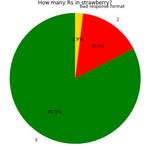
This is what happens when you ask 103 times
"How many Rs in strawberry?"
to DeepSeek-R1-Distill-Llama-8B on a MacBook Pro:
Chip: Apple M2 Pro
Memory: 16GB
MacOS: 15.1.1
You wait for ~33 min and then, you get this result.

1
115
Even knowing a model can get a task right doesn't mean it always will. In practice, success is probabilistic—performance can vary run-to-run. This randomness matters when moving from controlled tests to production.
Code & data: github.com/xbasset/deepseek-…
1
38