
MD, PhD. Haematologist @#NationalTaiwanUniversityCancerCenter. Assistant Professor @NTU_TW @EHA_Hematology #SWG #MDS #MPN #CMML 🇹🇼🇬🇧
Joined June 2026
- Tweets272
- Following106
- Followers58
- Likes548





Pinned Tweet
My previous account was hacked, so here's a fresh start. Trying to get this account going again.
526
Yu-Hung Wang retweeted

Our review article attempts to answer 2 key questions - who and when to transplant in MF 🙌🏽
Grateful to Prof. @Vikas_Gupta_1 for his guidance and mentorship.
doi.org/10.1016/j.clml.2026.…

Yu-Hung Wang retweeted

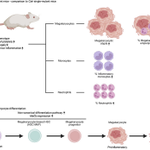
An increased number of BM progenitors is the main source of myeloid cell overproduction in CMML. Heterogeneous disorders in myeloid cell kinetics become striking when iGRANs are released. Read in Blood Neoplasia: ow.ly/OCpq5108YT7

Yu-Hung Wang retweeted

Can we reverse cancer-associated fibrosis instead of just slowing it down? Our new study in @ImmunityCP shows how the human bone marrow rewires to reverse fibrosis in blood cancer and identifies PDE5A as a therapeutic target! Proud of our incredible team
sciencedirect.com/science/ar…

Yu-Hung Wang retweeted

1/ Neutrophils are the most abundant immune cells in the body - but what exactly happens to them in clonal hematopoiesis?
With @ElinaKCook1 and @QMyPath, we’re excited to share our new medRxiv preprint exploring this very question!
medrxiv.org/content/10.64898…

Yu-Hung Wang retweeted

At #iwMDSMPN26, John Mascarenhas of @IcahnMountSinai commented on the importance of reassessing the treatment approach in patients with #myelofibrosis who have an inadequate response to JAK inhibitors.
Watch here:
🎥 ow.ly/Vv7G5107Ajy
#MPNsm #HemOnc #Hematology
Intended for healthcare professionals. VJHemOnc’s Community Focus Channel and Myeloproliferative Neoplasms Channel are supported by life sciences companies (listed on the Channel page), which have no influence over the content.

Yu-Hung Wang retweeted

🧬 Is the tumor microenvironment more conserved than the tumors themselves?
Fascinating new study in @Nature!
Across 42 cancer types and >2,000 human & mouse tumor samples, Januszyk et al. identify conserved stromal and immune transcriptional programs across organs and species.
An exciting step towards understanding shared mechanisms of immune evasion and therapy resistance.
Could pan-cancer TME signatures help us develop better biomarkers for immunotherapy—even across different tumor entities?
Importantly, shared transcriptional programs ≠ identical therapeutic vulnerabilities.
🔗 doi.org/10.1038/s41586-026-1…
Explore the atlas: tmeatlas.stanford.edu
@OncoAlert @weoncologists @urotoday @Uromigos
@OncoAlert and Faculty: @DrChoueiri @tompowles1 @apolo_andrea @neerajaiims @montypal @Silke_Gillessen @AOmlin @brian_rini @PGrivasMDPhD @TiansterZhang @amerseburger @DrDanielHeng @HHammersMD @scocmem @AndreaNecchi @AmandaNizamMD @drenriquegrande @nataliagandur @AlbigesL @cdanicas @declangmurphy @seanmmcbride @shilpaonc @DrRanaMcKay @scserendipity1 @DrYukselUrun @ravikanesvaran @BraunMDPhD @EfstathiouEleni @mzugman @crisbergerot @Markuseckstein3

Yu-Hung Wang retweeted
Chronic inflammation promotes transient myeloid differentiation in Tet2-deficient HSPCs but accelerates HSC exhaustion & MDS development. Read in Blood Advances: ow.ly/KLcH5105yeY

Implications of #TP53 mutations in patients with higher risk MDS who received HMA therapy: an analysis from the VALIDATE database of the International Consortium for MDS
nature.com/articles/s41408-0… #MDSsm
@ic_MDS @BloodCancerJnl @aamdsif @MDSFoundation @MDS_Hub @Dr_AmerZeidan
Yu-Hung Wang retweeted
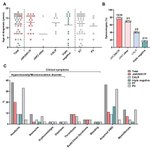
CHRS and CCRS effectively stratify CCUS risk groups. High risk (HR)-CCUS shares convergent clinical features with LR-MDS and may merit inclusion in MDS trials. Read full article in Blood: ow.ly/9uuV5107nfJ

Yu-Hung Wang retweeted

A pesar del lio para los desplazamientos, fue una jornada estupenda. Mucho talento en este inicio de grupo! Mil gracias al equipo SEHH por todo el trabajo y la ayuda. Dejo QR para los socios SEHH que quieran apuntarse al grupo.


What could be more rewarding than seeing our patients back on stage and back to the life they love? ❤️

2
105
Yu-Hung Wang retweeted
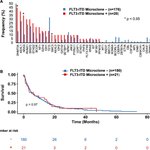
The rs2887399-T allele in patients with MDS and CMML with specific mutations is associated with reduced #AML progression and improved AML PFS. Read the full article in Blood Neoplasia: ow.ly/KPax5102Epp

Yu-Hung Wang retweeted

A clone by any other name: convergence of CCUS and LR-MDS #mdsm
>>> Clinical and genomic convergence of high-risk CCUS and lower-risk myelodysplastic syndromes/neoplasms ashpublications.org/blood/ar…

Yu-Hung Wang retweeted

New publication 📝 Results from the phase III VERIFY trial, published in @JCO_ASCO, show rusfertide significantly reduced the need for phlebotomy vs placebo in patients with phlebotomy-dependent PV (77% vs 33%; p < 0.0001).
Learn more about PV: bit.ly/4a7J9Wu
#PolycythemiaVera #MPN #MPNsm #MedNews #MedEd

Yu-Hung Wang retweeted

Literally one of the best papers I have read in long time!!! Future of #MDS & #AML prediction is in this data! A must known for #CHIP clinic afecionados and myeloid folks @aamdsif @ic_MDS @MDSFoundation

How do cancers emerge from healthy tissue? In @Nature today: leukaemia evolving in yearly blood samples up to 15 yrs before AML. First driver by age 20; each new driver multiplies growth 2–3×. A remarkably simple set of mathematical rules recapitulate it.
nature.com/articles/s41586-0…

Yu-Hung Wang retweeted

How do cancers emerge from healthy tissue? In @Nature today: leukaemia evolving in yearly blood samples up to 15 yrs before AML. First driver by age 20; each new driver multiplies growth 2–3×. A remarkably simple set of mathematical rules recapitulate it.
nature.com/articles/s41586-0…
Yu-Hung Wang retweeted

How does leukaemia develop? 🩸 How long does it take? ⏳
🌟 Our paper, started back when I was a PhD student in @jrblundell’s lab, is out today in @Nature 🌟
Yearly blood samples from women who developed AML in later life let us trace it back decades 👇
doi.org/10.1038/s41586-026-1…
Yu-Hung Wang retweeted
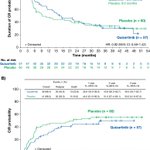
New publication 📝 Results from the phase II REFINE and phase III TRANSFORM-2 trials, published in Leukemia & Lymphoma, show that SVR35 responses at Week 24 were achieved in 12% of patients with JAK inhibitor-treated myelofibrosis receiving navitoclax monotherapy (REFINE), and by 17% of patients receiving navitoclax + ruxolitinib and 7% receiving BAT (TRANSFORM-2).
Learn more about myelofibrosis: bit.ly/4snWHUc
#myelofibrosis #MPN #MPNsm #MedNews #MedEd


