

22 | building Podex with my brother. founder lessons, wins and mistakes, in public.
Read a free playbook →
Joined March 2024
- Tweets77.2K
- Following4.3K
- Followers5.9K
- Likes77.5K






Pinned Tweet
I'm 22, still in university, and I turn long founder podcasts into playbooks you can actually use.
I used to trade crypto. It paid sometimes and it never felt like I was building anything real. So I started Podex with my brother.
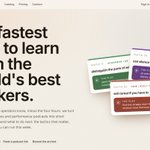
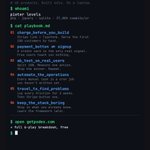
You paste a podcast or a long YouTube link. You get a playbook from that specific episode: a useful summary, plus the steps you can actually take.
That is what I work on here. Building it in public, and sharing the parts of founder conversations that are worth keeping.
If you're a founder or you're building something too, say hi.
Almost anyone can ship a product now.
That's the part people celebrate. The other part is less fun.
If it only takes a weekend to build something, it also only takes a weekend for someone else to build the same thing.
So the work moved. It's not "can we build this?" anymore. It's "would anyone notice if this disappeared?"
That's what we're trying to do with Podex. Not just ship features. Make something people actually come back to.
1
35
Zoost retweeted

I've been working a lot on improving my startup recently.
Got some amazing feedback over the past week.
Feedback that's really gonna help us scale beyond the levels we could ever imagine.
Building is fun, distribution isn't.
Both should be done in the right way.
For building:
Figure out what people want, and what they don't (on your platform).
Build according to that.
For distribution:
TRIAL & ERROR.
Testing, testing, testing until something hits.
Some days Podex feels slow.
Then I remember we actually shipped a product people can use.
That's more than I had a year ago.
1
57
Our best video ever got 800K+ views.
And it's the reason we stopped making them.
It was a UGC video for Podex. People loved it, and signups came in.
But they weren't the people we're building for.
We want founders and builders. The video pulled in everyone else.
So we walked away from our best-performing channel.
If the wrong people love your content, it's still the wrong content.
1
1
115
Zoost retweeted
I'm 22, still in university, and I turn long founder podcasts into playbooks you can actually use.
I used to trade crypto. It paid sometimes and it never felt like I was building anything real. So I started Podex with my brother.
You paste a podcast or a long YouTube link. You get a playbook from that specific episode: a useful summary, plus the steps you can actually take.
That is what I work on here. Building it in public, and sharing the parts of founder conversations that are worth keeping.
If you're a founder or you're building something too, say hi.
If you're in your early 20s and building something, this is the cheapest your mistakes will ever be.
No mortgage. No team waiting on payroll. Nobody is watching yet.
So ship the ugly version. Post the half-finished thought. Ask the question you think is dumb.
You won't get to be this unknown again.
I'm 22 and building with my brother. Who else is building young? Say hi.
69
Ask ChatGPT for the best tool in your category. If you're not in the answer, you just got a new marketing job.
Takes 10 minutes to check.
Open ChatGPT, Claude and Perplexity.
Ask the exact question your customer would ask.
Write down who shows up.
Write down which pages they cite.
Those pages are your list. Reddit threads, comparison posts, best-of articles.
Get yourself onto them. Answer the thread honestly. Ask the writer to add you. Write your own comparison page that answers the question better.
Tibo posted this morning that Bazzly is having growth he's never seen before, driven by AI mentions.
Doing this for Podex this week.
82
If you listen to founder podcasts on the way to work, try this.
When the episode ends, ask yourself 3 questions before you open anything else:
1. What did they do that I'm not doing yet?
2. What number did they use to know it was working?
3. What's the smallest version of that I can try this week?
If you can't answer the last one, you listened to it for fun. Which is fine.
But if you wanted something you could use, that last answer is what you came for.
1
1
74
You can sit through a 2 hour founder interview and still have nothing useful the next morning.
You remember the guest. You remember one story. The part you were going to apply is usually gone.
Most people call that learning. I do not think it is.
The episodes that actually stuck for me were the ones I turned into instructions.
The steps they actually took.
The numbers they said out loud.
The one decision they kept repeating.
Next time you finish an episode, write those down like that. That is the version that sticks.
76

Most of what I called "working on the company" was just staying busy.
Rewriting a page that did not need another rewrite.
Jumping between marketing ideas and finishing none of them.
Saving advice I was never going to use.
The days that actually moved something were quieter.
I talked to someone who tried the product.
I shipped one small thing they were stuck on.
I wrote about what was actually going on, even when it was messy.
I still have busy days. I just trust them less than I used to.
2
4
202
I cut most of my marketing down.
Not because something started working. I just got tired of being on too many platforms and being mid at all of them.
It is just X and LinkedIn now.
Feels a bit exposed. When you have five things running, you can always tell yourself the other one will pick up. Now there is nowhere else to look.
I do not know if this is the right call yet. I just know I was doing too much.
1
2
113
I gave myself a few months to become someone people in this space actually recognize.
Not famous. Just known.
Writing that out feels a bit embarrassing, which is probably why I avoided saying it.
I am building a company while I am still in university. I do not have years to quietly get good and hope the right people stumble onto me. If they do not know who I am, a lot of what I am building just sits there.
The easy move is to stay in the product all day and call it focus. Shipping feels clean. Trying to be remembered feels like you are begging.
I am done pretending those are different jobs.
The next few months will look a bit desperate from the outside. More of me than feels polite.
That is fine. I would rather look hungry for a season than stay politely invisible for years.
2
2
138

We used to keep adding features.
This week we did the opposite and simplified the whole product down to one action.
You paste a podcast or a long YouTube link. You get a playbook from that episode: the useful summary and the steps you can actually take.
Most early products are hard to explain. I got tired of that.
This is the one sentence version. Now I have to repeat it until people remember it.
1
82
Founders don't have time to sit through a 90-minute podcast.
So we made Podex do one thing.
Paste any podcast or long YouTube link.
Get a playbook back: a useful summary, plus the actual steps from that episode.
Not a full transcript. The parts you'd actually use.
We stripped everything else back so this could be the product.
If you have a long episode sitting in your tabs right now, this is for you.
3
3
282