






tlb retweeted

Introducing Sterling: Inference from verified providers.
The model you’re paying for might not be the one answering you. Every API model is served by a provider. Some serve a smaller version. Some break tool calls.
Sterling tests all providers and routes to the verified ones.
Confidential DeFi at scale. Finally.

Confidential DeFi at scale, live today.
Zama is the fastest growing confidentiality protocol for onchain finance.
Today, Zama expands confidential access to 16 curated yield vaults across 5 institutional curators and 5 assets: USDC, USDT, AUSD, WBTC, and tGBP, all deployed on @Morpho.
The same trusted curators and strategies that institutional capital already uses, now with confidential entry.
Alongside the vaults, the Zama Confidential Swap Protocol goes live. Swap between confidential assets without exposing intent or size.
Curated by: Armitage by @wintermute_t, @Bitwise, @flowdesk_co, @RockawayX, @SteakhouseFi
Access: @Morpho, @utila_io, @yield_xyz, @zerion
Incentives: @pendle_fi, @merkl_xyz
With support from: @Tether (USDT), @BitGo (WBTC), @tokenGBP (tGBP), @withAUSD (AUSD)
Shield, send, deposit, earn, and swap, all confidentially at: app.zama.org
3
124
tlb retweeted

$5.83M deposited in 48 hours.
The Steakhouse Confidential Prime USDC Vault on @Morpho, curated by @SteakhouseFi, is the first DeFi vault accepting confidential USDC (cUSDC).

可能算是 vitalik 对 Layer 2 试错的阶段性总结,结论是 $ETH 以后会更便宜更快,Layer 2 如果你也只是更便宜更快,那你不会有太多竞争力,需要想想其他的路子了。
他给出态度转变的理由是,Layer 2 开发的太慢,同时也很困难,从阶段 0 到 阶段 1的转变非常漫长:也就是 Layer 2 项目方逐步将产品去中心化,放弃控制权这一过程。能做到的寥寥无几,甚至有些项目表示自己不准备放弃控制权。
这个理由当然很合理,但从中能看到另一层含义。 V 曾经认为以太坊生态通胀很快,盘子极速增长,即便把大部分外溢的价值分给 Layer2, 自己依然保持可观的增长。但现实不尽如人意
对通用式 Layer 2 的否定,本质上是要求 Layer 2 自带客户进组。Layer 2 你得先是个应用,你自己能吸引人,你得干我 $ETH 干不了的事,不能进来分我的用户,不然咱这大以太坊生态不就是无限内卷了么。
害,生意不好做,同样的戏码,不同领域都会重复上演。看好 $ETH!

There have recently been some discussions on the ongoing role of L2s in the Ethereum ecosystem, especially in the face of two facts:
* L2s' progress to stage 2 (and, secondarily, on interop) has been far slower and more difficult than originally expected
* L1 itself is scaling, fees are very low, and gaslimits are projected to increase greatly in 2026
Both of these facts, for their own separate reasons, mean that the original vision of L2s and their role in Ethereum no longer makes sense, and we need a new path.
First, let us recap the original vision. Ethereum needs to scale. The definition of "Ethereum scaling" is the existence of large quantities of block space that is backed by the full faith and credit of Ethereum - that is, block space where, if you do things (including with ETH) inside that block space, your activities are guaranteed to be valid, uncensored, unreverted, untouched, as long as Ethereum itself functions. If you create a 10000 TPS EVM where its connection to L1 is mediated by a multisig bridge, then you are not scaling Ethereum.
This vision no longer makes sense. L1 does not need L2s to be "branded shards", because L1 is itself scaling. And L2s are not able or willing to satisfy the properties that a true "branded shard" would require. I've even seen at least one explicitly saying that they may never want to go beyond stage 1, not just for technical reasons around ZK-EVM safety, but also because their customers' regulatory needs require them to have ultimate control. This may be doing the right thing for your customers. But it should be obvious that if you are doing this, then you are not "scaling Ethereum" in the sense meant by the rollup-centric roadmap. But that's fine! it's fine because Ethereum itself is now scaling directly on L1, with large planned increases to its gas limit this year and the years ahead.
We should stop thinking about L2s as literally being "branded shards" of Ethereum, with the social status and responsibilities that this entails. Instead, we can think of L2s as being a full spectrum, which includes both chains backed by the full faith and credit of Ethereum with various unique properties (eg. not just EVM), as well as a whole array of options at different levels of connection to Ethereum, that each person (or bot) is free to care about or not care about depending on their needs.
What would I do today if I were an L2?
* Identify a value add other than "scaling". Examples: (i) non-EVM specialized features/VMs around privacy, (ii) efficiency specialized around a particular application, (iii) truly extreme levels of scaling that even a greatly expanded L1 will not do, (iv) a totally different design for non-financial applications, eg. social, identity, AI, (v) ultra-low-latency and other sequencing properties, (vi) maybe built-in oracles or decentralized dispute resolution or other "non-computationally-verifiable" features
* Be stage 1 at the minimum (otherwise you really are just a separate L1 with a bridge, and you should just call yourself that) if you're doing things with ETH or other ethereum-issued assets
* Support maximum interoperability with Ethereum, though this will differ for each one (eg. what if you're not EVM, or even not financial?)
From Ethereum's side, over the past few months I've become more convinced of the value of the native rollup precompile, particuarly once we have enshrined ZK-EVM proofs that we need anyway to scale L1. This is a precompile that verifies a ZK-EVM proof, and it's "part of Ethereum", so (i) it auto-upgrades along with Ethereum, and (ii) if the precompile has a bug, Ethereum will hard-fork to fix the bug.
The native rollup precompile would make full, security-council-free, EVM verification accessible. We should spend much more time working out how to design it in such a way that if your L2 is "EVM plus other stuff", then the native rollup precompile would verify the EVM, and you only have to bring your own prover for the "other stuff" (eg. Stylus). This might involve a canonical way of exposing a lookup table between contract call inputs and outputs, and letting you provide your own values to the lookup table (that you would prove separately).
This would make it easy to have safe, strong, trustless interoperability with Ethereum. It also enables synchronous composability (see: ethresear.ch/t/combining-pre… and ethresear.ch/t/synchronous-c… ). And from there, it's each L2's choice exactly what they want to build. Don't just "extend L1", figure out something new to add.
This of course means that some will add things that are trust-dependent, or backdoored, or otherwise insecure; this is unavoidable in a permissionless ecosystem where developers have freedom. Our job should make to make it clear to users what guarantees they have, and to build up the strongest Ethereum that we can.

Zama 的盲拍市场参与了 1.21 亿,不少资金等着尾盘押注,参与金额陡峭了起来。可能是前几个打新项目让市场冷静了些,还是比想象中的要少,但确实也在等这样一个机会,超额收益一般都在市场谨慎时出现,拭目以待
The bidding phase of the Zama Public Auction is now complete.
Total Value Shielded (TVS) has surpassed $121M, marking an important milestone for Zama, Fully Homomorphic Encryption, and blockchain privacy.
The auction contract has entered the settlement phase, and bids from the @kucoincom and @CoinList sales are being included in the Public Auction contract.
Bidders will be able to view their final allocation at auction.zama.org in the coming days.
Claim opens on February 2.
Thank you to everyone who believes in what we’re building at Zama 💛
2
220
tlb retweeted
You can now register for the Zama Public Auction.
Click here: auction.zama.org/register

I m ready
Announcing the Zama Public Auction.
We’re selling 10% of the $ZAMA supply via a sealed-bid Dutch auction on Ethereum, using the Zama Protocol itself to keep bids confidential with FHE.
Why this matters:
◼️ Fair distribution & real price discovery
◼️ No bot sniping or gas wars
◼️ Tokens are unlocked immediately
🗓️ Auction: Jan 12–15
🗓️ Claim: Jan 20
$ZAMA is the utility token of the Zama Protocol, a confidentiality layer for existing L1s/L2s:
◼️ Pay encryption & decryption fees
◼️ Stake or delegate to operators
◼️ Help secure FHE coprocessors & KMS nodes
Mainnet is expected to launch by year-end, with $ZAMA fully functional before the auction.
Get notified at launch: auction.zama.org
5
173
tlb retweeted

TradFi just met DeFi, onchain.
@capapp is bringing institutional credit onchain, powered by EigenLayer.
Its inaugural user? @FlowTraders, one of the world’s largest market makers.
This marks a milestone: regulated institutions are now accessing onchain liquidity through cryptoeconomically secured DeFi infra.
More 🧵⬇️
tlb retweeted
Coming Soon: The $ZAMA Token.
$ZAMA is the native token of the Zama Confidential Blockchain Protocol.
It will be used for protocol fees and staking. It follows a burn-and-mint model, where 100% of the fees are burned and tokens are minted to reward operators.
■ Users pay fees to keep transactions confidential (fees are burned)
■ Network operators get rewarded with new $ZAMA tokens
What Do Users Pay For?
■ Encrypting transaction data: $0.005-$0.50
■ Reading confidential balances: $0.001-$0.10
■ Moving confidential assets between chains: $0.01-$1
Heavy users may get big discounts (up to 100x cheaper). Prices stay stable in USD even if the token price changes, creating predictability for developers who use Zama in their products.
Real Example: Confidential Token Transfer.
■ Send tokens without revealing amounts or balances
■ Cost: $0.008-$0.80 depending on your usage level
■ Power users pay pennies; casual users pay under $1
How Operators Get Paid.
The Zama Protocol uses Delegated Proof-of-Stake, with 18 operators running the protocol: initially 13 KMS nodes and 5 FHE Coprocessors (and more over time).
■ Coprocessors: bigger rewards, higher costs
■ KMS nodes: smaller rewards, lower costs
Token holders can delegate their stake to these operators to help secure the network.
Zama’s tokenomics are designed to be self-sufficient.
If 10% of future crypto transactions are encrypted, it could result in $1B+ in yearly fees.
Read more in the Litepaper: docs.zama.org/protocol/zama-…

两个大块头项目小试牛刀,这种安全框架可以复用。这种对安全性的背书比机构来的更有性价比,后续应该会有很多项目模仿。

EigenZero is here!
We’re thrilled to partner with @LayerZero_Core to launch EigenZero, first implementation of the CryptoEconomic Decentralized Verifier Network (DVN) Framework.
Powered by EigenCloud’s slashing infrastructure and backed by $5M in ZRO stake.
With EigenZero, correctness is economically enforced, if verification fails, stake is slashed, and users are compensated.
Learn more ⬇️ 🧵
1
90
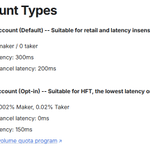
更新了 2 种账户模式 @Lighter_xyz ,一种是免费的,但速度没有优势的;一种是付费的,但速度具有优势的。
按照我的交易习惯来说,很少下市价单,通常是根据自己的预期提前挂出买卖单,并且交易不会很频繁,这对延迟几乎没有要求。
对交易延迟有毫秒级需求的是量化交易员,他们进一步获得了速度优势——本身这也是他们最依赖的优势,费用部分可以返还生态 LLP、风险基金、代币持有者等
设计上来看是一种各取所需,合理的资源分配


其实 USDe 在价格选择的问题,已经给出了最优解。
这一次 Binance 包裹 SOL 脱锚带来了连环清算,原因是包裹资产应该读取 Sol 本币价格,而不是 包裹资产交易对价格。Binance 本身是不需要对自己持有资产出具证明的。
既然 USDe 可以出具资产证明,减少定价环节对于Defi 乐高来说是更加稳固的。

While the widespread destruction of value was painful for everyone involved, there is only so much we can control.
In my view, our job is to:
i) Ensure the collateral is never impaired
ii) Service redemptions with zero downtime or delay
iii) Guide platforms on suggested oracle and risk management parameters
We did all of the above.
Unfortunately we cannot control how each platform implements and manages their own oracle and risk management designs. I hope these events serve as a catalyst to align and take these decisions seriously.
2
115
其实对于任何 perpdex 来说, 交易员 和 LLP 都是流动性提供方,互为对手盘,也是接对方下车的菩萨,少了谁都不行。
相比前两者,代币持有者是一个第三方,回忆下你为什么要买 $BNB ,冲 Meme,打新,基于交易所衍生出的用例长期看好带来生态繁荣的上涨。
代币持有者在这里的优先级会低于流动性提供者,也就是交易员和 LLP。
当然,按照这样的逻辑, 100% 用来回购不可能是长期的运行方式。

i do think what happened yesterday will have profound implications on the future of the economic relationship among token holders, traders, and vault depositors
at hyperliquid tge, traders and token holders were basically the same group of people. in fact, not just the same - their ownership was even scaled based on volume and usage. that was almost perfect alignment. over time, this inevitably diverged - now you’ve got people who don’t trade at all but own $HYPE, and others who trade in huge size but own zero $HYPE
fundamentally, that’s why some traders were left with a sour taste when they saw $HYPE holders celebrating the largest buyback day and the biggest HLP vault win yesterday
had this happened before tge, alignment would’ve been easier - you’d just drop certain traders some points. post-tge, it’s much tougher, especially when the protocol doesn’t have a cash reserve (or an insurance fund)
personally, i think this likely triggers a rethink of the incentive model and possibly marks the end of the ~100% buyback era. the pendulum has likely swung too far to one side - risking the equilibrium
lighter’s approach here feels more balanced and likely more trader-friendly. LLP took the hit, and traders were protected by it
longer term though, for lighter, this does raise two questions:
- if LLP becomes a quasi-insurance fund, should there be a cap on network OI relative to LLP?
- how does it incentivize LLP to compensate for the higher risk so it stays competitive?
I think this is likely where revenue and incentive structure come in. instead of using 100% of revenue for buybacks (ie incentivizing ONLY token holders), it could perhaps be split among:
- an insurance fund to backstop system-level risks
- some incentives for the vault to compensate for higher risk while keeping a more trader-friendly risk mechanism
- cover development costs
- and finally, excess capital going back to token holders
no one knows where the future of perp dexes and the incentive model will be, but thanks to all the builders - we’ve come a long way vs a few years ago. the exciting part is, being a derivative product, it can scale to almost any asset in the world - the upside is huge for our industry if defi gets it right. i’m hopeful we get there one day. let’s all keep building!
2
169
tlb retweeted

Lighter 的 L2BEAT 报告出来了,刚好在这里和大家聊聊 L2BEAT 的评级标准和对 Lighter 的评级情况。
L2BEAT 主要在两个方面评价一个 Layer2 的:风险分析 与 Rollup 所处的阶段
—————————————————————
1⃣ 风险分析,也就是 L2BEAT 这个大披萨盘,在 5 个方面评价 绿、黄、红(好、中、差)
1)Sequencer failure (排序器发生故障)
如果 L2 排序器发生故障怎么办?
Lighter 评价为绿,用户可以通过以太坊发起交易,如果排序器宕机超过 18 天,直接使用以太坊撤出资金。
这里 Lighter 的代码还有个很有意思的设置,如果排序器忽略任何一笔用户的存款、提款、开单、平单等操作,就让排序器进入 “沙漠模式”,直接宕机,防止黑客操作。
Lighter 评价为绿✅
2)State validation(状态验证)
状态验证 Lighter 依靠的是 Succinct 的 ZK Proof,所以这点不会出错,关于 Succinct 的 zkVM,请阅读
xitter.gq/EvanCrypto17/status/18…
Lighter 评价为绿✅
3)Data availability(数据可用)
Lighter 使用的是以太坊官方的 blobs 数据结构做 DA 层,所有数据均在以太坊链上可被验证。
Lighter 评价为绿✅
4)Proposer failure(交易拒绝)
如果用户在 Lighter 提交的交易被拒绝,Lighter 会直接宕机,然后用户可以通过提交零知识资金证明在以太坊上来无需信任地退出。
Lighter 评价为绿✅
5)Exit window (合约升级退出时间窗口)
如果智能合约被正常升级或恶意升级,留给用户的资金退出窗口期有多久?
大于 7 天是黄,大于 30 天是绿
这里 Lighter 没有升级退出窗口期,因此被判定为红。这个在目前的阶段很正常,因为成熟的 L2 —— Base、Arbitrum 都没有达到绿色。
Lighter 评价为红❌
—————————————————————
2⃣ Rollup 所处的阶段, 是 V 神提出、L2BEAT 践行的一个 Layer2 评级标准,依次为:
Stage 0:项目还处于较强依赖中心化控制的阶段(如中心化排序器)。即使有一些机制在场,也未必能完全防止排序器滥用权力或干预。
Stage 1:“中间阶段”——证明、挑战、退出机制都有,但仍保留一定“人工干预 ”的能力,Exit Window 要大于 7 天。
例如 Arbitrum 使用了安全委员会且有足够多外部人员,且 Arbitrum 的 Exit window 为 10 天,所以它被评为 Stage 1,Optimism stack 的 Exit window 是 0 天,所以是 Stage 0
Stage 2:“终极目标”——在这个阶段,中心化降到最低,系统主要依靠自动化 / 智能合约 / 无许可验证来保障安全与正确性,完全的去中心化 Layer2。
市面上很少有 Layer2 达到 Stage2
回过头看 Lighter,Lighter 使用的是完全中心化的排序器,Lighter 目前的安全委员使用的仅仅是 3/5 多签,人数不够多都是自己人,并且 Exit window 是 0,所以 Lighter 毫无疑问被判定为 Stage 0。
❓ 被判为 Stage 0 就代表不行吗?
不是,虽然 Base、Op 都被 L2BEAT 判定为 Stage 0,但他们承载了很大的 Layer2 活动量。
—————————————————————
除此之外,Lighter 在评级的过程中还被发现:
a、Lighter 的部分合约未经审计
b、关键的电路代码未开源
c、排序器对于外部预言机的价格是完全信任的状态,但这些预言机还未被认证
d、MEV 问题(中心化排序器都有的问题)
b 问题团队承诺会在 1 - 2 周内开源解决,c 问题团队也会计划解决(大概率采用成熟的预言机)
————————————————————
总结和看法
Lighter 在 L2BEAT 的评级非常一般,因为 Lighter 作为 PerpDEX 的 Appchain,要与专门的 Layer2 列在一起评级。
团队优化代码可能会提升到全绿或者 Stage 1,但要做到 Stage 2太难了,要处理高频交易的速度,与去中心化节点互相通信显然是违背的。
除此之外,代码还有很多要开源和审计的地方,团队需要做好披露。
作为一个 AppChain,Lighter 已经做的很好了,团队还未 TGE 的情况下,TVL 已经快超过很多知名 Layer2 了。
不会像其他 Layer2,Lighter 的 Token 作为 PerpDEX 平台币肯定是被赋予某种权力的,也不能用 Layer2 的其他产品对 lighter 进行估值,这会是一个严重的错误。


3⃣Succinct 的项目结构
Succinct 自称为区块链世界的“证明者”,项目的证明网路为 Succinct Prover Network,任何人都可已参与证明。
1、开发人员使用通用编程语言(即 Rust、C++ 等)编写软件,并将其作为程序部署到证明者网络。
2、开发提交交易请求生成证明。
3、证明者竞争生成证明,最高效的证明者会因他们的工作而获得奖励。
再详细一点就是:
1、开发者存入以太坊主网上的协议以支付证明费,费用以 $USDC 支付。
2、开发者给定程序的证明和协议的输入以及证明费用。
3、被质押的证明者在证明竞赛机制中出价,以获得生成证明的权利。在证明者参与该机制后,协议选择证明者在截止日期前生成证明。如果证明未在截止日期前交付,他们的质押额将被削减。
4、报价给链下参与者,让链下参与计算。
5、证明者生成证明后,证明者提交证明以供协议验证。一旦证明得到验证,证明者就会赚取费用。
6、证明者积累了余额,他们最终可以在 $USDC 年从网络中提取。

tlb retweeted

Posting the Lighter Salt Sheet for future reference
h/t @StayRoamer

