






𝗢𝗠𝗜𝗗 retweeted
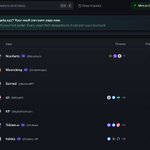
Now that the zETH auction is open to everyone, I wanted to be part of this phase too, even if only with a small bid.
I got my Race Pass 353 through the miner side of the launch, and now I'm curious to see how things look once the wider market joins in.
What I find interesting about @zerufinance's Activity Markets is that community participation can give people a role before a token reaches the public market.
But once the auction opens, there's a different question:
will that early involvement translate into genuine interest in owning the token?
At the time of my screenshot, only 7% of the supply had been sold. It's too early to draw conclusions, but that's one number I'll be watching as the auction progresses.
I'm keeping my own bid small for now. I want to see how this market develops beyond the initial Miner phase.
🤝 Paid partnership


𝗢𝗠𝗜𝗗 retweeted

The easiest idea to explain is usually the one that lasts longest
@onlystreetsfun is one live photo of a real spot plus a good name
Shot on the spot and launched on Solana before you leave the area
Nothing to decode and no thread to read just a photo you can open
People get a street corner faster than any token chart or roadmap
Maybe the best onboarding is a place most of us have already been

𝗢𝗠𝗜𝗗 retweeted

SMALL UPDATES CAN MAKE A BIG DIFFERENCE
Not every important product update needs a completely new feature.
Sometimes it's the small improvements that make you trust an app enough to keep using it.
@bagel_win's V1.6.0 update brought a few practical changes:
→ Contact Support is now accessible without leaving the app.
→ Multi-factor authentication is enabled for withdrawals.
→ Several known bugs have been fixed.
That second point is particularly important.
When an app handles trading activity and withdrawals, account security shouldn't be an afterthought.
And being able to reach support inside the app makes it easier to report problems when they happen.
Product quality is also built through these less flashy improvements.
Explore Bagel: bagel.win/
Don't forget to use my referral code "JZQFOHTPCH" to get 10% discount.
🤝 Paid partnership

Now that the zETH auction is open to everyone, I wanted to be part of this phase too, even if only with a small bid.
I got my Race Pass 353 through the miner side of the launch, and now I'm curious to see how things look once the wider market joins in.
What I find interesting about @zerufinance's Activity Markets is that community participation can give people a role before a token reaches the public market.
But once the auction opens, there's a different question:
will that early involvement translate into genuine interest in owning the token?
At the time of my screenshot, only 7% of the supply had been sold. It's too early to draw conclusions, but that's one number I'll be watching as the auction progresses.
I'm keeping my own bid small for now. I want to see how this market develops beyond the initial Miner phase.
🤝 Paid partnership

𝗢𝗠𝗜𝗗 retweeted
zETH is the first activity market that actually reached the auction stage.
@zerufinance built the supply from Ethereum activity instead of a fixed allocation.
Miners, the wallets that already ranked through verified participation, get the opening 24 hours on Uniswap CCA.
The remaining 96 hours are open to everyone.
The clearing price updates every block and only moves up or stays flat, which means an early bid can clear lower if demand is soft.
No team tokens, no developer bag
whatever does not sell gets burned.
That sequence is the real difference.
most launches set the supply first and then look for buyers.
Here the activity that happened before the auction already reduced the supply and reserved the first window.
The CCA format then lets the market discover the price without a fixed listing.
The only thing left is whether the demand that shows up in those 120 hours is enough to clear meaningful size before the burn takes the rest.
🤝 Paid partnership

𝗢𝗠𝗜𝗗 retweeted

Someone cracked TikTok's viral Slideshow algorithm using Claude Fable 5.2
This will distribute your project cheaper than the tiktok ads
🤝 Paid partnership


zETH is the first activity market that actually reached the auction stage.
@zerufinance built the supply from Ethereum activity instead of a fixed allocation.
Miners, the wallets that already ranked through verified participation, get the opening 24 hours on Uniswap CCA.
The remaining 96 hours are open to everyone.
The clearing price updates every block and only moves up or stays flat, which means an early bid can clear lower if demand is soft.
No team tokens, no developer bag
whatever does not sell gets burned.
That sequence is the real difference.
most launches set the supply first and then look for buyers.
Here the activity that happened before the auction already reduced the supply and reserved the first window.
The CCA format then lets the market discover the price without a fixed listing.
The only thing left is whether the demand that shows up in those 120 hours is enough to clear meaningful size before the burn takes the rest.
🤝 Paid partnership
𝗢𝗠𝗜𝗗 retweeted
I first thought the 24 hour miner window was just a head start. Turns out, it affects more than access.
@zerufinance allows everyone to bid once the public phase opens, but there's a catch: only Miners who actually bid during the first 24 hours qualify for miner rewards.
Those rewards are split based on two things: each miner's zaps and how much usdc they bid during that window.
There's another detail worth noticing: the auction price only moves up, and everyone bidding in the same block pays the same price.
So having miner status alone isn't enough. You also need to decide whether to bid during that first window if miner rewards matter to you.
That's the part I'd pay attention to before taking part.
🤝 Paid partnership


𝗢𝗠𝗜𝗗 retweeted

Everyone talks about how many phones @Acurast has onboarded.
I’m more curious about how much compute people are actually buying.
Every successful deployment burns $ACU. More paying developers could mean more token consumption.
That’s probably a more useful metric than device count alone.
acurast.com

𝗢𝗠𝗜𝗗 retweeted

Most launches start with a token and look for a community after.
@zerufinance is running the order the other way! an Activity Market begins with an existing onchain community.
verified participation earns Miner rights.
the activity of that community contributes to token burns. an open auction is where the market discovers the price.
the people who already contribute get a role in creating the market, not only a chance to buy into it later..
zETH is the first of these, built around Ethereum activity.
the difference is the starting point.
a conventional launch defines the supply and the access list first
here the community is the input that shapes who can participate early and how supply moves.
the auction is still the place the price is found
the seats are the part that come from the activity that was already there.
🤝 Paid partnership

𝗢𝗠𝗜𝗗 retweeted

Whenever a crypto project moves chains, people immediately look at gas fees or TPS. They usually miss the actual business play.
Watching @GenLayer shift its chain onto @arbitrum Nitro made something click for me.
You cannot pitch AI-adjudicated contracts to traditional institutions if your settlement layer feels like an experimental sandbox.
Landing on the exact same Nitro stack powering 30+ networks, including Robinhood's chain from July, instantly puts GenLayer in a room institutions already recognize.
Even smarter, they did not burn bridges to get there. While public settlement scales on Nitro, Matter Labs is still handling private, permissioned Prividium setups so banking consortiums can settle internal contracts behind closed doors.
Honestly, which side of that equation brings real volume to AI contracts first: open liquidity on Nitro or private bank workflows on Prividium?


𝗢𝗠𝗜𝗗 retweeted

@KoloHub just launched the Creator Syndicate, giving creators more ways to earn while growing their communities.
You can earn up to $50 per referred user, share a prize pool of up to $100K, and get 10% of the earnings from creators you invite.
Your referrals also get up to 5% cashback for three months.
Rewards start November 23.
Building a Web3 audience? Worth checking out.
Apply here: ambassadors.kolo.xyz
Join kolohub: get.kolo.xyz/p701730
#KoloHub #CreatorSyndicate


I first thought the 24 hour miner window was just a head start. Turns out, it affects more than access.
@zerufinance allows everyone to bid once the public phase opens, but there's a catch: only Miners who actually bid during the first 24 hours qualify for miner rewards.
Those rewards are split based on two things: each miner's zaps and how much usdc they bid during that window.
There's another detail worth noticing: the auction price only moves up, and everyone bidding in the same block pays the same price.
So having miner status alone isn't enough. You also need to decide whether to bid during that first window if miner rewards matter to you.
That's the part I'd pay attention to before taking part.
🤝 Paid partnership
𝗢𝗠𝗜𝗗 retweeted

What an amazing NEWS! The Bugz collections are minting on Tuesday and Wednesday, which means the other new collections also will be coming out soon!
We already have our mint date and we will announce it this week alongside a wallet checker for the wl spots.🚀
The wait is OVER! It’s time to spread the word and build excitement! 🦾🤖

Soonererer is almost herererererere!
🐛 BUGZ & DeBUGZ MINT WEEK IS HERE! 🐛
TWO COLLECTIONS. TWO DAYS. FREE AF.
The wait is almost over! DeBugz and Genesis Bugz are launching on UnVault, followed by the debut of the Anvil AMM powered by Clutch Labs!
👾 DeBugz | TUESDAY, NOVEMBER 17
⏰ 11 AM PST
🟢 Phase 1: 25 minutes
🟡 Phase 2: 25 minutes
🔴 Phase 3: 25 minutes
💰 Mint Price: FREE AF!
⚠️ All phases have limited allocations! If you're eligible, show up right on time!
🐞 Genesis Bugz | WEDNESDAY, NOVEMBER 18
⏰ 11 AM PST
🟢 Phase 1: 25 minutes
🟡 Phase 2: 45 minutes
💰 Mint Price: FREE AF!
🏆 Genesis Bugz holders get exclusive Minters Bonuses from participating collections launching on the UnVault Marketplace!
⚒️ THE ANVIL AWAKENS!
WEDNESDAY, NOVEMBER 18 | NOON PST
The DeBugz/Bugz Combined Anvil AMM launches via @ClutchMarkets!
🔍 SAME ELIGIBILITY. BOTH MINTS.
Your eligibility is the same for DeBugz and Bugz, but allocations and mint windows differ. Eligibility does not guarantee a mint.
CHECK YOUR WALLET NOW:
🌐 UnVault.com/Bugz
Set your alarms. Check your wallets. Tell your friends.
TUESDAYERERERER. WEDNESDAYERERERER.
🐛 Get Bit. Get Debugged. Get Bugged. 🐛
PS: Oh, and did we mention the UnVault Public Beta launches TOMORROW? 👀

𝗢𝗠𝗜𝗗 retweeted
Price oracles tell you what an asset is worth. Trust oracles try to make sense of what a wallet has actually done.
What caught my attention in @zerufinance's approach is the work that happens before scoring.
ZeruAI pulls activity from multiple evm ecosystems, decodes raw transactions, and normalizes behavior so activity across different chains and protocols can be compared. It then looks for patterns around contribution quality, risk, and reliability.
That middle step matters. A swap, a lending action, and a governance vote are all onchain events, but they tell you different things. If context gets lost during normalization, the final score could flatten actions that shouldn't be treated as equivalent.
I wouldn't focus only on whether a trust oracle produces a score. I'd want to know whether it preserves enough context to explain what that score actually represents.
A useful trust signal should make behavior easier to understand, not just easier to rank.
🤝 Paid partnership
𝗢𝗠𝗜𝗗 retweeted

99 launches, 4,671 demos and $1.1M in 11 weeks. Unfair knows how to get things done.
now they are sharing the playbook for free. thats a team worth watching💪.

In 11 weeks, we:
1. Ran 99 launches
2. Helped clients get 4,671 demos
3. Generated $1,1m
Today, we’re open-sourcing our entire business: unfair.so/strategy
Launch checklists, prompts, and even our employees: 50% of our team are Grok @bot agents (thank you, @elonmusk!)
𝗢𝗠𝗜𝗗 retweeted

Evening, folks.
People love to brag about a bot’s nanosecond trades, but the real question is: what’s powering those trades?
Enter @Hypesium and its home base, Elysium – Kinetiq’s Hyperliquid‑focused network on Arbitrum Orbit, settling to HyperEVM. It runs 100 ms blocks, uses HYPE as the gas token and its sequencer lives in Conduit.
What caught my eye is the money flow:
• 50 % of sequencer fees go straight to KNTQ buybacks.
• Another 25 % fuels builders who need blockspace.
Three takeaways:
1️⃣ Incentives are baked in – revenue feeds the ecosystem, tying activity to KNTQ.
2️⃣ Simplicity – HYPE swaps 1:1 between HyperEVM and Elysium, no extra wrapper needed.
3️⃣ Timing – Elysium launched on Nov 9, the same day Hypesium kicked off its creator campaign, so the bot grows with the chain.
Still, the proof is in the pudding:
– Will KNTQ buybacks sustain demand?
– Can 100 ms blocks hold up under load?
– Does Hypesium actually run faster because of Elysium?
Speed matters, but the chain sets the stage. Real usage will decide if the design lives up to the hype.
What do you value more in a trading bot: raw execution speed or the economics of the chain it runs on?

𝗢𝗠𝗜𝗗 retweeted

@IPXExchange's homepage has a section with six promises, from "Tokenize Your IP" to "One Platform, Every Surface". I went through them one by one and matched each to the tool card that's supposed to back it up. Promise vs proof
#FANSZN
