

Brego con números de profesión, hablo de cine pa' diversión, sin olvidar que soy maratonista amateur por pasión. 21K x 6 (RP 2:23:57) 42K * 1 (RP 6:06:11)
República Dominicana
Joined July 2019
- Tweets19.6K
- Following421
- Followers204
- Likes127







Pinned Tweet
youtube.com/@kellytecuenta-x…
Aquí vamos otra vez


Kelly retweeted

THE DAY OF THE JACKAL (2024) opens with a very tense assassination attempt, letting Eddie Redmayne’s meticulous, almost wordless performance do the work. The precision, disguises and violence make its first episode a genuinely gripping TV thriller indeed.

La gente se ha centrado que la jugada con Los Guardianas de la Galaxia le salio redonda, pero padre amado

Que si diga ahora que James Gunn tenía en planes una Justice League es de necios. Él se enfoco en personajes secundarios como a él les gusta, pero lamentablemente al público no les interesa esos personajes. Hoy por hoy, tiene más fracasos que éxitos.
13


Kelly retweeted

Qué dice mami que le mande 15 de aceite, 10 de mantequilla y que se lo apunte para el 15

Kelly retweeted

Se llama "no salirse del personaje"

Kelly retweeted

¿Por qué la generación Z de varios países usa en las protestas la bandera de los piratas de sombreros de paja de One Piece?
No es el primer símbolo de la cultura pop que se usa así. Os lo cuento.
¡Comparte si te gusta One Piece!
LINK: youtu.be/GJ_97Fygpdg

Kelly retweeted
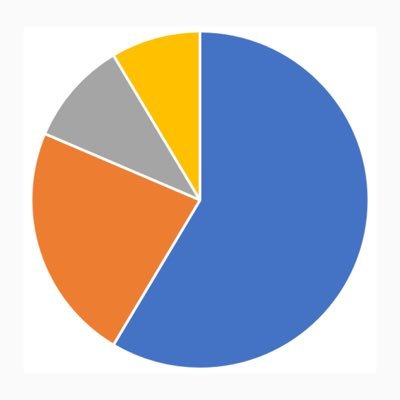
Which of the following has four eight and one nine?
36%88889
29%4819
7%888819
28%489
135,887 votes • Final results Kelly retweeted

Trillions of Degrees, “Rebellious” Quarks, and the Universe’s First Liquid
In the first moments after the Big Bang, space knew neither atoms nor protons, nor any of the matter we are familiar with. Instead, it was filled with a scorching mixture of quarks and gluons so hot that the temperature was measured in trillions of degrees. Physicists call this state quark-gluon plasma. And despite the cosmic heat, it behaved not like a gas, but more like a liquid: extremely fluid, almost perfect.
It is impossible to look directly into that ancient “liquid.” That is why scientists recreate tiny droplets of it in accelerators: they accelerate heavy nuclei almost to the speed of light and collide them. For an infinitesimally short moment, a microscopic droplet of primordial matter the size of an atomic nucleus is born. To understand what is happening inside, physicists use heavy quarks as probes. As these particles fly through the superheated medium, they constantly receive kicks from the surrounding quarks and gluons — and by how their speed and direction change, one can judge the properties of the plasma itself.
A similar principle was described by Albert Einstein back in 1905, when he explained the chaotic motion of pollen in water: molecules continuously “bombard” the particle from different sides. This idea of Brownian motion has been applied to quark-gluon plasma for nearly twenty years, but the older models did not fully account for the strong nuclear interaction and therefore poorly explained some observations.
The new work has filled that gap. Physicists calculated the motion of a heavy quark through a medium of quarks and gluons, taking the strong interaction into account. First they took a relatively simple model, and then they examined how often the quark receives kicks of different strengths.
The result was unexpected. Weak deviations indeed fitted the familiar picture. But strong kicks occurred noticeably more often than previous calculations had predicted. Moreover, the impacts were asymmetric: a sharp deceleration of the quark was more probable than an equally strong acceleration.
It is precisely these rare but powerful “kicks” that can reveal more about the plasma than millions of weak collisions. Their frequency and character depend on how strongly the particles inside the medium influence one another. If scientists learn to isolate such events in real accelerator data, a new, more precise way will appear to measure the properties of the matter that existed right after the birth of the Universe.
A check on plasma of a different composition produced the same asymmetry. Similar patterns had also appeared in earlier theoretical works on media with very strong particle interactions. It seems that frequent powerful kicks are a general property of hot quark-gluon plasma, almost independent of the details of its internal structure.
The authors suggest that in the primordial Universe particles interacted with one another more strongly than follows from the simplified Brownian description. This picture agrees well with the fact that quark-gluon plasma is one of the most fluid liquids known to science: particles within it constantly “pull” and “push” one another.
So far this is a theoretical prediction. The next step is to compare the calculations with real collisions of heavy nuclei at accelerators. If the characteristic deviations in the motion of quarks are indeed discovered, physicists will gain yet another tool to reconstruct the properties of matter that existed long before the first atoms.
🤖 Made with AI


Kelly retweeted

🌙 Mega Clefable Raid Day is coming!
📅 November 28
🕑 2:00–5:00 PM local time
✨ Increased Shiny chance
🎟️ Up to 6 free Raid Passes
#PokemonGO


Kelly retweeted
This is not Saturn! 🪐
All four giant planets in our solar system have rings (though only Saturn’s are large and bright enough to be seen from Earth, even with a basic telescope).
❕In this case, we are looking at Uranus.
This image was captured in 2002 by the Very Large Telescope (VLT) using the ISAAC instrument, in the infrared range.
