






2pmflow retweeted

So basically, today PHP got two critical bugs that let anyone run code on your server without even logging in, which is bad, and then the details leaked before the patch was even out, which is worse, and it works on WordPress and MediaWiki and Magento and Joomla and Laravel, and Censys says like 1.5 million servers are running a version with no fix, so the NSA was like "take your system offline," and the FBI was like "take your system offline," and CISA and the UK and CERT-EU were all like "take your system offline," and then the Prime Minister of Japan, the actual Prime Minister, posted at 5:55 in the morning telling 48.8 million people to take their system offline, so everyone took their system offline, like the Dutch cybersecurity agency took its own website offline, and the Dutch parliament went offline, and the Port of Rotterdam went offline, and Finland and France and Denmark started pulling government sites, and Wikipedia went down, and Archive.org went down, and Asana and GOG and Something Awful went down, and the University of Vienna's webmail went down for some reason, and that's just PHP. Because GitLab also dropped a CVSS 10.0, which is the highest score they give out, for a bug that's been there since 2014, so that's every self-hosted GitLab for twelve years, and then LiteLLM 1.107.0 got hijacked and shipped a credential stealer and a remote access trojan in every single wheel and the Docker images, including latest, and you didn't even have to import it, just installing it was enough, and it's the second time this year, and then Railway paused every deployment on the entire platform because someone got into the environment variables, so now everyone has to rotate every secret they've ever stored there, and TiDB Cloud said someone was walking around inside with stolen credentials for basically a month and an extortion group says they took 10.6 terabytes, and Zeabur got breached for the second time in two months and is just shutting down, like the whole company, and Node.js patched remote code execution and a TLS bypass, and CISA says Plex is being actively exploited, and someone took over 300 Tor exit relays to steal SSH passwords, and SafePay ransomware has hit over 600 critical infrastructure orgs, and India's biggest bank filed a data loss incident, and Japan has been in an official state of emergency in cyberspace since October 9, which honestly explains the 5:55 AM post. Oh, and eMudhra, a certificate authority that's issued over 60 million certificates, whose entire job is proving websites are who they say they are, was supposed to be using private keys that are random numbers over a hundred digits long, and one of them was 4. Just 4. And the others were like 66 and 237. Anyway, it's Wednesday.
w for humanity

interpretability might be the most important scientific problem in the world right now, as I don't think we can solve alignment if we don't know what we're building. I think I have good news about it. I co-authored early work in mechanistic interpretability at OpenAI and came away pessimistic, because neural networks appeared to fold into arbitrary tangled knots. years later, I started openai's first large-scale automated interpretability project, finding about 2% of neurons legible with the primitive tools we had
with modern agentic tools and a much closer look, the picture looks totally different. the vast majority in models up to trillions of parameters are legible, and their circuits beautiful. many famous examples of tangled neurons turned out to be misunderstood. The roadblocks I expected mostly aren't there. I now think ambitious interpretability will be solved by the time we need it most, and possibly quite soon, as automated scientists keep improving. it may be a bitter lesson for interpretability: the simple thing, at absurd scale, works
already-clean.goodfire.com/

this post has 3.1M views which means that statistically this quote tweet will save many lives. that’s pretty crazy to think about the power of distribution someone with lots of followers can just click some buttons on their phone before sleeping and save lives

imagining ai making a tear thru health issues like anti aging breakthroughs at the same speed it’s doing for math, like one random day openai casually drops a paper saying it’s solved aging and cancer and balding

nice benefit of working with ai is that you can open a thread from weeks back and immediately jump back in without reramping up the context

sweet idea this is like mapping prediction markets to existing public companies

Introducing @Supertake, a new platform that transforms your unique takes on the world into real, shareable investment portfolios using frontier AI and trading agents.
Supertake makes it easy for anyone to invest in their ideas, even if they know nothing about investing.
1/
2pmflow retweeted

My opinion doesn’t mean a lot here, but that’s mostly why I don’t think AGI Is an appropriate metric to track because AGI level is intelligence is also infinitely AGI at the same time as it replicates. Maybe that’s me just misunderstanding the problem but AGI is also simultaneously ASI in my mind
2pmflow retweeted
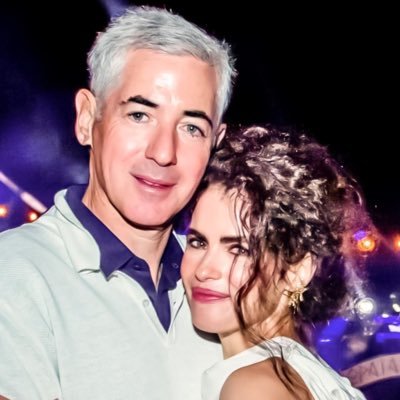
At midnight on February 6th, earlier this year, the doorbell to our apartment rang. The doorbell was followed by a pounding on the door. I answered the door and a security person in our building handed me his phone. It was my oldest daughter Eloise. She had found my 26-year-old daughter unconscious on the floor of her apartment and had called 911. The EMT team was already there, but they did not know what was wrong with Lucy or to which hospital they would take her.
I threw on some clothes and jumped in an Uber heading east toward Brooklyn. (Lucy lived alone in Williamsburg.) On the way, I learned that they were taking her to Elmhurst, a City trauma hospital in Queens. I arrived about five minutes after the ambulance to join Eloise, Lucy’s mom, and a friend, and waited to learn what was wrong.
After about 15 minutes, I asked a nurse where she was. I looked over his shoulder to his computer. Next to her name, it said “non-responsive.” I walked into the emergency room and wandered around looking for her until I found her unconscious on a gurney surrounded by several doctors and nurses.
By about 2:30am with the results from a CAT scan, Lucy’s doctors had determined that she had a massive brain hemorrhage and would need an emergency hemicraniectomy to release the pressure on her brain and remove the blood from the hemorrhage. I called our wonderful friend and family doctor Eddie Fisher and explained what was going on. He woke up Josh Bederson, Chairman of Neurosurgery at Mount Sinai, to find out more about Zach Hickman, the neurosurgeon on call that night. Dr. Bederson said Hickman was an excellent surgeon, which was comforting as we had no choice.
The surgery to save Lucy’s life began around 3:15am and finished around 5:30am. It was successful.
The following day, I joined Lucy in an ambulance while she was being transferred to Mount Sinai on Madison Avenue. Later that day, we determined from Lucy’s Oura ring that her hemorrhage had occurred around 9am, which meant that more than 19 hours had passed from the time of the hemorrhage to the completion of the surgery to release the pressure on her brain (I only wish @ouraring had an alert for this kind of a medical event. Imagine it could call a family member if the wearer doesn’t cancel the alert).
I later learned that the standard of care is not to do surgery to save a patient with a large brain bleed if more than five hours have passed since the hemorrhage. Even when the surgery is done, I was told that the likely outcome for the patient is a few months in a nursing home and death from pneumonia.
When I met Lucy’s doctors, I did my best to inspire them: “Let’s see what can be accomplished if we give her the best care possible and we invest unlimited resources to restore her to life.” And I promised that whatever we learned we would make available to everyone.
Dr. Chris Kellner, her neurosurgeon, and Dr. David Putrino, Director of Rehabilitation Innovation for the Mount Sinai Health System have led Lucy’s care team since that day. Words cannot describe the remarkable and compassionate care that she has received beginning with the EMT team and then from nurses, doctors, therapists, and the army of people who have worked to save her and return her to life. To this day, we have a daily Zoom where we discuss her progress and make adjustments to her care. While her care and oversight have been incredible, the learnings for the Mount Sinai team have also been elucidating and will assist in the care of many others.
Lucy began in a bad place. She was in a coma for several weeks and then awoke not being able to breathe on her own, unable to walk, see or speak.
Over the last six months, she has recovered her cognition – she understands everything including her circumstance – is able to walk a hundred or more steps at a time with assistance, is making progress with sounds, vowels and consonants and the beginnings of speech, but she remains unable to see.
Each day, she makes a little progress, and daily progress compounds. Every day I tell her that she just needs to make a little progress and it won’t be long before she is back.
We remain optimistic that Lucy will return to normal function. It will likely take years, but I believe it is only a matter of time, hard work, and technological progress, along with some, and perhaps a lot, of divine intervention.
Many people have been praying for Lucy and we are incredibly grateful for the prayers and remarkable support she has received. Lucy’s friends have been with her every day since the beginning, and their presence and friendship have saved her life and helped to rebuild and maintain her spirit. And on a very positive note, Lucy’s challenge has brought together our entire modern family who have all been incredibly devoted to her care and recovery.
Lucy's vision and other faculties may require some form of brain computer interface, work that is underway at Neuralink, Precision Neuroscience, Science, Synchron, Nudge, and other companies in the space.
If you are going to have a devastating brain injury, now is the best time in history for that to happen. We are living in a world when you can be confident that the blind will soon see again. We are going to do everything we can to help make that happen, including by assisting existing companies in the space.
With respect to our promise to make Lucy’s care available to others, we have made good progress. In May, a real estate colleague made me aware of a 93% vacant, brand new, 400,000 square foot Class A+ purpose-built biotech facility on West End Avenue between 65th and 66th Streets that missed the market and was available for sale. The Pershing Square Foundation acquired the building 60 days later.
We also put under contract an adjoining 130,000 square foot building at 320 West 66th Street that is currently being used by Saturday Night Live for studio space. The building has 35-foot ceilings with massive column-free spaces that can be converted into superb rehabilitation facilities. We will close on the SNL building in December.
We are also acquiring an adjoining vacant lot with additional air rights. With just the existing zoning rights, we can add a 150,000 square feet for a total of 680,000 square feet, a lab footprint larger than Rockefeller University, and that’s without including the potential for an upzoning that would allow for substantially more buildable area on the site’s 3.4 acres with spectacular views of the Hudson.
Our goal is to build the world’s greatest brain research, rehabilitation, recovery, human optimization, and longevity institute. We have named it The Ackman Oxman Institute or the AOI for lack of a better name, but also to reinforce the point that Neri and I and our family are all-in on the mission.
The AOI will be patient-centric. It will not be an academic research institute that produces lots of papers, a Nobel Prize winner or two, but little if any results for patients. We will be laser-focused on cures, treatments, devices, rehabilitation and exercise equipment, and targeted and basic research with a goal of massively accelerating the time from idea to innovation to production to helping a patient.
While the AOI will be a non-profit, it will have highly commercial instincts. The AOI will have its own venture funding and will work to develop innovations to create companies that we will seed, assist, and spinout to ensure technologies, treatments, techniques, and drugs get to patients as promptly as possible.
On one 3.4 acre campus in what is still the greatest city in the world, we will do neurosurgery, neuroscience, rehabilitation, nutrition, BCI and device development, human trials, hyperbaric oxygen treatments, and life extension programs, and we will mandate and incentivize collaboration among the teams with no silos, politics, bureaucracy, or any other constraint that is inconsistent with the mission.
Mount Sinai will be an important partner and deservedly so, but it won’t be our only hospital or medical school partner as we don’t believe any institution has a monopoly on the best ideas or the best talent. We don’t believe in exclusive relationships because that is not in the best interest of patients.
Five years ago, we considered launching a brain institute inspired by Neri’s mom who sadly died from Alzheimer’s. We couldn’t make the math work as the real estate was too expensive and we believed it would be too difficult to recruit the best talent from universities to our effort.
Since then, the real estate became available at a 70% discount, universities became a much less attractive place to work due to politics outweighing meritocracy, protests that disrupt learning, the curse of antisemitism, and a decline in funding. Fortunately, during the same time, I made sufficient personal economic progress to make the AOI possible.
The advance of AI in the last few years will also enable us to greatly accelerate our mission. AI still has a lot to learn about human intelligence and the brain, and the AOI should be at the forefront of the interplay between the brain and AI.
Today, I am making a public filing disclosing a gift from Neri and me of ~$400 million or 10,000,000 shares of Pershing Square Inc. (PS) to the AOI. It is very early days for Pershing Square so these shares are intended to anchor the long-term work of the AOI as the shares compound over time while generating what we expect will be a growing stream of quarterly dividends to fund the Institute.
We will also be announcing an additional gift of similar and potentially greater size which won’t be in the form of Pershing Square stock to provide the AOI with the short- and intermediate-term runway necessary to enable it to achieve its goal of becoming a self-sustaining institute, which reinvests all of its revenues, royalties, and the economic rewards of company formation to advance the fields of brain health and human longevity.
Neri and I have chosen to anchor the funding of the AOI to maintain vision alignment and limit the need for the organization to focus on fundraising. We expect the AOI to be the best-resourced brain, rehab, recovery, and longevity institute in the world.
We are grateful to have been able to form a board which includes Dean Kamen (our generation’s Thomas Edison), George Yancopoulus (CEO of Regeneron), James Rothman (Nobel Laureate), Bernardo Sabatini (neuroscientist), Chris Kellner (neurosurgeon), Olivia Flatto (CEO Pershing Square Foundation), Neri Oxman, and myself.
We have recently identified a CEO who we expect to announce by October along with other key hires, and are beginning searches for a Chief Scientific Officer, a Chief AI/Technology Officer, a Chief Operating Officer, a Chief Financial Officer, and other key leadership roles.
If you find what we are building compelling and want to be part of the leadership team that creates and builds the AOI from a standing start, please send an email to: [email protected] with a short note as to why you believe you can help. Please include your best three ideas for the AOI along with a summary of your background and your most important accomplishments.
We promise strict confidentiality to those expressing interest in working with us.
We have learned from Lucy that the brain can recover from even catastrophic injury. There is so much more work to be done as the mind is a terrible thing to waste.
For details from my Pershing Square SEC filing see:
sec.gov/Archives/edgar/data/…
think the reason AI hasn't transformed education yet is downstream of adults not knowing what's valuable to teach in school anymore. also before, asian tiger parents would nudge kids towards "safer" careers like accountant/lawyer/doctor etc but theres no equivalent now


2pmflow retweeted

I'm finally going to tell the story of Shao and Azuki as a manga! If you're coming to Anime Expo, swing by the Azuki booth and check out the first chapter! ⛩️
variety.com/2026/global/news… via @variety

great post well written

Now is a good time to explain certain things about the mechanics of the IPO process that most people don't know. I will explain various dynamics around IPOs that you've probably wondered about (or just felt were odd but ignored).
To the financially sophisticated: this post elides certain details and attempts to be simple enough for a lay audience. There's no novel reveal at the end so if you already know how IPOs work, you can skip this post.
When a company wants to IPO (sell shares, then have the shares float for public trading - two separate things - hence this explainer), they don't actually just sell them to the public.
Rather, they hire bankers to round up a bunch of institutional buyers or wealth investors. We'll call these "big buyers." The company does presentations to these buyers, and then the buyers indicate their willingness to buy - like how much, and at what price - and the bankers mediate this whole process and arrange the transaction.
The reason this happens is because when most companies come to the market, no one really knows what price it should start trading at, and it's largely an unknown entity (to the public investors), so you need experienced bankers who understand business and equity markets to figure it out and get it approximately correct. This is the actual function of the bankers who "take companies public" and they are called underwriters.
The way it works is this:
The bankers go to the big buyers (often investors who already have a lot of business with the bank) and ask them to participate in this process - the one I described above. Buying the shares is risky, so the big buyers need an incentive. This is where the "first day pop" comes from.
Because the bankers have the most information of any party at this stage, they are the most likely to be able to guess at the likely "real" market trading price of the stock. So they price the stock a little bit under so that when the actual offering to the public happens on opening day, the stock "pops" by about 10% - 20%. This allows the big buyers to make an instant profit flipping the stock, compensating them for taking the risk of buying an "unknown" stock with no trading history.
Let me summarize:
- The company sells its shares in a negotiated sale to big buyers.
- The company receives cash for those shares.
- Now the company is done.
- The next day, the big buyers sell their shares on the open market at whatever price public buyers are willing to pay.
There are, typically, rules around flipping the shares but obviously not for everyone, not for all the shares, and some big buyers just break the rule (and may not be invited to future IPOs). But obviously the shares that the public actually buys comes from somewhere, and it's these big buyers who bought them from the company in the banker-negotiated sale. They do not come directly from the company.
At no point does any member of the "retail" investor public actually give money to the company itself in return for any shares. It all goes through the banker-mediated sale process (called a "road show") where big buyers get a discount for taking the risk, and make their profits on the first-day flip to the buying public.
(The bankers also make a huge fee for doing this)
That seems kind of like "rich people enriching other rich people" but it's only partially that.
Only a small percentage of IPOs do really well. Many of them stink, or fail on the first day with no pop. So if you're a big buyer who participates in a lot of IPOs, you are taking on a real risk. If all goes well, there is a modest 10-20% pop on the first day, and the IPO is deemed a success from the standpoint of the financial industry, and in particular, the bankers who arranged it.
Here are two major ways it can go wrong:
If the bankers misjudge where the public price will end up and price it too low, the pop will be HUGE. The common reaction to this is "Wow, what a great IPO!" because most people just get excited when Money-Number-Go-Up. But if the pop settles to something roughly close to its peak - the first-day close is taken as a proxy for what the market considers a fair valuation of the company - it means the company left money on the table: it sold to the big buyers at far too low of a price. All the big buyers and opening-bell first-day retail buyers captured a huge part of that value. Remember that the purpose of an IPO is to raise money for the company's operations and if they just sold a bunch of stock for less than the market was willing to pay, well, that's bad for the company.
Another way it can go "wrong" is if it's "priced to perfection" where the negotiated sale is arranged at exactly what the public ends up being willing to pay, and there is no pop. Even "worse," if it's priced above that, and the bankers completely misjudge the price in the wrong direction, the stock will fall on the first day and close below the IPO price.
But "wrong" is a matter of perspective: this is bad for the big buyers (who didn't make money on flipping the IPO), bad for the first-day retail buyers who now own a plunging stock, and bad for the bankers, who lose credibility. But it is the best financial outcome for the company itself. The company was able to sell its shares at the maximum price the market would bear, and it walks away with the cash.
When an IPO like this happens, the financial headline that dominates is "it's a failed IPO." But in terms of raising money for the company, it's the best-case outcome! This is an instance where the incentives of all the parties involved are not the same.
When the bankers price the IPO for a modest pop, that's the default compromise between these interests: the company makes a little bit less than it would get from the public, the big buyers take a risk and get a profitable flip sometimes, and the bankers lend their market expertise and get paid their fees. When it skews in either direction, one or more of those parties takes a hit - but the others benefit.
The reason that the "priced to perfection" scenario is often excoriated in the press is because the financial press is largely controlled by the financial industry. It's not a conspiracy, it's just that financial news will mostly ask their network (i.e. finance folks) to give their opinion, and because the finance folks (bankers or big buyers) didn't come out ahead, they think of it as a failure. But it's a Great Success for the company itself!
Outlier IPOs:
In my life, I've had a front-row seat to two outlier IPOs (Google and Facebook), and two "standard default" IPOs (PayPal and Reddit). I'll talk a bit about the interesting effects in the outliers, and how they compare to the defaults, and then a bit about what could happen with SpaceX.
One of the ways the default IPO process can vary is when a company is already very well-known to the public. Most IPO-ing companies are unknown to the public, and that's a big reason why the bankers have to be involved: they form a bridge of trust to the big buyers and bring value in their specialized expertise about market sentiment.
But a company that's already very well-known doesn't get as much value from that. Especially if there's already demand for the company's shares, the company can often find enough buyers for its offering. The contract terms (services, fees) for underwriting an IPO are always negotiable, and so certain companies can negotiate lower fees and do things differently.
Google did this in 2004.
Now, one funny thing that's typically true in a default IPO is that the stock will open between $15 and $25. The reason for this is that most people are not financially sophisticated and if a stock opens at $100, they will think it's too expensive.
The real value of the stock is what percentage of the company it represents + the company's financial performance. So the numbers $15 and $25 are chosen because most people will think that's a reasonable price to buy - they compare it to buying something at the store. No joke.
Now, because companies and their existing stock can have a large range of values, what they do prior to the offering is simply do a stock split (or reverse stock split) so that the effective per-share price falls into that range. It's entirely just optics because most people don't understand math and finance.
In 2004, Google IPO'd at $85/share.
If you are thinking "omg, that's a lot!" then you are one of the people I just described. It doesn't matter that it was $85/share.
Google, because it was well-known and there was a lot of demand for its stock, did not have the underwriting bankers negotiate their sales to the big buyers! Because they had a lot of internal expertise (and preference for) fancy auction mechanics as a price discovery mechanism, they set up a "Dutch auction" for their shares.
Briefly, the Dutch auction is an auction format that is considered better at reaching the real market value of whatever's being sold (compared to a regular auction, which seeks to maximize the buying price).
They ran this Dutch auction and asked everyone who wanted to invest to submit their bids and amounts, and then assigned a price and (modulo some regulatory details) opened at $85/share.
This was the first time in tech for an "unusual" IPO. It was met with positive regard because Google didn't have to pay the bankers as much money, probably got a fairer price for its shares, and the buying public got in at a reasonable price, cutting out a lot of middlemen (e.g. big buyers, though they sold to the big buyers too). And Google was known for innovation and being quirky, so this fit their brand.
Today, by the way, the split-adjusted price for that offering is about $2/share.
Facebook also had an unusual IPO process.
Facebook engaged the underwriters from a position of absurd negotiating superiority. They were already globally known, and was probably the company most well-known at IPO (in terms of name recognition) in history.
Typical banker fees for underwriting can be ~4%. Facebook reportedly negotiated an underwriting fee of 1%.
Why? Because there was massive demand for its shares, and everyone already knew what Facebook was about. So who cares about the bankers?
Not only that, but Facebook priced itself to perfection.
It opened at $38/share, and closed at $38.23/share, implying that Facebook had exactly hit the market price and gotten the maximum amount of money, with nearly no spread between what Facebook sold for and what the public ended up paying for it.
Further, over the next few months, its stock trended downwards. This caused no end of hand-wringing from people who bought on first-offering, but it implies even more strongly that Facebook got top dollar for selling its shares.
(Anyone who held on for longer 16 months after that saw huge gains - today the price is at ~$590)
The financial press absolutely excoriated the Facebook IPO, calling it a huge failure. This drove the mainstream conversation about it, which also depicted it as a failure, highlighting stories of investors like an old lady who'd put her life savings into the IPO (.... which you are never supposed to do). The bad press went on for months.
At the same time, Facebook execs and informed insiders quietly understood that it had been a perfectly-executed IPO, in terms of raising money for the company.
And, if people like the old lady held on to her stock for a couple years, she still made mad bank.
Those were the outliers. Now the regular ones:
One of the features of an IPO is that typically most shareholders are subject to what is called a "lockup."
The default lockup is often for 6 months, but the terms can be negotiated. During the lockup, shareholders cannot sell their shares.
To understand this, first realize that "shareholders in the company" are different from the company itself.
In an IPO, the company (the corporate entity) issues stock and sells it to investors, taking in cash to fund the company's operations.
This is different from shareholders of the company - existing investors, employees, and executives - selling stock. These parties personally own stock (i.e. ownership) in the company and if they sell it the cash goes to them, not the company.
The lockup typically applies to some or all of these parties, and the reason is because when the company floats shares in its offering, if on the next day (or month) many large shareholders were to also sell their shares - some of which could be a block of comparable size to the IPO offering itself - it would tank the market. This would reflect very poorly on the company because it would mean that all the investors who bought in the IPO (big buyers, but also people who believed in the company and bought on the first day/week) would see steep declines while "insiders" made off with profits.
But the exact configuration of lockups varies, because it's all negotiable.
The common default is that most private company shares are locked up for 180 days.
Sometimes, the shares floated (sold to the big buyers) for the IPO aren't newly issued shares by the company. Sometimes the major shareholders negotiate to sell some percentage of their holdings - say 10% - and those shares are the ones sold to the big buyers and then later into the regular market. The rest of the shares held by the shareholders may remain subject to the lockup. The negotiation ends up balancing the desire of shareholders (prior investors, executives, employees) for liquidity vs the signaling effect it has on the market - no one wants an IPO to look like insiders dumping on the market.
When Reddit went public, the underwriting situation was pretty vanilla (road show, sell to big buyers, modest pop on first day).
The shares offered for sale at the Reddit IPO weren't all issued by the company, a significant component were employee shares. Many employees had been at the company for a long time, so a program was set up whereby the employees could elect to sell some percentage of their vested holdings, and these were some of the shares offered to the big buyers. All of the large existing shareholders - the venture capitalists and mutual funds that had already bought into Reddit at far below the IPO price - didn't sell a single share in the IPO.
(Subsequent market performance seems to have borne out the financial wisdom of that decision)
One thing to understand here then is the divergent effects on the company vs existing shareholders. If the company is "priced to perfection" and subsequently the stock price falls, and existing shareholders did not participate in the IPO sale itself, they are in the same boat as retail investors: the stock value is dropping. Further, if they're subject to a lockup, they have no way to exit the stock for a long time.
====
Now that we have all that background, we can talk about the SpaceX IPO:
SpaceX is an outlier, if for no other reason than the fact that size of the offering is the largest in history. When outliers happen, rules often get broken. Not because of corruption (though sometimes it's that), but because an outlier will often create conditions that are outside the anticipated range of what the existing rules were set up to handle.
The first thing is that SpaceX is one of those "already really well-known" companies and one with a lot of pent-up demand for its stock. In the last few years, SpaceX funding rounds have been massively oversubscribed.
This means that SpaceX is in a position to not only negotiate the sorts of terms that Facebook got with its underwriters (very low fees), but it has negotiating power on key terms like pricing, sizing, and lockup periods.
Remember that in terms of "cash raised" in the IPO, the amount the company raises is simply the amount they sell to the big buyers for, NOT how much the stock trades up (or down) once the markets open.
Elon's stated intention is that the IPO is necessary to raise the huge amount of funds needed to complete Starship and fund a mission to Mars.
People can quibble about whether that's his main motivation or if he's just grifter unloading on the retail market, but it's a very telling point that his actual compensation package involves actual Mars-based metrics like establishing a colony with a million people on it. If he's a grifter, and he basically controls his board, he there'd be no need for a comp package like that.
So if the goal of the IPO is not to cash out for insiders, but actually "raise a huge amount of money for the company to carry out its insanely ambitious goals," there would be a strong incentive to "price to perfection," i.e. push the bankers to price the stock at what they think the market really will bear, and reduce the profit the big buyers would make on the first-day pop.
And if any hiccup occurs, the stock could tumble, much like what happened with the Facebook IPO - but SpaceX itself would have the cash it needs.
Based on what I've explained much earlier, you can now also see that if the stock being floated in the IPO is newly-issued by the company and none of the existing shareholders are allowed to sell into the IPO, and the IPO is "priced to perfection," it's less likely that it's a dump on retail investors, because the stock will tumble before any of the major shareholders can sell. The company as an entity makes cash, but its shareholders share the fate of the market (actually slightly worse because of the lockup's effects on their liquidity).
On the other hand, having learned from that, SpaceX might not want a year of bad press, with the entire financial press discussing how bad an investment SpaceX is. Elon and SpaceX already have to fight a culture war and lots of people demonize them. So there's a chance the pricing has been set up to be something like the default - a modest pop on the first day. The question is basically whether the company wants to optimize for cash or public perception - compelling arguments for both could be made.
Having said all that, people are probably underestimating the degree of retail investor interest. The allure and romance of space flight, the exploration of space - all of those are long-held dreams that are older than Google or Facebook or even the internet itself. Mankind has dreamt of walking among the stars for decades.
Although the smart money makes decisions on the basis of P/E ratios and the like, a regular Joe with a Robinhood account who has dreamed of space and remembers the magnificence of seeing twin rocket boosters landing side-by-side will probably want to grab a few shares if he can. A LOT of people probably feel this way, and not many of them will be able to get IPO allocation.
Thus, it's possible that no matter where the offering price is set, there will be an absolutely insane, possibly record-setting pop on the first day. SpaceX is not just a selling Starlink, or compute or whatever you think - SpaceX is selling dreams. And it has been steadily making them real.
Incidentally, if this happens, after the euphoria wears off, the stock will probably tumble, providing lots of fodder for negative news coverage.
SpaceX's lockup policy is also unusual. Instead of either allowing some shareholders to sell immediately, or locking everyone up for 180 days, there is a staged and gradual unlock over the span of the 180 days, with a fraction of one's holdings allowed to be sold. One of the stages even requires that the stock price be over some threshold, presumably to hold the stock price in a certain range of values. It's unclear how this staged unlocking will affect price dynamics; it feels like an engineer's solution to trying to manage market volatility. (My suspicion is that the magnitude of public sentiment - both positive and negative - will drive more of the volatility than any pricing or lockup schedule)
Well, now you know everything I know about IPOs.
If I were to guess at outcomes, my probability distribution is:
70% likely to see a huge first-day pop (sustained for at least a week), and 30% likely that it's priced to perfection and closes below its IPO price.
This situation is such an outlier and all of the conditions necessary for any of those things to happen are in play, and it's not clear which forces will dominate.
Either way, good luck!
🚀
> The team's next step is a new turnstile and a fresh shielded pool in the coming upgrade, which will confirm the shielded pool was not inflated
zec catalyst coming soon that’s likely positive news

There's a lot of confusion about the recently patched Zcash bug. Here's how to actually understand it.
If the bug had been exploited before the patch (very unlikely it was), it would have looked like the shielded pool getting drained. Whoever minted the counterfeit shielded ZEC would want to sell fast, before anyone else found the same bug. And remember, the market for ZEC is almost entirely transparent ZEC, not shielded. You can't dump freshly minted shielded ZEC on Binance or Coinbase without unshielding it first.
The losers in that scenario are shielded holders who sit still. The transparent portion of Zcash is fully visible, so it's trivial to enforce that transparent ZEC never exceeds max supply. If you try to unshield more than the cap, you'll get stopped at the door.
So if you hold transparent ZEC (anyone trading, on an exchange, or doing price discovery on ZEC) there's no marginal effect on you. The loss falls entirely on shielded holders.
The team's next step is a new turnstile and a fresh shielded pool in the coming upgrade, which will confirm the shielded pool was not inflated. Think of it as taking headcount at the end of the field trip--that will make sure no extra kids snuck onto the bus.
But while AI found this bug, AI will also deliver the fix for the whole category: formal verification. I'm very bullish on this as the path to harden all software across the industry. Formally verified cryptography can't have implementation bugs by construction.
Right now AI is surfacing vulnerabilities across all our software--browsers, OSes, and blockchains are no exception. We're in the awkward adolescence where every wart is getting magnified and put on full display. But formally verified software is the only path forward for mission-critical software, and Zcash has put it front and center on their roadmap to deliver.
Privacy is too important not to.
(Dragonfly holds $ZEC and continues to. I'm personally an investor in ZODL.)
this is sick and i wish i could do this on the iphone. makes me wonder whether increasingly capable ai agents will push more people toward android because the customization gap feels more meaningful now
