

Author- 5 books (Babur: The Quest for Hindustan, Babur: The Chessboard King,The Proclaimed Messiah of the Palestinian Cause) || Urban-Designer & Architect II
India
Joined January 2017
- Tweets168K
- Following839
- Followers159K
- Likes115K





Pinned Tweet
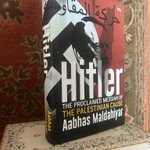
I am deeply humbled by the gracious gesture of the honourable Prime Minister of Israel, @netanyahu, in response to my book “Hitler: The Proclaimed Messiah of the Palestinian Cause.”
He writes: “It is throughly researched and compellingly presented, and it is suffused with your passion to do justice to Israel and the truth.”
Receiving a letter of appreciation directly from the Prime Minister, acknowledging receipt of the book, is an honour I will always cherish whole my life.
I extend my sincere gratitude to Ambassador @ReuvenAzar for ensuring that the copy reached the Prime Minister. His consistent support has meant a great deal.
I remain firmly committed to bringing forth the truth surrounding the cause of Israel; truths rooted in the historical realities of land and geopolitics around the Second World War, which today lie buried like crumpled paper beneath layers of selective amnesia. I genuinely believe that greater awareness of these facts will naturally create more allies for the cause of truth.
Israel and Bharat share an ancient civilisational bond, and as a Bhartiya, I hold this connection in the highest regard.
And above all, the most moving moment for me in the entire letter was the mention of “Bharat.”
@IsraeliPM @IsraelinIndia @BluOneInk @praveenBlu
Sharing a few buying links of book for people.
Amazon (hardcover) amzn.in/d/8EHw5d2
Kindle amzn.in/d/bU8noU3
@PadhegaIndia_ bit.ly/45426Xu


Aabhas Maldahiyar 🇮🇳 retweeted
My @IndiaToday article, “Pakistan: A 300-year-old project that Jinnah completed with Partition,” is more relevant than ever after Sharjeel Imam’s explosive interview with @TheQuint .
Imam declares that the Constitution is a “roadblock to dignified existence” for Muslims, calls secularism a “trap” and argues for organised political mobilisation built around Muslim identity.
JINNAH DEMANDED A SEPARATE NATION. SHARJEEL QUESTIONS THE CONSTITUTIONAL ORDER OF THE ONE THAT REMAINS. HAVE WE LEARNT NOTHING FROM PARTITION?
And where, in this vision, does the idea of India as one nation stand? What happens when religious identity is elevated above common citizenship? And why does the liberal establishment so often scrutinise the rhetoric of Hindu nationalism while treating Islamist political ideology with kid gloves?
The history of Partition cannot be reduced to British divide and rule. Colonialism exploited communal divisions, but the intellectual roots of Muslim political separatism stretch much further back. From the anxieties over Islamic political power to Sir Syed Ahmad Khan, Iqbal and Jinnah, the history is complicated, uncomfortable and impossible to understand through slogans alone.
Jihad, separatism and the struggle over who gets to define India are not subjects we can afford to bury beneath the language of political correctness.
Read my article. Partition was not an overnight accident. It was the culmination of a long ideological journey. We must have the courage to examine that journey honestly, especially when contemporary political rhetoric raises questions about the very foundations of our Republic.
indiatoday.in/opinion/story/…

Aabhas Maldahiyar 🇮🇳 retweeted

"Papa va payer, c'est ça l'égalité."
They marched for better schools and came home with Gucci. Was this for education?
When Paris Cries. My music video (sound on).
Aabhas Maldahiyar 🇮🇳 retweeted

“
Pakistan: A 300-year-old project that Jinnah completed with Partition

My @IndiaToday article, “Pakistan: A 300-year-old project that Jinnah completed with Partition,” is more relevant than ever after Sharjeel Imam’s explosive interview with @TheQuint .
Imam declares that the Constitution is a “roadblock to dignified existence” for Muslims, calls secularism a “trap” and argues for organised political mobilisation built around Muslim identity.
JINNAH DEMANDED A SEPARATE NATION. SHARJEEL QUESTIONS THE CONSTITUTIONAL ORDER OF THE ONE THAT REMAINS. HAVE WE LEARNT NOTHING FROM PARTITION?
And where, in this vision, does the idea of India as one nation stand? What happens when religious identity is elevated above common citizenship? And why does the liberal establishment so often scrutinise the rhetoric of Hindu nationalism while treating Islamist political ideology with kid gloves?
The history of Partition cannot be reduced to British divide and rule. Colonialism exploited communal divisions, but the intellectual roots of Muslim political separatism stretch much further back. From the anxieties over Islamic political power to Sir Syed Ahmad Khan, Iqbal and Jinnah, the history is complicated, uncomfortable and impossible to understand through slogans alone.
Jihad, separatism and the struggle over who gets to define India are not subjects we can afford to bury beneath the language of political correctness.
Read my article. Partition was not an overnight accident. It was the culmination of a long ideological journey. We must have the courage to examine that journey honestly, especially when contemporary political rhetoric raises questions about the very foundations of our Republic.
indiatoday.in/opinion/story/…
Aabhas Maldahiyar 🇮🇳 retweeted

partition was an ideological commitment of muslims of india. Strangely there leadership ditched large chunk of muslims in india instead of truly making pakistan homeland for muslims. Now muslims in india will be crushed as they continue down the perilous path.
My @IndiaToday article, “Pakistan: A 300-year-old project that Jinnah completed with Partition,” is more relevant than ever after Sharjeel Imam’s explosive interview with @TheQuint .
Imam declares that the Constitution is a “roadblock to dignified existence” for Muslims, calls secularism a “trap” and argues for organised political mobilisation built around Muslim identity.
JINNAH DEMANDED A SEPARATE NATION. SHARJEEL QUESTIONS THE CONSTITUTIONAL ORDER OF THE ONE THAT REMAINS. HAVE WE LEARNT NOTHING FROM PARTITION?
And where, in this vision, does the idea of India as one nation stand? What happens when religious identity is elevated above common citizenship? And why does the liberal establishment so often scrutinise the rhetoric of Hindu nationalism while treating Islamist political ideology with kid gloves?
The history of Partition cannot be reduced to British divide and rule. Colonialism exploited communal divisions, but the intellectual roots of Muslim political separatism stretch much further back. From the anxieties over Islamic political power to Sir Syed Ahmad Khan, Iqbal and Jinnah, the history is complicated, uncomfortable and impossible to understand through slogans alone.
Jihad, separatism and the struggle over who gets to define India are not subjects we can afford to bury beneath the language of political correctness.
Read my article. Partition was not an overnight accident. It was the culmination of a long ideological journey. We must have the courage to examine that journey honestly, especially when contemporary political rhetoric raises questions about the very foundations of our Republic.
indiatoday.in/opinion/story/…
Aabhas Maldahiyar 🇮🇳 retweeted

Despite being based on folklore, writing a full fledged novel on #Yakshe wasn’t an easy task. It took months of meticulous research and writing to craft this book on one of the most terrifying beings that have haunted Keralites for centuries. #iamayakshe @BluOneInk @6amiji @ARanganathan72 @Aabhas24

Aabhas Maldahiyar 🇮🇳 retweeted

Yes! @_YogendraYadav has fortified @surjitbhalla arguments. This shortfall is in the Youth 19-25 age group largely. Every year 2.5 cr young people cross 18 years. This is no indication of any large scale deletion of eligible voters.
They should put out similar data for the pre SIR cohort to compare. In no election has the entire eligible population been on the electoral roll too. The new summary revision from Jan 1 will enroll new eligible voters. Enrollment is a continuous exercise. @thehawkeyex @Iyervval @Aabhas24

#JeanDreze (he’s not on X) & @_YogendraYadav have together produced an article with dodgy arguments & an accidental admission: #WestBengal at 8.4% had one of the fewest #SIR deletions, among the 9 states studied, of dead, shifted & undocumented voters. #Gujarat at 17.4% had the most.

Aabhas Maldahiyar 🇮🇳 retweeted

Another scholar who did good scholarly work on this topic is @Aabhas24. His book 'Hitler: The Proclaimed Messiah of the Palestinian Cause' delves into this topic

Ravana’s father was the Arya Brahmin Vishrava, and he was born in the north. He was very much an Arya lord.
Btw, Arya was a very generic term for anybody from own tribe according to OG text Rigveda.
PS: Using the same logic of North-Indians being Arya.

Thank you so much @sanjeevsanyal 🙏🏾
Your words matter a lot.

Aabhas Maldahiyar 🇮🇳 retweeted

This Sewak Ram’s 1826 "Dussehra Procession at Patna" painting captures just how remarkable men’s drip in Bihar once was. Flowing angarkhas, kurtas, wrapped dhotis. Look at Babu Kunwar Singh and his attendants in the Illustrated London News in 1857... Such presence, such effortless elegance.
That world of everyday dressing now feels almost lost. In my village, my uncle is the only man who still wears a kurta dhoti. He’ll probably be the last.

Aabhas Maldahiyar 🇮🇳 retweeted
What made the Rajput charge so fearsome? What gave the Marathas the audacity to challenge mighty Timurids? And why did the worship of Shakti occupy such a powerful place in their warrior traditions?
My latest piece for @IndiaToday explores a forgotten dimension of India’s martial heritage: the sacred bond between the Goddess, the sword and the battlefield.
For the Rajputs of Mewar and the Marathas of Swarajya, devotion was not the opposite of defiance. The worship of Shakti embodied the courage to resist, the resolve to fight and the refusal to surrender. From the martial traditions associated with the Khanda to Chatrapati Shivaji Maharaj’s veneration of Bhawani, the Divine Feminine occupied a place far beyond the confines of ritual.
And this spirit did not end with the warrior kings. Generations later, revolutionary nationalists would invoke the Mother as Shakti in their struggle against British rule.
Dussehra was not just a celebration of a mythological victory. It was a summons to courage.
The Rajput sword. The Maratha Bhawani Talwar. The revolutionary’s invocation of the Motherland. Different struggles, different centuries, yet a recurring civilisational conviction: when the Mother calls, the warrior must rise.
Read the full piece:
indiatoday.in/opinion/story/…


OPINION | From Chhatrapati Shivaji Maharaj's Marathas to Maharana Pratap's Rajputs, the worship of Goddess Bhawani and Shakti was deeply intertwined with martial traditions. Dussehra was celebrated as a festival of victory. It was also a time when warriors honoured their swords, invoked divine blessings and prepared to march into battle.
#OPINION- Aabhas Maldahiyar (@Aabhas24)
Read more: intdy.in/31xalj

Aabhas Maldahiyar 🇮🇳 retweeted

Dhanyaasmi to all of you for the wishes and th blessings. the previous link wasn't opening for some people, so sharing here again. Hopefully this will work.
amzn.in/d/0bDHgCWd
Shubh Vijayadashami ! May Maa bless us all. May Siya Ram guide our path!


On this auspicious day of Mahanavami, I am delighted to place my newest book at Maa's feet. 🙏
Drawing from Arthashastra, my attempt here is to explore how ancient strategies can sharpen decision making across leadership, business, governance. Get it here
amazon.in/Sama-Dama-Danda...…


Aabhas Maldahiyar 🇮🇳 retweeted

This post needed a point-by-point counter. What Mr Chandra Kumar Bose has shared is the product of a delirious deracinated. Durga Puja is first a religious festival, and then a cultural one, because at the centre of all the festivities, is the worship of Maa Durga.
1. "Religion (as it has become) is an organized way to deal with devotees, and the Bengalis are far far away from any sort of blind beliefs."
Then why do Hindus go to the pandal and fold their hands in prayer, partake of prasad and seek Maa's blessings? Why do they fast for anjali? It can be "blind belief" for Bongs like you, but it is devotion and faith for millions Hindus.
2. "To Bengalis, Durga is just a part of our family. She could be termed as the Goddess, but never seen with a God-like image."
What about Noni Gopal or Laddu Gopal? What about Lord Jagannath, Shrinathji and Banke Bihari? I have seen people care for and feed the toddler Gopal like a child in the family. So, Durga isn't alone. Hindus have always loved their Gods. "God-fearing" was not an adjective for us.
3. "While people outside Bengal may fast as much as they like, Bengalis will continue to feast on Mutton Biriyanis and all sorts of delicious non-veg food"
You haven't associated yourself with Durga Puja, it seems. Those who sit for the rituals observe all the strict norms. Most of our Durga Pujas are Sarbojonin, which needs only a small number of people to follow the rituals. Those who offer anjali fast. Those who offer Dashami Puja at home fast.
4. "Durga Puja as a festival is deeply connected to arts, crafts, music, theater, films ... everything! It's an all-round celebration. Only a very tiny percentage of people would bother to offer prayers."
At the centre of the days-long festivities is Durga Puja is the worship of Maa Durga. Over 90% of the pandal-hopping Hindus offer prayers in front of each and every idol. The zamindars added theatre and amusement to Durga Puja to attract workers from nearby estates. That's how you have the arts connected to Durga Puja.
5. "Durga puja is all-inclusive. Many Muslims in Bengal celebrate it too."
So? Many Hindus take part in Eid festivities too, but they don't offer namaz. Participating in festivities doesn't mean taking part in Durga Puja's religious aspect. In Bangladesh, millions of Muslims visit puja pandals. So? Durga Puja is a Hindu religious and cultural festival.
6. There are hundreds of government and private awards given for 'Best Puja'. Not a single parameter in judgement relates to the devotion aspect of it."
Hindus have never overtly projected devotion like followers of some other religions have. Devotion has been a matter of our daily lives, soft and subtle. Our devotion has never bothered others until the crass DJ system found the jobless youths. Our devotion CANNOT be judged.
"Our country had no religion, but we thrived on our culture. It's time we pack religions into the sacks and throw them back to the western world"
Yes, India or Bharat of yore, didn't have religion, it had Dharma. There was no need to name Dharma, or the right way of life or death. Because it was only us. When others came, Dharma needed a name. The Dharma has now been encapsulated into several Indic faiths. It is that Dharma in our DNA that has allowed both the worshiping and feasting during Durga Puja.

Just to set the records straight…
For all non-Bengalis who confuse Durga Puja (of Bengal) with Navaratri (outside Bengal), there's a simple big difference in the way it's celebrated. While Navaratri could be religious (as people claim it to be), Durga Puja is a cultural festival. There's a remarkable difference between religion and culture.
Why is Durga Puja not religious, but cultural? Here's a Bongs take!
1. For most Bengalis, they have nothing to do with devotion, and everything to do with celebration. Religion (as it has become) is an organized way to deal with devotees, and the Bengalis are far far away from any sort of blind beliefs.
2. God/Goddess is an image that's alienated from family of our own lives and seen as an authority. To Bengalis, Durga is just a part of our family. She could be termed as the Goddess, but never seen with a God-like image. There's way more love than devotion. It's a very human connection. She's the daughter of the house who's come for Autumn break to her parents house with kids and friends
3. While people outside Bengal may fast as much as they like, Bengalis will continue to feast on Mutton Biriyanis and all sorts of delicious non-veg food (even at Puja premises where organizers often arrange for meals). Had there been any religious angle, things might not have been so simple.
4. Durga Puja as a festival is deeply connected to arts, crafts, music, theater, films ... everything! It's an all-round celebration. Only a very tiny percentage of people would bother to offer prayers. For the rest of us, Durga and the spirit of Durga puja is all in our heart. Even if we offer 'Anjali' (a prayer), our eyeballs hover all over the surrounding beauties in laal-paar-sada-sarees (a beautiful dress that ladies prefer to wear).
5. Durga puja is all-inclusive. Many Muslims in Bengal celebrate it too. Even there are religious Muslims who are the Presidents and Secretaries of Puja committees. No 'religious' festival could ever break these barriers!
6. There are hundreds of government and private awards given for 'Best Puja'. Not a single parameter in judgement relates to the devotion aspect of it. The Best Puja judgement takes into consideration the artistic finesse of the idol-making, the decorations around it, the lights, the sound, the safety measures, the theme, the concept, the social relevance of the theme, etc. It never considers how devotedly people offer prayers. So, devotion doesn't even come in our way of celebrating Durga Puja.
For those who have never witnessed Durga puja in Kolkata but have a lot to comment on it, please do make a visit. Your idea of a festival will change. Our country had no religion, but we thrived on our culture. It's time we pack religions into the sacks and throw them back to the western world (from where it has come) and fall back on our all-inclusive cultural ways of celebrating life once again.
Originally penned by Niilanjanaa Daschakraaborty

Aabhas Maldahiyar 🇮🇳 retweeted

Shakt!.
OPINION | From Chhatrapati Shivaji Maharaj's Marathas to Maharana Pratap's Rajputs, the worship of Goddess Bhawani and Shakti was deeply intertwined with martial traditions. Dussehra was celebrated as a festival of victory. It was also a time when warriors honoured their swords, invoked divine blessings and prepared to march into battle.
#OPINION- Aabhas Maldahiyar (@Aabhas24)
Read more: intdy.in/31xalj
Aabhas Maldahiyar 🇮🇳 retweeted
This post needs point-by-point factcheck, and I will do exactly that. You cannot hide behind originally written by Mr Chandra Kumar Bose. What you have shared is a delirium of the deracinated. Not a productive use of time for me, but this pseudo-secular jugglery with Hindu festivals needs a counter.
Durga Puja is first a religious festival, and then a cultural one. There is prana pratishtha ceremony of the deity ahead of the puja, and the immersion in the water kunda, before the bhashan procession. It is a Shakti puja, and needs strict observance of norms. At the centre of all the festivities, is the worship of Maa Durga.
1. "Religion (as it has become) is an organized way to deal with devotees, and the Bengalis are far far away from any sort of blind beliefs."
Then why do Hindus go to the pandal and fold their hands in prayer, partake of prasad and seek Maa's blessings? Why do they fast for anjali? It can be "blind belief" for Bongs like you, but it is devotion and faith for millions Hindus.
2. "To Bengalis, Durga is just a part of our family. She could be termed as the Goddess, but never seen with a God-like image."
What about Noni Gopal or Laddu Gopal? What about Lord Jagannath, Shrinathji and Banke Bihari? I have seen people care for and feed the toddler Gopal like a child in the family. So, Durga isn't alone. Hindus have always loved their Gods. "God-fearing" was not an adjective for us.
3. "While people outside Bengal may fast as much as they like, Bengalis will continue to feast on Mutton Biriyanis and all sorts of delicious non-veg food"
You haven't associated yourself with Durga Puja, it seems. Those who sit for the rituals observe all the strict norms. Most of our Durga Pujas are Sarbojonin, which needs only a small number of people to follow the rituals. Those who offer anjali fast. Those who offer Dashami Puja at home fast.
4. "Durga Puja as a festival is deeply connected to arts, crafts, music, theater, films ... everything! It's an all-round celebration. Only a very tiny percentage of people would bother to offer prayers."
At the centre of the days-long festivities is Durga Puja is the worship of Maa Durga. Over 90% of the pandal-hopping Hindus offer prayers in front of each and every idol. The zamindars added theatre and amusement to Durga Puja to attract workers from nearby estates. That's how you have the arts connected to Durga Puja.
5. "Durga puja is all-inclusive. Many Muslims in Bengal celebrate it too."
So? Many Hindus take part in Eid festivities too, but they don't offer namaz. Participating in festivities doesn't mean taking part in Durga Puja's religious aspect. In Bangladesh, millions of Muslims visit puja pandals. So? Durga Puja is a Hindu religious and cultural festival.
6. There are hundreds of government and private awards given for 'Best Puja'. Not a single parameter in judgement relates to the devotion aspect of it."
Hindus have never overtly projected devotion like followers of some other religions have. Devotion has been a matter of our daily lives, soft and subtle. Our devotion has never bothered others until the crass DJ system found the jobless youths. Our devotion CANNOT be judged.
"Our country had no religion, but we thrived on our culture. It's time we pack religions into the sacks and throw them back to the western world"
Yes, India or Bharat of yore didn't have religion, it had Dharma. There was no need to name the way of life or living by Dharma. Because it was only us. When others came, the Dharma needed a name. However, the Dharma has now been encapsulated into several Indic faiths. It is that Dharma in our DNA that has allowed both the worshiping and feasting during Durga Puja.
Aabhas Maldahiyar 🇮🇳 retweeted

Dalits who converted to Christianity are seen as lesser Christians by Roman Catholics, Syrian Christians or any UC Hindus converted to Christianity.
Dalits enter many Hindu temples, some even officiate as priests, but if you are a Dalit Xtian there is no way you can enter into an UC Church, there are separate churches for em.
They even have separate mass and baptism. Heck they are not even burried along with regular UC Xtians, they have separate graveyards.

Aabhas Maldahiyar 🇮🇳 retweeted

“You cannot erase the religious soul of a hindu festival simply because its cultural splendour is magnificent”…great post by @Aabhas24
Chandra Kumar Bose ji, your claim that Durga Puja is “cultural, not religious” collapses at the very first word: Puja.
Puja means worship. Through prana pratishtha, the Goddess is ritually invoked in the pratima. For the Hindu devotee, she is not just clay, paint and craftsmanship. She is Maa Durga, the Divine. You cannot erase the religious soul of a Hindu festival simply because its cultural splendour is magnificent.
Bengalis may welcome Uma as the daughter returning to her parental home, but she is also Mahishasuramardini, the slayer of Mahishasura, and Shakti, the divine power. A Hindu can love the Goddess as a daughter and worship her as the Divine. Intimacy does not negate divinity. That is the richness of Hindu bhakti, not proof that devotion is irrelevant.
Here is the question your argument evades: can a Muslim who does not accept Maa Durga’s divinity in Hindu theology regard her consecrated pratima as the divine presence of the Goddess? He may admire its artistry, join the festivities and work with Puja organisers. But appreciation is not worship; participation is not theological affirmation. A Muslim’s participation cannot redefine what Durga Puja means to a Hindu devotee.
Consider the Rajput traditions of Shakta worship. Bhawani was revered as a divine power, invoked for protection and victory. Certain traditions included bali, or ritual sacrifice. The Goddess was not a cultural mascot but a sacred presence. Bengal’s Durga and the Rajput traditions of Bhawani remind us of a fundamental truth: the Goddess is not merely celebrated; she is worshipped. Religion and culture are intertwined.
Your biryani argument is no better. Hindu dietary practices vary across regions and traditions. Eating mutton does not cancel worship. Nor does a “Best Puja” competition judging pandal design, lighting and craftsmanship prove that devotion is absent. An award can measure artistic excellence; it cannot measure the faith in a worshipper’s heart.
Pluralism means respecting differences, not pretending that religious differences do not exist.
And your suggestion that religion should be packed away to recover India’s inclusive culture is the ultimate contradiction. What exactly are we celebrating when the Goddess is invoked, mantras are chanted, anjali is offered and rituals are performed? Remove their religious meaning and you have not explained Durga Puja. You have reinterpreted it to fit your argument.
Chandra Kumar Bose ji, Durga Puja is unquestionably cultural. It is also unquestionably religious. Its art, music, food, literature and communal life have flourished around a sacred centre.
Durga Puja is cultural not because it is devoid of religion, but because religion has helped shape Bengal’s culture.
You need not worship Maa Durga to appreciate the festival. But you cannot turn your indifference to worship into a definition of Hinduism.
Maa Durga is not merely an exhibit to admire. For her devotees, she is the Goddess to worship. And no amount of cultural celebration can erase that truth.
Aabhas Maldahiyar 🇮🇳 retweeted
1/5 Sharjeel Imam has given an interview detailing his Islamist manifesto. Surprisingly, no storm has been kicked up over pronouncements that are so unapologetically anti-liberal, anti-secular, anti-democracy, anti-Constitution—in a word, anti-national.
2/5 He openly calls the Constitution fascist, labels secularism a trap, and denounces democracy as a contrivance to deny Muslims their political rights.
3/5 The piece is a litany of indictments against the liberal class. Imam rejects any difference between liberals and Hindutvadis. In his essentialist worldview, all Hindus are the same, unanimous in denying Muslims political power they claim as a divine right.
4/5 Inadvertently, Sharjeel has recognised something that liberals have been fighting shy of acknowledging: that Hindutva’s idea of India is anchored in the same “overarching nationalist framework”— that Muslims are Indians above all else.
5/5 For more, read this Opinion article by Ibn Khaldun Bharati, who looks at Islam from an Indian perspective:
Sharjeel Imam’s Islamist manifesto will be forgotten. The silence of liberals will not
theprint.in/opinion/sharjeel…

Aabhas Maldahiyar 🇮🇳 retweeted
Chandra Kumar Bose ji, your claim that Durga Puja is “cultural, not religious” collapses at the very first word: Puja.
Puja means worship. Through prana pratishtha, the Goddess is ritually invoked in the pratima. For the Hindu devotee, she is not just clay, paint and craftsmanship. She is Maa Durga, the Divine. You cannot erase the religious soul of a Hindu festival simply because its cultural splendour is magnificent.
Bengalis may welcome Uma as the daughter returning to her parental home, but she is also Mahishasuramardini, the slayer of Mahishasura, and Shakti, the divine power. A Hindu can love the Goddess as a daughter and worship her as the Divine. Intimacy does not negate divinity. That is the richness of Hindu bhakti, not proof that devotion is irrelevant.
Here is the question your argument evades: can a Muslim who does not accept Maa Durga’s divinity in Hindu theology regard her consecrated pratima as the divine presence of the Goddess? He may admire its artistry, join the festivities and work with Puja organisers. But appreciation is not worship; participation is not theological affirmation. A Muslim’s participation cannot redefine what Durga Puja means to a Hindu devotee.
Consider the Rajput traditions of Shakta worship. Bhawani was revered as a divine power, invoked for protection and victory. Certain traditions included bali, or ritual sacrifice. The Goddess was not a cultural mascot but a sacred presence. Bengal’s Durga and the Rajput traditions of Bhawani remind us of a fundamental truth: the Goddess is not merely celebrated; she is worshipped. Religion and culture are intertwined.
Your biryani argument is no better. Hindu dietary practices vary across regions and traditions. Eating mutton does not cancel worship. Nor does a “Best Puja” competition judging pandal design, lighting and craftsmanship prove that devotion is absent. An award can measure artistic excellence; it cannot measure the faith in a worshipper’s heart.
Pluralism means respecting differences, not pretending that religious differences do not exist.
And your suggestion that religion should be packed away to recover India’s inclusive culture is the ultimate contradiction. What exactly are we celebrating when the Goddess is invoked, mantras are chanted, anjali is offered and rituals are performed? Remove their religious meaning and you have not explained Durga Puja. You have reinterpreted it to fit your argument.
Chandra Kumar Bose ji, Durga Puja is unquestionably cultural. It is also unquestionably religious. Its art, music, food, literature and communal life have flourished around a sacred centre.
Durga Puja is cultural not because it is devoid of religion, but because religion has helped shape Bengal’s culture.
You need not worship Maa Durga to appreciate the festival. But you cannot turn your indifference to worship into a definition of Hinduism.
Maa Durga is not merely an exhibit to admire. For her devotees, she is the Goddess to worship. And no amount of cultural celebration can erase that truth.
Just to set the records straight…
For all non-Bengalis who confuse Durga Puja (of Bengal) with Navaratri (outside Bengal), there's a simple big difference in the way it's celebrated. While Navaratri could be religious (as people claim it to be), Durga Puja is a cultural festival. There's a remarkable difference between religion and culture.
Why is Durga Puja not religious, but cultural? Here's a Bongs take!
1. For most Bengalis, they have nothing to do with devotion, and everything to do with celebration. Religion (as it has become) is an organized way to deal with devotees, and the Bengalis are far far away from any sort of blind beliefs.
2. God/Goddess is an image that's alienated from family of our own lives and seen as an authority. To Bengalis, Durga is just a part of our family. She could be termed as the Goddess, but never seen with a God-like image. There's way more love than devotion. It's a very human connection. She's the daughter of the house who's come for Autumn break to her parents house with kids and friends
3. While people outside Bengal may fast as much as they like, Bengalis will continue to feast on Mutton Biriyanis and all sorts of delicious non-veg food (even at Puja premises where organizers often arrange for meals). Had there been any religious angle, things might not have been so simple.
4. Durga Puja as a festival is deeply connected to arts, crafts, music, theater, films ... everything! It's an all-round celebration. Only a very tiny percentage of people would bother to offer prayers. For the rest of us, Durga and the spirit of Durga puja is all in our heart. Even if we offer 'Anjali' (a prayer), our eyeballs hover all over the surrounding beauties in laal-paar-sada-sarees (a beautiful dress that ladies prefer to wear).
5. Durga puja is all-inclusive. Many Muslims in Bengal celebrate it too. Even there are religious Muslims who are the Presidents and Secretaries of Puja committees. No 'religious' festival could ever break these barriers!
6. There are hundreds of government and private awards given for 'Best Puja'. Not a single parameter in judgement relates to the devotion aspect of it. The Best Puja judgement takes into consideration the artistic finesse of the idol-making, the decorations around it, the lights, the sound, the safety measures, the theme, the concept, the social relevance of the theme, etc. It never considers how devotedly people offer prayers. So, devotion doesn't even come in our way of celebrating Durga Puja.
For those who have never witnessed Durga puja in Kolkata but have a lot to comment on it, please do make a visit. Your idea of a festival will change. Our country had no religion, but we thrived on our culture. It's time we pack religions into the sacks and throw them back to the western world (from where it has come) and fall back on our all-inclusive cultural ways of celebrating life once again.
Originally penned by Niilanjanaa Daschakraaborty