

Researcher and investigator towards sustainable development goals
IIT Mandi
Joined March 2022
- Tweets124
- Following99
- Followers282
- Likes115




Dr Aditi Halder retweeted

So worth a read.

A mathematician who shared an office with Claude Shannon at Bell Labs gave one lecture in 1986 that explains why some people win Nobel Prizes and other equally smart people spend their whole lives doing forgettable work.
His name was Richard Hamming. He won the Turing Award. He invented error-correcting codes that made modern computing possible. And he spent 30 years at Bell Labs sitting in a cafeteria at lunch watching which scientists became legendary and which ones faded into nothing.
In March 1986, he walked into a Bellcore auditorium in front of 200 researchers and told them exactly what he had seen.
Here's the framework that has been quoted by every serious scientist for the last 40 years.
His opening line landed like a punch. He said most scientists he worked with at Bell Labs were just as smart as the Nobel Prize winners. Just as hardworking. Just as credentialed. And yet at the end of a 40-year career, one group had changed entire fields and the other group was forgotten by the time they retired.
He wanted to know what the difference actually was. And he said it wasn't luck. It wasn't IQ. It was a specific set of habits that almost nobody is willing to follow.
The first habit was the one that hurts the most to hear. He said most scientists deliberately avoid the most important problem in their field because the odds of failure are too high. They pick a safe adjacent problem, solve it cleanly, publish it, and move on. And because they never swing at the hard problem, they never hit it. He said if you do not work on an important problem, it is unlikely you will do important work. That is not a motivational line. That is a logical one.
The second habit was about doors. Literal doors. He noticed that the scientists at Bell Labs who kept their office doors closed got more done in the short term because they had no interruptions. But the scientists who kept their doors open got more done over a career. The open-door scientists were interrupted constantly. They also absorbed every new idea passing through the hallway. Ten years in, they were working on problems the closed-door scientists did not even know existed.
The third habit was inversion. When Bell Labs refused to give him the team of programmers he wanted, Hamming sat with the rejection for weeks. Then he flipped the question. Instead of asking for programmers to write the programs, he asked why machines could not write the programs themselves. That single inversion pushed him into the frontier of computer science. He said the pattern repeats everywhere. What looks like a defect, if you flip it correctly, becomes the exact thing that pushes you ahead of everyone else.
The fourth habit was the one that hit me the hardest. He said knowledge and productivity compound like interest. Someone who works 10 percent harder than you does not produce 10 percent more over a career. They produce twice as much. The gap doesn't add. It multiplies. And it compounds silently for years before anyone notices.
He finished the lecture with a line I have never been able to shake.
He said Pasteur's famous quote is right. Luck favors the prepared mind. But he meant it literally. You don't hope for luck. You engineer the conditions where luck can land on you. Open doors. Important problems. Inverted questions. Compounded hours. Those are not traits. Those are choices you make every single day.
The transcript has been sitting on the University of Virginia's computer science website for almost 30 years. The video is free on YouTube. Stripe Press reprinted the full lectures as a book in 2020 and Bret Victor wrote the foreword.
Hamming died in 1998. He gave his final lecture a few weeks before. He was 82.
The lecture that explains why some careers become legendary and others disappear is still free. Most people who could benefit from it will never open it.

First first-author paper always matters a lot in PhD student's life. Congratulation, Akriti.
Dual Role of Defects and Metal/Semiconductor Interfaces in self-standi... sciencedirect.com/science/ar…
Check the new work from our group. Thank you @DasTisita and Jayanta for the collaboration
Fe-Doped CuCo₂S₄ Thiospinel as Oxygen Electrocatalyst for Rechargeable All-Solid-State Zinc–Air Batteries - now published in Journal of Materials Chemistry A pubs.rsc.org/en/content/arti…
Dr Aditi Halder retweeted

Heartiest congratulations to all graduates of IIT Mandi’s 13th Convocation! Wishing you success as you begin new journeys.
📹 A glimpse of your journey.
#IITMandi #Convocation #ProudMoment
youtu.be/5fL66AL1Sj4?si=ohXx…
Dr Aditi Halder retweeted

World summit to meet on two-state solution as support grows for Palestinian state reut.rs/4gAkKtX reut.rs/4gAkKtX

Dr Aditi Halder retweeted

An expert committee comprising Prof. Krishna P. Kaliappan (@iitbombay), Prof. Siddhartha Pandey (@iitdelhi), Prof. Ashok Kumar Mishra (@iitmadras) & Prof. Rakeshwar Bandichhor (@drreddys) reviewed the School of Chemical Sciences @iit__mandi. The panel evaluated the school’s academic programs, research initiatives, and outreach activities, acknowledged its achievements, and provided insightful recommendations to shape its roadmap for the coming 5 years.
@PMOIndia @EduMinOfIndia @IndiaDST @PIB_India

Many congratulations to Yadu and Viswanath
Durable PDMS‐Interleaved WS2 Monolayer Composites for Enhanced Optical Absorbance and In‐Situ Strain Sensing - Chandran - Advanced Functional Materials - Wiley Online Library advanced.onlinelibrary.wiley…

Dr Aditi Halder retweeted

গবেষকের মৃত্যুতে প্রশ্ন
#researcher #DeathCase #IISERKolkata #dean #Resigns
anandabazar.com/west-bengal/…
Dr Aditi Halder retweeted

Albert Einstein met fellow Nobel Prize laureate Rabindranath Tagore at his home in the outskirts of Berlin #OTD in 1930. The two distinguished minds explored the concepts of science, consciousness and philosophy.
Read an excerpt of their conversation: bit.ly/2JprgmD

ALT Albert Einstein and Rabindranath Tagore standing together on steps outside a building, both looking towards the camera, capturing a historical meeting of two intellectual figures.

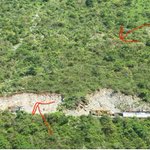
When Himachal is suffering from so much landslide, one side removing stones, upper the road connecting Kamand to Mandi city, #dcmandi

Dr Aditi Halder retweeted

The 4th #CO2India Annual Meeting has been inaugurated at @iitmadras!
High-level discussions are underway on cutting-edge strategies for Carbon Capture, Utilization & Storage (CCUS) — spanning fundamental breakthroughs to industrial translation.
@co2india @PMOIndia


Young people need to evaluate whether it is worth to go abroad to chase your dream.
This quoted post is unavailable.
1
100
Dr Aditi Halder retweeted

Had a delightful interaction with the students of IIT Mandi (Himachal Pradesh) on their 16th Foundation Day. Underlined the importance of fostering a culture of entrepreneurship and innovation that would allow India to lead in new technologies like Artificial Intelligence, machine learning, and other digital technologies.
Also, lauded the outstanding contributions of IIT Mandi in shaping India's technological and scientific advancements.
pib.gov.in/PressReleasePage.…


Dr Aditi Halder retweeted
Delighted at the safe return of NASA’s #Crew9 on earth! The crew comprising of India’s daughter Sunita Williams and other astronauts have rewritten the history of human endurance and perseverance in Space.
Sunita Williams’ incredible journey, unwavering dedication, fortitude and fighting spirit will inspire millions across the globe. Her safe return is a moment of celebration for space enthusiasts and the entire world. Her courage and achievements make us all proud.
Congratulations and a big thank you to all stakeholders for bringing them back safely on earth.
Dr Aditi Halder retweeted

Tej Pal Singh and I wrote an obituary of R Chidambaram recently in Acta crystallographica A. Chidambaram was a great champion of structural sciences, he will be sorely missed.

Mande and Singh: Rajagopala Chidambaram (1936–2025) ... #IUCr journals.iucr.org/paper?S205…
Dr Aditi Halder retweeted
“An electrifying start to CACEE-2024 at TIFR Mumbai! 🎉 Over 500 delegates, brilliant minds from across the globe, gathered to celebrate breakthroughs in chemistry. Here’s a glimpse of the vibrant crowd post-inauguration! #CACEE2024 #TIFR #ChemistryInAction”