
AI privacy and security | Doctoral candidate @CSatETH | Ask me about coffee ☕️
Zurich
Joined November 2017
- Tweets114
- Following184
- Followers221
- Likes729




Pinned Tweet
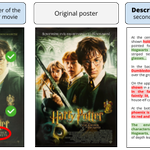
🧠🖌️💭 ChatGPT can accurately reproduce a Harry Potter movie poster. But can it describe the same poster in words from memory?
Spoiler: it cannot!
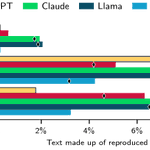
We show "modal aphasia", a systematic failure of unified multimodal models to verbalize images that they perfectly memorize. A 🧵

Michael Aerni retweeted

New paper out of @MaryPhuong10's @MATSprogram Stream, with @hrdkbhatnagar and @DoddEuodia! We made a testbed for eliciting latent knowledge in a code vulnerability scanning task. See below how we made the sandbagging model organism robust to both prompting and training! ( 1/14 )

Michael Aerni retweeted

Some thoughts on reviewing: spylab.ai/blog/reviewing/
First for @satml_conf where we trialed an early reject phase which cut submissions by ~40%.
Then more generally about how not everything deserves peer-review, and why we should reward writing things that people actually read.

Michael Aerni retweeted

🥁🥁Im superrrr psyched for this!!!
@sahar_abdelnabi and I are looking to hire a PhD student, co-advised by us to work on long horizon agentic information management, access control, privacy and security!
The student will be primarily hosted by Sahar but will be a visiting student @SCSatCMU as well!
Here’s to more interdisciplinary, cross-continental scientific research 🥁🥁

📢 Hiring announcement!!
As promised in my earlier post about more projects to come, I am very excited to share an open position, co-advised with Niloofar Mireshghallah (@niloofar_mire)!
We are looking for a Postdoc or a PhD student to work with us on privacy and contextual integrity in AI agents, to start as soon as possible!
Today's agents tend to see instructions, messages, memories, and tool outputs as one flattened stream of text. They are not very good at distinguishing information that is useful from information that is appropriate to use here, for this person now with their current preferences and relationships, and for this purpose.
The project spans single-agent and multi-agent settings. In a single turn, an agent may face ambiguous instructions, incomplete authority, conflicting goals, stale assumptions, or context that has been deliberately manipulated. Over weeks or months, the same agent may accumulate memories, observe changing teams and dependencies, and act on earlier inferences that were never explicitly authorized. In a network, agents representing different users must coordinate, but their interaction may either protect private boundaries or dissolve them. We want to make these questions concrete enough to train and evaluate systems where privacy and utility have to be studied together.
The position is fully-funded and based in Tübingen (formal primary host) with potential research visits at CMU (details to be determined and discussed with the applicant). We have generous funding and compute, so come work with us!
More details about the project and how to apply: docs.google.com/forms/d/e/1F…

Michael Aerni retweeted

I will hereby respect Multi-Agent Safety and I will NOT talk down on the future first-ballot hall of fame etc apology form


Michael Aerni retweeted
Really honored by this award from @USENIXSecurity
This was my first ML security project/paper.
Even in my wildest dreams I wouldn't have predicted how this works would shape my career and be more relevant than ever 10y later
Amazing how far we've come 😀

Congrats to @ETH_en Prof. @florian_tramer on receiving a @usenix Security Test of Time Award for “Stealing Machine Learning Models via Prediction APIs”, co-authored with @0xFanZhang, @AriJuels, Mike Reiter and @TomRistenpart. A well-deserved recognition! bit.ly/4fWaWvP

Michael Aerni retweeted
AI is advancing fast in math and cyber. Cryptanalysis sits at their intersection and underpins our digital security.
So can LLMs do cryptanalysis?
Increasingly, yes!
Introducing CryptanalysisBench where we test if AI can break 191 real schemes from past standardization efforts

Michael Aerni retweeted

Tomorrow we will present the Untrusted Content Masking defense at the Agents in the Wild workshop from 10:40h to 12h. Come by if you are interested in web agent security!


If you care about traditional privacy auditing, you likely care about canaries. OptiFluence is a great way to automatically generate strong ones!
Presenting this at ICML today, come say hi during the 2.30pm poster session, poster 3111!

⚙️ Most privacy auditing focuses on the mechanism.
🖼️ OptiFluence optimizes the canary instead!
Our scalable framework produces canaries with
🔎 near-perfect detection rates (99% [email protected]% FPR)
🤸 transferability between architectures
This enables practical regulatory audits!
On the road to ICML! 🇰🇷🇰🇷🇰🇷
Currently looking into all the novel privacy harms that result from capable LLMs.
Please reach out if you have any opinions on this; super excited to chat!

I'll also be around two posters!
On Thursday, 2.30pm in Hall A, @MYaghini and I present OptiFluence: Principled Design of Privacy Canaries --- an automatic way to generate strong canaries for traditional privacy auditing.
openreview.net/forum?id=428k…
Then on Friday, during the TAIGR workshop, @poonpura and I tell you why your distillation defense needs a proper threat model:
What Does It Mean to Break a Distillation Defense?

Distillation defenses perturb a model's outputs to degrade any model distilled from them. But they lack a shared threat model to compare defenses and evaluate robustness against realistic adversaries.
We propose one. 🧵
w/ @poonpura @AerniMichael @dpaleka @florian_tramer

Michael Aerni retweeted

Distillation defenses perturb a model's outputs to degrade any model distilled from them. But they lack a shared threat model to compare defenses and evaluate robustness against realistic adversaries.
We propose one. 🧵
w/ @poonpura @AerniMichael @dpaleka @florian_tramer
Michael Aerni retweeted

🧵 We have bad news about prompt injections. #prompt_injections_so_back
⚠️They may be fundamentally unsolvable for AI agents doing anything complex in real contexts. Though, there is some hope
The common narrative (e.g. CaMeL/SecAlign, etc) assumes you assumes you can separate data from instructions 🧱. But, commonly, in anything more complex than a toy demo, that distinction won’t hold. An email saying "the department head approved X" isn't an instruction, but could dramatically change agentic behavior whether this claim is true or not.
It's a contextual claim that the agent may not be able to verify. Probabilistic defenses now don’t catch this. And any deterministic defense that blocks all such claims also blocks the legitimate ones.
Fundamentally, an autonomous agent’s operating context might contain instructions everywhere: any interaction with a third-party or use of memory or skills are instructional by design 💬.
Instead, in our new paper with @ebagdasa, we reframe prompt injection through Contextual Integrity and show that:
🔴 Current classifiers can't detect contextual attacks
🔴 Safety training (SecAlign) makes BOTH security and utility worse
🔴 A CI-informed red-team loop hits 96.7% attack success on frontier models, that also transfer to other models
🔴 Even without any attacker, agents fail to separate information flows or respect delegation boundaries
🔴 An impossibility argument: no fixed policy prevents all context attacks without also blocking legitimate ones
📄 arxiv.org/abs/2605.17634

Michael Aerni retweeted
I was hoping to do a live demo of what @JieZhang_ETH @poonpura and @AvitalShafran have been cooking, but I didn't get a blue checkmark for my birthday so I can't call Grok from this account.
Screenshots from our lab's alt account will have to do.
like this one 👇

Michael Aerni retweeted

A new study by the SPY Lab at ETH Zurich shows how efficiently large language models can reveal the identities of anonymous online users from seemingly harmless textual traces.
Read the full interview here: inf.ethz.ch/.../the-more-you…...
#ETHZurich #DataPrivacy #CyberSecurity #CS

Michael Aerni retweeted

I'm presenting at the ICLR agents in the will workshop in 204A right now. On Large-Scale Online Deanonymization with LLMs.

If you are at ICLR: I believe AI security and privacy research is at an inflection point. Let's discuss what will actually matter in the future! Please reach out, I still have a few free slots!
Then we will present Modal Aphasia tomorrow (Thursday) during the very first poster session in Pavilion 4 (poster #4208)
@joshua_swans, @NKristina01_, and me look forward to talking to you!
xitter.gq/AerniMichael/status/19…

We will also present a reduced version of our recent deanonymization paper during the Agents in the Wild workshop on Sunday!
With @dpaleka, @SimonLermenAI, and @joshua_swans (who is maxxing his first conference!)
xitter.gq/dpaleka/status/2024892…

Can LLMs figure out who you are from your anonymous posts?
From a handful of comments, LLMs can infer where you live, what you do, and your interests; then search for you on the web.
New 📄 w/ @SimonLermenAI, @joshua_swans, @AerniMichael, Nicholas Carlini, @florian_tramer 🧵

Michael Aerni retweeted
"The AI researchers Simon Lermen and Daniel Paleka said LLMs make it cost effective to perform sophisticated privacy attacks, forcing a “fundamental reassessment of what can be considered private online”."
theguardian.com/technology/2…
