

An anarchist in mind; constitutionalist by heart. Founder/Owner of WSPORTS BRAND
Basel, Switzerland
Joined November 2024
- Tweets927
- Following74
- Followers80
- Likes680




Jealous adults behaving like children


5
Professor Uju Anya did not ask language education for a seat. She mapped how Black students actually speak themselves into a new language — then refused to whisper about the empires that shaped that story.
Award-winning author of Racialized Identities in Second Language Learning.
🤖 Made with AI

65
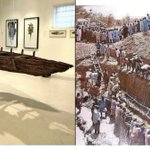
8000 years old boat found in Nigeria, Yet Nigeria celebrates independence day 66 years in 2026. What really happened @NGRPresident @NigeriaStories @HQNigerianArmy @DeleFarotimi

26
Shooting in German town: Police report several dead.
Several people were killed by gunfire in the German town of Stade. The circumstances are still completely unclear.
740


The corruption enablers are the west

2 prominent African public officials facing corruption probes in their home countries took refuge in the UK and US.
They have now been given US and UK state protection against prosecution for stealing African state resources.
Once again, whenever you wake up...
59
Every politician in Nigeria should henceforth ; Name 7 pupils in his final class primary schools ; Name 7 Students that attended same schools and classes ; Name 7 of your course mates in the university, Matriculation Nr. #ReclaimNigeria
13
This is exactly what Nigeria and Nigerians need; And I have designed it to help in elections quagmire. @inecnigeria @officialABAT @renoomokri @SaharaReporters @PeterObi @atiku

ALT Return of The African Giant


5


After Biafra/Nigeria War - None from the South East has ruled Nigeria 🇳🇬 either as a Civilian or Military.
The historical grievance is real and well-documented.
Since the end of the Nigerian Civil War in 1970, no person of Igbo extraction from the South East has held the office of President or Head of State in Nigeria—whether elected or military. Pre-war figures like Nnamdi Azikiwe (ceremonial President, 1963–1966) and Aguiyi-Ironsi (brief military head of state in 1966) do not erase the post-war exclusion.
Many Igbo view this as deliberate marginalization rooted in the war's aftermath: the "no victor, no vanquished" policy masked lingering distrust, leading to informal power rotation that has consistently sidelined the South East while favoring the North and South West.
This perception is reinforced by disparities in federal appointments, infrastructure, security deployments, and revenue allocation. However, Nigeria's politics is a patronage system driven by elite consensus, not pure merit or ethnicity alone—Igbo have thrived economically and in state-level governance, but federal power has remained closed off.
The -Global Igbo Peoples Assembly- can serve as an effective driving force precisely because it operates outside Nigeria's domestic constraints: it draws on global Igbo networks (diaspora in the US, UK, Europe, Asia), intellectual capital, remittances, and international leverage.
These groups have already shown capacity for fundraising (e.g., past pushes for N500bn toward Igbo presidency bids) and advocacy.
Short-Term: Build Leverage Inside Nigeria While Preparing the Exit.
Use the Assembly as a global coordinating hub-not a domestic political party—to avoid proscription risks while amplifying pressure.
- Economic self-reliance first-
Igbo entrepreneurship is legendary. Direct diaspora capital (via the Assembly) into South East infrastructure—industrial parks, tech hubs in Enugu/Onitsha/Aba, renewable energy, and agriculture value chains. Reduce reliance on Abuja's allocations.
Create parallel institutions (skills academies, investment funds, trade networks) that demonstrate viability as a standalone economic bloc. This builds internal buy-in and proves to skeptics that "Biafra" wouldn't collapse.
- Unified political front domestically.
The Assembly should fund and coordinate a "South East Agenda" across Ohanaeze Ndigbo, state governors, and legislators. Push for **true federalism** (resource control, state police, fiscal autonomy) as an immediate, constitutional demand. This is winnable via National Assembly alliances and 2027/2031 elections—zone the presidency explicitly and mobilize Igbo votes bloc-style while courting South South and Middle Belt partners. Treat federal inclusion as a -tactical bridge-, not the endgame: if restructuring fails, it validates the exit case.
- Narrative and data warfare.
Commission independent audits (via credible global firms) on marginalization metrics—roads, railways, security incidents, federal projects per capita. Publish annually. The Assembly's diaspora arm lobbies parliaments (US Congress, UK, EU) with evidence, framing it as unfinished post-war justice and a stability threat.
Recent Biafran lobbying efforts in Washington and The Hague show the template; scale it professionally, avoiding fragmented exile groups.
Scheming Peaceful Exit:- A Realistic, Non-Violent Roadmap
Peaceful secession is extraordinarily difficult in Africa (no successful precedent without prior war or colonial dissolution), but it is not impossible if framed as -irrevocable democratic self-determination- under international norms (UN Charter Article 1). Violence or "sit-at-home" tactics have backfired historically—focus on legality and optics.
1. Internal consensus-building (2026–2028)-; The Assembly convenes a Global Igbo Summit series (virtual + physical in Enugu or diaspora hubs). Secure buy-in from 80%+ of South East traditional rulers, governors, clergy, youth, and business leaders
24
The statement by Chief of Defence Staff (CDS) General Olufemi Oluyede- likening terrorists (primarily Boko Haram and ISWAP insurgents in Nigeria’s Northeast) to the biblical prodigal son who deserve rehabilitation via programs like Operation Safe Corridor rather than elimination—has drawn sharp criticism. He made these remarks on March 26, 2026, during an inaugural lecture for the military’s Joint Doctrine and Warfare Centre in Abuja.
While the intent appears to be strategic (encouraging voluntary defections to weaken terrorist groups from within, as some have surrendered in the past), this approach and the public framing carry several serious dangers for Nigeria’s already suffering masses—ordinary citizens enduring over 15 years of insurgency that has killed over 350,000 people (mostly civilians, with 90% children in some estimates), displaced millions, destroyed farms and schools, fueled widespread kidnapping, and compounded economic hardship, poverty, and food insecurity.
Here are the key dangers, elaborated step by step:
1. Weakened Deterrence and Potential Encouragement of More Terrorism.,
Publicly signaling that captured or surrendering terrorists will get a “second chance” (rather than facing decisive elimination) can reduce the perceived cost of joining or staying in these groups. Terrorists already exploit poverty, ideology, and coercion; knowing the military’s top leader views them as redeemable “Nigerians” who should not be pushed to “the extreme” may embolden recruitment or prolonged fighting.
In a country where banditry and insurgency have spread beyond the Northeast into the Northwest and North-Central, this perception of softness risks prolonging the violence that already devastates farming communities, markets, and schools—directly hitting the masses’ ability to feed themselves and live without fear.
2. High Risk of Recidivism and Re-offending
Operation Safe Corridor (launched in 2016) has graduated and reintegrated hundreds of ex-Boko Haram members through deradicalization, but studies and reports highlight serious flaws: inadequate community consultation, poor monitoring, insufficient vocational/psycho-social support, and opaque screening that sometimes lets higher-risk individuals slip through. Locals have reported recidivism, with some ex-fighters returning to violence, evading programs, or showing disruptive behavior in communities.
For the masses—especially in affected villages—this means the same individuals who burned homes, kidnapped children, or killed relatives could re-emerge as threats, restarting cycles of trauma, displacement, and economic ruin.
3. Erosion of Military Morale and Operational Effectiveness.
Frontline soldiers who risk (and often lose) their lives confronting terrorists may feel their sacrifices are undermined when the CDS frames enemies as “prodigal sons” needing repentance rather than battlefield defeat. This can lower combat motivation and public support for the military.
Meanwhile, ongoing attacks (e.g., recent Borno incidents killing dozens) continue unabated, leaving civilians exposed while resources shift toward rehabilitation infrastructure, deradicalization centers, and stipends.
4. Resource Diversion from Victims and Basic Needs.
Nigeria faces crushing debt, inflation, and poverty. Rehabilitation programs require significant funding for camps, training, and reintegration support. Yet victims—displaced families, widows, orphans, and farmers who lost everything—often receive far less attention or aid. This creates a glaring injustice: perpetrators get state-supported “second chances” while survivors languish in IDP camps without adequate food, shelter, or livelihoods.
The masses, already struggling with high food prices and unemployment, see tax money (or borrowed funds) potentially prioritizing terrorists over schools, hospitals, or security infrastructure that could protect them.
1
23