

Rancher Direct Certified – Verified. Decentralized. Real. Partnerships DM us. *Currently international.
Pastures, backroads, online
Joined September 2021
- Tweets32.9K
- Following4.8K
- Followers61.3K
- Likes43.9K


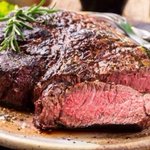


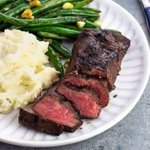

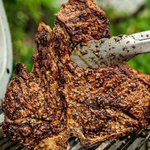

SAVE BEEF 🇺🇸 BeefMaps.com retweeted

Three hundred chickens. That is what the woods took off this place this year.
The crows put a lookout in the tree and talk to each other. Then two or three dive in and kill the chicks. Coyotes took two lambs, and we put Mama Cheep and her twins in a pen because they would not leave the pasture alone. Mel has been changing the scarecrow's clothes every day because the crows figure him out.
So the chickens go behind wire this winter, and there will be fewer of them. I would rather tell you that straight than pretend the flock is fine. January beef shares are open and the pork and lamb are in the freezer, but chicken is the one I cannot promise.
Your rancher,
Jason Hanley | 208-714-0478

SAVE BEEF 🇺🇸 BeefMaps.com retweeted
September feedlot placements came in at 1.78 million head, 88 percent of a year earlier and down 12 percent. The lowest September since USDA's Cattle on Feed series started in 1996.
Marketings were 1.524 million head, 93.4 percent of last September. Also the lowest September on record.
Cattle on feed on October 1 was 11.372 million head, 99.6 percent of last October. Under 100 percent for the first time in years.
Corbitt Wall went through the report on Monday's Feeder Flash and flagged the part the trade keeps missing. Those 11.372 million are not all beef animals on a feedlot clock.
Beef on dairy calves go on feed as soon as they can eat, then stay past a year. "It's all about the pounds and nobody talks about fitting a box anymore," he said.
So the inventory that is supposed to prove beef is plentiful is padded with a dairy cross crop that will not grade Choice.
Heifers were 37.8 percent of the on feed count, 4.30 million head. No one is holding back replacement females.
October feeder cattle still settled Friday at $348.32, up $4.70 on the week.
@corbittwall @feederflash
SAVE BEEF 🇺🇸 BeefMaps.com retweeted
Don Close does not expect the Mexican feeder flow to come back.
"I do not think we will get back to that standard, a million to 1.2 million head a year."
Before the border closed, that was the number. Crossings this year ran 43,000 to 45,000 head, and Pro Farmer put it near 41,000 through Oct. 16.
What he will not put a date on is the recovery. "How much lower that will be is yet to be seen. But we have changed the infrastructure of that market."
Columbus, New Mexico, reopens to Mexican cattle Monday. A reopened port and a shrunk feeder flow are not the same thing.
For a cow-calf operator that is the whole supply question in one line: the calves you count on coming north may not come.
SAVE BEEF 🇺🇸 BeefMaps.com retweeted

Visitors. Stop everything.
Our herd is 100% grass fed and finished, and has zero small talk. They just stare. Politely.
SAVE BEEF 🇺🇸 BeefMaps.com retweeted
Ranch Life, Day 1.
Real ranch. Real cows. No filters. Cows don't take weekends off. Follow along.
SAVE BEEF 🇺🇸 BeefMaps.com retweeted
Mark Slusher's hay barn holds under 200 bales where a normal year puts 500. That is why the cow herd at Southern Eagle Ranch in Campbell County, Virginia went from 115 head to 81 this fall.
🇺🇸 BeefMaps.com
The family has run cattle there nearly 50 years and puts 120 acres in hay. Mark has spent $15,000 buying what the ground did not grow. He puts a single quality bale at $125.
Carla Slusher checks the creeks for water running, and the 81 head move to what grass is left.
Virginia had 24.5 percent of the state in moderate drought or worse October 20. USDA forecasts the state's non-alfalfa hay crop at 2.17 million tons, against 2.42 million last year.
Governor Spanberger's September 16 order waived over-width hay permit fees and hours-of-service rules for 30 days from October 1. Axle weights stayed.
Campbell County extension agent Todd Scott cut his own herd back. "When you reduce your cow herd, it also reduces our potential income for this next year," Slusher said. The outfit normally sells over 50 calves.
USDA counted 28.5 million beef cows July 24, down 1 percent. On October 20, 43 percent of the national cattle inventory sat in drought areas.

SAVE BEEF 🇺🇸 BeefMaps.com retweeted
Southern Italy ran out of food in 96 hours, and the thing that emptied the shelves was a trucker deciding the load did not cover the diesel.
Shelves went bare across Puglia, Calabria, Sicily and Campania in four days. Produce, milk, bread, meat, water. Diesel hit 2.20 euros a liter and the freight rate stopped covering the trip. No driver hauls groceries at a loss. He parks the truck.
That is a 72-hour food system. A grocery store carries about three days of stock, so four days of idle trucks empties the store before the panic buying starts.
Diesel is short here too. Dry pumps hit Florida, California and Texas in September. Texas signed a disaster declaration on September 28 to get dyed diesel moving.
The cold chain has its own soft spot. Freezers at military commissaries in eleven states went into defrost the same night in late August. Mid-October, controllers at 500 to 700 French supermarkets ran at 122 degrees. Tons of food to the dumpster, a few fires. The same controller family sits in about two thirds of American supermarkets.
Fertilizer is the one I watch. No Gulf fertilizer cargo crossed Hormuz in September or October. That is 20 to 29% of the traded nitrogen on earth. Sulfur doubled past 1,000 a tonne, phosphate is up 25 to 30%, Mosaic idled two Louisiana plants. Whatever fertilizer exists in December is what next spring's crop gets.
Yanasa TV laid the chain out this week. Every link breaks the same way, quietly, in about four days.
A full freezer and a producer down the road beat a 72-hour shelf every time.
Your rancher,
Jason Hanley | 208-714-0478
SAVE BEEF 🇺🇸 BeefMaps.com retweeted
Italian truck drivers parked their rigs over the price of diesel, and inside of a week the produce aisles in the south of Italy were stripped bare.
Milk, eggs, meat, bread, pasta, bottled water. The loads stopped moving because 2.20 a liter turns every haul into a loss, and nothing on that shelf arrives without a truck.
Full Spectrum Survival walked through the trucker math this week. Nine of ten gas stations in Campania were reportedly dry at the peak. Roughly a million liters of buffalo milk went unprocessed in a single day because the tankers never showed, about 3 million euros gone, with mozzarella and pasta lines next to idle.
The national average for on-highway diesel was 6.28 a gallon the week of October 19. It set a record 6.53 the week of September 21. A year ago it was 3.64.
Fuel cost per thousand miles for an owner-operator went from about 562 to 942. Freight rates did not follow.
So the man with a rig and a load of produce is running the same math as the Italians. Haul it and lose money, or park it and eat the three days of food in the cab.
Every one of those parked rigs is an empty shelf somewhere down the line.
Grocery inflation cooled to 1.8 percent last month. Groceries are still up roughly a third since 2020, and about one in five American adults used a food bank or pantry in the past year. That price level never came back down.
I raise my own beef, pork, lamb and chicken and keep a full freezer, because a shelf stays full only while the driver can afford the fuel.
Your rancher,
Jason Hanley | 208-714-0478
SAVE BEEF 🇺🇸 BeefMaps.com retweeted
You cannot ask a shareholder owned food company to make worse food on purpose. The charter will not let it.
Dr. Berry laid it out to a conference room. Once a company has outside shareholders, the board owes them the money, not the customer.
The case is from cars. In 1919 Henry Ford kept cutting the Model T price and held the cash instead of paying a dividend. The Dodge brothers, minority shareholders, sued. The Michigan Supreme Court ruled for them on February 7, 1919, and ordered $19.3 million out.
"A business corporation is organized and carried on primarily for the profit of the stockholders."
That line is the food system. The sugar stays in the cereal because pulling it costs revenue, and the man who pulls it answers to the people who own the shares.
Same math at the plant. Paying a rancher above the market hands shareholder money to a supplier. It does not happen twice.
What is left is the animal and the man who owns it. Three other families, a quarter beef each, and the freezer fills.
It will not be cheaper per pound than the store. A quarter runs 100 to 130 pounds wrapped, often $7 to $14 a pound all in. That gap is what the structure costs.
@KenDBerryMD
SAVE BEEF 🇺🇸 BeefMaps.com retweeted
Cole went through the fence to visit the neighbor's Angus heifers. Three thousand pounds of Charolais, and he just wanted to keep his options open.
Took about ten minutes to walk him back. Parked the truck across the road, opened the gate, and he knew where he was going. Then we spent the rest of the day fixing fence. He is the genetics behind our beef, and he knows it.
January beef shares are open. Beef, pork, lamb, and chicken off this ground.
Your rancher,
Jason Hanley | 208-714-0478

SAVE BEEF 🇺🇸 BeefMaps.com retweeted

Now that we’ve reached the inevitable end of what monopoly power delivers, a simple reminder follows:
When Profiteering Betrays Public Trust – It’s Time to Break ‘Em Up! nobull.mikecallicrate.com/20…
SAVE BEEF 🇺🇸 BeefMaps.com retweeted
Britain lost more than nine in ten of its slaughter plants since the 1970s, from about 2,500 to 200, and the rate for the inspector on the line rose again for 2026/27.
An Official Veterinarian bills £79.60 an hour, up 20.8 percent. A Meat Hygiene Inspector bills £48.50. The plant pays both, so the inspection that makes the meat legal is a cost the slaughterhouse carries hourly.
The £4 million fund meant to keep the small plants alive closed its window in September 2024 with no successor round.
Christopher Price chairs the Abattoir Sector Group. More than 150 organisations signed his letter asking the Prime Minister to treat local slaughter as essential infrastructure. His line: "You cannot have British meat without the infrastructure to process it."
The survey reached 850 farmers. Two thirds struggled to find a plant. A third had watched one close. 43 percent could not sell meat locally if theirs shut.
In the States the federal inspector comes out of USDA appropriations, and the wait for a kill date at a small inspected plant still runs weeks to months. Britain bills the plant for the inspector's hours, so every closure lands the same fixed cost on fewer kill floors.

SAVE BEEF 🇺🇸 BeefMaps.com retweeted
Mexico's cattle federation closed its convention in Saltillo on October 20 with a warning about an American country-of-origin label.
Its president, Homero García de la Llata, called it a label that "would discriminate against Mexican calves and beef."
He said CNOG has worked to keep that label off Mexican cattle.
In the same speech he asked his own government for no duty-free beef import quotas in 2027, citing 1.7 million head left unexported and a 500,000-ton beef surplus.
So Mexico wants protection from imported beef at home while working to keep an American label off the calves it ships north.
The Senate farm bill carries mandatory country-of-origin labeling. The House bill does not.
Congress returns November 9.
Congress repealed beef COOL once before, in December 2015, after WTO rulings went against it for Canada and Mexico.
SAVE BEEF 🇺🇸 BeefMaps.com retweeted
Utah's water office has a filing for 1,712 acre-feet. What O'Leary Digital bought to get it is a ranch.
On October 15 its Utah DC Sub I filed change application a55167, moving 1,712 acre-feet a year off irrigation on Bar H Ranch in Hansel Valley onto a data center and 7.5 gigawatts.
That is 557 million gallons of a century-old farm right carried by that ground, not new water.
The ground came with it. About 11,000 acres are under purchase agreement at Bar H, a spread of 16,000. The plan opened at 40,000 acres and was cut to 20,000.
Eleven data center clusters and fifteen 500 megawatt gas plants sit behind it. Engineers project 1,215 acre-feet diverted, 229 returned, about 987 a year out of the basin, less than the hay ground consumed.
Grow the Flow's Ben Abbott says a plant that size on that water would run ten to a hundred times leaner than anything built. "There is not an example anywhere on the planet."
O'Leary Digital CEO Paul Palandjian says the loop is closed and recovers 90 percent. Nearly 200 protests were filed by October 20.
Permanent change, the filing says. The irrigation use ends, the valley keeps the hay ground, and the county gets the buildings. @YanasaTV
SAVE BEEF 🇺🇸 BeefMaps.com retweeted
In 1864 José Andrés Sepúlveda sold 48,803 acres of the California coastal plain for $18,000. Thirty-six cents an acre.
Los Angeles County ran about 70,000 head of cattle. Two rainless winters killed more than seven in ten of them, and the families who counted their wealth in livestock were broke.
The buyers were a partnership of three: James Irvine, who sold goods to gold miners in San Francisco, Benjamin Flint, Thomas Flint, and Llewellyn Bixby, sheep and cattlemen out of the north.
Two years later they took Rancho Lomas de Santiago, 47,226 acres, for $7,000. Fifteen cents an acre. With part of a third grant the holding reached about 108,000 acres, nearly a fifth of Orange County.
In 1876 Irvine bought his partners out for $150,000 and held all of it.
Every step was legal and quiet. The rain failed, and the ground moved from families who had held that plain for generations to men who watched the drought from a counting house on San Francisco Bay.
That ground is the city of Irvine. The Irvine Company, private, no public shares, holds about 93,000 acres of Orange County under one owner. Joan Irvine Smith, the founder's granddaughter, was bought out in 1990.
SAVE BEEF 🇺🇸 BeefMaps.com retweeted

God bless this farmer who is beating the government machine that hates independent farmers and healthy food.

A 19 year old with no land and no money built a 40-cow dairy on somebody else's farm. 300 families were buying milk off that rented ground before he ever paid for an ad.
Nathan Vergin got in by managing one of Joel Salatin's rental farms in Virginia: income off the beef herd, an apartment, access to equipment and a shop.
He found customers before he had a parlor. He called everybody he knew, told them he was starting a raw milk herd share, and asked them to pass it on. No ads. A list. About 30 said yes. While the parts sat in transit he milked five cows by hand for five days straight, by himself.
The parlor: old tie stall stanchions bolted to a hay wagon chassis, a vacuum pump hooked to a lawnmower engine, a box around the engine to keep the weather off. He pulled it into the field, fired it up, milked into a bucket, carried the milk to the cooler.
It was ugly as a mud fence. It milked cows.
There is a big difference between I don't have the ideal setup and I can't start. Those are two separate things.
Word of mouth did the marketing. Somebody drank the milk, told a friend. He bought another cow, needed more ground, more people called, more cows. No five year plan. Demand pulled him forward one cow at a time.
Virginia won't let raw milk sit on a store shelf, so the herd share is the road in. Customers own a slice of the herd and pay a boarding fee. The milk is theirs as owners.
Nobody handed him a farm. He found the grass, then the customers, and the customers set his size. That is a business a middleman cannot shut off.
Your rancher,
Jason Hanley | 208-714-0478
SAVE BEEF 🇺🇸 BeefMaps.com retweeted
No significant rain in southern Missouri for over 90 days. Grass burned to the bone. That is the part of the cattle market no AI model prices.
Ask ChatGPT, Gemini and Claude for a cattle price outlook and you get a tidy story. Higher next October. Lower by 2031, back near the historical norm. Higher again by 2036, with ChatGPT the only model calling for prices above today's.
The host of Rational Ranchers runs cattle in northern Arkansas and another place in southern Missouri. He earns his living from cattle and sheep, and he does not play the futures market. Plenty of people do.
His verdict on the three forecasts: no clear answer and no reliable prediction. Reasonable assumptions, nothing more.
Then the ground truth. Southern Missouri is feeding hay in October. Farmers there will either burn through their winter supply or sell cows before the weather turns. Both of those happen long before a 2031 forecast gets tested.
Mother Nature does not read model output. I would rather have hay in the barn than a ten year price call.
Your rancher,
Jason Hanley | 208-714-0478
SAVE BEEF 🇺🇸 BeefMaps.com retweeted
Eight billion dollars in diesel relief was announced on October 19. The formula behind it is built on planted acres, so a cow calf outfit with no crop ground computes to zero.
The program is Harvest Fuel Relief. It is Commodity Credit Corporation money, administered by the Farm Service Agency. BeefMaps.com
Payment is one uniform formula for modeled 2026 crop year losses, built from FSA reported planted acres, Economic Research Service cost of production, and WASDE yields and prices. Title I row crops first, rates promised in November.
The release names specialty crop growers and fishermen as producers with no Title I crop, and tells them to send fuel cost data to [email protected]. Senator Dan Sullivan announced Alaska fishermen were eligible after coordination with the department.
Cattle are not named in the terms. There is no per head lane in the formula, and pasture has no planted acre to report.
A feedlot buys diesel by the gallon for trucks, tractors, feed wagons and well pumps. None of that appears in the formula.
For everyone outside Title I the methodology comes later, so no rate has been set for the operation running cattle on ground it never plants.
