Long $TWST $ABCL $PRME $TEM | Not financial advice.

Joined December 2025
$PRME This guidance seems tailored to Prime's modular platform, even mentions "reverse transcriptase-based editors" twice ๐Ÿ‘€ Here are 4 key insights and why this could be a massive catalyst for Prime: 1) One BLA Across Mutational Families CBER's new blueprint outlines how companies can bundle multiple mutation-specific product variants for a single gene under one BLA, brand name, and NDC. Under the guidance, sponsors can establish an "Individualized Feature Space" (IFS). The core drug components (like the LNP delivery vehicle, formulation, and editor engine) stay fixed, while the guide sequences vary to address different patient mutations. โ€ข Instead of filing separate, costly BLAs for every individual mutation in a disease, the FDA would legally consider these variants to share the same active ingredient. โ€ข All variants could share a single brand name, prescribing label, and NDC (National Drug Code), with the container label simply specifying the targeted gene variant. 2) Adding New Mutations Post-Approval via In Vitro Data Alone Once an initial IFS is approved with clinical proof-of-concept, sponsors wouldn't need to run new clinical trials to add unstudied variants. โ€ข Under an approved Postapproval Change Management Protocol (PACMP), new mutation-specific guides could be added through streamlined CMC manufacturing supplements using in vitro potency and NGS off-target safety assays. โ€ข These in vitro safety packages could even be generated using scaled-down, representative material rather than full commercial batches. 3) Custom CMC and Process Validation (PPQ) Relief Prime editing pegRNAs vary in length and secondary structure depending on the mutation, which traditionally created major manufacturing validation headaches. โ€ข CBER explicitly addresses this, instructing sponsors to design flexible chromatography and mixing controls upfront rather than revalidating the process for every sequence. โ€ข Even better, the FDA removes the requirement to run Process Performance Qualification (PPQ) campaigns on every variant. Sponsors could bracket manufacturing scales instead. For Prime, managing a $108.8M cash balance as of Q2, avoiding redundant clinical trials and validation campaigns would preserve critical runway. 4) Commercial Blueprint for Wilson Disease and Beyond As mentioned, CBER explicitly cites "reverse transcriptase-based editors" (part of Prime's editing platform) in the text when defining "platform" boundaries. โ€ข In Wilson disease, Prime's lead in vivo asset (PM577a) targets the western H1069Q mutation, while a follow-on candidate targets the East Asian R778L mutation. Prime could clinically validate both under a shared ATP7B IFS, secure a single BLA, and then systematically roll out pegRNAs for the long tail of rare ATP7B mutations using in vitro data to capture the entire global market. โ€ข The exact same playbook applies to Prime's cystic fibrosis program (covering non-modulator CFTR mutations), PM647 in AATD (expanding from PiZ to rare SERPINA1 variants), and ex vivo CGD. Why is this all important? A major bear thesis on mutation-specific gene editing has always been commercial fragmentation. If a therapy only fixes one specific spelling mistake, how do you affordably treat the hundreds of other mutations in the same gene? This new draft guidance directly answers that question. Keep in mind that this framework applies to multiple mutations within a single target gene, so PM577a (Wilson) and PM647 (AATD) will still require separate BLAs despite sharing the same Universal Liver LNP. In summary, this draft guidance provides the exact regulatory bridge Prime would need to overcome mutation fragmentation and allow them to turn bespoke single-mutation fixes into scalable, single-license commercial franchises without having to fund standalone clinical trials for every variant.
1
7
3
43
3,867
$ABCL Sharing for AbCellera investors following TCEs, pretty cool to see a visual of T-cell Engagers in action ๐Ÿค“
I captured this video in my lab to show the power of medicines called T-cell engagers. Left: T cells move in and out of a cancer tumoroid, largely ignoring it. Right: Add a T-cell engager, and the T cells attack. Once they recognize their targets, they tear through the tumor.
2
4
43
1,708
$TEM Digging into the ESMO 2026 abstract roster shows how deeply embedded Tempus's infrastructure is becoming across clinical oncology research. I found 40 abstracts that mention Tempus. 24 are just standard co-author conflict-of-interest disclosures but 16 are active scientific studies directly using Tempus sequencing panels (xT, xR), liquid biopsy assays (xM/NeXT Personal Dx), AI pathology, and the Tempus Lens multimodal database. Breakdown of 3 key takeaways: 1) Slashing ADC Screening Bottlenecks by roughly 75% with RNA Identifying patients for Antibody-Drug Conjugates (ADCs) targeting Claudin-6 (CLN6) typically requires invasive and costly immunohistochemistry (IHC) protein staining on precious biopsy tissue. UCLA researchers used routine Tempus whole-transcriptome RNA sequencing (xR) across 466 metastatic lung cancer patients and showed that existing RNA data predicts CLN6 protein positivity with near-perfect accuracy (0.976 AUC, 100% sensitivity, 84% specificity). This allows clinics to use Tempus RNA data as an automated pre-screen, cutting the need for physical IHC staining down to only about 25% of tumor samples. 2) Uncovering Novel Biomarkers via Multimodal Data Researchers are actively mining the Tempus Lens database (which pairs DNA "xT" and RNA "xR" sequencing with real-world patient outcomes) to discover what drives treatment resistance and survival: โ€ข GCN2 in Prostate & Kidney Cancers: Across 8,456 advanced prostate cancer patients and a companion kidney cancer cohort, high GCN2 RNA expression identified a distinct, less aggressive tumor profile with fewer high-risk mutations (TP53, RB1, AR) and significantly longer time to next treatment (adjusted HR = 0.78, p = 0.044). โ€ข MTAP Deletions & Immunotherapy Resistance: Using Tempus's US real-world dataset, an international study showed that MTAP gene deletions occur in roughly 15% of lung adenocarcinomas, remain stable across treatment lines, and serve as a negative biomarker predicting shorter survival on standard checkpoint inhibitors. โ€ข Granular Sub-Cohort Insights: Seven additional database studies evaluated early-onset prostate and breast cancers, PTEN and ATM mutations, real-world Enhertu (T-DXd) outcomes in gynecologic cancers, head and neck immune archetypes, and druggable TP53-Y220C mutations across pan-solid tumors. 3) Real-World Liquid Biopsy & Global Expansion โ€ข ctDNA vs. Imaging Scans: UCSF and Stanford researchers evaluated Tempus xM/NeXT Personal Dx in 137 recurrent/metastatic head and neck cancer patients, finding a 22% discordance rate between blood ctDNA tests and imaging scans (most often visible disease on scans despite negative ctDNA). This highlights why combining liquid biopsy with imaging and multimodal data is critical rather than relying on a single blood test in isolation. โ€ข European Footprint: The multicenter European LOLA Project shared interim real-world results from deploying large-panel ctDNA NGS testing across metastatic lung and colorectal cancer centers in Europe. ESMO 2026 shows that academic centers and biopharma aren't just using Tempus as a commodity lab vendor, they're using xR RNA sequencing to eliminate tissue testing bottlenecks and mining the Lens database to discover the next generation of clinical biomarkers.
$TEM Tempus presented new clinical validation data at ESMO 2026 for an AI-enabled pre-screening panel in advanced non-small cell lung cancer (NSCLC), developed through its ongoing collaboration with Pfizer. As the number of targeted therapies for lung cancer grows, identifying the right biomarkers requires running multiple, time-consuming tests on limited biopsy tissue. In practice, tumor tissue often runs out before testing is finished, forcing patients to go through invasive repeat biopsies or delaying targeted treatment. Tempus is addressing this diagnostic bottleneck by pulling molecular signals directly from standard hematoxylin and eosin (H&E) digital pathology slides that are already generated during routine care. Key takeaways: โ€ข Massive Real-World Validation: The multi-center analysis evaluated 60,459 advanced NSCLC cases across 56,969 patients using routine whole-slide pathology images. โ€ข High Analytical Sensitivity: The AI panel achieved more than 80% sensitivity across all 12 evaluated genomic and IHC biomarkers, with sensitivity exceeding 90% for several specific targets. โ€ข Intelligent Diagnostic Triage: Still in development, the panel isn't meant to replace established sequencing (NGS) or immunohistochemistry (IHC) assays. Instead, it acts as a triage tool to help clinicians prioritize which confirmatory tests to order first, preserving limited tissue samples and getting patients on targeted therapies faster. โ€ข Pharma Alignment: Conducting the study with Pfizer highlights a clear shared incentive. Pharma companies want to remove testing hurdles so more eligible patients actually get identified for precision therapies. โ€ข Expanding the Digital Pathology Suite: This builds directly on Tempusโ€™s existing AI biomarker work, sitting alongside Paige Predict (which analyzes H&E slides to predict 123 biomarkers across multiple cancer types when tissue is insufficient for sequencing) and Tempus Preview (which provides early biomarker predictions about 24 hours after a sample arrives at the lab). In short, Tempus is using its multimodal data library to turn a routine pathology slide into an automated triage tool, helping doctors conserve tissue, eliminate testing delays, and route patients toward personalized treatments much faster.
2
3
28
1,718
$TWST Usual suspect spotted in the RFD4-Proteina scientific preprint, not surprising considering Twist's close relationship with David Baker's lab.
๐Ÿงฌ Design proteins faster and send fewer, better candidates to the lab. Introducing RFD4-Proteina, a new NVIDIA BioNeMo open model co-developed with @UWproteindesign. โ–ซ๏ธFast: 13ร— faster generation than RFdiffusion3 at 200 residues โ–ซ๏ธ Smart: state-of-the-art across 12+ protein design tasks โ–ซ๏ธ Programmable: set your design inputs and use test-time compute on harder problems Start with our binder-design tutorial nvda.ws/3VK9Uvr
4
511
Brandon Richard retweeted
Two VIPerturb-seq updates: 1. Updated preprint w/@CalebLareau where we enrich for VIPs using RNA markers before sequencing: biorxiv.org/content/10.64898โ€ฆ 2. Delighted to share that @10xGenomics is releasing a commercial VIPerturb-seq product! Check it out at pages.10xgenomics.com/WEB-20โ€ฆ
Excited to share VIPerturb-seq! New tech from my lab which aims to improve the cost, data quality, and efficiency of single-cell CRISPR screens so that they are accessible to any lab - even at genome-wide scale Preprint and ๐Ÿงต (1/): biorxiv.org/content/10.64898โ€ฆ
2
22
3
145
12,250
$TEM Two new announcements today from Tempus involving Bristol Myers Squibb (BMS), and Pathos AI that highlight how Tempus is scaling its data moat across both oncology and neuroscience: 1) Expanded BMS Oncology Deal (Through 2031) โ€ข Long-Term Data Licensing: BMS expanded its multi-year agreement to license Tempus's de-identified multimodal oncology data through 2031, making BMS one of Tempusโ€™s largest oncology data licensors. โ€ข Lens Platform & GPU Access: BMS gains full access to Tempus's Lens Platform, an AI-first, agentic environment connected to dedicated high-performance GPU infrastructure. This allows BMS researchers to directly build, train, and execute advanced AI models on training-ready datasets. โ€ข R&D Focus: The collaboration aims to uncover novel drug targets, understand resistance mechanisms, and increase the probability of technical success across BMS's oncology pipeline. 2) Pathos AI & BMS Neuroscience Collaboration ($55M Deal) โ€ข Expanding into Neurology: Tempus will use its multimodal infrastructure to build a curated, de-identified longitudinal dataset tracking hundreds of thousands of patients with Alzheimer's and other neurological conditions. Pathos AI is licensing this dataset under a 5-year, $55M agreement. (Important to note that Tempus founder Lefkofsky also serves as the Co-founder and Chairman of the Board of Pathos AI) โ€ข BMS Backing & Pathos Foundry: Alongside the data deal, BMS led Pathos's $237M Series E financing at an approximate $3B post-money valuation. BMS secured multi-year access to the Pathos Foundry platform (which uses thousands of specialized AI agents to calculate real-time probability of success, guide trial pivots, and pinpoint patient sub-populations) along with 3-year exclusive rights for its neuroscience programs. Key Takeaways: โ€ข Proving the Model Beyond Oncology: A major question has been how effectively Tempus can replicate its oncology playbook in other disease areas. Landing a $55M contract to build out a massive longitudinal neurology dataset is strong validation of its non-oncology expansion. โ€ข Dual Monetization Channels: Tempus locks in direct, recurring high-margin licensing revenue from pharma giants like BMS through 2031, while also capturing upside from techbio partners like Pathos through data fees, cloud hosting, and equity stakes. โ€ข Deepening Enterprise Integration: By embedding Tempus's Lens infrastructure and Pathos's Foundry platform across its oncology and neuroscience pipelines, BMS is making Tempus's data ecosystem a foundational piece of its daily R&D workflow. To summarize, Tempus is showing that its multimodal data library isn't just a static reference tool for cancer. It's an active, GPU-powered operating system that pharma giants and emerging AI biotechs are paying tens of millions to build on top of, now expanding into neuroscience.
Today we announced a strategic collaboration with @bmsnews to support their oncology drug portfolio. We also announced a strategic collaboration with Bristol Myers Squibb and @pathos to advance drug discovery in Alzheimerโ€™s disease. Collectively, this makes BMS one of our largest data and modeling customers. Through this collaboration, BMS researchers will be able to train advanced AI models using de-identified data to surface breakthroughs and increase the probability of success when developing therapies for both cancer patients and those suffering from Alzheimerโ€™s disease. Read on: pathos.com/pathos-ai-announcโ€ฆ & tempus.com/news/pr/tempus-exโ€ฆ
3
1
1
36
1,603
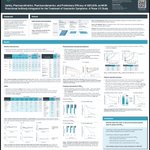
$ABCL AbCelleraโ€™s official poster for ABCL635 from TMS 2026 has been released. It consolidates the Ph1 SAD and MAD, and Ph2 proof-of-concept cohorts into a single dataset and gives us 4 new data points: 1) First Look at Immunogenicity (2% ADA Rate) AbCellera disclosed the anti-drug antibody (ADA) rate across the combined Phase 1 SAD (Single Ascending Dose) and MAD (Multiple Ascending Dose) cohorts: just 1 out of 42 participants (2%). More importantly, there was no significant relationship between ADA positivity and drug clearance. This is a key de-risking milestone for a chronic monthly injectable, confirming the immune system isn't clearing the drug early or reducing exposure. 2) Quantified Sleep Improvement (8.9-Point Drop) Earlier updates noted a statistically significant improvement in sleep, and the poster puts hard numbers to the PROMIS sleep disturbance scale. At week 4, ABCL635 delivered an 8.9-point improvement in sleep disturbance compared to a 3.5-point improvement on placebo (a net 5.4-point benefit over placebo). 3) Side-by-Side Repeat Dosing Liver Data (Zero Signals) The poster features side-by-side longitudinal graphs comparing liver enzymes (ALT, AST, bilirubin) from the 3-dose monthly MAD cohort (Sept 16, 2026 cutoff) against the single-dose Ph2 cohort (July 30, 2026 cutoff). Repeat monthly dosing over 3 months maintained the exact same flat, baseline-level liver profile as a single dose, further separating ABCL635 from oral small molecules like Veozah and Lynkuet. 4) MENQOL Quality-of-Life Breakdown On the Menopause-Specific Quality of Life (MENQOL) scale, ABCL635 drove a statistically significant improvement in the core vasomotor symptoms (VMS) domain over time, while other sub-domains (psychosocial, physical, and sexual health) trended favorably vs. placebo without reaching statistical significance. In short, this poster from The Menopause Society 2026 annual meeting checks several of the remaining boxes as ABCL635 heads toward late-stage development. We now have confirmation of a very low (2%) immunogenicity rate that doesn't impact drug clearance, quantified sleep benefits, and flat liver enzyme curves across repeat monthly dosing, backing up its best-in-class potential.
$abcl The new ABCL635 poster is here! I havenโ€™t had a chance to read it but sharing with you first! cdn.prod.website-files.com/6โ€ฆ
8
10
88
4,372
Brandon Richard retweeted
AbCellera to Present at Upcoming Investor Conferences in November 2026 investors.abcellera.com/newsโ€ฆ
3
9
4
117
8,841
$PRME One of the aspects I like most about Prime's platform is the modularity and how it positions them to capitalize on recent FDA efforts to streamline approvals and make bespoke genetic medicine more scalable. Although prime editing can theoretically repair most genetic mutations, old FDA rules would treat every new guide RNA as a brand-new drug. Spending years and tens of millions of dollars repeating animal tox, biodistribution, and manufacturing validation for single point mutations left thousands of rare diseases commercially stranded. In light of ongoing shifts at the FDA, Prime is well positioned to break through this bottleneck: 1) Turning Drug Development into an Interchangeable Process Primeโ€™s Universal Liver LNP packages five standardized chemical components around prime editor mRNA. โ€ข To target a new liver mutation or disease, Prime leaves the entire nanoparticle shell, delivery formulation, and editor mRNA completely intact, swapping only the guide RNA sequences (less than 5% of the drugโ€™s total mass). โ€ข Under the FDAโ€™s Platform Technology Designation and Leveraging Prior Knowledge frameworks, Prime could cross-reference safety, stability, and CMC data across programs. This is likely why PM647 (AATD) cleared its IND in September 2026 just weeks after PM577a (Wilson disease) in July, cutting preclinical time and capital expenditure with each successive pipeline asset. 2) "Umbrella" Approvals Across Mutational Families In Wilson disease, Primeโ€™s lead in vivo candidate (PM577a) targets the H1069Q mutation common in the West, while a follow-on candidate addresses the R778L variant prevalent in East Asia. โ€ข Under the FDAโ€™s draft Plausible Mechanism Framework, once PM577a demonstrates clinical proof-of-mechanism in the human liver, Prime could potentially bundle follow-on ATP7B guides into master protocols or supplemental filings without running multi-year, standalone trials for every variant. โ€ข As CEO Dr. Allan Reine noted after dosing the first PM577a patient this month, the same shared LNP delivery approach provides a direct path to expand into global patient populations across mutational families. 3) De-Risked Human Biology & Near-Term Catalysts Prime editing is no longer purely theoretical. In PM359 for p47phox CGD, Prime proved in humans (NEJM, Dec 2025) that prime editors repair DNA cleanly without double-stranded breaks, restoring functional neutrophil activity to 69โ€“83% (well clear of the 20% clinical efficacy threshold). โ€ข Holding RMAT and Rare Pediatric Disease designations, PM359 is on track for a streamlined 1H 2027 BLA under the FDA's Rare Disease Evidence Principles (RDEP), a milestone that could unlock a Priority Review Voucher (PRV) worth about $100M+ in non-dilutive capital. โ€ข Upcoming 2027 clinical readouts for PM577a (Wilson) and PM647 (AATD) rely on direct, objective biomarkers (serum ceruloplasmin, 64Cu PET copper efflux, and functional M-AAT protein), insulating the platform from the subjective clinical-scale failures that tripped up others. In short, the modular nature of Prime's platform combined with the FDA's regulatory updates could allow the tech to evolve from an unscalable trial-and-error grind into a plug-and-play platform, sharply lowering the cost and latency required to commercialize genetic cures.
$PRME Regulation can make or break a thesis in bio. Between 2024-2026, the FDA has been overhauling how it evaluates genetic medicines and platform technologies like Prime editing, creating a potential tailwind for this type of tech. Roughly 95% of rare diseases still have no approved treatment. Instead of forcing ultra-rare programs into slow, legacy clinical trial models designed for mass-market pills, the FDA has announced several policy changes to modernize the process: โ€ข Plug-and-Play Platform Reuse (May 2024 & Summer 2026) Once a delivery vehicle or manufacturing method (like a standardized LNP or AAV vector) is approved, sponsors no longer have to start from scratch. Under Section 506K and recent genome-editing guidance, companies can cross-reference prior safety, biodistribution, and manufacturing (CMC) data across different drug candidates using the same platform. โ€ข Single-Arm Approvals for Ultra-Rare Diseases (Sept 2025) For severe genetic conditions affecting less than 1,000 U.S. patients, randomized placebo trials are practically impossible. Building on previous policy, the FDAโ€™s Rare Disease Evidence Principles (RDEP) now permit full marketing approval based on a single-arm trial, provided itโ€™s backed by clear natural history data and confirmatory biomarker readouts. โ€ข Mutation Bundling via Draft "Plausible Mechanism" (Feb 2026) Gene editing therapies often target distinct, patient-specific mutations within the exact same gene. Under the Plausible Mechanism Framework, sponsors could bundle multiple mutation-specific editors into a single trial and BLA under a master protocol. In addition, new mutation variants could potentially be added post-approval without requiring full-scale clinical trials. โ€ข Restored Non-Dilutive Capital & Division-Wide Alignment (2026) Congress and the White House reauthorized the Rare Pediatric Disease Priority Review Voucher (PRV) program, restoring an asset historically worth about $100M+ in cash upon approval. Capping this off, the FDAโ€™s recent rare disease framework whitepaper standardizes Bayesian stats and flexible CMC inspections across all CDER and CBER review divisions to eliminate inconsistent standards. In short, for modular genetic medicines with hard biomarker readouts, the FDA is starting to dismantle the traditional 10-year development gauntlet in favor of a faster, capital-efficient, plug-and-play framework. While some of these shifts are still in a draft or non-binding guidance status, they're shaping up to be a regulatory sweet spot for therapies like prime editing that directly repair a root genetic mutation and deliver objective, binary biochemical proof.
27
1,561
Eli Lilly CEO Dave Ricks says AI helping us conquer disease will require "lots and lots of data that doesn't exist, yet." Why I continue to focus on companies that own properietary data (like AbCellera & Tempus) and companies that help generate new data at scale (like Twist).
$TWST I find it odd that some are saying that there is no data bottleneck in AI x Bio, and others are saying it's already over... Meanwhile, billions of dollars in investments (from Biohub, Meta, the DOE, the NIH, Google Deepmind, and others) were recently announced to generate the massive amounts of data needed to train biological AI models as part of the Virtual Biology Initiative. Plus, Anthropic recently unveiled their wetlab in SF, launched a protein design competition, and seems to just be getting started with their push into bio. On top of that, in a recent interview, Max Jaderberg, president of Isomorphic Labs (recently rumored to be raising a new round at $40B), said: "In AI, if you don't feel limited by data or you don't feel limited by compute, you're doing something wrong. Especially in the space of biology in chemistry, you can't just go to the internet and download data here. There are some amazing historical data sets that have been created, but actually we believe that a lot of the data that's going to power this space needs to be generated specifically for the models." Well connected companies with deep pockets run by smart people are commiting a lot of money toward generating massive amounts of data to train biological models in the coming years and even the government is getting involved. It's real, and it's not over. Despite the crazy price action, I continue to believe Twist is very well positioned for this theme, especially in light of biosecurity concerns, competition from China, and an increasing focus on domestic biomanufacturing.
3
382
Same. Although, I wouldn't mind if Twist and Adaptyv combined forces ๐Ÿ˜
At this point, I'm wondering how @adaptyvbio hasn't already been acquired by @AnthropicAI!
2
323
More AI x Bio ๐Ÿ‘€
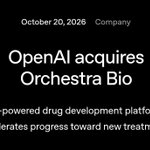
JUST IN: OpenAI acquires biotech AI startup Orchestra Bio, accelerating its push into AI-driven drug discovery.
6
368
$ABCL AbCelleraโ€™s official abstract for ABCL635 from The Menopause Society 2026 meeting is out. While we already knew the high-level Phase 2 data, this new TMS abstract gives us a deeper look at a few more granular data points: 1) Exact Headache Breakdown (Clustered at the Highest Dose) Prior slides noted mild headache as a common adverse event, but we now have the exact numbers. In the SAD cohort, transient, mild headache occurred in 23.3% (n=7) of participants within the first few days of dosing. Importantly, more than half of those cases (n=4) were clustered at the highest 900mg supratherapeutic dose, well above the 300mg and 600mg doses taken into the multi-dose cohort. 2) Quantified Target Engagement (65% to 80% Testosterone Drop) In Q1 earnings slides, AbCellera showed line graphs of hormone suppression to prove ABCL635 was hitting the target. The abstract puts more hard numbers to those charts: male participants saw a 65% to 80% reduction in testosterone from baseline across the 300mg to 900mg doses (alongside corresponding drops in LH and FSH), confirming strong, concentration-dependent HPG axis suppression. 3) Cohort Demographics The abstract also discloses the exact median ages for the trial groups: 54.5 years for the SAD cohort and 62.0 years for the MAD cohort. Quick recap of the Phase 1/2 core results: โ€ข Trial Setup: The Single Ascending Dose (SAD) cohort enrolled 40 healthy men and postmenopausal women (6:2 active-to-placebo across 30mg, 100mg, 300mg, 600mg, and 900mg). The Multiple Ascending Dose (MAD) cohort enrolled 16 healthy postmenopausal women (6:2 active-to-placebo receiving 3 monthly doses of 300mg or 600mg), alongside the Phase 2 proof-of-concept cohort in women with moderate-to-severe VMS. โ€ข Clean Safety & Liver Profile: Zero serious or severe adverse events, no dose-limiting toxicities, and (crucially for the NK3R class) no clinically significant liver enzyme elevations across either the SAD or MAD cohorts. โ€ข Validated Monthly Dosing (PK): Dose-proportional exposure with a roughly 24-day half-life, backing up the convenient once-every-4-weeks injection schedule. To summarize, the granular numbers reinforce the bull case for ABCL635. Weโ€™re seeing potent, quantifiable target engagement at therapeutic doses, a roughly 24-day half-life that easily supports monthly dosing, and a very clean safety profile where even mild side effects like headaches were largely confined to the maxed-out 900mg test dose, all with zero liver toxicity signals.
$ABCL ๐Ÿงฌ ABCL635, ์ด์ œ๋Š” ํšจ๋Šฅ์„ ๋„˜์–ด 3์ƒ์„ ์ค€๋น„ํ•  ๊ทผ๊ฑฐ๋ฅผ ์Œ“๊ณ  ์žˆ๋‹ค. TMS 2026 CLINICAL UPDATE $ABCL์˜ ์ด๋ฒˆ ํ•™ํšŒ ์ดˆ๋ก์—์„œ ์ œ๊ฐ€ ์ฃผ๋ชฉํ•˜๋Š” ๊ฒƒ์€ ๋‹จ์ˆœํ•œ ์•ˆ๋ฉดํ™์กฐ ๊ฐœ์„  ํšจ๊ณผ๊ฐ€ ์•„๋‹™๋‹ˆ๋‹ค. ์•ฝ 24์ผ์˜ ๋ฐ˜๊ฐ๊ธฐ, ๋ฐ˜๋ณต ํˆฌ์—ฌ ์•ˆ์ „์„ฑ, ์‹ค์ œ ํ‘œ์  ์ž‘์šฉ ํ™•์ธ๊นŒ์ง€. ABCL635์ด ์›” 1ํšŒ ํˆฌ์—ฌํ•˜๋Š” ํ•ญ์ฒด ์น˜๋ฃŒ์ œ๋กœ ๊ฐœ๋ฐœ๋  ์ˆ˜ ์žˆ๋Š” ๊ทผ๊ฑฐ๊ฐ€ ์ถ•์ ๋˜๊ณ  ์žˆ๋‹ค๋Š” ์ ์ž…๋‹ˆ๋‹ค. 1. ๋ฐ˜๋ณต ํˆฌ์—ฌ์—์„œ๋„ ๊ธ์ •์ ์ธ ์ดˆ๊ธฐ ์•ˆ์ „์„ฑ ์ž„์ƒ 1์ƒ์—์„œ ๋‹จํšŒ ํˆฌ์—ฌ 40๋ช…, ๋ฐ˜๋ณต ํˆฌ์—ฌ 16๋ช…์„ ํ‰๊ฐ€ํ–ˆ์Šต๋‹ˆ๋‹ค. ๋ฐ˜๋ณต ํˆฌ์—ฌ๊ตฐ์€ 300mg ๋˜๋Š” 600mg์„ 4์ฃผ ๊ฐ„๊ฒฉ์œผ๋กœ ์ด 3ํšŒ ํˆฌ์—ฌ๋ฐ›์•˜์Šต๋‹ˆ๋‹ค. ํ˜„์žฌ ์ดˆ๋ก์— ๋ณด๊ณ ๋œ ๊ฒฐ๊ณผ๋Š” ๋‹ค์Œ๊ณผ ๊ฐ™์Šต๋‹ˆ๋‹ค. * ์ค‘๋Œ€ํ•œ ์ด์ƒ๋ฐ˜์‘ ์—†์Œ * ์ค‘์ฆ ์ด์ƒ๋ฐ˜์‘ ์—†์Œ * ์šฉ๋Ÿ‰ ์ œํ•œ ๋…์„ฑ ์—†์Œ * ์ž„์ƒ์ ์œผ๋กœ ์œ ์˜๋ฏธํ•œ ๊ฐ„๊ธฐ๋Šฅ ์ˆ˜์น˜ ์ƒ์Šน ์—†์Œ7 ๋‹ค๋งŒ ๊ฒฝ๋ฏธํ•˜๊ณ  ์ผ์‹œ์ ์ธ ๋‘ํ†ต์€ ๊ด€์ฐฐ๋์œผ๋ฉฐ, ๋” ํฐ ์ž„์ƒ์‹œํ—˜์—์„œ ์•ˆ์ „์„ฑ์„ ๊ฒ€์ฆํ•ด์•ผ ํ•ฉ๋‹ˆ๋‹ค. 2. ๋ฐ˜๊ฐ๊ธฐ ์•ฝ 24์ผ, ์›” 1ํšŒ ์ฃผ์‚ฌ ๊ฐ€๋Šฅ์„ฑ ์•ฝ๋™ํ•™(PK) ๋ถ„์„์—์„œ ์•ฝ 24์ผ์˜ ๋ง๊ธฐ ๋ฐ˜๊ฐ๊ธฐ๊ฐ€ ํ™•์ธ๋์Šต๋‹ˆ๋‹ค. ์ด๋Š” ํšŒ์‚ฌ๊ฐ€ ๋ชฉํ‘œ๋กœ ํ•˜๋Š” ์›” 1ํšŒ ํ”ผํ•˜์ฃผ์‚ฌ ์ „๋žต์„ ๋’ท๋ฐ›์นจํ•ฉ๋‹ˆ๋‹ค. ๋˜ํ•œ ์•ฝ๋ ฅํ•™(PD) ๋ถ„์„์—์„œ๋Š” NK3R ๊ด€๋ จ ์‹ ํ˜ธ ๊ฒฝ๋กœ์— ์‹ค์ œ๋กœ ์ž‘์šฉํ•œ๋‹ค๋Š” ๊ทผ๊ฑฐ๊ฐ€ ํ™•์ธ๋์Šต๋‹ˆ๋‹ค. ๋‹ค๋งŒ ๋ฐ˜๊ฐ๊ธฐ 24์ผ์ด ๊ณง 4์ฃผ ๋‚ด๋‚ด ๋™์ผํ•œ ์น˜๋ฃŒ ํšจ๊ณผ๋ฅผ ๋ณด์žฅํ•˜๋Š” ๊ฒƒ์€ ์•„๋‹™๋‹ˆ๋‹ค. 3. ๊ธฐ์กด ์ž„์ƒ 2์ƒ ํšจ๋Šฅ๊ณผ ์—ฐ๊ฒฐํ•ด ๋ณด๋ฉด ABCL635์€ ์ด๋ฏธ ์ž„์ƒ 2์ƒ 4์ฃผ ์ฐจ์—์„œ ๋‹ค์Œ ๊ฒฐ๊ณผ๋ฅผ ๋ฐœํ‘œํ–ˆ์Šต๋‹ˆ๋‹ค. ์ค‘๋“ฑ๋„~์ค‘์ฆ ์•ˆ๋ฉดํ™์กฐ ๋นˆ๋„ 83% ๊ฐ์†Œ ์œ„์•ฝ๊ตฐ์€ 33% ๊ฐ์†Œ ์œ„์•ฝ ๋Œ€๋น„ ํ•˜๋ฃจ 5.3ํšŒ ์ถ”๊ฐ€ ๊ฐ์†Œ 37%๋Š” ์•ˆ๋ฉดํ™์กฐ๊ฐ€ ์™„์ „ํžˆ ์†Œ์‹ค ์ด๋ฒˆ ์ดˆ๋ก์€ ์ด๋Ÿฌํ•œ ํšจ๋Šฅ์„ ๋’ท๋ฐ›์นจํ•  ์•ฝ๋ฌผ ํŠน์„ฑ๊ณผ ์ดˆ๊ธฐ ์•ˆ์ „์„ฑ ๊ทผ๊ฑฐ๋ฅผ ๋ณด์—ฌ์ค€๋‹ค๋Š” ๋ฐ ์˜๋ฏธ๊ฐ€ ์žˆ์Šต๋‹ˆ๋‹ค. 4. 10์›” 22์ผ TMS ํ•™ํšŒ์—์„œ ํ™•์ธํ•  ๊ฒƒ ์ด๋ฒˆ ์ดˆ๋ก ์ž์ฒด์—๋Š” ์šฐ๋ฆฌ๊ฐ€ ๊ธฐ๋‹ค๋ฆฌ๋Š” ์™„์ „ํ•œ 12์ฃผ ํšจ๋Šฅ ์ง€์†์„ฑ ๋ฐ์ดํ„ฐ๊ฐ€ ํฌํ•จ๋ผ ์žˆ์ง€ ์•Š์Šต๋‹ˆ๋‹ค. ํšŒ์‚ฌ๋Š” TMS ํฌ์Šคํ„ฐ์—์„œ ์ž„์ƒ 1์ƒ ๋ฐ˜๋ณต ์šฉ๋Ÿ‰ ์ฆ๋Ÿ‰ ์‹œํ—˜์˜ ์ƒˆ๋กœ์šด ์•ˆ์ „์„ฑ ์ž๋ฃŒ์™€ ์ž„์ƒ 2์ƒ์˜ ์ƒˆ๋กœ์šด ํ™˜์ž ๋ณด๊ณ  ๊ฒฐ๊ณผ๋ฅผ ์ œ์‹œํ•  ์˜ˆ์ •์ด๋ผ๊ณ  ๋ฐํ˜”์Šต๋‹ˆ๋‹ค. ์šฐ๋ฆฌ๊ฐ€ ํ™•์ธํ•  ํ•ต์‹ฌ์€ ์„ธ ๊ฐ€์ง€์ž…๋‹ˆ๋‹ค. โ‘  ๋ฐ˜๋ณต ํˆฌ์—ฌ ์‹œ ์•ˆ์ „์„ฑ ๊ฒฐ๊ณผ์˜ ๊ตฌ์ฒด์ ์ธ ๋‚ด์šฉ โ‘ก ํ™˜์ž๋“ค์ด ์‹ค์ œ๋กœ ์ฒด๊ฐํ•œ ์ฆ์ƒ ๋ฐ ์‚ถ์˜ ์งˆ ๊ฐœ์„  โ‘ข ์ƒˆ๋กœ์šด ์ž๋ฃŒ๊ฐ€ ํ–ฅํ›„ ํˆฌ์—ฌ ์šฉ๋Ÿ‰๊ณผ 3์ƒ ์„ค๊ณ„์— ์ œ๊ณตํ•˜๋Š” ๊ทผ๊ฑฐ 5. ๋‹ค์Œ ๋‹จ๊ณ„๋Š” 12์ฃผ ๋ฐ์ดํ„ฐ์™€ ์ž„์ƒ 3์ƒ ์ œ๊ฐ€ ๊ฐ€์žฅ ์ค‘์š”ํ•˜๊ฒŒ ์ƒ๊ฐํ•˜๋Š” ๊ฒƒ์€ ์•ž์œผ๋กœ ๊ณต๊ฐœ๋  12์ฃผ ๋ฐ์ดํ„ฐ์ž…๋‹ˆ๋‹ค. ์ดˆ๊ธฐ ํšจ๋Šฅ์ด ์–ผ๋งˆ๋‚˜ ์ง€์†๋˜๋Š”์ง€, ์•ฝ๋ฌผ ๋†๋„๊ฐ€ ๊ฐ์†Œํ•˜๋ฉด์„œ ํšจ๊ณผ๋Š” ์–ด๋–ป๊ฒŒ ๋ณ€ํ™”ํ•˜๋Š”์ง€, ์ตœ์ ์˜ ํˆฌ์—ฌ ์šฉ๋Ÿ‰๊ณผ ๊ฐ„๊ฒฉ์€ ๋ฌด์—‡์ธ์ง€ ํ™•์ธํ•ด์•ผ ํ•ฉ๋‹ˆ๋‹ค. ์ด๋Ÿฌํ•œ ๊ฒฐ๊ณผ๊ฐ€ ๊ธ์ •์ ์ด๋ผ๋ฉด ABCL635์€ ์ž„์ƒ 3์ƒ ์„ค๊ณ„์˜ ๋ถˆํ™•์‹ค์„ฑ์„ ํ•œ ๋‹จ๊ณ„ ๋” ์ค„์ผ ์ˆ˜ ์žˆ์Šต๋‹ˆ๋‹ค. ๊ทธ๋Ÿฌ๋‚˜ 3์ƒ ๊ฐœ์‹œ์™€ ์„ฑ๊ณต, ์ƒ์šฉํ™”๋Š” ์•„์ง ํ™•์ •๋œ ๊ฒฐ๊ณผ๊ฐ€ ์•„๋‹™๋‹ˆ๋‹ค. ๐Ÿ’ฌ ๋งˆ์ง€๋ง‰ ์ฝ”๋ฉ˜ํŠธ ABCL635์€ ์ด์ œ ๋‹จ์ˆœํžˆ ํšจ๋Šฅ์ด ๊ฐ•ํ•œ ํ›„๋ณด๋ฌผ์งˆ์ธ์ง€ ํ‰๊ฐ€ํ•˜๋Š” ๋‹จ๊ณ„๋ฅผ ๋„˜์–ด, ์‹ค์ œ๋กœ ๋ฐ˜๋ณต ํˆฌ์—ฌํ•  ์ˆ˜ ์žˆ๋Š” ์˜์•ฝํ’ˆ์œผ๋กœ ๋ฐœ์ „ํ•  ์ˆ˜ ์žˆ๋Š”์ง€๋ฅผ ๊ฒ€์ฆํ•˜๊ณ  ์žˆ์Šต๋‹ˆ๋‹ค. 10์›” 22์ผ TMS ๋ฐœํ‘œ, ์ดํ›„ 12์ฃผ ๋ฐ์ดํ„ฐ, ๊ทธ๋ฆฌ๊ณ  2027๋…„์„ ๋ชฉํ‘œ๋กœ ์ค€๋น„ ์ค‘์ธ ํ›„๊ธฐ ์ž„์ƒ ๊ฐœ๋ฐœ. ์ €๋Š” ์ด ๊ณผ์ •์ด ABCL635์˜ ๊ฐ€์น˜๋ฟ ์•„๋‹ˆ๋ผ AbCellera๊ฐ€ ์ž์ฒด์ ์œผ๋กœ ์‹ ์•ฝ์„ ๊ฐœ๋ฐœํ•  ์ˆ˜ ์žˆ๋Š” ๊ธฐ์—…์ธ์ง€ ํŒ๋‹จํ•˜๋Š” ์ค‘์š”ํ•œ ์‹œํ—˜๋Œ€๊ฐ€ ๋  ๊ฒƒ์œผ๋กœ ๋ด…๋‹ˆ๋‹ค. ์ข‹์€ ํ•ญ์ฒด๋ฅผ ๋ฐœ๊ฒฌํ•˜๋Š” ๋Šฅ๋ ฅ์—์„œ, ์ข‹์€ ์˜์•ฝํ’ˆ์„ ์™„์„ฑํ•˜๋Š” ๋Šฅ๋ ฅ์œผ๋กœ. ๐Ÿ”— ์ฐธ๊ณ ์ž๋ฃŒ / PRIMARY SOURCES The Menopause Society โ€” TMS 2026 Abstract P-92 menopause.org/ Jack Prescott โ€” ABCL635 ํ•™ํšŒ ์ดˆ๋ก xitter.cf/JackPrescottX/status/2โ€ฆ AbCellera โ€” ABCL635 ๊ณต์‹ ํŒŒ์ดํ”„๋ผ์ธ abcellera.com/pipeline/abcl6โ€ฆ AbCellera โ€” TMS 2026 ๋ฐœํ‘œ ์•ˆ๋‚ด xitter.cf/AbCelleraBio/status/21โ€ฆ
3
9
1
52
5,145
$TWST More collaboration between Twist and Anthropic: "Teams at Adaptyv Bio and Twist Bioscience experimentally tested 211 designs for binding." Plus, Citrini launches Citrini Therapeutics ๐Ÿ‘€
๐Ÿฆ‚ This was a very fun collaboration with the team @citrini! Thank you to @TwistBioscience and @adaptyvbio for the rapid turnaround on experimental validation and to Susana Vรกzquez Torres (@CNIOStopCancer), Tim Jenkins (@DTUtweet ), and Dan Bedinger (@carterra_bio) for their thoughtful review. Read more in our blog post: anthropic.com/research/claudโ€ฆ
2
5
760
As psychedelic treatments approach potential FDA approval, psychiatrists need to be ready for patientsโ€™ questions. To help prepare them, Johns Hopkins, Yale, NYU, and Columbia developed a standardized psychedelic medicine curriculum for psychiatry trainees. The first multi-site evaluation of the course was just published in Academic Psychiatry. After the course: ๐Ÿ’ก Confidence counseling patients about clinical research and legal care nearly doubled ๐Ÿ”ฌ Understanding of the limitations of current evidence rose sharply ๐Ÿ“ˆ Knowledge quiz scores improved โš–๏ธ Trainees gained a more balanced, critically informed view of the evidence, without inflated enthusiasm for the field Weโ€™re continuing to develop educational and training programs for professionals across a range of fields, so stay tuned! doi.org/10.1007/s40596-026-0โ€ฆ
7
11
1
68
3,962
$TEM Tempus presented new clinical validation data at ESMO 2026 for an AI-enabled pre-screening panel in advanced non-small cell lung cancer (NSCLC), developed through its ongoing collaboration with Pfizer. As the number of targeted therapies for lung cancer grows, identifying the right biomarkers requires running multiple, time-consuming tests on limited biopsy tissue. In practice, tumor tissue often runs out before testing is finished, forcing patients to go through invasive repeat biopsies or delaying targeted treatment. Tempus is addressing this diagnostic bottleneck by pulling molecular signals directly from standard hematoxylin and eosin (H&E) digital pathology slides that are already generated during routine care. Key takeaways: โ€ข Massive Real-World Validation: The multi-center analysis evaluated 60,459 advanced NSCLC cases across 56,969 patients using routine whole-slide pathology images. โ€ข High Analytical Sensitivity: The AI panel achieved more than 80% sensitivity across all 12 evaluated genomic and IHC biomarkers, with sensitivity exceeding 90% for several specific targets. โ€ข Intelligent Diagnostic Triage: Still in development, the panel isn't meant to replace established sequencing (NGS) or immunohistochemistry (IHC) assays. Instead, it acts as a triage tool to help clinicians prioritize which confirmatory tests to order first, preserving limited tissue samples and getting patients on targeted therapies faster. โ€ข Pharma Alignment: Conducting the study with Pfizer highlights a clear shared incentive. Pharma companies want to remove testing hurdles so more eligible patients actually get identified for precision therapies. โ€ข Expanding the Digital Pathology Suite: This builds directly on Tempusโ€™s existing AI biomarker work, sitting alongside Paige Predict (which analyzes H&E slides to predict 123 biomarkers across multiple cancer types when tissue is insufficient for sequencing) and Tempus Preview (which provides early biomarker predictions about 24 hours after a sample arrives at the lab). In short, Tempus is using its multimodal data library to turn a routine pathology slide into an automated triage tool, helping doctors conserve tissue, eliminate testing delays, and route patients toward personalized treatments much faster.
Study presented at #ESMO26, from our collaboration with @pfizer, evaluated more than 60,000 advanced #NSCLC cases and found greater than 80% sensitivity across all 12 biomarkers using routine H&E pathology images. Read on: tempus.co/4jpwO4X
1
2
19
3,124
$PRME Regulation can make or break a thesis in bio. Between 2024-2026, the FDA has been overhauling how it evaluates genetic medicines and platform technologies like Prime editing, creating a potential tailwind for this type of tech. Roughly 95% of rare diseases still have no approved treatment. Instead of forcing ultra-rare programs into slow, legacy clinical trial models designed for mass-market pills, the FDA has announced several policy changes to modernize the process: โ€ข Plug-and-Play Platform Reuse (May 2024 & Summer 2026) Once a delivery vehicle or manufacturing method (like a standardized LNP or AAV vector) is approved, sponsors no longer have to start from scratch. Under Section 506K and recent genome-editing guidance, companies can cross-reference prior safety, biodistribution, and manufacturing (CMC) data across different drug candidates using the same platform. โ€ข Single-Arm Approvals for Ultra-Rare Diseases (Sept 2025) For severe genetic conditions affecting less than 1,000 U.S. patients, randomized placebo trials are practically impossible. Building on previous policy, the FDAโ€™s Rare Disease Evidence Principles (RDEP) now permit full marketing approval based on a single-arm trial, provided itโ€™s backed by clear natural history data and confirmatory biomarker readouts. โ€ข Mutation Bundling via Draft "Plausible Mechanism" (Feb 2026) Gene editing therapies often target distinct, patient-specific mutations within the exact same gene. Under the Plausible Mechanism Framework, sponsors could bundle multiple mutation-specific editors into a single trial and BLA under a master protocol. In addition, new mutation variants could potentially be added post-approval without requiring full-scale clinical trials. โ€ข Restored Non-Dilutive Capital & Division-Wide Alignment (2026) Congress and the White House reauthorized the Rare Pediatric Disease Priority Review Voucher (PRV) program, restoring an asset historically worth about $100M+ in cash upon approval. Capping this off, the FDAโ€™s recent rare disease framework whitepaper standardizes Bayesian stats and flexible CMC inspections across all CDER and CBER review divisions to eliminate inconsistent standards. In short, for modular genetic medicines with hard biomarker readouts, the FDA is starting to dismantle the traditional 10-year development gauntlet in favor of a faster, capital-efficient, plug-and-play framework. While some of these shifts are still in a draft or non-binding guidance status, they're shaping up to be a regulatory sweet spot for therapies like prime editing that directly repair a root genetic mutation and deliver objective, binary biochemical proof.
$PRME The FDA's new Rare Disease Framework Initiative is well-timed for Prime, especially considering their $108.8M in cash as of Q2 (runway into 2027). โ€‹Roughly 30M Americans have a rare disease ($997B annual burden), yet only about 5% have an approved therapy. Historically, the FDAโ€™s 18+ rare disease programs were applied unevenly across review divisions (for example, the FDA rejecting uniQureโ€™s plan to file a single-arm BLA in Huntingtonโ€™s and mandating a sham-surgery trial). โ€‹The new framework aims to fix this division-by-division inconsistency by calibrating evidence and manufacturing rules to what is realistically attainable in small populations. This initiative caps a 13-month wave of CBER and CDER reforms to make regulatory flexibility the default norm. โ€‹Here are 4 ways the FDA's 2025โ€“2026 rare disease overhaul could directly impact Prime: 1) โ€‹De-Risking PM359's 1H 2027 BLA โ€‹While seeking a CGD partner to focus capital on in vivo liver programs, Prime is advancing PM359 (granted RMAT in June) toward a 1H 2027 BLA on Phase 1/2 data. โ€‹Unlike Huntington's (which has about 40,000 U.S. patients), p47phox CGD affects fewer than 1,000 U.S. patients and has a clear biochemical readout in functional neutrophil activity (exceeding 20% restores immune function, and PM359 hit 69โ€“83% in NEJM). This checks every box of the FDA's Rare Disease Evidence Principles (RDEP) criteria for a single-arm filing. 2) โ€‹Removing CMC Bottlenecks & Unlocking a $100M+ PRV โ€‹Historically, ex vivo stem cell therapies have been delayed by manufacturing (CMC) hurdles rather than clinical efficacy. Pairing the framework's risk-based CMC rules with CBER's Jan 2026 policy (dropping the 3-PPQ-lot mandate and allowing concurrent batch release and post-approval spec tweaks) could sharply cut the time and cost to make PM359 BLA-ready. โ€‹With Rare Pediatric Disease status (recently extended by Congress through 2029), approval also unlocks a Priority Review Voucher (PRV) worth $100Mโ€“150M+ in non-dilutive cash. 3) โ€‹Scaling the "Universal Liver LNP" Platform โ€‹PM577a (Wilson disease, H1069Q), its R778L follow-on, and PM647 (AATD, PiZ) share the same GalNAc Universal Liver LNP and Prime Editor mRNA, swapping only the guide RNAs (pegRNA/ngRNA). Two 2026 FDA policies turn this modularity into a major moat: โ€‹โ€ข Platform Data Reuse (June 2026 Guidance): Safety, biodistribution, and CMC data from PM577a (first patient dosed Oct 5) can be reused across programs (evidenced by PM647 clearing its IND on Sept 24, just two months after PM577a). โ€‹โ€ข Mutation Bundling (Feb 2026 Plausible Mechanism Framework): Editors targeting different mutations in the same gene (like Wilson's ATP7B variants or Cystic Fibrosis CFTR variants) can be tested under one master protocol, bundled into a single BLA, and expanded to rarer variants. 4) โ€‹Fast-Tracking 2027 Liver Readouts via Biomarkers โ€‹Instead of waiting 5โ€“10 years for clinical cirrhosis or emphysema outcomes, the framework supports accelerated registration using direct mechanistic biomarkers: โ€‹โ€ข PM577a (Wilson): Measuring how effectively the liver clears copper into bile (via 64Cu PET imaging), blood ceruloplasmin (copper-carrying protein) levels, 24-hr urinary copper, and chelator withdrawal. โ€‹โ€ข PM647 (AATD): Restoring normal M-AAT protein levels and reducing toxic Z-AAT protein accumulation. โ€‹In short, the FDA is systematically removing the biggest historical roadblocks in gene editing for rare diseases, giving Prime a faster, clearer, and more capital-efficient path to validate its platform and monetize its pipeline.
1
3
1
30
3,641
This platform really exposes just how fragile the average person's thesis is.
3
11
699