

This account is no longer active, and our content has moved to https://xitter.cf/t.co/0wkiMyvGr1. Follow us there for more.
- Tweets5.9K
- Following338
- Followers4K
- Likes934





ALT "Pathogen Genomics Centers of Excellence partnering for early detection and rapid response.” over a map with connecting lines between five locations - Georgia, Massachusetts, Minnesota, Virginia, and Washington state.
ALT "Pathogen Genomics Centers of Excellence partnering for early detection and rapid response.” over a map with connecting lines between five locations - Georgia, Massachusetts, Minnesota, Virginia, and Washington state.

ALT Image shows a hand holding an agar plate with isolated Clostridium botulinum

ALT Woman looking through a microscope in a lab. Text overlay: DNA analysis ties ten locally acquired malaria cases to four distinct sources.

ALT A sick patient in a hospital bed.

ALT Image depicts a public health scientist analyzing whole genome sequencing data on a sequencing instrument. WGS provides detailed genetic information about pathogens that make people sick.

ALT Three public health scientists set up samples on sequencing instruments “building capacity” and “advanced molecular detection.”


ALT Overhead view of a farm, showing an airplane spraying fungicide. The text reads: Azole fungicides are used to protect crops from fungi. Azole fungicides kill most A. fumigatus, but resistant A. fumigatus spores can survive and multiply in the environment.

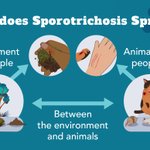
ALT The cycle of how sporotrichosis spreads to people from the environment (through cuts from branches, brush, and through soil) and animals, mostly cats (through scratches or bites).

ALT An image of sprouted beans. Text overlay states: “Food Safety Alert Update. Salmonella outbreak linked to Deep brand frozen foods. Additional Deep-branded frozen food products have been recalled, including sprouted mat (moth) & moong (mung) beans, surti undhiu mix, & fruits & vegetables. Cdc.gov/foodborne-outbreaks”

ALT Map of wastewater sites indicated by orange dots with a magnifying glass zooming and showing each one as a pumpkin. With the text “Wastewater Monitoring. Something mysterious is showing up in wastewater as fall approaches. Swipe to find out what it is!”

ALT Test tubes of brown liquid with tiny pumpkins floating. With the text “Could it be...pumpkin spice? Just Kidding! We love a seasonal latte, but we’re picking up some other seasonal trends in the wastewater.”

ALT A phone showing state and territory trends of influenza data being held near a cup coffee. With the text “Wastewater Monitoring Data. As we enter the season of flu (and other viruses) going around... stay informed so you can make decisions to keep yourself and your loved ones healthy. Check wastewater data for your community. www.cdc.gov/wastewater”

ALT A series of images showing the dates and themes of the fungal disease awareness week. Text reads, “9/15- Testing and antifungals, 9/16- Fungal diseases and One Health, 9/17- Neglected Tropical Diseases, 9/18- Fungal pneumonias, 9/19- The future of fungal diseases.”

ALT A mosquito bites a person. Text overlay states: “Advanced Molecular Detection in Action” and “Tracking U.S. Cases of Malaria”

ALT A woman on a boat, reaching into the water. Text overlay states: “Insights on Genomic Epidemiology with Krisandra Allen.”


ALT 3D illustration of Candida auris, a drug-resistant fungus. Text overlay states: "Uncovering Emerging Threats” and “Advanced Molecular Detection.”

ALT Health scientist preparing a sequencing instrument for whole genome sequencing. Text overlay states: “New Technology” and “Advanced Molecular Detection.”

ALT Network data stream flowing on dark background. Text overlay states: “Developing Faster Tests” and “Advanced Molecular Detection.”