

Chief DCF manipulator, market investigator and fundamental chartist. ACCA, CISI. Dynamic asset allocation. Not financial advice.
etoro.com
Joined January 2016
- Tweets6.5K
- Following366
- Followers2.9K
- Likes5.1K
Day 2. Interesting to hear eToro CEO & Founder, Yoni Assia, in conversation with SpaceXAI Lead Field Engineer, Nick Miller. Also looking forward for the Fireside conversation between
Goldman Sachs Managing Director, Jonathan Penkin, with eToro Global COO & Deputy CEO, Dr. Hedva Ber.

I am here for the first time, even though I have been part of PI program since 2019. It's great to catch with fellow teammates and Etoro team who clearly put a lot of efforts in organising this event.
@etoro continue to positively disrupt the way how people invest under @yoniassia leadership.
So greatful to be part of the journey!
Well done @etoroteam.

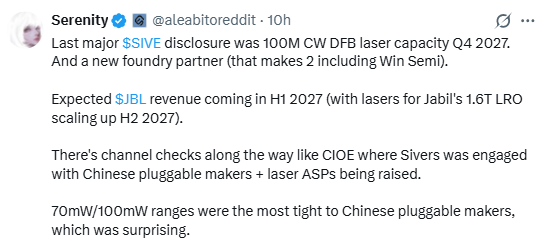
Dude still can't settle with $SIVE after squeezing subscribers with this hype nonsense at 100. Yes, still 4x on 1Y, but those who bought at 100? Minus 75%, close to complete wipeout.
А где здесь Мальта? И почему Россия воздержалась от голосования за эту резолюцию? Должна же была против голосовать по твоей логике. А вообще твой комментарий это манипуляция. От ответственности не уйдешь 😉. Вернемся к теме, умылся кровью сегодня или пока нет, сочинец?

First 100 USD made. That's 10% in less than 2 months. This war will only stop if one of the parties falls. Ukraine will not fall any time soon, because they have Western support. Russia will not fall because, in a war of exhaustion, they still have capacity.
I look at it as high risk / high reward bet. Very similar to the stock market, where we are placing bets on companies. Will bring it to 10% of the portfolio by the end of the year.


$PG VALUATION MODEL
Procter & Gamble has raised its dividend for 70 years in a row. Tide, Pampers, Gillette, Oral-B - chances are you used one of its brands before breakfast. It is about as close to a bond with a logo as the stock market gets. At USD 151, my DCF says investors are paying roughly 14% more than the cash flows are worth. Great company. Wrong price? Let's run the numbers.
KEY ASSUMPTIONS:
* Explicit average 5Y/5Y revenue growth @ 2.6%/2.8%
* Long-term growth in perpetuity @ 2.5%
* Adj. EBITDA margin expanding from 26.3% to 28.5% by Year 10
* WACC @ 7.4%
* Adj. EBITDA exit multiple of 14.8x
* Tax rate 20.85%, the marginal rate
* The input that drives reinvestment is the marginal Sales to Capital ratio of 2.63, held constant through Year 10

Portfolio update – September 2026
CL Sept - 2.28%
SP500 Sept - 0.35%
CL YTD - 1.2%
SP500 YTD +12.7%
My portfolio slightly underperformed S&P index in September. The main laggards were a few growth stocks (Eose, Jobe, OCGN) which I bought earlier this year because I thought they could deliver decent returns. This unfortunately didn’t happen yet, however the impact on portfolio was limited since I gave those positions only a small fraction. TLT and SPHD were also down -3% and -4% respectively, and this had larger impact on underperformance. TLT and SPHD declined in September 2026 largely because US Treasury yields rose sharply. This illustrates an important portfolio-construction risk: long-duration government bonds and defensive dividend stocks are not necessarily good diversifiers against each other. Both can suffer substantially when long-term real yields or term premiums rise. For my portfolio, this is also a reason why I keep short-duration government bonds such as $SHY, PRAB and BIL - they behave differently. They have much lower duration risk and is therefore less vulnerable to the same bond-market repricing.
Transactions
➖ Disposed $NVO, $BTDR, $PDD, SYM, RZLV, BETS as part of a portfolio de-risking. Accumulated losses on these positions were locked in, and proceeds reinvested into more conservative stocks.
➕ New entry in IMB, STZ, HONA, AZO, BKNG, FICO. Those are visibly more prominent names and based on my DCF models they seem to be undervalued at the moment.
Stress test
I have built a portfolio that is designed to endure a market collapse of any size, including a depression similar to 1929.
If S&P500 collapses by 50%, my portfolio is expected to drop by 24%. A mix of low-risk assets, such as government bonds, along with undervalued defensive stocks, will provide the necessary cushion while still generating decent returns to preserve purchasing power. When a bear market kicks in, I want to go shopping instead of leaking wounds. This opportunity unfortunately comes at a cost. If I had kept 100% in an S&P index fund, my return would be 14% higher YTD. I do acknowledge this cost, but at the same time I do not plan to make any changes in my strategy. I feel more comfortable with buying government bonds at a 5% yield than buying the S&P 500 at 40 CAPE.
Holdings as of 10/10/2026
BIL 16%
PRAB13%
Cash7%
SHY7%
TLT 4%
FTSL4%
BKLN4%
IEI 3%
BKNG3%
USMV3%
VGT3%
SPHD3%
LQD3%
NVDA2%
WKL2%
AZO2%
PYPL2%
MSFT2%
Other 18%
What is my portfolio trying to achieve?
Capital preservation
The 45% allocation to cash and short/intermediate Treasuries ($BIL, $SHY, PRAB) provides liquidity and relative stability. It also gives me the flexibility to increase equity exposure after a market correction.
Income generation
FTSL, $BKLN, $LQD and $SPHD aim to generate income. FTSL and BKLN provide floating-rate corporate loan exposure, but they carry credit risk, particularly during recessions.
Selective capital appreciation
$BKNG, $MSFT, $META, $NVDA, $AZO, WKL and FICO provide exposure to businesses with competitive advantages and long-term compounding potential. PYPL, LULU and OTIS introduce more turnaround, recovery or valuation-re-rating exposure.
Asymmetric growth opportunities
OCGN, EOSE, IONQ and JOBY together represent just 4%. I retain exposure to potentially transformative technologies without making the entire portfolio dependent on speculative outcomes.
So yes, capital preservation is my highest priority right now. I hope to achieve this by combining systematic exposures (USMV, VGT, SPHD, MVOL) with individual stock selection (core-and-satellite philosophy, although the fixed-income and liquidity positions are effectively my largest core).
The main trade-off is the possibility of underperforming during a prolonged equity bull market, as we are already witnessing in 2026.
Breakdown by sector/asset class
Cash and equivalents – 42%
Bonds ETF – 18%
Technology – 8%
Low volatility ETF – 7%
Industrials – 7%
Consumer Cyclical – 7%
Consumer Defensive – 4%
Healthcare – 2%
Financial – 3%
Communication – 2%
This wraps up the September performance.
Thanks for reading.
CL.
