

UGent PhD candidate researching Demographic Sustainability of Liberal Orders 15 years XP EU affairs 📖History🏛️ 🇪🇺Politics🇺🇸 🧬Evolution👶 #evopolitics
Bruxelles
Joined May 2011
- Tweets39.9K
- Following1.2K
- Followers2.4K
- Likes86.2K






Pinned Tweet
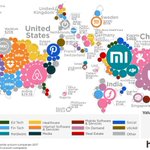
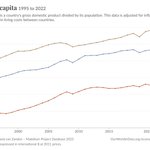
A picture's worth a thousand words.. so here are the key points from my academic article with @filipefaria on the geopolitics of ultra-low fertility & techno-natalism: Visualized! craigwilly.com/p/the-geopoli…

Craig Willy retweeted

🇪🇺 Europe’s pension taboo is costing Europe its future.
Pensions absorb over 12% of EU GDP and are governments’ biggest expense.
They are becoming unsustainable, requiring higher taxes and more immigration.
In 22 of 30 European countries, a worker earning €2,000 would retire on less than €1,400
No major tax cuts or support for low earners without pension reform.
Funded pensions would build trillions in assets, finance European growth and strengthen retirement security.
Funded pensions would help close Europe’s €1.4 trillion annual investment gap.
Governments must stop sacrificing young people’s future to avoid electoral losses.
renaissanceeurope.org/insigh…


Craig Willy retweeted

Mussolini famously bragged about nationalizing almost the whole Italian economy.


fascism is when you nationalise private companies
Readers added context they thought people might want to know
Yes. Fascist economics was corporatist, and viewed private businesses as organs of the state. Private enterprise was permitted so long as it followed the directives of the state. They nationalised and privatised on political whims.
fee.org/articles/econo…
econlib.org/library/Enc/Fa…
en.wikipedia.org/wiki/Economics…
Craig Willy retweeted

🚨 La Suède vient de réaliser son objectif : revenir à 35% de dette publique sur PIB.
Quel exploit.
En 1995, la dette 🇸🇪 était à 85%. 💀
2 ans plus tôt, le pays avait perdu son AAA.
11,2% de déficit au creux de la crise.
Une des raisons (au-delà des dépenses sociales) : l'État avait FORCÉ les banques à accorder des prêts pour que "les personnes défavorisées puissent devenir propriétaire".
Résultat, le secteur bancaire s'était effondré.
😅
Ce que la Suède a fait pour s'en sortir :
→ Laisser le secteur privé tranquille
→ Couper dans ses dépenses
→ Réformer
→ Offrir plus de liberté aux entreprises
→ Supprimer les impôts démagogiques qui appauvrissaient le pays en faisant fuir la richesse (taxe sur les transactions financières, la taxe héritage à 90%...)
La Suède nous a montré le chemin.
Arrêtons d'écouter ceux qui veulent TOUJOURS relancer l'économie par l'augmentation de la dépense publique (ou la taxation des riches/whatever) alors que notre dette est à 119%.


Craig Willy retweeted

TIL Vietnam primarily has East Germany to thank for its coffee culture!
East Germany had problems sourcing coffee and often had to dilute it down with roasted grains and other extenders to produce something called Mischkaffee. East Germans hated it. Nor could they grow their own coffee as you need a tropical climate to do that.
So East Germany signed agreements with Vietnam in 1980 and 1986 to provide equipment and machinery in exchange for Vietnam scaling its own coffee production and sending half its harvest to East Germany. The area of cultivation went up more than 10x during the 1980s.
However, coffee needs time to mature, and the first expanded harvest was only ready in 1990. East Germany had just ceased to exist. This is how Vietnam found itself with a massive surplus of coffee, which spilled over into both exports and the appearance of its own extensive coffee culture.


Craig Willy retweeted

Francis Fukuyama has written his final book, which is a memoir. We talk about his time in government, how he sees America's problems, and the "last man" nature of our contemporary politics. You can read, watch, or listen here. richardhanania.com/p/cosplay…

Craig Willy retweeted
Fukuyama on meeting Qaddafi: "He had a zero-sum view of wealth: wealth could not be created, only taken from someone else. I asked him then where Bill Gates—at that time one of the richest men in the world—got his money. Qaddafi said he stole it from his customers. I pointed out that they got useful software in return; he thought about it a bit and said that Gates stole it from the companies that made computers." richardhanania.com/p/cosplay…

Craig Willy retweeted

The most successful example of trickle-down economics in the last 10 years might be Romania. Billionaires paid 5% dividend tax and 10% personal income tax. Millionaires paid 1% corporate tax on €1,000,000. The median person saw their salary go up 3x during the decade.
Most of this was delivered under a 'Social Democrat' government, who of course made sure they took a nice juicy 'success fee' too.
Rest of CEE did well too but none outshined Romania: Lithuania +190%, Hungary +187%, Bulgaria +185%, Poland +120% (base effect).


Eastern Europe taxes poor people a higher % than rich people. If you earn €20K in Romania you pay 40% tax. But if you earn €2M, you pay 10%.
Romania's 'Social Democratic Party' is more right wing on tax policy than any Western European conservatives. They pioneered the '1% tax on €1 million' corporate tax system during the 2010s, which saw Romania's median salary grew by 200% during the decade. The EU eventually pushed them to cut the threshold to €100K.
The lower tax rate is because Eastern Europe caps social contributions and has flat rate tax. This has been very useful for retaining job creators and HNWIs in their countries. Whilst the rich pay a lower tax rate, the absolute amount of tax they pay is higher and they tend to consume less public services.

Craig Willy retweeted
Francis Fukuyama on why so much of politics involves cosplaying now: "People feel that they are living in a society that doesn't demand very much from them. No heroism, no risk. And they're uncomfortable with it, and so they play like they're taking risks."


Craig Willy retweeted

New (amazing) cabinet directive:
For every $1 in regulatory costs a new rule adds, regulators must cut $2 elsewhere. 👏
They’ll also have to test new rules for competitiveness, default to national or international standards, and review rules regularly.

Craig Willy retweeted
Francis Fukuyama is arguably our era's most influential intellectual. The End of History got two big things right: the triumph of democratic capitalism, and the kinds of nihilistic politics we would find in a world without any great cause to struggle over.
All of our discourse about topics like democracy, populism, and modernity is filtered through the lens of Fukuyama's thought.
I just got to interview him about his new memoir. It spanned the range of Fukuyama's work, including
-What happened to public intellectuals?
-"Last man problems" like proceduralism
-What to make of the fact that Americans fight all the time online, even though violence, disorder, and resistance to the government remain low
-His brief flirtation with postmodern philosophy, and realizing it was nonsense
-Life extension, embryo selection, and genetic engineering
-Whether trust really explains different societal outcomes, particularly the success of China
-His "intellectual meetings of the mind" with Muammar al-Qaddafi
-What he thinks of the Bukele experiment
There is too much to list it all here. Just read the interview. richardhanania.com/p/cosplay…
Japan highlights for me:
* Eiheiji: forested mountain Zen temple, meditation
* Gandharan Buddha statues at Tokyo National Museum
* Kamakura:
* Staying in a temple-BNB near Dewa Sanzan up norther (deep Japan)
Recent pattern of US politics: side takes power, then abuses power through combination of ideological self-radicalization and love of said power.
Time for citizens and Congress to work to limit presidential power and return powers to the states (governors are usually popular!).
It's magnificent propaganda. And the sentiment is essentially correct.
Yet the communist paradox: How does such emancipatory idealism birth the most oppressively gray & sterile political orders?

Craig Willy retweeted

Joseph Conrad’s Nostromo follows a fictional Latin American country torn apart by corruption and its uneasy dependence on foreign capital. Tyler and Richard Hanania picked it hoping to talk about something other than politics for once — a bit ironic, given Hanania’s new book, Kakistocracy: Why Populism Ends in Disaster, is all about the stupidity of current politics.
Some of Tyler’s questions for Richard in this episode, starting with a close read of Nostromo before ranging into Latin American crime, Shakespeare, the media, and populism:
· Is Nostromo himself a rotten fraud, or a flawed but decent man?
· Why does Conrad scramble the novel’s timeline instead of telling it straight?
· Why is religion almost entirely absent from Conrad’s fiction?
· Does the “folly and murder” passage reveal Conrad’s real view of liberalism?
· Could a Latin American author have written this novel, as Fredric Jameson claimed?
· Why does Latin America have so much crime despite not being especially poor?
· Was Panama actually a success story, against the odds?
· Is Shakespeare objectively the greatest English-language writer, or just the most prestigious?
· Has the media gotten worse, especially its coverage of AI?
· Who on the populist right is actually worth reading?
· Why do conservative women hug and liberal women shake hands?
· What do you want to write and learn next?
Watch the full conversation with @RichardHanania and @tylercowen here, or search for Conversations with Tyler wherever you get your podcasts.
youtu.be/txDPOpbdK5c?si=ZbZz…