

Deconstructing the biological mechanics of fat loss, fasting, and metabolic health. Data-driven protocols for busy people. Zero fluff.
The Lab
Joined August 2026
- Tweets265
- Following43
- Followers17
- Likes206





Especially in a deficit. Enough protein helps you hold onto muscle while the fat comes off, and it keeps you fuller so the calories are easier to stick to.
And visceral fat tends to respond well to a steady calorie deficit. You can't spot reduce it, but overall fat loss usually brings the waist down with it.
Same with the scale in a deficit. Daily weigh-ins bounce around with water, but the weekly average and photos a few months apart show what's really happening.
THE LABEL SAYS 150. YOU ATE 600.
• The calories on a label are per serving, not per bag
• A chip serving is about 1 oz, roughly 15 chips
• Lots of bags hold 4 servings or more. Family size can hold 8 to 10
• A cereal serving is often about 1 cup. Most bowls fit 2 or more
• Check "servings per container" first, then do the math
Read the top line. Save this for your next grocery run.

Weekends for most people I talk to. Five solid deficit days can get wiped out by two loose ones, so the weekly total is what actually counts.
Worth checking the numbers first too. Track intake and weigh-ins for 2 or 3 weeks, because a lot of stalls are just a smaller deficit than you think.
Fair question. For most people I'd say about 10 to 25% under maintenance, so roughly 300 to 500 a day. 700 can work for a while if you have more fat to lose, but it gets harder to keep muscle and training quality up.
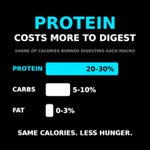
PROTEIN IS THE CHEAT CODE NOBODY USES.
• Your body burns about 20 to 30% of protein calories just digesting it
• Carbs burn about 5 to 10%. Fat burns 0 to 3%
• Protein is the most filling macro, so you snack less
• Aim for about 0.7 g per pound of body weight a day
• Start each meal with a palm or two of protein
Same calories. Less hunger. Easier deficit.

Hitting cals is doing most of the work if fat loss is the goal. The lifts and protein just make sure what comes off is mostly fat.
Slowing down after the first few weeks is normal, since a lot of that early drop is water and glycogen. Around 2 lb a week is already a solid fat loss pace, and eating that low for long can cost muscle, so I wouldn't chase faster.
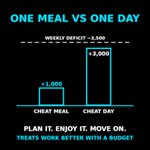
YOUR WEEKEND IS ERASING YOUR WEEK.
• A 500 calorie deficit Monday to Friday adds up to 2,500
• Eat 1,250 over maintenance on Saturday and Sunday and it's gone
• A big brunch, a few drinks, and a takeaway night can get you there fast
• Fat loss runs on the weekly total, not your best days
• Keep 1 or 2 planned treats, and keep protein and steps normal
Fat loss is a 7 day game. Bookmark this before Friday.

Both matter is the key part. Losing fat in a moderate deficit while still training gets you leaner and fitter at the same time.
Stage level lean like that usually takes months of a steady deficit, not a quick cut. Most people underestimate how long the last few percent takes.
Yep, water and glycogen swings can hide a few days of real fat loss. If you're staying in a deficit, the weekly average will show it.
Good reminder. A few pounds up after a high carb weekend is mostly water, not fat. Judge the trend over the week, not one weigh in.
Makes sense. Staying that lean takes a deep deficit for weeks, and training drive is usually one of the first things to go.
Interesting one. UPFs are also just really easy to overeat, and that extra intake is a big part of why they make staying in a calorie deficit so much harder.
SAME CALORIES. WAY MORE FOOD.
• Fullness comes a lot from volume, because a stretched stomach tells your brain you've eaten
• Water and fiber add volume for very few calories
• 100 calories is about 3 cups of air-popped popcorn, or about 10 chips
• A big salad or veggie soup first can cut how much you eat after
• Add protein, it fills you up the most per calorie
Fill the plate. Not the calorie count.

Good point on portions. A snack can look high protein on paper but at 25 to 30 g it is mostly just a few calories of starch. Worth checking the real serving if you are in a deficit.