








Pinned Tweet
Some of the most important dieteis of ancient "Greece" are in Albanian, not Greek. This is shamelessly ignored or considered coincidence by corrupt academia, even though Athens, Attica & most of Greece were Albanian until 19th cent, when Greek was forced on the population 🧵👇


Di_Ell retweeted
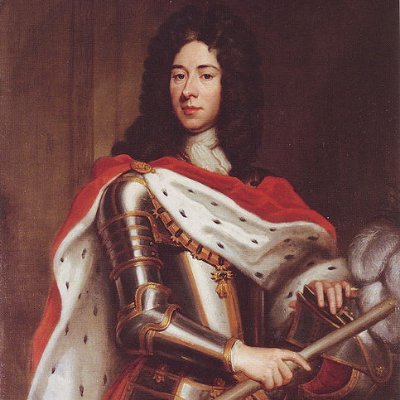
Albanian mercenary Mercurio Bua who commanded a unit of stradioti cavalry in the Italian Wars changed employers multiple times.
He served:
Republic of Venice 1494-1499
Duchy of Milan 1499-1503
Kingdom of France 1503-1508
Holy Roman Empire 1508-1513
Republic of Venice 1513-1532
I would like to talk a bit about this mercenary, the manner in which he switched sides, and the stradioti who served in the Italian Wars.
The stradioti were mercenaries who originated from the Balkans. They were Christians who had experience fighting the Ottoman Empire and adapted to the light cavalry tactics of their enemies, fighting in similar manner of combat, conducting daring raids deep into enemy territory. Because of this, they were very valuable for Western Europeans, who lacked this element in their own military tradition. In terms of their race, stradioti were mostly Albanians with a notable number of them of Greek origin and some Slavs as well.
The origin of Mercurio Bua was very typical of a stradiot. He was born in 1478 in an Albanian family in Nafplio in the Morea (Peloponnese). His father was a local Albanian leader Peter Bua who was among the instigators of the Morea revolt of 1453-1454 against the Ottomans. After his father died he moved to Venice as a young boy in 1489.
At the time, Venice was already familiar with Albanian stradioti mercenaries. They began recruiting stradioti regiments in the second half of 15th century to help secure the Venetian mainland which was under attack from Ottoman raids. The stradioti proved very valuable due to their mobility, being able to equal Ottoman speed and element of surprise. Venetian observers generally spoke very highly of stradioti. One of the things that impressed the Venetians was the ferocity of the stradioti and their demand to be rewarded one ducat for each severed enemy head they brought to the captain.
Venetian writer Marin Sanudo wrote:
"They commit robberies ... they are unrivalled in raids, plunders of places...; and they do not take captives, but cut off the head, and are used to being rewarded by the captain with one ducat for each. They are frugal in diet and thrifty in needs, it is enough for their horses to be healthy."
Since many of them were essentially refugees, they did not have the same high demands as other elite mercenaries at the time and were also motivated by the possibility of revenge against Ottomans.
Their fame soon spread all over Italy and beyond. Luigi Da Porto from Vicenza wrote:
"They attack suddenly like devils...; and swimming rivers wide and deep, and using routes almost unknown to the peasants themselves, they progress with unbelievable stealth into the depths of the enemy."
The stradioti were also easily recognizable for their fashion, with long tunics and hats. Da Porto wrote that they are "truly strange in aspect, and wear peculiar clothes and are armed with curious weapons; … their shoes are made of rope, and their tunic reaches to the heels."
In terms of weaponry, they used a wide range of weapons, including maces, swords, daggers, bows, lances, crossbows and eventually also gunpowder weapons. Marin Sanudo wrote:
"They have sword, lance with pennant, and mace. Very few wear cuirasses, generally they wear cotton cloaks, sewn in a particular fashion. Their horses are large, accustomed to hardships, run like birds, always hold their heads high and surpass all others in maneuver of battle."
At the time, having access to thousands of such elite mercenaries was very valuable for a state involved in many wars such as Venice, particularly since the stradioti performed a function in which other Western armies were mostly lacking.
However as their reputation increased all over Europe, other states began inquiring about their services as well. The stradioti would end up serving in wars as far away as Scotland!
The stradioti would become especially notable in the Italian Wars, a series of conflicts which raged in Italy from 1494 to 1559 and involved many foreign European superpowers which fought over Italy with large mercenary armies. Renowned mercenaries such as Mercurio Bua could find themselves constantly employed as various armies kept invading Italian states and were interested in their services.
Mercurio Bua entered the Italian Wars in the service of Venice, fighting the French at the Battle of Fornovo in 1495. He took part in campaigns against the French all over the peninsula, fighting them in the Kingdom of Naples. However he was frustrated by the lack of pay and decided to place himself in the service of the Duke of Milan Ludovico Sforza. While his master was different, the enemy he was fighting was the same as before as the French invaded the Duchy of Milan. Bua participated in many skirmishes with the French.
This war between Milan and France led to the Battle of Novara in 1500. The French besieged Novara where Milanese forces personally led by Ludovico Sforza were holding out. Sforza had assembled a strong mercenary army, however there was a problem. The Swiss mercenaries whom he hired refused to fight because there was a large contingent of Swiss mercenaries in the French army as well, and Swiss mercenaries did not want to fight other Swiss. Because of the mutiny of Swiss mercenaries, German landsknechts also weren't eager to fight and they joined the negotiations to capitulate to the French. Seeing the bulk of his army surrendering, Ludovico Sforza decided to disguise himself as one of the Swiss mercenaries and tried to trick his enemies in this manner, hoping to escape. However one of the Swiss mercenaries snitched on him and he was imprisoned by the French. He was taken to France where he died 8 years later in captivity.
The stradioti in service of Ludovico Sforza were among the mercenaries who refused to negotiate with the enemy and instead of surrendering, like the Swiss and the Germans, they tried to cut their way out of the French blockade. This led to fierce fighting in which some stradioti were captured, including Mercurio Bua, who was captured by a group of Scottish mercenaries. He was imprisoned and later ransomed out.
In this situation, Mercurio Bua decided to enter the service of his enemies, the French. In this new job, he was fighting the Spanish in Kingdom of Naples, participating in the Battle of Garigliano in 1503, where the French were defeated. As the French lost any hope of occupying the south of Italy, Bua and his mercenaries continued to fight under French banner in the north, participating in quelling the anti-French revolt that broke out in Genoa in 1507. In French sources he is described as a "captain of 100 Albanian cavalrymen and men-of-war."
But in 1508 he decided to switch employers again, finding himself in the service of Holy Roman Emperor Maximilian I of Habsburg who sent him to troubled Flanders in command of 400 stradioti.
Being in service of the Holy Roman Empire soon meant that Mercurio Bua would have to fight his former country of Venice as another war broke out in Italy in 1508, known as the War of the League of Cambrai where major European powers, including Emperor Maximilian, declared war on Venice. Bua showed no mercy fighting his former country, he ravaged the Venetian countryside where he conducted many raids. With his unit of stradioti he participated in many sieges, including the sack of Lonigo in 1512 where they massacred the civilian population.
However as the war progressed, Bua decided to switch sides. In 1513 he faced a unit of fellow stradioti in Venetian service. During this clash, one of his men voluntarily allowed himself to be captured in order to start negotiations with the adversaries on behalf of Bua. Bua was allowed safe conduct and after meeting with Venetian commanders, he deserted the Imperial army and began serving Venice again, his original employers. In Venice he was received by the Doge Leonardo Loredan who assigned him to command of all the stradioti. While this appointment was met with some opposition, particularly from the stradioti of Greek nationality, Bua would fight well for the remainder of the conflict which lasted until 1516, participating in skirmishes against Spanish and Imperial troops occupying the Venetian mainland. He also participated in the Battle of Marignano in 1515 where a Venetian contingent helped the French defeat the Swiss. The value of his service to Venice can be seen in the fact that, over the course of the war, his monthly salary increased from 100 to 1,000 ducats.
Bua continued to serve Republic of Venice, where he settled, as another war in Italy broke out in 1521. However he does not appear to be as successful in this conflict. Military was evolving fast and the stradioti no longer had the same element of novelty and surprise. Giovanni delle Bande Nere formed an effective local skirmish cavalry with his Black Bands and routed Bua's stradioti in one of the skirmishes. The Imperial landsknechts and Spanish arquebusiers proved to be a formidable combination and one this Italian war which culminated in their victory at Pavia in 1525.
However the legacy of stradioti in European military history remains very important as one of the pioneers of light cavalry tactics in European armies in early modern period.
Mercurio Bua's personal legacy in Venice was also respected, despite his mercenary activities for other states which including fighting against Venice itself for a certain period. In 1532 he moved to Treviso after a long military career. He would practically retire from war however he did not stop longing for returning to fight one day, even contemplating insurrection activities in his native Morea. He died in 1542.
Tzanes Koronaios, a stradiot and one of Bua's companions, wrote a long epic poem in vernacular Greek to commemorate Bua's deeds of arms which he performed in many difficult battles. Such was the life of this mercenary.


Di_Ell retweeted
Why are the "Greek" gods in Albanian?
Robert D'Angely perfectly captures my view:
Greek was always the lingua franca from "antiquity" to the Ottomans, but the population was Bilingual.
Greek was for official use, but at home, natives spoke Pelasgian/Albanian until the 19th c.


Di_Ell retweeted

Padian et Al. The longest largest cohort study into "HIV" transmission returned negative results which debunks sexual transmission of non existent "viruses".
Di_Ell retweeted
Diogenes told Alexander in Macedonian: 'Aposkotēson'
Official Greek interpretation: "Unshadow me"
Yet 'A po shko të shonë' is an Albanian sentence that means 'Can you move so I can see.'
The word only appears once, but called Greek by totally ignoring the Albanian etymology.

Di_Ell retweeted

583 years ago, on this day in 1443, #Albanian commander Gjergj Kastrioti, known as #Skanderbeg, abandoned the Ottoman army during the Battle of Niš and began his return to his homeland, accompanied by roughly 300 Albanian loyal knights.
It was the start of a 25-year resistance that made him #Albania’s national hero and the defender of Western Civilisation. European contemporaries widely regarded his resistance as a defence of Western Christendom against #Ottoman expansion.
#Skanderbeg #Skënderbeu #Albania #History
Di_Ell retweeted

Mari women.
The Mari are a Finno-Ugric people and one of the oldest ethnic groups of central Russia. For centuries, they have preserved their traditional pre-Christian religious beliefs and practices, making them one of Europe’s last peoples to maintain a living pagan tradition.


Di_Ell retweeted

On April 16, 1999, Rudolf Scharping spoke of Serbian crimes against the Albanian civilian population: “Serbian soldiers have killed pregnant women they took the babies out of their wombs”, adding that they had played football with “the heads of the murdered”.

Di_Ell retweeted

Odiseu, ligji i Zeusit dhe shqiptarët
Fraza që përmendet më shpesh në filmin Odisea është ligji i Zeusit. Ne shqiptarët s'kemi nevojë për biletë kinemaje për me kuptuar ligjin e Zeusit. Mjafton me shkuar deri në Malësi. Ligji i Zeusit është ligji i mikpritjes. Grekët e quajnë Ksenia, Filoksenia, mikpritja e të panjohurrit. Në një botë kur s'kishte hotele, as pasaporta, as polici, me hap derën për një të panjohur s'ishte thjesht mirësi, ishte kusht themelor i civilizimit. Shpjegimi është se Zoti shkon i maskuar si i panjohur dhe troket në shtëpitë e njerëzve. Në japonisht ekziston fjala Marebito, që nënkupton një perëndi që vjen në fshat e maskueme. Kështu që kur i afroheni oborrit të një shtëpie në Malësi dhe dikush del para e thotë, mirë se të ka prurë Zoti, nuk është thjesht mirësjellje, po i thërret në emër të asaj që ka përpara. Nyja 602 e Kanunit thotë se shtëpia e shqiptarit është e Zotit dhe e mikut. Pra, shtëpia e shqiptarit është e Zotit dhe e Zotit. Shtëpia e shqiptarit është dy herë e Zotit. Por nuk thotë që miku mund të sillet si Zot në shtëpinë e shqiptarit. Kjo e thyen ligjin. Lufta e Trojës nisi jo për shkak të tradhtisë, nisi sepse u thye ligji i Zotit. Parisi ishte mik në shtëpinë e Menelaut. Hangri bukën e tij, fjeti nën çatinë e tij e mandej mori gruan. Pra u sill si Zot në shtëpinë e tjetrit. Shqiptarit mund t'i vjedhësh taksat, mund t'i rrisësh çmimet, mund t'i refuzosh shërbimet pa kufij, por nuk mund t'i sillesh si Zot në shtëpinë vet. Kështu që kush thyen ligjin e Zeusit, ka kundër shqiptarin dhe para tij edhe Zotin. Christopher Nolanit ju desh 200 milionë dollarë me ja kujtuar botës atë që një grua Kelmendi apo në Dukagjin e thotë, sa herë i ndalet një makinë te porta.
Di_Ell retweeted

In 1928 a Chicago paediatrician let babies choose their own dinner from 34 foods, and for six years not one of them chose the way the pamphlet says.
Clara Davis took fifteen infants just weaned, and put a tray in front of them at every meal.
Beef, lamb, chicken, liver, kidney, brains, bone marrow, fish, eggs, milk, bananas, oats, carrots, peas, cabbage, salt. Nothing processed. No sugar.
Nobody steered. The nurse held the spoon, the baby pointed.
One boy ate seven eggs a day for a stretch. Another lived on bananas for a fortnight and then would not look at one.
They chewed bone marrow. They drank the beef juice. They pushed the greens round the tray.
One baby arrived with rickets. She put cod liver oil on the tray and left it there. He drank it, unprompted, until the rickets healed, and then never touched it again.
Six years. Not one case of stomach trouble. Not one deficiency. Visitors said they had never seen healthier children.
The doctors who examined them wrote it up as the wisdom of the body.
Nobody had taught these children that the yolk was bad or the marrow was rich or the cabbage was the healthy part.
Left alone with the food, a one-year-old built itself a diet heavy in the animal and ate the plants as a side when the mood took it.
The experiment is almost a century old. The pamphlet is still telling his mother to start with the carrot.


Di_Ell retweeted
The project I am running is totally Decentralized to counter the "top down" State and Big Pharma dictated model of modern Science.
We go the extra mile for transparency, even taking you inside the labs to watch the experiments being carried out.
Di_Ell retweeted

To maintain the AD 79 Pompeii narrative, archaeologists must devise vague theories about medieval excavation, resettlement, and subsequent abandonment to explain the abundance of medieval tools unearthed at a supposedly 1,950-year-old site.


Di_Ell retweeted
Serbia was always the enemy of Europe and Christianity. Fighting alongside Turks, giving away their daughters, to make alliances. Serbian culture is not western. Its eastern Turkic-Slavo-Carpathian. There is nothing European, white or even Western about Serbs.

"Almost everything in biology text books is hallucinations."
youtube.com/shorts/0LB41FKyp…

