




Congrats Justin and your team for the beautiful work!!

Excited to share our work in @JExpMed led by @t_stevenson95. We show that aggregated α-synuclein at CNS borders drives inflammation and impairs lymphatic function, positioning meningeal immunity as a driver of clearance deficits in Parkinsons disease.
tinyurl.com/5yvpsxhm

Siling Du retweeted

Out today in Immunity! Our pan-atlas of human immune aging: 12.4 million PBMCs from 2,609 people across 8 global cohorts (including new 188 people cohort from UK).
cell.com/immunity/fulltext/S…
We map shared aging patterns onto 59 key immune populations and link the balance of GZMK+ and GZMB+ CD8 effector memory T cells to health trajectories; show differences in RTEs and Th2s with sex etc; ethnicity associated features.
artyomovlab.wustl.edu/human-…
How it came to be:
in 2023 we published first hierarchically annotatied atlas of human immune aging in PBMC - 166 people, 55 populations, key changes revealed - CD8 naives, KLRC2/NKG2C+ CD8 memory going down, GZMK+ CD8 T cells and Th2 and Tc2 type 2 memory cells going up! (Terekhova et al, Immunity 2023)
in 2024 we added major phenotypes within naive cells - SOX4+ RTE cells and their CD38 marker going down. (Bohacova et al, Immunity 2024)
In 2025-26 more atlases published with their own annotations making impossible to leverage power of data..
Now we provide unique in its power and consistency resource - 2600 people across ages, sexes, races, continents etc. All annotated in sync and analyzed for what aging looks like globally!

Siling Du retweeted

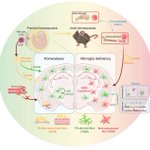
Very excited to see this work published! Huge congratulations to Huma and the entire team for a wonderful study on microglial heterogeneity across aging, brain regions, and parabiosis.

I am thrilled to share our new publication: "Core activation program and selective regional responsiveness of microglia during aging and parabiosis" doi.org/10.1016/j.celrep.202… Grateful to all collaborators, special thanks
@gzhao11
@TristanLi_Lab
@NannanLu3
@wysscoray

Siling Du retweeted

Glad to share that my preprint "ID2 secures cDC1 specification by antagonizing E proteins at a pleiotropic Zeb2 enhancer" is out today in @NatImmunol
This represents another major piece of my PhD work.
nature.com/articles/s41590-0…
Preprint thread:
xitter.cf/FeiyaOu1/status/196363…


🧵1/8 Happy to share my new preprint “ID2 secures cDC1 specification by antagonizing E proteins at a pleiotropic Zeb2 enhancer.” I resolved why ID2 is essential for cDC1 lineage specification and uncovered a new paradigm of enhancers. Read here: researchsquare.com/article/r…
Siling Du retweeted

🧵Excited to share my first author paper in @Nature from @kipnislab. "Functional role of skull lymphoid structures in CNS immunosurveillance" nature.com/articles/s41586-0…

Siling Du retweeted

Just DREADD-full
Wake-activated neuronal populations that regulate sleep drive
nature.com/articles/s41586-0…

Siling Du retweeted

Excited to share our new work by Jay Park @janghyun_park_ and friends! Jay found lymphoid structures in the skull bone marrow that seem to be serving immune hub role for the brain... brain, after all, may not be using "common lymph nodes" but rather has its own unique immune hubs and Jay showed their role in brain tumors... but their role in likely much more than that. This is a long paper but it is worth the read || nature.com/articles/s41586-0…

Siling Du retweeted

🔥🔥New paper alert!
Super excited to share our paper, out today in @NatureHumBehav, led by the wonderful @Nofar_Mizrachi
nature.com/articles/s41562-0…
To me, this finding fundamentally changes how we should think about the relationship between cognition and immune regulation:

Siling Du retweeted

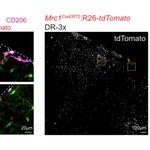
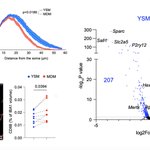
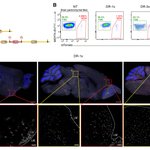
Finally, I want to highlight elegant and complementary stories from Helena Barr, @stevens1lab, Hernandez Moura Silva, Juan Lafaille, Rahul Nagvekar, and @BrunetLab, further underscoring the importance and unique functions of brain macrophages. 6/6
biorxiv.org/content/10.64898…
biorxiv.org/content/10.64898…
elifesciences.org/reviewed-p…

Siling Du retweeted
The transcription factor MAF is known from human genetics to be important in Alzheimer’s disease, but its precise function within the brain has been unclear.
Our latest, out today in @CellCellPress, dissects the role of MAF in brain macrophages. 1/
cell.com/cell/fulltext/S0092…

Siling Du retweeted

Out in @Cell today: In a collaborative effort across multiple labs, we found that cMAF controls the identity and function of perivascular macrophages critical for cerebrovascular function.
cell.com/cell/fulltext/S0092…
A thread:
oh wow! My dream experiment has come true! Huge congrats Julia for the beautiful study!

Gaining therapeutic access to the human brain is one of the biggest unsolved problems in biomedical science.
Today @nature, we uncover a massive influx of immune cells into the human brain during aging, revealing that the brain is more accessible than previously thought. 1/
nature.com/articles/s41586-0…

Siling Du retweeted

Thrilled to share: we show that neuronal hyperactivity drives C1q-mediated synapse loss via brain-recruited B cell/IgM, showing unexpected neuroimmune crosstalk in adult brain. CONGRATS to @Ger_Crowley13 who led w/ resilience & creativity & whole team! science.org/doi/10.1126/
Very thrilled and grateful to see our work featured on the cover of @NeuroCellPress! Many thanks to our co-authors and collaborators who contributed to this study.

cell.com/issue/S0896-6273(25… On the cover: In this issue of Neuron, Du et al. @DuSiling show that repeated microglial depletion enables peripheral monocytes from both the blood and skull bone marrow to infiltrate the brain and engraft as monocyte-derived macrophages with distinct identities. Inspired by a passage from the Zuo Zhuan (“The first beat of the drum rouses the soldiers’ spirits; the second weakens their resolve; by the third, they are exhausted”), the artwork depicts three rounds of microglial depletion gradually exhausting the endogenous microglial niche. The two advancing armies represent distinct peripheral sources of invading cells: one arriving from the blood, illustrated by the army bearing the red flag, and the other emerging from the skull bone marrow, portrayed as descending from the mountains. Artist credit: Ying Xu.

Siling Du retweeted

Decoding the spatiotemporal development of human meninges @CellCellPress cell.com/cell/fulltext/S0092…

Siling Du retweeted

nature.com/articles/s41586-0… -> organ specific ECM shapes identities of intrinsic nervous systems. v cool!

Siling Du retweeted

Excited to share our new study out in
@SciImmunology
We show that Monocyte-derived Macrophages drive oxidative damage during neuroinflammation
science.org/doi/10.1126/scii…

Congrats Haikuo! Beautiful work!

Check out our recent work on @NatureComms! Greatly appreciate my mentors and collaborators making this possible. We developed epi-Patho-DBiT, a unified platform that enables spatially resolved ATAC -seq or CUT&Tag analyses in FFPE tissues!

Siling Du retweeted

Excited to announce our study (w/ @RukmanThota & @MaxKrummel) published today @Nature:
Macrophages “hold our living identities” by taking tiny bites from living cells and presenting this information to CD8 T cells.
nature.com/articles/s41586-0…
#immunology #cellbiology @immunox @ucsf
