

AI's last mile is human. Creating became easy. Reviewing hard. Managing impossible. Ex Skype, Microsoft, Google Gemini. SandboxAQ. Author, AI-Political.
London
Joined March 2012
- Tweets1.5K
- Following529
- Followers773
- Likes118K







Pinned Tweet
Politics did not start in parliament. It started in a garden.
One rule. One pitch. The rule lost.
That is the snake. It won with words, and let someone else take the bite.
Consequences came, and with them the blame. Adam pointed at Eve. Eve pointed at the snake. Nobody defended the decision. Everyone defended themselves.
So they reached for fig leaves. Not to repair the damage, but to manage its appearance.
Look into the distorted mirror today and the garden is still there, only now the trees are glass towers. Same persuasion, same blame, same fig leaves, just with better branding.
If your system, human or AI, rewards looking right over being right, you will get Eden every time.
That's the argument of my first book, AI-Political.

American theorist James Burnham, in The Machiavellians (1943), built on the iron law of sociologist Robert Michels: every organization ends in oligarchy.
Oligarchy runs on what stays unseen. The version of the numbers you control. The story told in the room you were not in.
AI agents now ship with a better management rule than most companies.
DeepSeek's: every message costs someone's attention. If it isn't worth more than that, it's removed.
Imagine that rule applied to meetings.

Source: the DeepSeek Harness team's research prototype (31 Oct), philosophy doc: github.com/deepseek-ai/dsh-s…

AI didn't raise productivity. Cutting bloat did.
AI just gave companies the excuse. The real work, redesigning how decisions get made, is still on hold. xitter.gq/jburnmurdoch/status/21…

Quick thread on AI and productivity:
Lots of people say this chart shows AI is now showing up in the productivity data.
But I made this chart to argue the opposite: a trend that pre-dates AI and only shows up in the US doesn’t look like AI.
Here’s how I’m thinking about the data and underlying dynamics:


A transformation program once delivered unusually strong returns. A senior peer leaned over and said the numbers looked too good. Keep a lid on them, he said, in case other teams got nervous.
The technology worked. The politics didn't.
Now put an AI observer in that meeting. It decides nothing. It records what was delivered and what was said about it. Burying a good number gets much harder.
Microsoft just offered a quarter of its workforce a way out. Read it as a preview, not a one-off.
Most orgs start out well designed. Then inertia and politics take over. A new product line gets a leader, the leader hires, the hires hire. Each step was defensible on its own. The question is who it was defensible for: the company, or the executive.
xitter.gq/FinanceLancelot/status…

BREAKING: Microsoft $MSFT is offering voluntary exit packages to roughly 60,000 of its employees.
The cost cutting effort potentially affects up to 27% of Microsoft’s total workforce of 223,000 people.
"The Voluntary Exit Offer reflects an important part of how we're evolving our approach to change: creating greater flexibility and, where possible, more ways for employees to shape their next chapter," Chief People Officer Amy Coleman
Websites learned to keep you scrolling. Models are learning to keep you talking: agreeable first, truth second.
We know that road. Filter bubbles, then false information at scale.
AI needs to be optimized for truth, not for engagement.
The longer version of this argument is in my book, AI-Political: amazon.com/dp/B0HP4217PF


The prompt seesaw: correct an AI and it rewrites everything around your last line. Tell it to revert and it drops that line and brings back the old version.
Write, delete, write, delete. Up, down, and you're not getting anywhere.
AI needs memory of judgment, not just of words.
Eight US states are suing OpenAI, alleging ChatGPT was made agreeable on purpose to keep people on it longer. That's not a bug. It's an objective someone chose. apnews.com/article/openai-la…

Neuroscience knowledge gives you the edge. The subconscious mind is much more powerful than the concsious one.

I presented this at @CV_Labs @WeAreDevs and @WorldSummitAI
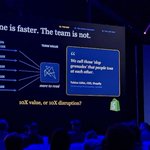
The technical moat for organization is done. Now we will see who has the originality and execution muscle to get things done.

