Eric Protic (@EricMProtic) header
Eric Protic (@EricMProtic) profile picture

Helping operators turn AI pilots into real workflows. Builder: https://xitter.gq/t.co/cXFy1DUjth + https://xitter.gq/t.co/QHG0wd6lPV. Fix the handoff. Own the exception. Tampa, FL

Tampa, FL
Joined November 2022
Photo by Eric Protic (@EricMProtic)Photo by Eric Protic (@EricMProtic)Photo by Eric Protic (@EricMProtic)Photo by Eric Protic (@EricMProtic)Photo by Eric Protic (@EricMProtic)Photo by Eric Protic (@EricMProtic)Photo by Eric Protic (@EricMProtic)Photo by Eric Protic (@EricMProtic)Photo by Eric Protic (@EricMProtic)Photo by Eric Protic (@EricMProtic)
Replying to @AnthropicAI
Using the old Python service as the test oracle is such a smart move, since the existing behavior is the real spec, quirks included. Curious how you decided which differences were bugs to fix versus old behavior clients quietly depended on.
1
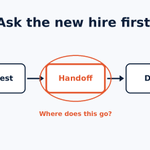
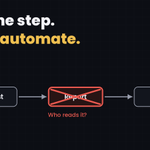
The cheapest debugging tool in software squeaks. The Pragmatic Programmer (1999) made it famous: explain your code, line by line, to a rubber duck. Halfway through, you hear the bug yourself. It works on apps before they exist, too. Before I build, I talk the workflow through out loud: who starts it, what they click, where it waits. Somewhere around "and then they just..." I find the step nobody actually owns. The duck never interrupts. It also never asks for equity.
3
Love that both of them went straight to public telescope data. Citizen scientists have a real track record here, since Planet Hunters volunteers spotted the planet PH1 in Kepler data back in 2012. Curious how they ruled out false alarms like eclipsing binaries before calling it worth a second look.
1
Replying to @a16z
The CAA parallel is such a good one. Ovitz and his co-founders left William Morris in 1975, and what stuck was the idea that clients belonged to the whole agency, so everyone got rewarded for helping each other win. Same thing works inside companies when teams share credit for fixing the bottleneck instead of guarding their piece of it.
1
Replying to @Microsoft @BBBSPS
Consistent is the word that matters most in that line. Big Brothers Big Sisters traces back to 1904 in New York, and the core idea still holds up: one steady adult who keeps showing up can change a kid's whole trajectory. Love seeing employees give their time, not just dollars.
1
Replying to @Google @antigravity
Indexing lighting cues is the sneaky useful part, since mismatched light is usually what makes a cut feel off even when the content fits. Film crews kept handwritten logs of every take for exactly this reason, so letting search do the logging is a fun upgrade. Would love to see it suggest matching B-roll when you search by what someone said.
Love that people with learning disabilities helped build it, not just test it at the end. Keeping human experts reviewing every version is the right call too, since going from weeks to minutes means way more of these docs can finally get made. Curious whether the reviewers' edits feed back into how it picks images next time?
4
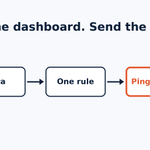
Most teams that ask me for a dashboard actually need a tap on the shoulder. Week one, everyone opens the dashboard. Week three, it's a very nice tab nobody clicks. So I ask one question: what would make you stop what you're doing and act? That answer becomes a rule. The rule sends one message to one owner, only when it matters. Dashboards are great for looking back. Nudges move the work today.
4
Eric Protic retweeted
Apply now for OpenWorks — to become a partner, or to get support for your business: openai.com/openworks/
JUST IN: OpenAI announces it will pay AI experts up to $8,000/month to help local small businesses adopt artificial intelligence through its new "OpenWorks" program.
684
727
174
12,420
1,839,989
Selling OutboundPro® taught me the person who signs is rarely the person who clicks. The buyer wants the big picture: pipeline, cost, timeline. The rep who opens it every morning wants one thing: fewer tabs. Win the buyer, lose the rep, and the login quietly goes stale by spring. So now I ask for ten minutes with whoever will live in it. They tell you what the deal really hinges on. @MonteOSIntel
8
Replying to @github
Putting ACCESSIBILITY.md right next to the README is a smart nudge, since folks who hit a barrier often just leave instead of filing an issue. A short "known gaps and what we're working on" section would go a long way with people using screen readers or keyboard-only setups.
1
Replying to @claudeai
Catching misuse patterns across many requests while still keeping zero retention is a tricky balance, and building it with real customers shows. For regulated teams, a plain-English page on what the safeguard looks at versus what it never stores would make the security review go a lot faster.
1
Replying to @Replit
Missions agreeing on success criteria and a budget before the agent starts is the part I'd steal for every project kickoff. Most stalled builds I've seen weren't short on effort, they just never wrote down what done looks like. Curious if the agent can flag when it's getting close to the budget and ask for a call?
1
Replying to @GoogleCloudTech
Love seeing an old side project come back to life. One habit that helps with these revivals: have the agent write up what the app actually does today before it changes anything, since six-year-old code is full of rules nobody remembers adding. That write-up then doubles as the test plan for the new version.
5
Checking provider claims against source code and live traffic is the right bar. "Trust, but verify" was an old Russian proverb before Reagan made it famous during the 1987 arms talks, and it fits AI vendor reviews perfectly. A report security teams can attach straight to their review should shorten a lot of procurement calls.
3
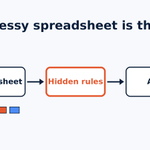
The best spec a team ever hands me is the spreadsheet they're embarrassed to show me. The color coding. The column called "notes2." The tab named DO NOT TOUCH. Each one is a rule the official system never learned, so somebody taught it to a spreadsheet. Before I build anything, I ask what every color means. The answers are usually the requirements doc nobody wrote. Don't hide the messy sheet. It's the blueprint.
8
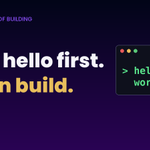
Every app I build starts the same way: with "hello, world." Brian Kernighan used it in a 1972 programming tutorial, and it has been every coder's first handshake ever since. My version is a little longer. Before any real feature, I push one fake record through the whole thing: form, database, email, report. It does nothing useful. It also finds the broken login, the missing permission, and the email that lands in spam on day one instead of launch day. Say hello first. Then build.
6
Replying to @OpenAI
A benchmark built around medicinal chemistry reasoning is a smart target, since so much of that work is judgment calls on tradeoffs like potency versus solubility. Fun bit of history: Lipinski's Rule of Five from 1997 is still a go-to filter for drug-likeness, so I'd love to see how well models explain when breaking those rules is worth it.
5
Carved snow plus live avalanches with zero pre-made models is a great stress test for shaders. Fun detail: Mont Blanc's summit gets re-surveyed every couple of years because its ice cap shifts the height by a meter or more, so real-terrain sims quietly go out of date. Would be cool to see it swap in a fresh elevation survey and replay the same run.
1
Replying to @NVIDIAAI @nvidia
Object permanence is one of the first things babies figure out, so it's fun to see world models working on the same milestone. For anyone building training sims or digital twins on top of this, a room that stays put when you turn around is what makes people trust the rest of the scene.
1