

There are No Bad Assets, just Bad Prices: Exploiting Market Anomalies with Neglected Data
Joined May 2009
- Tweets45.7K
- Following2.1K
- Followers11.2K
- Likes69.9K



ShadowStock retweeted

Love this program, which brings together so much wisdom shared by @MohnishPabrai with the @manualofideas community over nearly two decades. Thank you, Mohnish.

Pabrai saw Buffett and Einhorn own GM, despite disliking autos, and investigated why. Our free 62-minute narrated profile traces that lesson. Listen, then follow Great Investors in your favorite podcast app: latticework.com/p/mohnish-pa…

ShadowStock retweeted

ADHD is a superpower.
"The problem isn't that I can't focus; it's that I can't focus on stuff I don't care about."
"On stuff I care about, I can lock in and you’re not going to find me for months."
So if you have ADHD ...
"The first thing you have to do is reframe the task to find the autonomy."

My conversation with @steven_kotler on flow, cognitive performance, and doing your best work.
Kotler is the executive director of the Flow Research Collective, where he studies flow and the science of peak performance.
In this episode, you’ll learn:
• How to get so absorbed in what you’re doing that distractions fade.
• How to find a challenge that holds your attention without overwhelming you.
• Why a hobby you gave up might be worth picking up again.
• What frustration tells you when you’re learning and how to respond.
• How to focus on work you don’t feel like doing.
• How to think clearly when there’s too much information, and you’re unsure what to trust.
Listen and Learn
(Includes paid partnerships.)
ShadowStock retweeted

Anthropic’s ‘Adjusted’ Profit Exposes Wall Street’s Earnings Game
by the peerless Jon Weil
wsj.com/finance/investing/an…

ShadowStock retweeted
Druckenmiller says to sell when the facts behind your thesis change—not just because the price falls. His 61-minute narrated profile traces that discipline and the asymmetric 1992 pound bet. Listen and follow Great Investors in your favorite podcast app: latticework.com/p/stanley-dr…

ShadowStock retweeted

Dan Loeb says the investors who underperformed or did not survive the last decade were stuck on deep value and low multiples, and explains how moving into quality companies opened up a whole new world for him
“No, they still exist all the time. The real opportunity today is kind of overlaying that understanding those types of opportunities and looking for something that combines that with business quality lens."
"So let’s talk about how my business evolved and how we evolved. I think if you look at a lot of the people who have underperformed or haven’t survived the last decade or so, when people were really stuck on the idea of deep value, low multiples, and being really stubborn about how they viewed businesses, and less flexible about moving into higher multiple companies or growthier companies."
"We basically just started to look at companies that grew faster, that had better returns on capital, that were quote unquote quality businesses. That kind of opened up a whole new world for us."
"So I would call that kind of the other significant part of what we do, which would be quality investing, thematic investing, and that’s when we started to organize our team around industry experts and less generalists and less around the transactions.”

Bill Nygren explains how 20 colleagues and an assigned devil’s advocate attack every new idea, then flip sides when it is time to sell
“It’s a it’s a relatively intimidating setting. You’ve got about 20 investment professionals basically trying to shoot holes in your idea. But the the goal is that we find more of our mistakes before we lose client money in them than than we do, you know, have them end up in the portfolio."
"We assign someone the job of being devil’s advocate and presenting the opposite case so that we’ve got these two people arguing with each other in front of all of us and the rest of us all asking questions."
"Basically all the questions are negative at this point because the analyst is already presenting this as: this is going to be a potentially very good idea. So we’re all focused on why might it not be a good idea."
"Now later in the process after we’ve owned a stock and the analyst is saying it’s time to sell it, everything reverses. So all of us then are saying, are you sure you’re being aggressive enough on the growth rate? Is there a reason we don’t think this can obtain an average multiple for its industry?"
"So the questions are all pushing the other direction. So the analyst is is always at odds with everyone else in the room.”

ShadowStock retweeted
Three months to Day One for The Seven Virtues of Great Investors!
link.amazon/A07EEUbQD
You can master the markets only by mastering yourself.
This book, I hope, will show you how.

ShadowStock retweeted

TALKING BILLIONS: Eric So: The Collision: What AI Does To Us, Why We Need to Stop Outsourcing Our Judgment
What happens when the bicycle for the mind becomes a motorcycle? MIT Sloan's Eric So on his new book The Collision, why AI flatters us, and the one thing we should never outsource: judgment. 🎧 Listen on Talking Billions #AI #Investing #BehavioralScience
ShadowStock retweeted
This is like, who can build the biggest airline the fastest? Not sure it ends well, but I look forward to picking up some of the pieces. Ken Griffin had a great point on this in the interview we included in this week’s member newsletter.


ShadowStock retweeted
Pabrai saw Buffett and Einhorn own GM, despite disliking autos, and investigated why. Our free 62-minute narrated profile traces that lesson. Listen, then follow Great Investors in your favorite podcast app: latticework.com/p/mohnish-pa…
I'm lazy. But I will leave a review on Amazon.
The title may make experienced investors think it's nothing original or useful. But they are wrong. Thanks for the work you shared in the book.
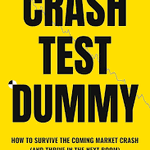
Today I just finished CRASH TEST DUMMY. This is classic Tobias Carlisle writing!! Every sentence offers real-world investing insights. It’s fun to read, with useful tables and checklists worth reviewing. It’s not a read-once book. I gained many new investment perspectives. And I’ve read many investment books. I don’t think the book is just about benefiting from and preparing for a market downturn. But instead, it's DEEPLY RESEARCHED. And it can and should be applied to individual stock selection and analysis.


Today I just finished CRASH TEST DUMMY. This is classic Tobias Carlisle writing!! Every sentence offers real-world investing insights. It’s fun to read, with useful tables and checklists worth reviewing. It’s not a read-once book. I gained many new investment perspectives. And I’ve read many investment books. I don’t think the book is just about benefiting from and preparing for a market downturn. But instead, it's DEEPLY RESEARCHED. It should also apply to individual stock selection and analysis.
Thanks for writing the book!! I will leave a review. But I got the book via Kindle Unlimited. So I’m buying a copy for permanent ownership, and I'll read it multiple times.
ShadowStock retweeted

I always enjoy my banter with Brandon down under. For this chat, Brandon came to Austin last month.
youtu.be/ugwLvcyRPKc?is=VIkB…

ShadowStock retweeted

This is obvious to most with a working brain cell.

Griffin thinks GPUs are a commodity: "GPUs, like airlines, have a very low marginal cost to run... the moment you have overcapacity, pricing goes into freefall."
Ken Griffin's bear case is supply passing demand in a business where the next unit costs almost nothing to serve, the same setup that took telecom pricing straight down after the 2000 fiber buildout. He thinks every AI return model in use today assumes that never happens. $NVDA $AVGO
Citadel CEO Ken Griffin Says AI 'Almost Certainly' in a Bubble; Trump Has 'Mixed Scorecard', Bloomberg Podcasts, October 21, 2026


ShadowStock retweeted

Hedge Fund Manager David Orr (@orrdavid) on why he’ll back a delivery guy over a Harvard grad, as long as the track record is real.
David Orr runs Militia Capital, a ~$480M hedge fund. ~50% annualized, Sharpe 2.
“If you didn’t go to Harvard, they’re not going to give you money. They’re gonna lead you on for years.”
We cover:
- Edge is just reps. He's placed a few hundred independent bets every year since 2019, more in one year than a lot of hedge fund managers get in a decade.
- The two-hour rule: if he can't decide on a stock in an hour or two, he skips it. When a trade goes against him, he quits. "The market said I'm wrong, I'm wrong."
- 500 positions in his partition and zero notes. Some of his best shorts are down 40% and he's forgotten what the company does.
- The Gogo lesson: he spent 100 hours on a short and was right on the fundamentals (it's now $2), but it ripped to $20 first. All that research made him stubborn on the way up.
- The AI risk system: it groups the book into custom baskets like "Banks Done Right" and "yield traps," recalculated daily. A 25% bet can quietly become 45% in two weeks.
- How Militia recruits PMs: 95% of track records are junk, and one cherry-picker ran 30 accounts and sent the best one. The PMs who make it include a game show winner, a Spanish government worker and a programmer, with 0.15 cross-correlation.
- The best short seller in the world, quietly: 40% a year short only for years, and he still gets a tiny allocation at his fund.
- Why multi-managers' real business is marketing. Collect $2B a year in fees on $100B and it's "mission accomplished," whatever the returns.
- The long/short tax trick: harvest losses on losing shorts, and never cover one that's down 90%. No tax is due until it's delisted, which can take 10 years.
- $150M raised from one email asking LPs for $100M. He says he could raise a billion but won't, and admits they "must have gotten at least somewhat lucky."
- His AI stock map: hyperscalers locked customers into take-or-pay deals at ~35% return on capital. If compute prices crash 80%, the end customers get wiped out, not the hyperscalers.
- Is investing 99% talent? For big alpha, almost entirely. Pod shop alpha is teachable, maybe for 1 in 50 people rather than 1 in 10,000.
Highlights:
00:00 Intro
00:44 How AI custom factor baskets track dynamic correlation in levered portfolios
03:24 Sourcing non-consensus PM talent and verifying live Sharpe track records
07:24 Structuring carry and tax deferral to attract elite proprietary traders
12:50 Why institutional multi-manager platforms fail to back pure alpha
20:22 The two-hour research limit: Avoiding sunk-cost bias in short selling
27:58 Momentum screening vs deep value: Why top longs hit new highs
29:40 Why traditional finance books fail and what operator biographies teach
37:16 Why rapid technological adaptation beats traditional economic moats
39:26 Analyzing the AI trade: Why hyperscalers offer superior downside protection
44:57 Internalizing stock borrow desks to maximize net-of-fee fund compounding
55:25 Avoiding confirmation bias and why shorting revenue growth fails
01:01:42 Pod shop leverage factories vs raw discretionary alpha generation
01:07:12 Unplugging from market narrative feeds to preserve independent conviction
ShadowStock retweeted

Peter Lynch: The average range for a stock on the New York Stock Exchange, the average high, average low, every year is 100%
People know this, but they never buy it.....they never have the intention to buy. There are plenty companies with outstanding CEOs, strong buybacks, high free cash flow yields, and they keep innovating....


