

Finally know what to do with your money. Personal finance and digital assets you control. Free 2-minute quiz + 7 free lessons 👇
Joined April 2025
- Tweets939
- Following275
- Followers156
- Likes4.3K





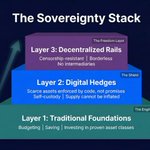



If your income changes every month, most budgeting advice does not fit you. It assumes a fixed salary.
Freelancers, commission jobs, small business owners and gig workers need a different starting point. Here is one method, step by step.
1. Write down what you earned in each of the last 6 months.
Example: $2,400, $3,100, $1,900, $2,800, $3,500, $2,200
2. Do not build the budget on the average. Here the average is $2,650, but 3 of the 6 months came in below it. A budget built on the average comes up short in half the months.
3. Find your lowest normal month. Leave out one-offs, like a month you were ill or between jobs. Here it is $1,900. Call it your floor.
4. Make the essentials fit inside the floor: rent, food, bills and debt payments.
5. In a good month, everything above the floor goes into a separate account: your cushion. In a bad month, the cushion helps fill the gap.
With a floor and a cushion, a bad month is one you already planned for.
Does your budget break in the same month every year?
Usually it is a big bill that the monthly budget never counted: car insurance, school fees, a flight home, gifts, yearly subscriptions. They do not come every month, so they are easy to forget. Then several land at once.
A simple fix, in five steps:
1. Open last year's bank and card statements.
2. Write down every cost that came only once or twice in the year.
3. Add them up.
Example:
Car insurance: $900
Gifts and holidays: $600
Flight home: $1,200
Yearly subscriptions: $300
Total: $3,000 a year
4. Divide the total by 12. Here that is $250 a month.
5. Every payday, move $250 into a separate savings account and use it only for these bills.
Once the account has built up, the money is already there when the insurance bill or the flight comes, and the month stays on plan.
This has a name: a sinking fund. It means saving a little every month for a cost you know is coming.
Freedom Capital DA retweeted

A year ago, I warned that the financial system was about to radically change. I told you to get ready for the boom. Not a market boom, but the sound of a controlled demolition. I wrote that the legacy financial system was being systematically rigged for detonation. The traditional processes and safety nets were failing, and the new architects in Washington were preparing to rewrite the social contract using a completely new system of accounting: tokenization and stablecoins.
Many in the mainstream financial press thought the idea of the US government forcing a digital redenomination of the economy was too complex, or simply too incredible, to be true. Yet, it is underway. I said new forms of money would appear, and they are: The US is pursuing a Bitcoin SWF and introducing stablecoins. Banks are still resisting, but crypto is getting access to the Fed’s payment system. Digital rails are being installed. Chairman Warsh represents a radical regime change at the Fed.
Erebor is now up and running, the new investment bank for a tokenized world, with a valuation of at least $8b and a deposit base of $4b. Tokenization is breaking the lock that Wall Street and private equity held over startups and widening the funding avenues for "workhorse" businesses.
The prediction that the EU would be forced to recognize stablecoins issued outside its jurisdiction, despite the ECB's desire to route retail savings into capital markets and push a CBDC, has proven to be a defining macroeconomic clash.
But as the digital panopticon of the on-chain ledger becomes our new reality, the need for human judgment, intuition, and conscious capital is greater than ever. We are moving at lightspeed into an atom-led economy, but technology alone cannot guide us. To survive the rest of this transition, we must also upgrade what I call our Heartware in addition to upgrading our hardware and software.
I am unlocking this piece from the archives today. Read it to see exactly how the blueprint was drawn, which structural pillars have already fallen, so we can understand what we must do to ensure this entrepreneur's revolution actually leads to human flourishing.
open.substack.com/pub/drpipp…


Most personal finance advice was built for a world of stable middlemen, stable jobs, and stable currencies.
I do not think that world exists anymore.
At 26, I watched a banking system erase a decade of my savings overnight.
That experience pushed me to build The Freedom System.
A step by step system to understand money, build your structure, and automate it.
The app is live.
20% off until May 8.
Link below.
What breaks first in 2026: the middleman, the job market, or the currency?
Freedom Capital DA retweeted

Mega bullish Bitcoin?

Under Economic Fury, @USTreasury will continue to systematically degrade Tehran’s ability to generate, move, and repatriate funds.
Treasury’s Office of Foreign Assets Control is sanctioning multiple wallets tied to Iran — resulting in the freeze of $344 million in cryptocurrency.
We will follow the money that Tehran is desperately attempting to move outside of the country and target all financial lifelines tied to the regime.
Personal finance is changing because the world it was built for is disappearing.
Three forces are driving it:
1. currency debasement from soaring debt
2. rising geopolitical tensions in the late stage of the big debt cycle
3. AI disrupting the careers people depend on for income

The goal is to help people organize and automate their financials, adapt to AI disruption, and operate with more control in a deglobalizing digital economy.

