

Research in #Biomedical #DataScience & #Bioinformatics #CompBio. @MarkGerstein AT @YaleMBB @YaleMed
Yale University
Joined October 2009
- Tweets312
- Following198
- Followers528
- Likes392



Pinned Tweet
New study conducted by our lab in collaboration with #PsychENCODE has made significant discoveries linking genetic variants to genes and cell types in human brain. #psychencode24
For more details, refer to our original thread: xitter.gq/MarkGerstein/status/17…
news.yale.edu/2024/05/23/tra…

New paper on single-cell genomics & regulatory networks for 388 human brains just out in @ScienceMagazine. Neat stuff on single-cell QTLs, cell-to-cell communication, & DL models simulating drug effects (science.org/doi/10.1126/scie…) #PsychENCODE24

Gerstein Lab | Yale retweeted

Where did a mutant cell come from, and where did it go?
1/ Our new manuscript StarTrak (biorxiv.org/content/10.64898…) enables somatic variant calling + lineage reconstruction at single-pixel resolution in spatial genomics. It iterates between the two, using multimodal deep learning on spatial, histology and expression data. 🧵


We are excited to announce pyGENIE, a Python package to access AACR Project GENIE cancer genomics data. pyGENIE enables clinical and genomic queries, tumor mutational burden analysis, and mutational signature analysis through a unified API.
Read here:
doi.org/10.1093/bioinformati…

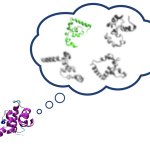
New paper in Protein Science! Meet DreamFold: a World Model that generates protein folding pathways and reveals druggable intermediate states: onlinelibrary.wiley.com/doi/…

Excited to see our work featured by @YaleMed! We introduce MedicalAgentsBench, a benchmark for evaluating how multi-agent LLMs compare with reasoning models—and how they can complement each other in clinical decision-making: medicine.yale.edu/news-artic…

Gerstein Lab | Yale retweeted

Posting my talk today at @UniBarcelona on the 25th anniversary of the human genome (hosted by @beaborsari) lectures.gersteinlab.org/sum… Lots of new slides on variant impact models & pseudogene epigenetics across tissues


Gerstein Lab | Yale retweeted
Posting my talk today for tutorial IP2 at @iscb's #ISMB2026: Large Language Models & Agentic AI for Biomedical Informatics (organized by @XiangruTang) lectures.gersteinlab.org/sum… Has lots of slides on case studies for LLMs in brain genomics & comparisons with more classic approaches


During our recent lab roster meeting, we asked about everyone's AI chatbot preferences (n=69, multi-select):
🥇 Claude — 49 (71%)
🥈 ChatGPT — 43 (62%)
🥉 Gemini — 14 (20%)
Takeaway: Mostly Claude + ChatGPT co-usage, with Gemini as a distant third and a long tail of niche tools.
Gerstein Lab | Yale retweeted
Post term, cleaned up my biomed. data sci. course website. gersteinlab.org/courses/3520 Now in its 28th year. New thing this year was #AI integration: the students merged (with color coding) the manual & AI summaries of each lecture. Also, lots of new posted videos & PDFs (esp. on DL)


New @naturecomms paper by @katerbowie @MarkGerstein @jordan_peccia @H2O_Hannah. We study how disinfection shapes microbes in hospital sink drain biofilms. Biofilms regrew in 4 days, enriched for carbapenem-resistant bacteria and multidrug efflux pump genes nature.com/articles/s41467-0…

In our @NatMachIntell paper, we introduce a framework to analyse interpretability in deep learning by drawing on a formal notion of model semantics from the philosophy of science. We illustrate our framework with examples from biomedicine. Read here: rdcu.be/e9uYh

By Jonathan Warrell, Michael Gancz, Hussein Mohsen, Prashant Emani & @MarkGerstein
66
Curious how pseudogenes are transcriptionally regulated? Our new @genomeresearch paper shows processed pseudogenes break the rules: they’re transcribed without classic epigenetic marks, linked to enhancers, and enriched for YY1 motifs. Study co-led by @YunzheJ and @beaborsari
🔐 New open-access paper in Cell Reports Methods!
We show that fully homomorphic encryption enables privacy-preserving polygenic risk scores (PRS), allowing secure computation directly on encrypted genomes with near-zero accuracy loss.
📄 cell.com/cell-reports-method…

🚀 New paper in Bioinformatics!
Our #ASTRO work led by @dingyao_zhang introduces "ASTRO: Automated Spatial-Transcriptome whole RNA Output", an automated pipeline optimized for whole-transcriptome spatial analysis, especially in challenging FFPE samples.
🔗 doi.org/10.1093/bioinformati…

Our @NeurIPSConf work led by @_YunyangLI “E2Former: An Efficient and Equivariant Transformer with Linear-Scaling Tensor Products” was selected as a spotlight (with score ranked ~17 / 21k submissions).
Poster: Thur Dec 4, Exhibit Hall CDE #5512
Online: openreview.net/forum?id=ls5L…

This work is a close collaboration with colleagues previously at Microsoft Research (@MSFTResearch) and currently at Ubiquant and various other places. Huge thanks to them for the ideas and computational resources.
209
🆕Our new PNAS study bridges histology and genomics!
Using deep learning and imageQTL analysis, we show how tissue images reflect gene expression and aging — making histology more interpretable with AI.
pnas.org/doi/10.1073/pnas.24…

By @RanMeng_m, William Zhu, Christopher Cameron, Pengyu Ni, Xiao Zhou, Tselmeg Ulammandakh, and @MarkGerstein.
By @RanMeng_m, William Zhu, Christopher Cameron, Pengyu Ni, Xiao Zhou, Tselmeg Ulammandakh, and @MarkGerstein.
126