

National strategy 🇺🇸
New York City
Joined March 2009
- Tweets1.1K
- Following2.9K
- Followers1.4K
- Likes591





Grant Kettering retweeted

Trump and Xi will meet in Shenzhen Thursday. In today’s @ForeignAffairs, I argue that the so-called “detente” they struck a year ago is now under severe strain. Busan is cracking over rare earths, a new Democratic Congress will check Trump, and the Nvidia scandal is triggering new export controls. After a year of calm, we may be in for a period of tension.
Beijing has used the detente to press its advantage. It is locking in its industrial leadership, coercing its neighbors, and keeping rare earth flows tight to keep the U.S. on a tight leash. Meanwhile, the U.S. has been accommodating.
But Beijing is overreaching. If the United States believes Beijing will throttle rare earths no matter what it does, there is little reason for continued restraint. With the trade truce expiring January 10, time is running out for the two leaders to extend or preserve it. The meeting in Shenzhen, and the next one in Miami in December, are the last few opportunities to stabilize.
--
A summary of the key points:
1) Chinese scholars see the current detente as temporary. Chen Dongxiao calls the detente a “tactical truce.” Wu Xinbo said it was “tactical stability” that is “neither sustainable nor solid.” And Shen Weizhong, a former Chinese foreign ministry official, says: “The more time we have, the better prepared we might be towards a final showdown on Taiwan or maybe another trade war.”
2) Chinese scholars believe China’s strength built the detente, not diplomacy. Wang Yong called the trade war “a tipping point in terms of strength.” Wu writes it “is not the result of the U.S. side having a change of heart or showing goodwill, but was won by China through arduous striving and struggle.” Wang Yong of Peking University calls the trade war’s outcome “a tipping point in terms of strength.”
3) Chinese scholars credit Trump personally for American conciliation. Chen Dongxiao points to his “distinct and unique decision-making style.” Zhao Minghao writes that Trump “admires power and prefers to engage with the leaders of powerful countries.” Others write he would "readily sacrifice" Taiwan. They want to lock in the current stability, as Xi declared, for three years and beyond.
4) Trump has indeed been accommodating so far. He kept tariffs on China well below the cap. He paused entity listings for the longest period since 2008. He let advanced AI chips flow to China and its Southeast Asian cutouts. And he held up arms sales to Taiwan and offered only muted support to Japan and the Philippines under Chinese pressure.
5) Beijing is pulling up the tech ladder and preparing for the next fight. New State Council orders threaten foreign firms that cut ties with Chinese partners. Exit bans keep key talent and their families in the country. Export controls on manufacturing equipment keep others from catching up. National security regulations on scientific publication protect domestic know-how. And rare-earth licenses force foreign buyers to hand over customer lists and production details, giving China a map of chokepoints.
6) Beijing is taking advantage of American conciliation to press its advantages in Asia, breaking past precedent. A China Coast Guard crew clubbed a Philippine sailor near Second Thomas Shoal. They blocked a resupply mission during Xi’s state visit to Washington, breaking a two-year agreement. Japan now faces the broadest coercion campaign in more than a decade, existentially threatening some of its manufacturers. And around Taiwan, the PLA fired rockets closer to the island than ever before. Washington has largely stood by.
7) Beijing is breaking the Busan agreement. Washington has complied with the terms of the Busan agreement, suspending the Affiliates Rule and lowering tariffs, but Beijing has throttled the supply of rare-earth minerals and magnets to the United States. U.S. officials say China has delivered only about two-thirds of what it promised, and trade data suggest the shortfall is larger still. Shortages of yttrium, used for jet engines and gas turbines, have forced some suppliers to suspend production. Chipmakers are running short of scandium. Beijing believes strength built detente, and more strength will preserve it - not backfire.
8) The way forward at Shenzhen. The two sides are unlikely to save the truce at Shenzhen. We should expect few breakthroughs on agriculture, aviation, or even AI despite the need. But the leaders should at least announce they are working to extend the truce ahead of the December meeting in Miami.
If they fail, and tensions mount, there is a growing risk of runaway escalation.
foreignaffairs.com/united-st…

Grant Kettering retweeted

Introducing the Center for Human Progress, a think-and-do tank rooted in cultural evolution, behavioral science, and economics.
The world isn't short of great ideas. It's short of the systems to deliver them. The barriers to implementation are typically in the people layer - norms, incentives, and other aspects of culture. 🧵
centerforhumanprogress.org/

Grant Kettering retweeted

Hierarchy, Not Ideology: China’s Tributary Order
A frequently debated issue among Western commentators is whether we’re in “Cold War 2.0.” The focus is usually on ideology. The common refrain: unlike the Soviet Union, China doesn’t export its political system, so the West can afford to deal with Beijing issue by issue. A typical example is the EU’s view of China as a “partner, competitor, and systemic rival.”
This is a dangerous misreading. Ideology has rarely been the organizing principle of Chinese foreign relations—except briefly when Mao served as Stalin’s junior partner. The central theme, historically and today, is the clientelist model: Beijing sits at the center, others orbit around it, and their legitimacy depends on deference.
The Historical Playbook
For centuries, China managed a vast network of tributary states. Korea, Vietnam, Okinawa, and Thailand weren’t annexed, but they survived only by paying ritual respect. Envoys performed kowtows, adopted Chinese calendars, and presented tribute. What mattered was not what kind of government they ran or what faith they followed, but whether they affirmed China’s supremacy.
Even succession politics were subject to Beijing’s hand. A king without China’s recognition was a king without legitimacy. Trade, too, was conditional: access to China’s markets was granted as a favor to the obedient, not as a right of equals.
The lesson was clear: ideology was secondary; hierarchy paramount.
The Modern Version
Fast forward to today, and the same logic applies. Beijing doesn’t demand its clients adopt one-party rule. It demands silence on its “core interests”: Taiwan, Xinjiang, Tibet, the South China Sea. It demands symbolic gestures of respect in joint communiqués. And in return, it offers market access, loans, investment, and political cover.
But the tribute runs deeper today. It operates in three layers:
First, diplomatic deference. A client state must toe the line on Taiwan, Tibet, Xinjiang, and the South China Sea. It must parrot Beijing’s preferred slogans about a “shared future” and avoid joining coalitions China deems hostile.
Second, economic subordination. Beijing doesn’t demand you abandon democracy—but it does demand you open markets to Chinese firms, accept technology dependence, and swallow asymmetric trade. Industrial policy is tolerated only if it doesn’t cross Chinese interests. Tribute is no longer bolts of silk; it’s ports, 5G networks, and supply chains mortgaged to Beijing.
Third, domestic compliance. This is where democracies face their hardest test. China cannot tolerate a free press that criticizes it. States aspiring to client status are expected to silence NGOs, muzzle newspapers, and discipline universities that stray too far. Just as emperors once appointed kings, Beijing now cultivates political elites who echo its line.
What a Democracy Gives Up
This is the stark reality: in a China-centered world order, a democracy does not lose the form of its system—ballots will still be cast, parties will still alternate. But it will lose the substance of sovereignty.
•Foreign policy will be constrained to avoid crossing Beijing.
•Economic independence will be eroded as key sectors are mortgaged to Chinese supply chains and finance.
•Freedom of speech will shrink, not because Beijing outlaws it directly, but because governments and elites censor themselves to stay in China’s good graces.
In other words, democracy survives as ritual—much like the tributary kowtow—while the space for true independence narrows to nothing.
The Real Choice
This is why framing today’s contest as “Cold War or not” misses the point. China is not building an ideological empire. It is building a hierarchical one. And in that hierarchy, democracies survive only as clients—provided they pay tribute in silence, in markets, and even in their own public discourse.
That is the world Beijing is offering. The question is whether democracies are prepared to live in it.
Grant Kettering retweeted
@_StephenKBannon's PBS interview is pretty epic.
More cogently than I've seen elsewhere, Bannon links the boogey-man of the administrative state causally backward, through law firms, universities, and the media, and ultimately to "billionaires" whom, he claims, benefit directly from—and finance their administrative shock troops with—a political economy of permanent Keynesian deficits.
The project is, of course, the rectification of our constitutional republic, and the method is restoring the unitary executive to dismantle these strata of unelected elites, to deliver the state back to the people. Despite being a propagandist's gloss on a more complex and interesting situation, there is enough here to be electorally potent and put MAGA's political competitors on the defensive.
But the superficiality is also glaring. Still fumbling around with the absurd expectations set by DOGE, and how to find $2tn in deficit reduction. Nothing on trade. Hand waving on a grand strategy of "hemispheric defense". Clearly no appreciation for the deeper economic and strategic questions we face.
The tragedy is that instead of bringing the best of our political tradition—righteousness, rectitude, and clarity of strategic vision—to address of legitimate issues, MAGA has largely brought petty, grievance-ridden, corrupt, short-sighted, and worst of all un-strategic solutions to bear.
I agree that the old order was not tenable, and the inability for the old order to understand itself and its own failings is lamentable, but this is no excuse for stooping even lower than they ever did.
Where is the constructive alternative?
youtube.com/watch?v=NAgh90cC…
Grant Kettering retweeted

5/ Ukraine is the only country actually fighting this type of modern war.
And the West? Mostly watching. Zaluzhny says we don’t just need donations, we need joint development, joint production, and deep integration.

Grant Kettering retweeted
@policytensor this is a really excellent, really well-written piece. One of the best I've read on these topics. I wish other people wrote more stuff like this. Thanks.
I think you do a great job at prioritizing productivity, drawing out its links to trade, and rolling all that up into the geopolitics.
Nevertheless, I still disagree with you on some key stuff so let me summarize:
1) In context of our exchange that got us here, the protectionism of Trump/Navarro/Cass ≠ the economics and data of Pettis/Setser/Klein. So I do think that Pettis et al. deserve a close reading and, if warranted, a dedicated refutation.
2) But your piece goes way beyond Pettis et al and I think is *far* more interesting than just the trade debate.
My core objection to your argument is quite simple: China is not an inevitable colossus to which we much manage a power transition, and we have a good strategy to avoid this within reach.
First, China's scale and high-productivity regions/sectors/firms masks the fact that in aggregate China's productivity is low and anemic: documents1.worldbank.org/cur…
Second, while China absolutely has developed impressive technology and probably the worlds best industrial ecosystem, it still lack a huge number of critical technologies as well as anything like the other chokepoints (e.g. finance) that remain (for now in the hands of the U.S.). In other words, the net assessment of national tools here also favors the U.S., strongly.
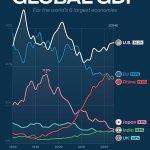
Third, China's domestic imbalances that have been a result of core policy under/since Deng (and which Pettis does a great job of explicating) have led to serious problems including especially massive capital misallocation (a lot of which has yet to be written off balance sheets) as well as an incredible economic dependence on net U.S. demand.
China's political unwillingness to undergo institutional and political transformation means that it will not be able to reverse these imbalances and build the large, moderately wealthy consuming class that would be required to backfill for demand and actual produce a return on their fixed capital investments.
And furthermore, we need to highlight within this that China's trade imbalances are *not* (as you argue) due to innocent savings/investment differentials, but rather to the panoply of well documented neomercantilist practices (hukou, labor repression, financial repression, capital controls, etc.) which China employs intentionally and explicitly to generate precisely the distorting effects (trade surpluses, differential industrialization, etc.) which folks like Pettis claim they do.
This in may ways seems like the key disconnect in too many of these conversations, as people are eager to defend trade against protectionism but fail completely to defend trade against neomercantilism (which is all Pettis et al have been doing — they're actually pro free trade).
Overall, the national strategy you don't seem to consider closely enough is not U.S.-China decoupling (which I agree would not work), but rather U.S.-led global decoupling with China, paired with escalation of technology exclusion, and stronger offense against Chinese influence operations and other gray zone activities—paired with diplomatic reassurance.
This strategy would retain many of the advantages of trade which you write about so well, while simultaneously preventing China from enjoying those same benefits. Because the U.S. is the one with the massive global trade deficit, it putatively (if well played, which is not currently occurring) should have the power to redirect that net demand where it sees fit, specifically to use that net demand to convince, incent, and coerce trading partners to do the same (while also reindustrializing and reducing dissavings in the public sector). Not a quick or easy process, but far from impossible.

Already wrote it. policytensor.substack.com/p/…. But perhaps an update is required to directly refute the core claims of Pettis-Miran.
Grant Kettering retweeted

I wrote this almost a decade ago:
“ The hope that the Chinese will admit their wrongs and ask to join our rules-based club is a mirage. It must be given up. We hold to it only because we fear the responsibility the truth would force upon us. The Chinese have made their choice. The ball is in our court now.”
It is dispiriting to have to have the exact same conversation today.


This quoted post is unavailable.