

CTO @TrustedSec | Former Optiv/SecureWorks/Accuvant Labs/Redspin | Race cars
/tmp/.a
Joined April 2008
- Tweets67.7K
- Following5K
- Followers75.3K
- Likes146K




Justin Elze retweeted

Today we announce 1Password for Agents platform, building with companies @Muse, SpaceX Super Intelligence Grok @Bot, @AnthropicAI’s @Claudeai, @OpenAI, @TownAI, @Browserbase, @Browser_use, @heydana_ai, Instinct, @usekernel, @Perplexity_ai, @tryramp, @Tomo, and @wajo_ai, with more integrations on the way. 🎉
We've heard from so many of our customers who want to use these new personal AI agents to help them get more done, but want more control over what the agent can access with the same trust and ease of use they get when using 1Password directly.
1Password for Agents gives your agents access without giving up your passwords. When an agent reaches a sign-in form, it requests a credential from your vault. If you approve the request, 1Password directly auto-fills the credential in the destination site so the agent can’t see or take possession of the credentials.
The agent gets the task done, but it doesn’t get your passwords..
You stay in control. 1Password for Agents free and optional for personal and family accounts. Unless you opt-in to an agent connector, agents cannot touch your vault.
➡️Learn more: bit.ly/487da6J
Justin Elze retweeted

When I read Anthropic’s “self-replicating AI” article, I knew I had to respond.
The research is technically interesting. But the headline combines three different models, two separate experiments, a seeded foothold and a network of unauthenticated computers into one story about “self-replicating AI.”
Honestly, that conclusion would never survive peer review. Here is what they actually demonstrated.


Justin Elze retweeted

It seems that MS update prevents coercion and relaying via WebDAV.
Defeating SMB signing as described in QT will most likely be patched as well.
There is a PR for a module in NetExec


I wrote up a way to defeat enforced SMB signing for relay.
It abuses a documented SMB re-authentication behavior.
I'm surely missing nuance and prior art. Corrections welcome.
Writeup:
blackfield.ch/blog/defeating…
PoC:
github.com/aas-n/reauthx

Justin Elze retweeted

Project Swarm from @GreyNoiseIO let's you get ground truth on exploitation in the wild. You can deploy your own honeypots to collect reconnaissance, exploitation, and post-exploitation artifacts. It's a dollar.
greynoise.io/project-swarm
Justin Elze retweeted

Just an incredible indictment of this guy and BBC news, for two reasons:
1) How can you claim to be a "cyber correspondent" and not know what PHP is?
2) Why would you admit this in public? You didn't have to say all that


Justin Elze retweeted

18 months after Trimarc joined TrustedSec, the work speaks for itself. In our new #blog, Identity Security Architect @PyroTek3 reflects on Trimarc’s integration into TrustedSec and what it means for customers, services, and ongoing research. Read it now! hubs.la/Q04C18Yy0


Justin Elze retweeted

Honestly, yesterday's PHP vuln chaos wasn't that different from what we've seen in the past. The classic "it's coming get ready" race to reproduce coupled with the classic misleading noise from the discussion feels pretty familiar. Humans make it messy.
Justin Elze retweeted

The actual prompt for this was "let's look for pre-auth RCEs in PHP". I'm sharing this so people know this stuff is real and to take agent-assisted scanning seriously.
I kicked if off using Claude Mythos 5.1 (in stock Claude Code) but it uses a skill to drive a harness we built over the last few months.
I don't know if the harness is amazing, but it certainly has a scary track record so far. It's setup to do an agent guided tree search across a codebase, and runs in microvm sandboxes that all have the full source code for the target, as well as the source for any transitive dependencies.
When I built the harness I basically just fed Claude a bunch of Project Zero blog posts describing how they did research and had it build a harness that ran like that, but on our tech stack.
The first phase is just setup and can run with any model, it just does that fetching and assembles the kit environment, and gets a target up and running alongside the source code.
Then we just do some basic suspend/resume stuff over to the hunt phase, where one agent supervises the tree, and the first node kicks off.
Each node is context-aware and aware of the work of all the others. I think I ran this with parallelism 4? So 4 running at any one time. The supervisor can shape the tree and boost nodes or prune. Any node can add more below it with targeted instructions.
A typical run looks like the first node doing a codebase review or building and running a fuzzer or something, all depending on the target. Then based on whatever it finds, it'll queue 4-5 children that go look into those areas. The main system guidance is to validate everything 3 times in clean VMs, and we typically require full exploit chains/POCs.
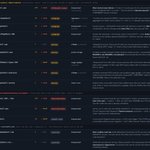
Here's what this run looked like.
We're doing this with a bunch of other open source projects now and companies. We're doing a lot of this for free, even with private companies, across critical infrastructure. We're directly partnered with Anthropic, and can do this even if you don't have direct access to a frontier model yourself.


Justin Elze retweeted

Yep. Because you can't just prompt "find me all the vulnerabilties". Maybe in awhile but we're nowhere near that now.
Skilled researchers, custom harnesses, and other techniques are changing the bug depth game, in addition to bringing down the cost.

wait, PHP was actually scanned by Anthropic’s Claude Mythos earlier this year. they also had access to OpenAI’s Daybreak Red for validating exploits.
the PHP Foundation revealed this JUST yesterday.
keeping frontier cyber models in the hands of a selected few doesn’t seem to be working well for the internet.
thephp.foundation/blog/2026/…

Justin Elze retweeted

Anthropic should provide a setting where you can ask the safety filters to knock you down to Opus 4.6 or 4.7 instead of Worst Opus Ever


Justin Elze retweeted

Adding this to the lab, github.com/dinosn/php-cve-20… , this will work on stock, official php:8.4.26-apache image, no php.ini change, single-worker
prefork, display_errors=Off . Default has the 128M allocation, not the 8M that is on labs. All work in progress. I don't see realistic scenario though without spamming heavily and for long time servers.

Justin Elze retweeted

Just published our high fidelity scanner for php2shell: github.com/assetnote/php2she…
See our detection logic here: slcyber.io/research/high-fid…
We've taken care in our detection logic and hope it helps defenders. Congrats to @calif_io and @lcfr_hax for the discovery.
Justin Elze retweeted

A great reminder that Entra App Proxy, Cloudflare Tunnels/Access, or some sort of ZTNA is a great way to remove stuff you don't want hacked from the Internet

Justin Elze retweeted
Added support for the compromised eMudhra intermediaries to gopostille. It'll let you create a validly signed certificate chain for a clone leaf cert in places that haven't revoked them. 1/2

Justin Elze retweeted
Autonomous LLM work on the PHP bugs was a real worry until you realise how few people understand exploitation well enough to prompt around ASLR and offsets. So many lab only /goal outcomes masquerading as something more general.
Justin Elze retweeted

When looking for exploitation of emerging vulnerabilities I regularly see defenders looking for IOCs lists, specific artifacts of open-source POC code etc. to build your detections on. While these are valuable, they are only a small part of the story and they won't catch everything.
Historically the life cycle went: CVE/0-day released -> POC released -> hunt for signs of exploitation -> variant hunting. In the first few days of disclosure, the same POC code was weaponized by many actors, which meant those first days of detection were some what simple.
However, in the world of AI, the barrier to entry for writing exploit code has been dramatically lowered and you can't be sure that the POC code shared on GitHub is the one being used to target your environment. In fact, exploits may be weaponized simply by analyzing update and patch content.
Without concrete indicators, often the best way to detect something novel in your environment is to use your existing telemetry as your base line and then pattern our what is new. Your SIEM is an archive of what is normal in your environment - broken down to what is normal for every single asset.
When something new and emerging drops, find high risk deviations from that, on your vulnerable and exposed assets.
Has this file ever spawned a process in this way? Has this process ever crashed like this? Are files regularly created in this directory? Does this process usually create files? Baseline left of the disclosure, detect deviations right of the disclosure = find bad.