

Crit Care 🫀 Fellow @OHSU | Chief 🫀Fellow @OHSUCardio | IM @BCM_InternalMed | MD @CayetanoHeredia 🇵🇪. Interest in walkability and urban planning.
Portland, OR
Joined May 2014
- Tweets1K
- Following1.2K
- Followers894
- Likes14.9K





Christian Inchaustegui, MD retweeted

Some have advocated that PCWP is often falsely elevated with obesity from positive external pressure from the chest, and many may not have real HF.
@JCardFail I explain why this is likely an incorrect hypothesis and why the pcwp can be trusted in obesity
sciencedirect.com/science/ar…
Christian Inchaustegui, MD retweeted

A historic day for Resuscitation Science at @AHAScience #ReSS2026.
ON-SCENE is out in @NEJM — nationwide HEMS ECPR in the Netherlands, cannulation on scene.
40% vs 20% survival to discharge. 36% vs 13% CPC 1-2 at 6 mo. 45 vs 77 min to ECMO flow.


Christian Inchaustegui, MD retweeted

Los diuréticos de asa intravenosos a dosis muy altas (ej, bumetadina y furosemida), NO se asociaron a ototoxicidad👂, los pocos cambios auditivos son temporales y totalmente reversibles
Olvidemonos ese mito viejo y obsoleto
JAMA Cardiol 2026
10.1001/jamacardio.2026.4913

Christian Inchaustegui, MD retweeted

New from JCF and @HFSA 🫀
Our latest scientific statement on Right Heart Failure is now available.
Explore the publication and its insights for the #HeartFailure community.
bit.ly/4BJnJL4

Christian Inchaustegui, MD retweeted

Robbing Peter to pay Paul? MA-FP prior to durable #LVAD was associated with near doubling of the rate of aortic insufficiency and 30% increase in the rates of right heart failure. @JonGrinsteinMD
🔗: jhltonline.org/article/S1053…
Christian Inchaustegui, MD retweeted

🫁⚙️ Asincronías Paciente-Ventilador
📈Alto Impulso Respiratorio
📉Bajo Impulso Respiratorio
🔄Trigger Reverso
📊Detección en Curvas
⚙️Ajustar Ventilador Antes que Sedar
🔰📚Respiratory Care 2025
Artículo Completo👇🏻✅🆓
t.me/DeCaUMX

Christian Inchaustegui, MD retweeted

This is one of the funniest things to me. I will often ask someone who tells me that they’re dry. How is it that they got that way and then there’s usually a little bit of silence, a mumble about insensible losses, a limited PO intake, despite the 3 L that have been given in the last 48 hours, lol. The reality is that unless you were getting aggressive diuretic therapy or you have severe G.I. losses, your so-called intravascular dry patient likely has a main systemic filling pressure problem and you don’t wanna miss the septic source because you thought they were dry.

Christian Inchaustegui, MD retweeted
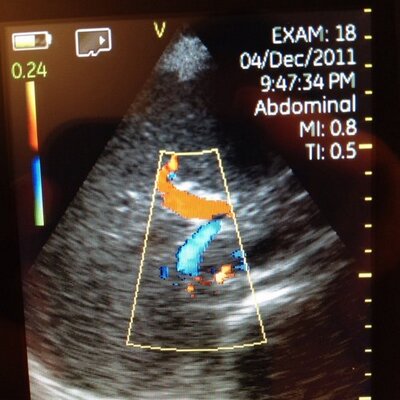
Updated the chapter on extubation 😁
Determining whether the patient "passes" an SBT is perhaps the biggest clinical conundrum.
Rapid-Shallow Breathing Index (RSBI) is commonly used to gauge whether the patient passes an SBT. However, this is only moderately predictive of the ability to extubate:
👍 RSBI <105 indicates +2 likelihood ratio of successful extubation
👎 RSBI >105 indicates a 0.3 likelihood ratio of successful extubation
RSBI <105 doesn't guarantee success, because it only measures if the patient is strong enough to breathe (the patient may still fail to clear secretions or maintain their airway).
RSBI >105 doesn't guarantee failure. Especially in the context of chronic respiratory dysfunction (COPD, ILD), patients may still be extubatable (especially extubation of COPD patients directly to BiPAP).
Ultimately, there's no easy answer. Clinical judgement and experience are needed. Vibes. Often you need to repeat the SBT and see exactly what happens and how the patient "failed."
There is only ONE test with 100% sensitivity and specificity for the ability to extubate: removing the endotracheal tube and seeing what happens. Patients continue to surprise me and remind me that we cannot foresee the future, so sometimes we need to just empirically try.
The main improvement to the chapter is better organization with quick links to commonly encountered problems.
(#1/2, link in next post)
#AlwaysBeExtubating

Christian Inchaustegui, MD retweeted

Clinical relevance of ventriculo-arterial coupling and how to assess it at the bedside
CCR Journal Watch
criticalcarereviews.com/late…

Christian Inchaustegui, MD retweeted

📢Just Published in @CircHF: Special issue dedicated to cardiogenic shock Guest Edited by Dr. David Morrow, MD, MPH.
📖Read the issue here: 🔗ahajournals.org/toc/circhear…
@DrNancySweitzer @AHAScience

Christian Inchaustegui, MD retweeted

Time for #CardiogenicShock guidelines?
Our @JACCJournals #JACCAdvances State-of-the-Art Review: Evolving evidence across CS phenotypes, hemodynamics & #MCS & where guidance needs to evolve.
👉 jacc.org/doi/10.1016/j.jacad…
Shaped by expertise & insights of an all 🌟 coauthor team


Christian Inchaustegui, MD retweeted

Note to self: cardiogenic shock + jet fuel vasopressors & inotropes = bad outcomes. 🎩 tip to the authors.
eddyjoemd.com/foamed

Christian Inchaustegui, MD retweeted
New IBCC chapter on CT scan for patients with a history of contrast allergy 😁
Some key points:
☢️ If contrasted CT is emergently necessary (e.g. stroke, trauma) just get it. Full stop.
☢️ If the contrast allergy reaction occurred before 2000 it's likely due to oudated high-osmolal contrast dye. You don't need to worry about this, just get the scan. (Canadian guidelines)
☢️ Define the severity of the prior reaction. Unless it was *severe* and resembling an allergy (e.g. anaphylaxis, vital sign abnormalities) you don't need to really worry about it.
☢️ Antihistamines *do* probably reduce the risk of mild contrast reactions (e.g., urticaria). If you want to give a dose of oral nonsedating antihistamine that's fine (eg cetirizine 10 mg PO). Antihistamines don't save lives or prevent anaphylaxis. And you don't need to give a big bomb of IV diphenhydramine.
☢️ The best available data suggests that pre-scan steroids don't prevent severe reactions. Canadian guidelines say not to give steroids. Historically the American Allergy guidelines have also recommended not giving steroid. The most recent American College of Radiology plus American Allergy consortium guidelines (below) say to "consider" steroid (figure below). That means exercise your best judgement about risks vs benefits.
☢️ If you do decide to give steroid you can give a single dose of 200 mg IV hydrocortisone or 40 mg IV methylprednisolone 4-8 hours before the CT scan. You don't need to give multiple doses of steroid. You don't need to wait a billion hours before the scan. Hydrocortisone probably makes the most pharmacokinetic sense because it's relatively short-acting and has low CNS penetration (less delirium).
☢️ Changing to a different formulation of contrast dye DOES probably help *if* you can get this done. Unfortunately patients often don't know what type of contrast dye they received previously. Also, most hospitals only have access to a couple types of contrast dye. So this works better in theory than reality.
☢️ No matter what you do there is always a nonzero risk that the patient may develop anaphylaxis after CT scan. This should be treated aggressively with epinephrine per usual. There's no way to get the patient to zero risk. Trying to get to a zero-risk situation will actually cause delays and harm.
#1/2 (link in next post)


Christian Inchaustegui, MD retweeted

Loop diuretics are threshold drugs, not direct nephrotoxins. In congested HF, underdosing can be worse than aggressively getting above the natriuretic threshold. Testani and colleagues have prospectively tested 1,000 mg/day furosemide-equivalent loop dosing, producing substantially more diuresis and decongestion without a significant renal-function penalty.
academic.oup.com/eurjhf/adva…


Christian Inchaustegui, MD retweeted
This common clinical issue is why we did this small RCT to try and show that loop nephrotoxicity is indeed a myth. academic.oup.com/eurjhf/adva…

Christian Inchaustegui, MD retweeted

Tale as old as time. Lasix nephrotoxicity: the Bigfoot of inpatient medicine. Too many fear it. Nobody’s actually seen it.
Meanwhile the kidneys are drowning in venous congestion wondering why nobody will just give the F* Lasix. LASIX IS NOT NEPHROTOXIC. CIN doesn’t exist. @ASNKidney we need your help to say “Bigfoot” is just AI.

Christian Inchaustegui, MD retweeted

ACC/AHA guideline writers assigned Class I indications (strong recommendations in favor) for multiple CAC and Lp(a) testing uses
After just a few months both failed in RCTs
It's time for ACC/AHA to do some soul searching as to why and how that happened

Christian Inchaustegui, MD retweeted

So treating a non-causal marker of disease doesn’t treat the disease? Shocking.
Do we still need to measure Lp(a) in everyone? Another example of the guidelines getting ahead of the evidence.
novartis.com/news/media-rele…

Christian Inchaustegui, MD retweeted

Presented at #ESCCongress:
In patients with suspected acute coronary syndrome without myocardial infarction, routine CT coronary angiography did not result in a lower incidence of myocardial infarction or death from a cardiac cause than standard care. Full TARGET-CTCA trial results: nej.md/4wH7Yk7
@escardio

ALT A figure from the Original Article "Targeted Use of Computed Tomographic Coronary Angiography in Acute Chest Pain." The trial name, TARGET-CTCA, is in parentheses after the title. The figure shows the incidence of myocardial infarction or death from a cardiac cause. The trial results are being presented at the European Society of Cardiology Congress 2026. The logo of the New England Journal of Medicine is at the bottom.
Christian Inchaustegui, MD retweeted
We've not understood why SGLT2 drugs (like empagliflozin, Jardiance) have marked protective heart benefit.
Today @ScienceMagazine a mechanism unraveled for improving cardiac metabolism and fuel efficiency
science.org/doi/10.1126/scie…
