

Journal of Integrative Plant Biology publishes reports, commentaries, review articles, new resources, new technologies, and full-length research articles.
- Tweets3.2K
- Following3.3K
- Followers5.3K
- Likes3.3K







ALT Decorative image.

ALT Diagram describing how the apple transcription factor WRKY9 mediates growth-defense trade-offs: first, it suppresses growth by downregulating DWF4, reducing brassinosteroid levels; then, Alternaria alternata infection activates the kinase BIK1 to phosphorylate WRKY9, which inhibits JAZ8 to promote jasmonic acid signaling and enhance resistance.


ALT Summary APG V tree showing relationships of orders based on nuclear gene sequences (e.g., One Thousand Plant Transcriptomes Initiative, 2019; Stull et al., 2020; Yang et al., 2020; Xiang et al., 2024; Zuntini et al., 2024).


ALT Poster illustrating results of APG-V.


ALT Panel of data figures illustrating how editing TaBADH1 alone or TaBADH1 and TaBADH2 via CRISPR/Cas9 produced fragrant wheat with up to 11.24-fold higher 2-acetyl-1-pyrroline than the wild type without yield penalty, revealing asymmetric functional redundancy between these two genes and providing elite germplasm for wheat quality improvement.

ALT Diagram describing how the kinase CPK10 acts as a delayed brake on zinc uptake by phosphorylating the transcription factor bZIP19/23 and thus reducing zinc transporter expression, preventing plants from taking up too much zinc, and maintaining zinc homeostasis.

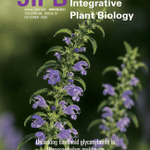
ALT Cover of the October issue of JIPB. Centred is an in-situ morphological image of a stalk of purple flowers belonging to the medicinal and ornamental plant Moldavian dragonhead (Dracocephalum moldavica), which is rich in bioactive flavonoid glycosides. The cover also includes the JIPB logo, journal name, issue information and the title text, "Unlocking flavonoid glycosylation in Dracocephalum moldavica."

ALT Diagram to describe the process of engineering flavonoid glycosides, beginning with the identification of key enzymes in Dracocephalum moldavica that produce valuable flavonoid glycosides, and the engineering of these enzymes and optimization of the sugar supply in Escherichia coli, resulting in efficient microbial production of scutellarin and phloretin di-C-glycoside.

ALT A schematic model illustrating the critical functions of TGW1aJZ in shortening growth duration and increasing grain yield in rice.

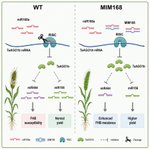
ALT Diagram comparing WT and MIM168 wheat cultivars, illustrating how silencing miR168a enhances resistance to Fusarium head blight and increases grain yield. Also shown: how these benefits are associated with TaAGO1b and changes in two downstream small RNA pathways that govern spike development and defense responses.

ALT Comparative editing efficiencies of Cas-SF01 and Cas9 in stable transgenic tomato plants. For each of the three target genes (SlGAD3, SlSGR1, and SlTDC1), mutation frequencies induced by Cas-SF01 and Cas9 were evaluated in T0 transgenic lines.

ALT Diagram illustrating the bottom (genetic code), middle (3D chromatin context), and top layers (cell type specificity) of analysis that contribute to understanding the natural grammar of CREs, which can be used, together with AI-driven design, in predictive engineering for crop improvement.

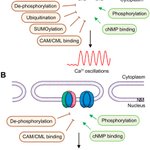
ALT Diagrams illustrating the functional mechanisms of plant cyclic nucleotide-gated channels in plasma membranes and nuclear membranes.

ALT Diagram describing mechanisms of drought sensitivity and tolerance under drought stress conditions, illustrating how the histone deacetylase TaHDA1 functions as a key regulator linking histone and non-histone deacetylation with drought adaptation.

ALT Diagram summarizing how surface immune signals license intracellular NLR receptors through alternative RNA splicing, a mechanism that enables rapid activation of NLRs upon effector recognition, revealing that surface immunity not only amplifies defense and actively sets the threshold for intracellular immune triggering.

ALT Diagram to illustrate how microRNA miR1866 suppresses OsUBP7, which encodes a protein that is involved in cell growth and abscisic acid responses. Releasing this brake produces heavier grains with stronger dormancy.

ALT Diagram of low and high jasmonic acid conditions, describing how the C-type cyclin CycC1;1 interacts with MYC2 and MED25 to block their association and RNA polymerase II recruitment, thereby repressing senescence-associated gene expression and delaying leaf senescence in Arabidopsis. Unlike jasmonic acid-inducible JAZ repressors, CycC1;1 operates independently of jasmonic acid signaling, representing an evolutionarily conserved regulatory mechanism.


ALT Annotated flow diagram to illustrate how, in wheat, phosphorylation of the S-like RNase TaRNS4 mediated by the kinase TaRLK5 promotes its degradation of Puccinia striiformis f. sp. tritici RNA in the apoplast, enhancing resistance to stripe rust. Also shown: how TaRNS4 can hijack phosphatase TaPP2C10 to relieve its dephosphorylation of TaMAPK6, thereby activating MAPK-mediated immune responses.

ALT Diagram illustrating how the CHPO allelic toggle switch governs rice chilling resilience. The japonica allele (CHPOjap, 6×GCG) acts as an “Active” switch that effectively promotes chilling resilience. Upon DNA binding, it upregulates key survival- and yield-related pathways, leading to enhanced chilling resilience, nitrogen use efficiency (NUE), and tiller number, thereby conferring the high resilience phenotype characteristic of japonica rice. By contrast, the indica allele (CHPOind, 2×GCG) functions as a “dysfunctional” switch. Despite binding to DNA, its shortened polyalanine tract renders it ineffective at initiating essential transcriptional programs, resulting in compromised chilling tolerance and reduced tillering, which underlies the low resilience phenotype typically observed in indica rice under cold stress.