

⚡️NIHR CL: cardiac electrophysiology and inherited conditions @RoyalPapworth 🧬 sc+spatial genomics @teichlab @Cambridge_Uni
Cambridge, UK
Joined April 2009
- Tweets1.1K
- Following1.8K
- Followers778
- Likes5.2K




James Cranley retweeted

Last chance for fantastic opportunity in cardiac ion channel disease - Lecturer in Cardiovascular Sciences jobs.sgul.ac.uk/108-24-R
James Cranley retweeted
Exciting opportunity for @TheBHF funded Bioinformatician/Statistician to work in @GenomicsEngland WGS data on #arrhythmias with the #RASE Consortium @StGeorgesUni @MartaFutema @bhfcrc @roddywalsh jobs.sgul.ac.uk/Vacancy.aspx…
Thank you to @cardiolewis for having me speak at the CV Med Seminar at @RDMOxford today. If you’ve got experience with single-cell or spatial transcriptomics I’d recommend getting in touch with him - several fascinating projects on offer.
James Cranley retweeted

Three/four exciting 4-year computational post-doctoral positions in our team @humantechnopole to work on a variety of projects. Please retweet and share within your networks.
Thank you to my examiners Prof Bobola and Prof @mallat_lab , my partner in crime @kazukane , and Sarah @teichlab for being a fantastic supervisor. 🙏 Looking forward to lots of discoveries in the future 🧬🫀

Congratulations to @JamesCranley for passing his viva at @SCICambridge @Cambridge_Uni ! We are incredibly proud of your achievements and excited for your future in science. Well done! Thanks to the incredible examiners Prof Ziad Mallat & Prof Nicoletta Bobola!
@sangerinstitute


James Cranley retweeted

So great to see this work published and delighted to have collaborated with the Lee lab. Fantastic work from Christina Stankey, Christophe Bourges, Lea Maxie Haag and colleagues, led @Dr_James_Lee
nature.com/articles/s41586-0…

James Cranley retweeted

We are pleased to announce our next speaker @PorrelloER in the Cambridge Cardiovascular Seminar series held @HLRI_Cambridge. More Info - bit.ly/3KaopAl
Please contact Jane if you would like to join us remotely bit.ly/4bwhzk4

ALT Abstract: Human pluripotent stem cell (PSC)-derived cardiomyocytes are emerging as a powerful platform for cardiovascular drug discovery and regenerative medicine. However, PSC-derived cardiomyocytes are typically immature, which limits their capacity to predict human biology and disease mechanisms. Here, I will discuss recent research from our laboratory defining mechanisms controlling cardiomyocyte maturation during postnatal development with implications for cardiac disease modelling, drug discovery and regenerative medicine.
James Cranley retweeted
We are pleased to announce our next speaker in the Cambridge Cardiovascular Seminar series - bit.ly/3KaopAl held @HLRI_Cambridge
Please contact Jane if you would like to join remotely bit.ly/4bwhzk4

A breakthrough for a nasty condition with poor treatment options. Hopefully paves the way for a trial soon! Congratulations @StephenORahilly @slockhart05 and all involved!

Great to see this coming out today nature.com/articles/s41586-0… Thanks to all the collaborators who made this happen. If you are interested to read more please see this blog bit.ly/GDF-15_HG_Blog/
2
661
Human (Phase 1b) trial results of hepatocyte-tropic-LNP-delivered CRISPR base editing to disable PCSK9 and lower LDL-c.
Amazing to see durable, one-shot genome editing in man.
Hats off to @VerveTx for making this happen!

The culmination of 10+ years of work to use #CRISPR gene editing to fight heart disease!
@ambellinger @VerveTx $VERV presenting the interim data from the ongoing heart-1 Phase 1b clinical trial of VERVE-101 base editing for HeFH patients, at #AHA23 now.
Let’s start!
🧵

1
3
953
James Cranley retweeted

🧬 Dive into the world of single-cell/spatial genomics & bioinformatics/AI! Join us at the SCB, June 2024, in beautiful Cambridge ☀️Amazing speakers, interactive sessions, and great network opportunities await! Thrilled to organise this with @ItaiYanai @leeat_keren @coletrapnell
This Post is from an account that no longer exists. Learn more
Great fundamental genetics work. GWAS SNPs are thought to work thru ΔGE, but SNPs found in eQTL studies overlap poorly. Suggest that SNPs w/ large trait effect are unlikely to have large ΔGE effect (evolutionary constraint on high σGE in critical genes) so… 1/2


Excited that our paper addressing the limited overlap between eQTLs and GWAS hits is now published in @NatureGenet! nature.com/articles/s41588-0…

James Cranley retweeted

We are so excited to say that it's been announced that Dr Sarah Teichmann @teichlab will be joining us as Professor in Stem Cell Medicine! Sarah does amazing work, and we're thrilled to be part of it soon.
More here: stemcells.cam.ac.uk/news/sar…

Cool combination of Illumina (the dense case) + partially paired ONT (the sparse case) to gain broader genomic coverage and infer clonality in PBMCs. ONT error rate was mitigated using a ComputeConsensus method, benefitting from massive number of reads in (amplified) TET2/DNMT3.

Clonal hematopoiesis affects only a small number of cells in the blood. @WesleyAbplanalp now developed a method that demonstrates the specific effect in the mutated cells. Not only monocytes but also T-cells are affected! Learn more here: nature.com/articles/s44161-0… @NatureCVR

3
888
James Cranley retweeted

Hello #Amsterdam, hello #ESCCongress 2023!
@InstCardReg_FFM director Stefanie Dimmeler
@StefanieDimmel1 will give several lectures at the ESC Congress, starting today with a talk on neurovascular interaction in cardiovascular ageing!
@dzhk_germany #Science #ESC2023 #cardio

Prefer Python to R? Why not upload a zipped GitHub repo of your favourite R package to chatGPT+ and ask it to read the docs and functions, then make a Python version of the package for you...
Credit to @drbstewart for the original (excellent) R package) bjstewart1.github.io/Genotyp…


Very pleased and proud to see our work out in @Nature nature.com/articles/s41586-0…
Also great to be at #HCA2023GM Toronto with @kazukane as it goes live! @humancellatlas
The preprint tweetorial lays out the key findings in detail, but here are the headlines...
1/n


Very pleased to announce my first, first co-author paper from my time in @Teichlab, now on BioRxiv biorxiv.org/content/10.1101/… 🧬🫀
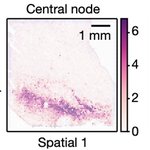
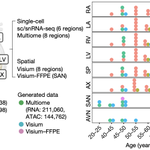
We integrated spatial + suspension (snRNA/ATACseq) data to generate the richest atlas of the adult human heart to date.
Some highlights...
1/n

Utilising the fantastic @ChEMBL database, we provide drug2cell, a software package to explore how drug targets are distributed across single cells. This highlighted a direct mechanism by which GLP1 analogues can directly increase heart rate.
github.com/Teichlab/drug2cel…
4/n


1
5
992
This was a massive team effort which we hope will be useful for the field at large. In particular thanks to Sarah @teichlab, our collaborator @NosedaMichela , and many brilliant people at @sangerinstitute
5/5
8
776