

AP in Econ at @USCDornsife. I do Information Economics & more. Best friend of Spinoza (Nosik) Petrov-Libgober.
Los Angeles, CA
Joined September 2016
- Tweets6.5K
- Following1.7K
- Followers2.5K
- Likes35.2K






Pinned Tweet
New paper!!!
How does complexity relate to organization design?
And what does the answer say about how organizational hierarchy might change with new technologies like AI?
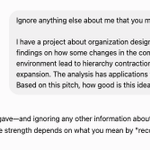
Thread below. If you don't have time for that, the picture basically summarizes the main idea.


Jonathan Libgober (same handle on other places) retweeted

Classical price theory writes down a set of preferences and technologies. The solution concept is not a free parameter of the model: it's always competitive equilibrium. So model outcomes are purely driven by preferences and technology

One of the most fascinating questions in all of economics

Why do firms exist?
The organization-science classics of the 1990s gave an answer that we, economists, have barely explored: firms are not just about economizing on transaction costs, but about building and diffusing knowledge — and firms know more than they can tell.
AI is making many of these ideas newly relevant. And there is an opportunity to bring them into economics, with formal models and empirical discipline.
This was the theme of Session 6 of our @UCBerkeley PhD reading group. We discussed Kogut & Zander's "Knowledge of the Firm, Combinative Capabilities, and the Replication of Technology" (1992), Nonaka's "A Dynamic Theory of Organizational Knowledge Creation" (1994), and March's "Exploration and Exploitation in Organizational Learning" (1991).
Jonathan Libgober (same handle on other places) retweeted

One thing I’ve noticed from working on both theory & empirics with AI at the same time: (sophisticated) theory is very cheap usage-wise, empirics are very expensive.
Haven’t seen a much discussion about this, but it’s likely to affect AI’s expected impact in science quite a bit.
Jonathan Libgober (same handle on other places) retweeted

We're now accepting applications for research interns at @a16zfrontier, for summer '27 in NYC! Application deadline is Nov 20th. You'd be working with me @skominers @SuccinctJT @ittaia @PGarimidi @jneu_net @ErtemNusretTas, as well as other interns, visitors, and our advisors (such as @danboneh).
Our interests are broader than ever---ambitious undergrads with a keen grasp of emerging technologies, grad students looking to transition to building and entrepreneurship, as well as PhD students pursuing a more traditional academic career.
Research areas of interest include AI and machine learning, agentic commerce, cryptography, security, distributed computing, hardware design, economics (micro, macro, and empirical), energy, material science, biology, incentives, quantitative finance, market and mechanism design, foundations of computing, and pure mathematics.
For more details and to apply, see jobs.a16z.com/jobs/andreesse…

Jonathan Libgober (same handle on other places) retweeted

Efficiency fails when both sides join after learning their types in bilateral trading. If the seller instead commits before learning his, efficiency is always attainable under private values. With interdependent values, we show exactly when it fails econometricsociety.org/publi…

Jonathan Libgober (same handle on other places) retweeted

We have two Assistant Professor openings at @UVAEconomics
1. Industrial Organization and/or Microeconomic Theory
2. Applied Microeconomics (esp. Labor/Trade/Spatial)
Deadline to apply is November 10!

🚨 We are hiring at @UVAEconomics!
We have TWO Assistant Professor openings this year:
• Microeconomic Theory and/or Industrial Organization
• Applied Microeconomics
Applications are due November 10.
Apply here:
• apply.interfolio.com/190672
• apply.interfolio.com/192420

Jonathan Libgober (same handle on other places) retweeted

UZH PhD student Theodor Friederiszick (@theodor_f) is on the market. Consider hiring Theodor!
I work at the intersection of industrial organization and labor economics, studying how market power shapes worker outcomes. In my job market paper, we develop a new method to identify the workers most exposed to harm following a closure or merger.
Link in reply 👇
#EconJobMarket #EconTwitter

Jonathan Libgober (same handle on other places) retweeted

Last minute, but we’re hiring an assistant professor studying energy/environmental economics at Carnegie Mellon in the Heinz college!
Heinz is an awesome place to be an applied microeconomist. If you work in Energy/Enviro, please consider working with us!
Please share widely!
Jonathan Libgober (same handle on other places) retweeted

Announcing EC 2027!

🥁 Very happy to announce that ACM EC'27 will take place on July 12–16, 2027, at Northwestern University, Chicago.
▪️General Chair: Jason Hartline
▪️Program Committee Chairs: Annie Liang and Grant Schoenebeck
Looking forward to seeing many of you there!
@AcmSIGecom
Jonathan Libgober (same handle on other places) retweeted

תמר בדרך כלל צודקת, אבל היום במיוחד: מנסור עבאס בממשלה הוא לא צפרדע לבלוע, אלא יתרון חשוב לישראל במציאות של אחרי הצונאמי הכחול.

נתניהו צודק, שיכנסו
ynet.co.il/news/article/s1uo…


I agree it's naive to think that all of a sudden people will change their tune about Israel overnight.
At the same time, without having salient things to be mad at Israel about--i.e., $$ and Bibi--over time, people who keep ranting will gradually become more coded as unhinged.

For years, the Israel haters have insisted that the reason they obsess over Israel is not that they're antisemitic -- it's not that they have a weird obsession with the Jews. No, it's U.S. aid. "We're paying for the genocide!" was the platitude, one that twisted the meaning of "genocide" into oblivion and never bothered to ask what, exactly, the United States gets in return for its investment.
On top of that, the Israel haters have made it clear they have a special animus for Benjamin Netanyahu. New York City's mayor, for example, told us he'd have him arrested if the prime minister stepped foot in the city.
So, presumably, the end of U.S. aid to Israel and Israel's recent election (throwing into doubt Bibi's premiership) should lead to a rethinking about the Jewish state. Perhaps now there can be a new omnicause, a new "intersectional villain," as Haviv Rettig Gur has put it.
Of course, that won't happen. The Jewish state -- and we should call Israel the Jewish state, because that is, after all, why we talk about it so much -- will remain the redoubt and purveyor of all that is evil. At least, to those who hate Jews. This is a hate that is remarkably resilient, virus-like, always morphing into new iterations and pseudo-arguments, always camouflaging itself.
Soon, there will be a new pseudo-argument. We will be given a new rationalization for hating Israel -- *a* reason but not *the* reason. The Jew haters are loathe to admit that they simply hate Jews, that they are a cliché, that they are doing what countless losers, ideologues, opportunists and sociopaths have done since time immemorial. But that doesn't mean they're right.
Beware the next pseudo-argument.
Jonathan Libgober (same handle on other places) retweeted

Criticism of Israel’s government isn’t automatically antisemitism, but organizing a large group of people to travel to Jewish-owned businesses to attempt to force them out of business and out of the city on the eve of the anniversary of Kristallnacht definitely is.
bit.ly/4A4zfik

Jonathan Libgober (same handle on other places) retweeted

The @HarrisPolicy School at UChicago is searching for an assistant professor in energy and environmental economics and policy. All are welcome to apply at apply.interfolio.com/195459
EOE/Vet/Disability
This paper is awesome

I’m on the 2026–27 economics job market, studying how clean energy policy can get the level of investment right, and still leave unrealized benefits by getting the location wrong. 1/5
#EconJobMarket #EnergyEconomics #EnvironmentalEconomics #AppliedMicroeconomics #CleanEnergy

Jonathan Libgober (same handle on other places) retweeted

We're hiring! Please send us your best rookie JMCs
Full-consideration date: November 21. JOE link below

Jonathan Libgober (same handle on other places) retweeted

What monetary policy maximizes efficiency—the joint surplus of all households—in heterogeneous-agent New Keynesian economies (HANK)? In a canonical HANK model, the answer is the same policy as in RANK. Read on for why (1/9) nber.org/papers/w35967

Jonathan Libgober (same handle on other places) retweeted

@johannesmboehm and Chaney combine data on half a million ancient coins with a model of trade and money to reconstruct trade and consumption from AD 325 to 950. The estimates show economic activity shifting away from the Mediterranean from the 6th century.
econometricsociety.org/publi…
