

I'm a scientist
everywhere
Joined April 2009
- Tweets668
- Following624
- Followers3.9K
- Likes3K




Joe Ecker retweeted

What distinguishes successful from failed reprogramming to iPSC? In this new preprint, part of our @IGVFConsortium efforts, we used single cell methylation, Hi-C, RNA and ATAC, and spatial RNA to answer this question biorxiv.org/content/10.64898…

Joe Ecker retweeted

For human genetics, Bolero traces bulk-tissue eQTLs to the cell types likely driving them. It also predicts larger effects for non-coding de novo mutations in autism cases than in siblings, especially in early neuronal development.

Joe Ecker retweeted

Single-nucleus DNA methylation sequencing of 34,000+ muscle nuclei at base resolution revealed exercise-induced changes specific to each of three muscle types. Male and female mice also differed substantially in methylation across the major cell types of each muscle. @JoeEcker @WuTsaiAlliance
cell.com/cell/abstract/S0092…
(C-E) Clustering of nuclei within (C) Gastrocnemius (GC), (D) Biceps femoris (BF) and (E) Quadriceps (QD) based on average methylation levels (mCG fraction; upper panels) and colored by sex (lower panels). Major clusters show clear sex-specific separation.

Joe Ecker retweeted
We identified genes where exercise drove especially large shifts in DNA methylation. These methylation hotspots could serve as epigenetic markers of exercise.
@JoeEcker @GeraldineMaier @WuTsaiAlliance
cell.com/cell/abstract/S0092…

Thank you Satchin and @WuTsaiAlliance for allowing us to participate in this exciting research🙏

A hidden gem in our exercise atlas: base-resolution single-nucleus DNA methylation maps of three muscle types, across male and female, sedentary and exercised mice. It’s the first resource of its kind in exercise research. Thank you @JoeEcker
One outcome is a set of cell-type-specific methylation markers. For example, the long noncoding RNA LncPPARa is hypomethylated in progenitor cells.
Look up the methylation signature of your favorite gene here: neomorph.salk.edu/mouse-hpa/…
@WuTsaiAlliance @GeraldineMaier
cell.com/cell/abstract/S0092…

Shareable link -enjoy! tinyurl.com/4m5m49rr

So happy to see this paper led by the awesome @GeraldineMaier out in press 😌. In it we interrogate the widespread effects of exercise.
Be sure to give it a read 👀!
sciencedirect.com/science/ar…
Joe Ecker retweeted

Exercise isn’t one response. RNA-seq shows it varies by tissue, sex and time of day; metabolomics reveals organ-specific rewiring. Single-nucleus sequencing in muscle shows which cell types drive adaptation, plus epigenetic changes bulk assays miss. authors.elsevier.com/c/1nx~B…
Congrats Ravi and team!

While it might just be a glass of whisky tonight, I’m sure @JensenHuang and I can knock out four Guinness’s easy @etnshow

Joe Ecker retweeted

Last call to register!
Join Dr. Hisham Mohammed, Associate Professor at the Knight Cancer Institute at OHSU, on Tuesday, October 6 at 11 AM PDT to learn how single-cell DNA methylation reveals breast cancer evolution and treatment response.
Register: ow.ly/JLx150ZQPhE

Congratulations to you both! Loved the reaction of your children when Karl told them the news. So proud of their father!

So proud of Karl!! ♥️. Stanford University professor Karl Deisseroth wins 2026 Nobel Prize in physiology or medicine med.stanford.edu/news/all-ne…

Thank you Manel 🙏

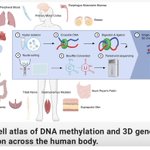
Big fan of @JoeEcker research at @salkinstitute. Tour de force in @ScienceMagazine to map at #singlecell resolution DNA #methylation and #3D structure of many human tissues. Fascinating data and an extremely useful #epigenetic landcape reference for follow-up work!
Joe Ecker retweeted

EU relaxes rules for gene-edited crops
The new laws break away from 20-year-old restrictive GMO directives to give an official nod to plants made with new genomic techniques nature.com/articles/s41587-0…

Joe Ecker retweeted

Mutational consequences of perturbing DNA repair and chromatin state in Arabidopsis biorxiv.org/content/10.64898… Fantastic job Cullan!

Joe Ecker retweeted
Here is a neat story led by Alex Tadros on the history of Arabidopsis laboratory stocks. They can be diverged by over 100 generations!
Genetic and epigenetic divergence among Arabidopsis thaliana Col-0 laboratory lineages since the 1950s biorxiv.org/content/10.64898…

Amazing convergence of two NIH funded studies using orthogonal approaches to discover microglia switch in the brain during aging nature.com/articles/s41586-0… @NIHDirector_Jay


Joe Ecker retweeted

Only about a quarter of human diseases have an approved therapy. By some estimates it's a few percent. Most of those treatments slow a disease rather than stop it.
Closing that gap is what the AI-cures-everything story promises. Build a system smart enough and the cures hidden in what we already know will fall out. I have worked at the intersection of machine learning and biology for three decades, and I believe #AI will eventually transform human health. The capabilities arriving now are extraordinary. But the promise rests on an assumption that is simply false: that we already understand human biology well enough for a clever enough reasoner to find the answers in it. We don't.
More than 90% of drugs entering clinical trials fail, a number that has barely moved in decades. In the large majority of those failures the molecule was engineered just fine. The mechanism it targeted was wrong. We are doing a pretty good job at manufacturing keys, but they are generally for the wrong locks. And because nobody wants to fail in the clinic, the industry has retreated to the locks it already trusts: 38 targets now have more than 50 programs against each of them, while the number of novel targets advanced per year fell from roughly 100 in 2015 to about 30 in 2024.
AI will not reason its way past this. Biology wasn't engineered. It is the product of billions of years of messy, stochastic evolution, and the variation that produced is too vast and too idiosyncratic to work out in the abstract. You have to measure it. Aimed at a biology this thinly sampled, AI will mostly help us generate failures faster.
I founded @insitro because getting to the right locks requires a different kind of system. We generate multimodal human and cellular data at scale, use machine learning to find causal drivers of disease, and test those hypotheses experimentally. Virtual Human™ is built for causal discovery; TherML™ turns what it finds into the right therapeutic intervention. It is working: first-in-class programs internally and with partners, three #ALS targets that Virtual Human™ identified and @bmsnews nominated, and additional collaborations with @EliLillyandCo and @GileadSciences .
Today we are launching Deep Phenotype: Scaled Biology, Deep Causality. Issue one is "Drug Discovery Has No Magic Wands," the first half of a two-part essay on the magical thinking currently running through our field and what I think it will actually take. After that you will hear from insitro's own scientists and engineers, people who work across computation and experiment because the problem requires both.
Getting this right is hard, and we do not have all of it worked out. I hope you will follow along and think it through with us.
DeepPhenotype.Substack.com

Joe Ecker retweeted

We had such great time at the #GRC meeting on Neuroepigenetics! Beautiful nature in NH, good food & exceptional science. @themazelab and I are future vice chairs! So excited to help this meeting & community grow! ❤️
🙏all! @BarcoLab @JoeEcker @PhilippMews @apombo1 @CreminsLab


Joe Ecker retweeted

A heartbreaking realisation that @andyburnham's father will likely not ever recognise that his son has become Prime Minister.
For about 10 years now, Alzheimer's and other dementias have been the leading cause of death in the UK (outside of the pandemic) - 10 years! The disease's lethality is only eclipsed by the extreme toll it takes emotionally and socially.
The UK is well-positioned to build the cures for this disease and many others, for the benefit of our country and the wider world. With leading research institutions already like the @UKDRI and the growing exceptionality of AI led by @KanishkaNarayan, we have real reason to have hope. This is what we're deeply committed to at @PrimaMente.
No one should be robbed like this.

Joe Ecker retweeted

Yes, good question. Mutations are acquired over time by all cells in the body. These mutations are totally random and unique to each cell. Therefore, they are typically detectable only with single cell WGS or after clonal expansion, and PACT only tracks expanded clones.
In parallel, the phenotype of single cells can be measured in many ways, such as snRNA, snATAC, or snm3C-seq (methylation + chromatin conformation). What Zemke et al. found is that microglia in aged individuals are very similar to human monocytes. @JoeEcker
science.org/doi/10.1126/scie…
This similarity is only detectable via methylation, not snRNA or snATAC. ~All human monocytes and microglia appear to have stereotyped methylation signatures that are quite reproducible across individuals.
The most obvious explanation for this is that aged human microglia may be highly similar to monocytes because the microglia have been replaced by monocyte-derived cells. However, methylation can change over time, so it is quite challenging to fully prove this.
However, the somatic mutation approach does provide definitive proof of a bone marrow origin for the expanded clones of cells that are trackable via PACT (or mtscATAC-seq). Future work will be needed to fully unify the strengths of both approaches - stay tuned!

Amazing convergence of finding using orthogonal approaches - congrats Julia et al!
Serendipitously, Nathan Zemke, Bing Ren, and @JoeEcker discovered the same phenomenon using a different approach: single cell methylation. Collectively, these data show that the replacement of yolk sac microglia by monocytes starts in middle age and is ~complete by age ~80. 5/
science.org/doi/10.1126/scie…
