

Editor and writer. Previously worked at CNN Sport and BBC Sport. All views my own. Retweets are not endorsements.
London
Joined January 2010
- Tweets25.9K
- Following3.9K
- Followers13.4K
- Likes6.6K








John Sinnott retweeted

Brighton, Union SG, Lens, Hearts, Castellón…
Clubs working with Jamestown Analytics keep signing players who already stood out in our model.
So we asked: can we build a “Jamestown index” from our own data?
Here’s what we found 🧵

John Sinnott retweeted

Interesting thread.
And this is why new ideas and structure around emotional intelligence has to be the next frontier in football.
Success leaves clues and people will always pick up on the patterns eventually. An edge shared is no longer an edge. It simply dissolves into a necessary skill that everyone now requires to survive.
From what I can gather, Bloom and Benham were doing early xG virtually unchallenged through the 2000s. That’s how they made the money to buy Brighton and Brentford.
Then, thanks to social media, others figured it out in the early 2010s. By which stage, Bloom and Benham had bought their boyhood clubs and had branched out to making money inside the game.
Value and certainty in trading on Asian handicaps had turned to value and certainty in player trading. They’ve now had this world to themselves for about a decade now too.
So what’s left?
Develop the players you have.
Not just in the technical sense, which is obviously being done very well by many now, but by understanding how minds are wired and finding an edge in speaking directly to the human needs of untapped potential.
I hear a lot about emotional intelligence in football but I don’t hear too many people able to give a coherent answer of what it actually is.
I went to a conference recently. One technical presentation after another, plenty of excellent ideas around the application of data and logic.
Then the sporting directors and chief execs took to the stage and the benefit of their experience was unanimous: football is about human beings and emotional intelligence.
Not one presentation attempted to dig into the subject. A few anecdotes here and there but no frameworks or definitions.
Inside football, psychology remains a generic pile of do’s and don’ts. One size fits all. Mostly feminine talk about safe spaces and player support. Naturally. 80% of psychologists are women after all.
It’s mostly about player welfare, framed as the obligation that clubs have to the players they pay vast sums to.
Only when clubs see that there’s a competitive edge to be gained from truly understanding the assets in their building will the conversation change and develop into something more substantial.
Most clubs are so stretched right now, posting record losses through paying the going rate for players that promise nothing more than survival in the same league.
And yet there’s so much money being left on the table by not understanding how those players differ from each other in the way they see the game and their place in it.
A squad of 18 players with 18 unique personality types, yet so many commonalities to be found among them on one side of a personality coin or the other.
You can literally split a dressing room into nine different versions of blue bibs versus white bibs. And facilitate the type of banter that isn’t about appearance or birthplace.
In such a competitive environment, it’s powerful intelligence to have.

John Sinnott retweeted

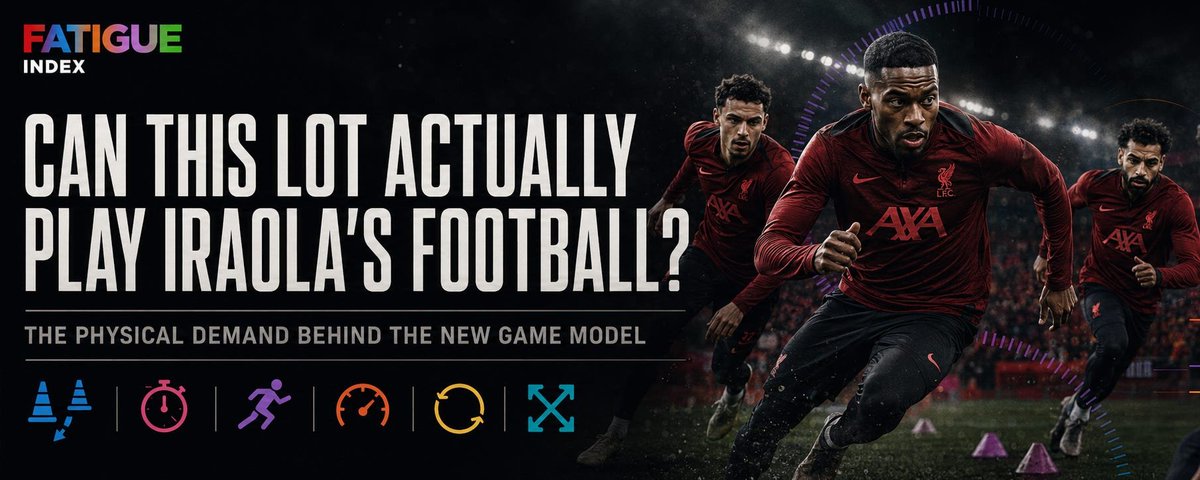
Really interesting @JordanC1107 interview with Aaron Briggs, who lost his job as Liverpool analyst and set-piece coach last season.
When you keep conceding from set pieces, very easy to blame the guy whose specialist area that is. I just think there was so much wrong with #LFC last season — mentally, physically, tactically/structurally. So many of the goals they conceded looked like less a case of organisation/preparation than concentration
nytimes.com/athletic/7488630…


John Sinnott retweeted

FIFA’s plan to sell a stake in its commercial operations to outside investors is thankfully dead in the water, but what was behind this proposal? What would have been the implications for the beautiful game if Infantino had got his way? This is explored in today’s FREE ARTICLE.

John Sinnott retweeted

I QUIT
The rumours are true. I quit the newsroom and I quit crime.
The plan is really silly, but @privateeyenews told it well
I'm leaving this site forever very soon, so find me on Substack to hear how the crime>clown thing is going...
theshinythings.substack.com/…

John Sinnott retweeted

“Every competition I go to, every time I see her competing, it’s a blessing"
An interview with British high jumper @morgan_a_lake and her father and former coach Eldon, who is three years into his recovery from encephalitis as a result of COVID-19. nytimes.com/athletic/7369371…

John Sinnott retweeted

I wrote about Bielsa and that viral Uruguay photo. The pic drew a lot of comment but it’s very on-brand for him, and there are good reasons behind it:
nytimes.com/athletic/7364828…

John Sinnott retweeted

Terry Butcher was an iconic England captain, the blood-soaked tough guy who never took a backward step.
He was also a father.
In 2017, he found his son Christopher, a former soldier, dead in his bedroom. He had been suffering from PTSD after tours of Iraq and Afghanistan.
Now, Terry is ready to talk — about grief, hope and the child he still bids good night.
@DTathletic
🔗 nyti.ms/4xallup

John Sinnott retweeted

Clemente Rodríguez, Carlitos Tevez y el Bichi Fuertes... ¿Impuesto a las ganancias cuando el jugador es dueño de "su pase" y lo cede?
🧵1/
Cuando Clemente Rodríguez se fue de Estudiantes a Boca en 2010, quedó libre y se "vendió" a sí mismo por USD 1.900.000.
AFIP le reclamó ganancias por esa operación.
La Cámara acaba de confirmar que tenía que pagar.Pero la historia de fondo es más larga. Empieza con un abogado que invirtió en Tévez.🧵👇


John Sinnott retweeted

An aptly timed article. A good read.
You can say they’ve been good owners and say they’ve made mistakes - both can be, and are true.
Some interesting lines and themes in there about intellect and curiosity that make me think there’s a lot of untapped potential still at LFC

John Henry’s path to building @fenwaysports — and a $14B sports empire — has been anything but linear.
As a former hedge fund manager, he's clear-eyed about the realities of ownership: success isn’t guaranteed and fan frustration comes with the territory.
MORE: ow.ly/TchC50YUJoA

If you are a Multiple Sclerosis patient and were switched from Tysabri IV (originator natalizumab) to Tyruko (biosimilar natalizumab) within the NHS it would help a lot if you could take this survey and also share.
eu.surveymars.com/q/mYiXLAAB…

636
John Sinnott retweeted

Excellent article by my friend David Rodriguez-Fraile, who won the Golden Boot as top scorer at the 1997 FIFA U-17 World Cup in Egypt with 7 goals playing for Spain and Real Madrid. He was teammates with Xavi and Iker Casillas during that tournament. Highly recommend reading his thoughtful and thought-provoking piece.
Age before stage: the foundation of Elite Youth Soccer islandernews.com/opinion/let… via @IslanderNews

John Sinnott retweeted

This is a fascinating 12 minutes of footage about Liverpool in the mid 80s - had no idea there was an unemployment league (seen about two-thirds of the way through)

John Sinnott retweeted

‘I couldn’t be like that’: Nigel Clough on his dad, keeping it real and preparing for Arsenal.
Grateful to Nigel and his players, @DerbyUni for hosting, Guardian Sport and @UoDFootyJournos for keeping us motivated!
theguardian.com/football/202…

John Sinnott retweeted

Brilliant long read by the great @shaunwalker7 on Ukraine, how the CIA and MI6 got hold of Putin’s Ukraine plans and why nobody believed them.
It's a long one, so put the kettle on.
theguardian.com/world/ng-int…

John Sinnott retweeted

👀 One of football’s best-kept secrets… revealed.
Former Premier League striker, Dave Kitson, confirms the truth!
🎥 Watch now: youtu.be/G9WwybncpJg
#Football #PremierLeague #MentalHealth #Sport #Interview
John Sinnott retweeted
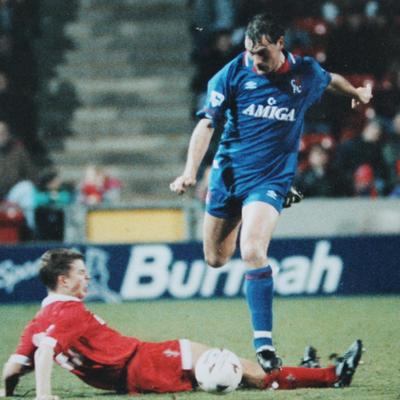
Luke Matheson is the boy who got the bus to school after scoring at Old Trafford.
Aged 23, he’s now at Macclesfield, chasing FA Cup dreams, enjoying football but no longer defined by it &, more than anything, determined Ethan McLeod’s legacy lives on.
nytimes.com/athletic/7043985…
