

@JoinOdin
Account based inUnited Kingdom
About this account
- Account based in
- United Kingdom
- Connected via
- United Kingdom App Store
Account-level information from X, not a live location or the device used for a specific post.
launch and run your vc firm from your phone
anywhere
Joined July 2020
- Tweets759
- Following167
- Followers2.4K
- Likes2.6K


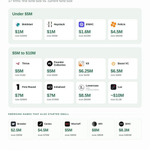



Emerging managers form venture capital’s broader discovery layer by backing a wider range of ideas.
While megafunds largely finance popular categories, the more diverse emerging-manager cohort fund roughly twice the share of outlier business-and-technology profiles and supported varied domains such as climate, materials, medical devices, and space.
This matters because their differing mandates expand what counts as a fundable opportunity, giving LPs exposure to opportunities beyond the consensus and founders greater access to capital.
Venture Capital's Discovery Layer
@JoinOdin x @dealroomco
Get the paper: research.joinodin.com/#/pape…

Odin retweeted

Fewer opportunities + more capital = enmeshment
Per round, and per dollar, the large venture firms are increasingly similar in their coverage.
They converge on the same companies as funding rounds progress, herding in more capital to drive prices up further while adding logos to their LP deck.
Unfortunately, the underlying businesses do not become significantly stronger and price quickly accelerates far beyond value.
Thanks to the good folks at @harmonic_ai for letting me analyse their data for this. More to come.


For a long time, concentration in VC remained fairly stable, as capital inflows were broadly distributed.
This changed in the last five years as exits dried up and the "illiquidity ratchet" kicked in — only the largest and least sensitive LPs have sustained allocation, to the largest firms.
(i.e. Smaller LPs need distributions to recycle into new comittments, and therefore rely on the market acting rationally to produce exits. On the other hand, large firms produce irrational behaviour.)
The HHI (Herfindahl-Hirschman Index) is a standard measure of market concentration. It is the sum of the squared market share of each participant.
A score of >1,800 designates a highly concentrated industry, trending toward oligopoly, which receives extra antitrust scrutiny on M&A.
This must also factor the "relationship-based" of venture capital, where firms are not independent actors operating in competition with each other.
So, it's possible to calculate a "similarity-adjusted" score which considers the level of enmeshment — how frequently the portfolio companies of a particular firm share the same set of investors.
Bu this measure, venture capital has clearly reached a point where concentration is problematic, surpassing the 2023 antitrust threshold and even the higher original threshold from 2010.
As the market becomes more concentrated, this manifests as conesensus investing and increasingly inflated prices for mediocre assets.
The eventual "buyer" is yet more downstream private capital, each getting marked up by the next. There's no bagholder if the bag keeps getting passed around.
It's unclear how this is corrected without some form of intervention.

Which processes should you look to automate, as a VC?
Decision making, like scoring opportunities, should probably be the last place you look for efficiency.
Start with the functions where you may otherwise be tempted to bring in an intern. Treat AI as a "cybernetic teammate", allowing you to focus more on the fundamentally human elements of venture capital.
"What you decide not to automate sends a strong signal about what you believe your strengths are."
Wisdom from @yoheinakajima, on this episode of Going Solo.

Yohei Nakajima came to venture as a builder.
He has made tools as a hobby since high school, without ever having held an engineering job, and he began sharing them with the world during COVID.
Today, @yoheinakajima is General Partner and co-founder of @UntappedVC, a small firm on the frontier of applying AI to venture capital.
His route there began about ten years ago at TechStars, helping spin up the Disney Accelerator, and runs back to a college thesis on angel investment organisations.
In this episode of Going Solo, he joined @credistick to discuss:
0:53 - Intro to Yohei and Untapped
3:33 - Should venture capital be more innovative
7:20 - Being a builder/hacker and a VC
10:40 - Applying AI to venture capital
14:40 - Mapping market data
17:06 - "Shared discovery paradox"
22:10 - VC bifurcation and the need for clarity
26:05 - AI and the influence on creativity
30:14 - Automation creeping earlier
33:35 - AI generated pitch materials
38:54 - The importance of follow-through
40:10 - The world in 10 years
Odin retweeted

as a big fan of @credistick, was a pleasure to join him to chat about my thoughts on AI in VC and startups!
0:53 - Intro to Yohei and Untapped
3:33 - Should venture capital be more innovative
7:20 - Being a builder/hacker and a VC
10:40 - Applying AI to venture capital
14:40 - Mapping market data
17:06 - "Shared discovery paradox"
22:10 - VC bifurcation and the need for clarity
26:05 - AI and the influence on creativity
30:14 - Automation creeping earlier
33:35 - AI generated pitch materials
38:54 - The importance of follow-through
40:10 - The world in 10 years
btw if you're in SF, i'm doing a deeper dive into my agentic set up this Wednesday over a Lunch & Learn: luma.com/aiwithyohei

In a world where every pitch is stronger and more polished, because of AI, how do you make sure you can still identify the best founders?
You have to look at the "unpolished signals" from the founder; the data that hasn't been prepared for an investor — like their activity online.
@yoheinakajima, of @UntappedVC, has thought more about discovery, signalling and AI than most GPs.
Our conversation covered how he thinks about introducing AI into VC processes, and how VC processes must change in a world with AI.
Odin retweeted
In a world where every pitch is stronger and more polished, because of AI, how do you make sure you can still identify the best founders?
You have to look at the "unpolished signals" from the founder; the data that hasn't been prepared for an investor — like their activity online.
@yoheinakajima, of @UntappedVC, has thought more about discovery, signalling and AI than most GPs.
Our conversation covered how he thinks about introducing AI into VC processes, and how VC processes must change in a world with AI.
Yohei Nakajima came to venture as a builder.
He has made tools as a hobby since high school, without ever having held an engineering job, and he began sharing them with the world during COVID.
Today, @yoheinakajima is General Partner and co-founder of @UntappedVC, a small firm on the frontier of applying AI to venture capital.
His route there began about ten years ago at TechStars, helping spin up the Disney Accelerator, and runs back to a college thesis on angel investment organisations.
In this episode of Going Solo, he joined @credistick to discuss:
0:53 - Intro to Yohei and Untapped
3:33 - Should venture capital be more innovative
7:20 - Being a builder/hacker and a VC
10:40 - Applying AI to venture capital
14:40 - Mapping market data
17:06 - "Shared discovery paradox"
22:10 - VC bifurcation and the need for clarity
26:05 - AI and the influence on creativity
30:14 - Automation creeping earlier
33:35 - AI generated pitch materials
38:54 - The importance of follow-through
40:10 - The world in 10 years
Odin retweeted
"Human plus AI is going to outperform pure AI, so the question is what part do you want to keep human. As a venture firm, what you decide not to automate sends a strong signal about what you believe your strengths are, and what you believe your job is" - @yoheinakajima
Yohei is General Partner and co-founder of @UntappedVC, a research-oriented VC firm, and one of the most brilliant individuals I've had the pleasure of speaking to for @JoinOdin's Going Solo series.
To give you an idea of his range, here are just three of the papers he has published in the last few years:
• Task-driven autonomous agent utilizing GPT-4 — also known as "Baby AGI", one of the first open source automonous agents he developed in 2023, followed by the "Pippin" digital being framework.
• The Shared Discovery Paradox: How a One-Answer Rule Turns Better Information into Worse Search — taking a game theory approach to understanding the dynamics of problems like early stage investing.
• Soft-to-Rigid: Shape Continuation as an Alternative Search for Packing Congruent Shapes — outlining his novel (and record-setting) "hardening" solution to mathematical shape packing problems.
He's also built an autonomous research lab (Distributed Discovery) and a wikipedia style platform for organising knowledge around source data (Epistemedia).
His intense curiousity, and the creativity with which he approaches trying to find solutions or paths to better understanding, are both laudable qualities for a venture capitalist.
Check out the episode here: blog.joinodin.com/p/unpolish…

Odin retweeted
For a long time, concentration in VC remained fairly stable, as capital inflows were broadly distributed.
This changed in the last five years as exits dried up and the "illiquidity ratchet" kicked in — only the largest and least sensitive LPs have sustained allocation, to the largest firms.
(i.e. Smaller LPs need distributions to recycle into new comittments, and therefore rely on the market acting rationally to produce exits. On the other hand, large firms produce irrational behaviour.)
The HHI (Herfindahl-Hirschman Index) is a standard measure of market concentration. It is the sum of the squared market share of each participant.
A score of >1,800 designates a highly concentrated industry, trending toward oligopoly, which receives extra antitrust scrutiny on M&A.
This must also factor the "relationship-based" of venture capital, where firms are not independent actors operating in competition with each other.
So, it's possible to calculate a "similarity-adjusted" score which considers the level of enmeshment — how frequently the portfolio companies of a particular firm share the same set of investors.
Bu this measure, venture capital has clearly reached a point where concentration is problematic, surpassing the 2023 antitrust threshold and even the higher original threshold from 2010.
As the market becomes more concentrated, this manifests as conesensus investing and increasingly inflated prices for mediocre assets.
The eventual "buyer" is yet more downstream private capital, each getting marked up by the next. There's no bagholder if the bag keeps getting passed around.
It's unclear how this is corrected without some form of intervention.
There are five ways that the large venture platforms are trampling small firms:
1) Pumping price-insensitive capital into Seed, indiscriminately inflating prices / diluting outcomes.
2) Delaying liquidity, making it harder for smaller LPs to recycle capital into new commitments.
3) Changing deal terms to eliminate pro rata, take senior preferred or veto exits that are too small.
4) Obliging companies stay private for longer, eroding cash returns via a higher cost of capital.
5) Backing emerging managers for dealflow, cutting them off if they seem competitive.
This is a procyclical spiral, which results in small firms having a harder time raising capital which narrows the market and cedes more ground to the platforms.
This is problematic for the health of the venture market, as it ensures a continued march towards oligopoly. Competition is a force for good.
The deeper problem is that large venture platforms are structurally consensus oriented. They cannot do the job that venture capital was created for.
This is an empirical truth, evident in their portfolios. They are incentivised to dominate "legible" categories, not to look for new ideas on the frontier, and that is exactly how these firms are built.
Thus, the small firms which make up venture capital's discovery layer are gradually being pushed out of the market. The consequences of this, financially and economically, will play out over the next decade.
Guess what happens when the funnel of opportunities narrows? Prices rise further, capital concentrates, and advantages accrue to the larger firms.
Progress will stagnate, returns will fall, and the big firms will keep getting bigger. A perfect re-run of the 2010-2022 era, but perhaps much worse.
This cycle explains why firms like @usv and @benchmark have raised such large recent funds.
It's not that they are FOMOing in at the top of the market; it's more likely that they recognise the potential to be consumed by this spiral if they don't build a warchest to survive it.

Odin retweeted
“We found that growth mindset players performed better than fixed mindset players, their mistakes did not affect their attention to the game, and they read more learning feedback than fixed mindset players. In addition, growth mindset players were more likely to actively seek difficult challenges, which is often essential to self-directed learning.”
Gaming Mindsets: Implicit Theories in Serious Game Learning (2012)
In the translation of competitive gaming studies over to entrepreneurship, a clear attribute of interest is the growth mindset.
This refers to founders with a clear long-term objective, who recognise the journey there will involve constant learning and incremental achievments.
These aren't "strivers" chasing a finite victory. They are mission driven, open-minded, and positive-sum in their ambition.


Odin retweeted

it *is* actually possible to own as much upfront without giving up diversification as part of the same portfolio strategy (e.g. @EarthlingVC Fund I is ~70% deployed and has already exceeded target # of investments while meeting ownership targets):
> be the first investor. you 1) can negotiate your own terms and 2) will likely enter on a lower valuation than if you are investor #10 (esp in this market)
> invest in high-impact sectors the market undervalues. you will face very little competition (less competition = less bloated valuations)
> in both examples, less cash is needed to buy requisite ownership, freeing up capital to make *more* investments
the functional problem is that most managers don't want to either be first or invest in things the majority of the market undervalues

Odin retweeted
There are five ways that the large venture platforms are trampling small firms:
1) Pumping price-insensitive capital into Seed, indiscriminately inflating prices / diluting outcomes.
2) Delaying liquidity, making it harder for smaller LPs to recycle capital into new commitments.
3) Changing deal terms to eliminate pro rata, take senior preferred or veto exits that are too small.
4) Obliging companies stay private for longer, eroding cash returns via a higher cost of capital.
5) Backing emerging managers for dealflow, cutting them off if they seem competitive.
This is a procyclical spiral, which results in small firms having a harder time raising capital which narrows the market and cedes more ground to the platforms.
This is problematic for the health of the venture market, as it ensures a continued march towards oligopoly. Competition is a force for good.
The deeper problem is that large venture platforms are structurally consensus oriented. They cannot do the job that venture capital was created for.
This is an empirical truth, evident in their portfolios. They are incentivised to dominate "legible" categories, not to look for new ideas on the frontier, and that is exactly how these firms are built.
Thus, the small firms which make up venture capital's discovery layer are gradually being pushed out of the market. The consequences of this, financially and economically, will play out over the next decade.
Guess what happens when the funnel of opportunities narrows? Prices rise further, capital concentrates, and advantages accrue to the larger firms.
Progress will stagnate, returns will fall, and the big firms will keep getting bigger. A perfect re-run of the 2010-2022 era, but perhaps much worse.
This cycle explains why firms like @usv and @benchmark have raised such large recent funds.
It's not that they are FOMOing in at the top of the market; it's more likely that they recognise the potential to be consumed by this spiral if they don't build a warchest to survive it.
Identifying great founders is the central challenge of venture capital.
Some clues can be found in the relationship between competitive gaming and entrepreneurial success, across three dimensions:
- Decision making
- Strategic thinking
- Social dynamics
Odin retweeted
There's a fascinating overlap in the attributes required to play competitive games and those required to effectively lead a startup.
A few of the more obvious examples include @FEhrsam, @MaxJunestrand, @tobi, @aidangomez, @thresh and @elonmusk.
To understand this relationship, researchers have studied the core skills which appear transferrable between the two:
- Leadership
- Communication
- Strategic planning
- Decision making
A competitive environment shifts the application of these skills into high-pressure conditions that simulate entrepreneurial challenges.
The rate at which successful founders emerge from this background seems only likely to increase, as competitive gaming becomes more popular and widely experienced.
Read more here:
blog.joinodin.com/p/the-impo…


Competitive Gamers = Competitive Founders
Max Junestrand - Founder of Legora ($1.8B valuation)
Turned down a multi-million dollar career in gaming playing Dota 2
Travis Kalanick - Founder of Uber ($170B Market Cap)
World #2 in Wii Tennis
@MaxJunestrand @travisk have gaming friends starting new businesses I should meet?
Odin retweeted
Venture deals have rebounded significantly since the cooling-off in 2023. 2026, year to date, has already seen 44% more capital deployed than 2021.
Despite that, small deals have continued to fall away, not just as a % of deals but also in $ volume.
This is a remarkable shift compared to 2016 where sub-$50M rounds represented more than half of total capital deployed.

Odin retweeted
"If you look at the hottest concepts in AI investing today, like RSI or RL environments — those are very old terms in the research world. Suddenly the venture world is like, 'This is the hot new thing, let's put a ton of money into it!'"
Generally speaking, the job of a venture capitalist is to back great founders and stay out of the way.
However, learning to recognise great technical founders can require some familiarity with the principles behind the pitch.
Too often, particularly in hot markets, investors are excited by simple narratives (e.g. promises of AGI) and overlook more complex truths.
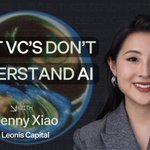
This is the opportunity that @jennywxiao, former researcher at @OpenAI, AI/ML PhD from @Columbia and GP at @LeonisCapital, recognised in 2022.
TL;DR — if you want to claim you invest on the frontier, it helps to have an idea where the frontier is.
Few VCs really understand the AI companies they’re funding, which is the biggest source of mispricing in the market at the moment.
@LeonisCapital is a research-driven fund investing in seed and pre-seed AI companies out of San Francisco.
Before co-founding Leonis, @jennywxiao did her PhD at Columbia researching LLM benchmarking and evals and was an early employee at @OpenAI.
In this episode, Jenny explains how Leonis has automated most of its own workflow (including an algorithm that outperformed the team at picking winners across a 20,000-company backtest) and why she thinks 92% of the “neo labs” raising money today are the wrong shape for venture returns.
Going Solo is Odin’s series on small and emerging managers building the future of VC.
New episodes biweekly. Subscribe so you don’t miss one. linktr.ee/goingsolowithodin
0:00 Intro to Jenny and Leonis Capital
1:32 What Leonis looks for: capability curves over products
5:22 Why she left OpenAI to become a VC
7:54 The zero-value cut-off for foundation model companies
11:53 Can open-source models ever overtake closed-source?
14:58 Why venture capital hasn't been disrupted by AI yet
17:52 Automating the fund: the Leonis Alpha system
22:30 Technical due diligence is founder due diligence
25:40 The four types of “neo labs”
28:42 How much of today’s AI capital gets burned
30:47 The real competitor to every AI startup
32:19 Modelling Anthropic and OpenAI’s path to IPO
36:24 Why AI leadership is more fragile than it looks
37:46 What the world looks like in 10 years
40:23 The best career advice Jenny ever got
Odin retweeted

Capital alone explains 73% of how many unicorns a US VC firm leads.
Chart by @JoinOdin, data from @IlyaStrebulaev at Stanford GSB.
So I added one more dot: @MVP_Ventures.
At our fund size, the trend line says we should have led about 8 unicorns.
We've backed 21.
(Like Ilya, I only counted companies we got into before they hit $1B.)
The chart also shows that doubling capital tends to mean about 55% more unicorns.
A co-investor can't just invest in any company. More money doesn't buy us more allocation, and no lead has to leave room for us. We earn our way in. Founders need to love us. Leads need to give their stamp of approval.
So that dot isn't all ours. The Founders and the Leads made room for us:
→ @NavinChaddha and @MayfieldFund in Lumilens Seed
→ @NEA and @8vc in @WisprFlow's Seed
→ @hanstung and @notablecap in @neondatabase's Series A
→ @generalcatalyst in @triumpharcade's Series A
→ @alexisohanian and @SevenSevenSix in @stoke_space's Seed
Thanks to Ilya, @credistick and the Odin team for pushing rankings to adjust for capital.

The majority of AI founders are pitching ideas based on current model capabilities.
"This is how you get a company that is going to get commoditised by foundation models in the next 6–12 months." - @jennywxiao
The outliers are looking at where model capabilities are heading, and building ahead of that curve.
Watch the full episode: linktr.ee/goingsolowithodin
Few VCs really understand the AI companies they’re funding, which is the biggest source of mispricing in the market at the moment.
@LeonisCapital is a research-driven fund investing in seed and pre-seed AI companies out of San Francisco.
Before co-founding Leonis, @jennywxiao did her PhD at Columbia researching LLM benchmarking and evals and was an early employee at @OpenAI.
In this episode, Jenny explains how Leonis has automated most of its own workflow (including an algorithm that outperformed the team at picking winners across a 20,000-company backtest) and why she thinks 92% of the “neo labs” raising money today are the wrong shape for venture returns.
Going Solo is Odin’s series on small and emerging managers building the future of VC.
New episodes biweekly. Subscribe so you don’t miss one. linktr.ee/goingsolowithodin
0:00 Intro to Jenny and Leonis Capital
1:32 What Leonis looks for: capability curves over products
5:22 Why she left OpenAI to become a VC
7:54 The zero-value cut-off for foundation model companies
11:53 Can open-source models ever overtake closed-source?
14:58 Why venture capital hasn't been disrupted by AI yet
17:52 Automating the fund: the Leonis Alpha system
22:30 Technical due diligence is founder due diligence
25:40 The four types of “neo labs”
28:42 How much of today’s AI capital gets burned
30:47 The real competitor to every AI startup
32:19 Modelling Anthropic and OpenAI’s path to IPO
36:24 Why AI leadership is more fragile than it looks
37:46 What the world looks like in 10 years
40:23 The best career advice Jenny ever got
Odin retweeted
The average emerging manager backs more than twice as many outlier profiles than a megafund, per investment.
Pooling 5 EM portfolios increases the range of investments significantly, while the same is not true for the more homogenous megafunds.
At the earliest stages, venture capital is built on discovery; innovation relies on an appetite for companies outside of "legible" categories.
Megafunds' revealed preference is to dominate existing categories, rather than drive discovery. So, the market will continue to rely on small and emerging managers for discovery.
Thanks to @dealroomco for letting me loose on their data to test this hypothesis.
Full report available here:
research.joinodin.com/#/pape…

Few VCs really understand the AI companies they’re funding, which is the biggest source of mispricing in the market at the moment.
@LeonisCapital is a research-driven fund investing in seed and pre-seed AI companies out of San Francisco.
Before co-founding Leonis, @jennywxiao did her PhD at Columbia researching LLM benchmarking and evals and was an early employee at @OpenAI.
In this episode, Jenny explains how Leonis has automated most of its own workflow (including an algorithm that outperformed the team at picking winners across a 20,000-company backtest) and why she thinks 92% of the “neo labs” raising money today are the wrong shape for venture returns.
Going Solo is Odin’s series on small and emerging managers building the future of VC.
New episodes biweekly. Subscribe so you don’t miss one. linktr.ee/goingsolowithodin
0:00 Intro to Jenny and Leonis Capital
1:32 What Leonis looks for: capability curves over products
5:22 Why she left OpenAI to become a VC
7:54 The zero-value cut-off for foundation model companies
11:53 Can open-source models ever overtake closed-source?
14:58 Why venture capital hasn't been disrupted by AI yet
17:52 Automating the fund: the Leonis Alpha system
22:30 Technical due diligence is founder due diligence
25:40 The four types of “neo labs”
28:42 How much of today’s AI capital gets burned
30:47 The real competitor to every AI startup
32:19 Modelling Anthropic and OpenAI’s path to IPO
36:24 Why AI leadership is more fragile than it looks
37:46 What the world looks like in 10 years
40:23 The best career advice Jenny ever got