KA Science (@KAScienceDept) profile picture
Joined December 2021
Photo by KA Science (@KAScienceDept)Photo by KA Science (@KAScienceDept)Photo by KA Science (@KAScienceDept)Photo by KA Science (@KAScienceDept)Photo by KA Science (@KAScienceDept)Photo by KA Science (@KAScienceDept)Photo by KA Science (@KAScienceDept)Photo by KA Science (@KAScienceDept)Photo by KA Science (@KAScienceDept)Photo by KA Science (@KAScienceDept)
Born #OnThisDay in 1871 was Ernest Rutherford PRS. He was the first to theorise the existence of the atomic nucleus, and worked on the first experiment to split the atom. In our collection we have his homemade potato masher, though this is not what he used to split the atom...
12
88
14
415
Replying to @KAKempston
Cosmic cliffs & a sea of stars. @NASAWebb reveals baby stars in the Carina Nebula, where ultraviolet radiation and stellar winds shape colossal walls of dust and gas. nasa.gov/webbfirstimages #UnfoldTheUniverse
1
What a discovery....👏,@KAKempston
It’s hard to overstate what impact #JWST is going to have on science, astronomy & our understanding of the universe. Incredible images. Huge congratulations to the international team that has made this possible.
1
A huge well done to Callum Donnelly. One of our year 12 chemists, Callum will this year be attending the Kings College London Chemistry Summer School. Upon completing the summer school, he will be given a contextual offer to study at Kings after A ‘levels. 🌟🧑‍🔬 @KAKempston
4
2
13
KA Science retweeted
Emma M from the teachers group at #GPSSS22 took this photo. 🔬🧄 What phases of mitosis can you see? Try yourself and with your students using our 'microscopy of root tip mitosis' protocol: saps.org.uk/teaching-resourc… #GPSSS22 #plantsci #summerschool @GatsbyPlantScEd #microscopy
4
9
43
A dividing cell photographed through a microscope. Actin and myosin II filaments are shown. #Science #Biology #CellBiology #Art
6
106
9
640
Neuron cell looking for connection: #neuroscience
159
1,442
649
7,885
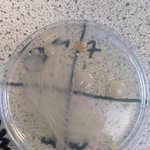
What a brilliant lesson with Y8 in science. 🦠They have been learning the streak plate method to grow bacteria.🦠 Looking forward to seeing the results. @KAKempston
2
8
Replying to @KAKempston
How bacteria spreads and multiplies from an unwashed hand: #biology
1
4
Two brain cells in the cerebellum shown using dye injection: #neuroscience by B. Barti
18
286
30
1,813
Thought you might find this interesting Y9. We have been looking at the brain and the function of each of its parts this week. @KCABedford
Brain cells in the cerebellum, a region involved in movement and proprioception: #neuroscience by G. Dunn
1
5
Replying to @KAKempston
Light pollution can be harmful to wildlife. For example, for bats, which use powerful night vision and echolocation to navigate, artificially lit areas can be like staring into car headlights on full beam. 🦇
2
Look Y9s, evidence of the stem cells and differentiation we have talked about in our lessons. @KCABedford
Birth of a brain cell. Stem cell differentiating into a neuron: #neuroscience
1
3
Birth of a brain cell. Stem cell differentiating into a neuron: #neuroscience
79
1,520
150
7,818
Replying to @KAKempston
Small but mighty! This is a video of a killer T cell of the immune system destroying a monstrous ovarian cancer cell. I recently captured this data on a spinning disc confocal microscope.
3
Can you name any of these influential women? @KCABedford
From Caroline Herschel to Hertha Ayrton and Kathleen Lonsdale, explore the most influential women in British science history, as voted for by our expert panel: #WomenInSTEM royalsociety.org/topics-poli…
2
4
Replying to @KAKempston
Have you ever heard of moss piglets or water bears? Or perhaps you know them better as tardigrades? These microscopic animals are incredibly tough. Curator Jan Beccaloni discusses one of the amazing adaptations that helps them to survive in extreme environmental conditions.
2
Y9s have been looking at mitosis in our biology lessons @KCABedford
A cell going through cell division videoed through a microscope. #Science #CellBiology #Art
2
1
2
Replying to @KAKempston
Born #OnThisDay in 1921 was Mary Jackson, @NASA's first black female engineer. She developed expertise working with wind tunnels and analysing data on aircraft flight experiments, and eventually became an equal opportunity specialist to help women & minorities.
3