
Partner Venture Capital Special Situation Fund @23mile | Host, 23mile Podcast (Tech M&A and Turnaround Stories)
London
Joined March 2009
- Tweets7.8K
- Following1.5K
- Followers912
- Likes6K




Pinned Tweet
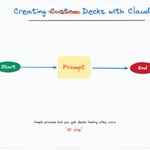
The biggest divide in business today is between those who are vehemently against the use of AI in creating decks and those who say "what's wrong with it?"
What if you could use AI to generate decks that don't look like AI?
Threading that line is tricky but can be done, here's a proven 5 step process.
Try it out and you'll be pleasantly surprised.
kayfin.co/custom-decks-with-…

Always sad when this happens but reminder that failure is the default outcome for tech startups.
If you find modest success, get out when you can.
Anything is better than zeros though VCs disagree
xitter.cf/kayodeodeleye/status/1…

Foursquare was acquired last month. The outcome was disappointing. It's taken me a while to write this, but I think I'm finally done grieving it. Here are some thoughts on our final years, an effort to honor the team who helped build & maintain FSQ's legacy, and my attempt to finally get some closure. teendrama.substack.com/p/som…


Yes, and you could be a portfolio company and VCs would still ghost you. Especially if you’re not one of the hot ones

See more

Venture capital is just a group of men (mostly) writing cheques into companies founded by their friends, creating this giant boys club.
Right?
I surely believed this for a long time. Looking back, I has no idea what I was doing when I was raising funds for my startup.
I'd started multiple businesses over many decades before then, but when you hear that a venture-backed startup is a different beast, it truly is.
Surely, there's some nepotism as in every area of human endeavour but mostly, it is strictly through the lens of one question.
❓ What are the chances that this founder can build a breakout company?
And that's why founders that complain that their seed VC "ghosted" them when they were in trouble just don't understand venture capital.
VCs go back to that single question all the time. Let's say a VC invests in 20 seed stage companies at ~$200k ARR, for simplicity.
After 18 months years, a typical distribution would be something like this:
1️⃣ 3 failed and shut down completely
2️⃣ Of the 17 alive, 1 would have grown exponentially, to ~$2 million ARR
3️⃣ 2 others would have enjoyed high growth, and be around $1 million ARR
4️⃣ The largest cohort of 8 would only have recorded moderate growth and be at $450k ARR
5️⃣ The final 6 will have seen revenue fail to pick up but just enough to keep them alive, so around $250k ARR
What this means is that this VC only cares about 3 to 5 of the original 20. These "chosen ones" get the follow-on funding, portfolio support and intro to other investors.
What about the ~12 that are alive and revenue generating? Well, they are left to fend for themselves.
Many end up coasting along for many years as zombies until they eventually run out of funds and shut down.
Unfair and brutal? Yep, that's how it feels to be one of the startups that are basically "venture orphans", but no one can blame VCs.
That's just how things work.

Kayode retweeted

If customers won't buy your stuff, try asking what they would buy. This sounds obvious, but surprisingly few founders do it, and it often yields valuable insights.
Venture capital is just a group of men (mostly) writing cheques into companies founded by their friends, creating this giant boys club.
Right?
I surely believed this for a long time. Looking back, I has no idea what I was doing when I was raising funds for my startup.
I'd started multiple businesses over many decades before then, but when you hear that a venture-backed startup is a different beast, it truly is.
Surely, there's some nepotism as in every area of human endeavour but mostly, it is strictly through the lens of one question.
❓ What are the chances that this founder can build a breakout company?
And that's why founders that complain that their seed VC "ghosted" them when they were in trouble just don't understand venture capital.
VCs go back to that single question all the time. Let's say a VC invests in 20 seed stage companies at ~$200k ARR, for simplicity.
After 18 months years, a typical distribution would be something like this:
1️⃣ 3 failed and shut down completely
2️⃣ Of the 17 alive, 1 would have grown exponentially, to ~$2 million ARR
3️⃣ 2 others would have enjoyed high growth, and be around $1 million ARR
4️⃣ The largest cohort of 8 would only have recorded moderate growth and be at $450k ARR
5️⃣ The final 6 will have seen revenue fail to pick up but just enough to keep them alive, so around $250k ARR
What this means is that this VC only cares about 3 to 5 of the original 20. These "chosen ones" get the follow-on funding, portfolio support and intro to other investors.
What about the ~12 that are alive and revenue generating? Well, they are left to fend for themselves.
Many end up coasting along for many years as zombies until they eventually run out of funds and shut down.
Unfair and brutal? Yep, that's how it feels to be one of the startups that are basically "venture orphans", but no one can blame VCs.
That's just how things work.
This lays near the inefficiencies of VC.
935 staff means the company was never going to tune a profit.
As long as money was cheap, no problem.
Founders have to cut the fat or sell to PE with balls to do the cutting

When you sell to Bending Spoons, most of your team will be promptly laid off.
This may be capitalism and may be necessary for Bending Spoons to hit its 25%+ unlevered IRR goals.
But certainly, most of Airtable and Miro employees losing their jobs is a bitter pill to swallow.
👉 Airtable had 935 employees when it signed. The entire Bending Spoons core team is smaller than that.


Because of survivorship bias, most early stage founders forget that only 1 in 10 of venture backed startups can achieve their lofty dreams.
It's great that investors are now advising their portfolio companies to consider options beyond the binary go big or go home.
Staying alive, cutting costs and getting profitable is not a bad outcome for a business that is making ~$1 million in revenue and has happy customers.
Yes it's tough but it is worthwhile making that hard pivot from hypergrowth to profitability

Met a close friend who’s also a seed stage founder today..
They have been growing but runway is dwindling and he wanted advice on what he should do next. Stellar customers, getting close to a $1M in revenue. Not a rocket ship, but not bad at all. He thinks he’s a bit early since the models haven’t caught up to the capabilities he wants but he also really feels the opportunity cost.
I have this same exact conversation at least 2x a week.
In this moment, you only have essentially three options:
1) if you have intense belief in the company, be a cockroach and get to default profitable. once the capabilities get there, you feel the demand, then go raise a large round and go for the jugular.
2) find an orthogonal area that is much more relevant and growing like crazy. ride the coat tails of new existing capabilities and push hard to capture them quickly using unfair advantages. and if you don’t have that, then..
3) sell / get acquihired and join a far more ambitious company that has figured out a lot of the things you haven’t. And then get back to starting a new company 1-2 years later when you find the next thing you want to build.
It’s hard but honestly those are the three options you have. And it really depends what category you’re in. The bar continues to get harder every month on how to cross the chasm from seed -> series A. The old school metrics are just not relevant anymore and in this consensus market there’s only a few categories where there’s tremendous pull on the VC front.
You could lament that this is the state of the market, but it’s better to know it’s happening than be oblivious on what is actually happening.
I get to share this directly which makes me uncomfortable but at least someone has to say it out loud 🙈
You can build a deck very easily with Claude and the output looks really good.
But looks are deceptive as most of these AI decks are in reality, very bad design. Worse still, all default AI decks exactly alike.
Which means investors, clients and other stakeholders are very sensitive to AI decks and many say they instantly bin them.
So what's the option?
✖️ Continue to build decks manually
OR
✅ Set up Claude to build custom decks using this simple 5 step process.
Check out the deep dive for full details.
kayfin.co/claude

Track laps to start the day
Always good to sweat it out despite the cold 🔥🔥🔥
Also debut of new Speed shoes. Didn’t disappoint


If you’re in SF it will look like adoption is high.
Get off twitter and you realise it’s not so


Here 🙌
The biggest divide in business today is between those who are vehemently against the use of AI in creating decks and those who say "what's wrong with it?"
What if you could use AI to generate decks that don't look like AI?
Threading that line is tricky but can be done, here's a proven 5 step process.
Try it out and you'll be pleasantly surprised.
kayfin.co/custom-decks-with-…