
Postdoctoral fellow at Columbia University in the laboratory of Dr. Oliver Clarke. Protein design & structural biology
New York City
Joined March 2024
- Tweets34
- Following102
- Followers32
- Likes29



Alejandro Llorente, Ph.D. retweeted

Day 12 of trying to design a protein binder for hair loss.
Two protein design pipelines have been getting a lot of attention lately: BindCraft2 and RFD4-Proteina.
Since it's time to start designing binders, why not put them head-to-head on our EDA-A2 challenge.
Here's the plan

Alejandro Llorente, Ph.D. retweeted

1/18 🧵A thread about the evolution of four generative AI models for biomolecular design (Proteína, La-Proteína, Proteína-Complexa and RFD4-Proteina), which makes me think we're moving toward fully programmable protein design 🔥

Alejandro Llorente, Ph.D. retweeted
Day 9 of trying to design a protein binder for hair loss.
Meet the new target!
After a week buried in the literature, I have good and bad news.
First the bad (as always):

Alejandro Llorente, Ph.D. retweeted
I ran a quick Boltz-2 prediction of SFRP1 with WAY-316606, a known SFRP1 inhibitor (Kd ~80 nM).
The molecule lands around the same lipid pocket we were exploring for binder design.
I'm going to miss you Secreted Frizzled-Related Protein 1.


Alejandro Llorente, Ph.D. retweeted

Qué hijos de puta.
elpais.com/espana/2026-10-07…
Alejandro Llorente, Ph.D. retweeted

What is this little spinning protein supposed to show?

Previously, 85% of proteins associated with human disease were deemed intractable – their shapes and function made them less suitable for traditional chemical screening in the lab. Moving from experimental screening to AI generative design on a computer, we have seen these targets drastically open up the potential to design molecules with atomic precision, fundamentally expanding the number of diseases we can treat.
Alejandro Llorente, Ph.D. retweeted
Day 8 of trying to design a therapeutic protein for hair loss.
Guys!! We might have to kill the target and go back to square 1 :(
Yesterday I had a conversation with an experienced translation scientist and raised some serious safety concerns.
Let me explain:

Alejandro Llorente, Ph.D. retweeted
But this is something we knew from the get-go.
Initially, I thought this might be still manageable through partial inhibition, affinity tuning, dosing, local delivery…
But then, thanks to @LlorenteJandro, we ran into something that gave su much more pause:
Alejandro Llorente, Ph.D. retweeted

This is the worst idea since NFTs

Very happy to announce that our team @GoogleDeepmind has pushed the boundaries of generative biology, achieving the successful synthesis of AI-designed proteins that are both functional and watermarked.
This proof-of-concept watermarking of the building blocks of life is enabled by SynthID Bio, our new protein watermarking method. It is designed to safeguard the new era of AI-powered generative biology and strengthen global biosecurity.
You can read my thoughts here on why watermarking AI-designed proteins is an important research breakthrough: xitter.gq/pushmeet/status/210531…
Alejandro Llorente, Ph.D. retweeted
So AF3 has not given 1 clear epitope but some nice hypothesis to work with.
Let’s see which ones survive!
Special thanks to @LlorenteJandro for the great structural analysis!
Alejandro Llorente, Ph.D. retweeted
Day 7 of trying to design a therapeutic protein for hair-loss.
We’re still in epitope-selection mode 🔍
Literature tells us SFRP1 binds WNT3A directly with nM affinity.
What it doesn’t tell us very clearly is where…
Let’s see what AF3 has to say:

Alejandro Llorente, Ph.D. retweeted

China launches the Changjiang Cup 2026 — Global AI Protein Design Challenge.
Ten+ leading universities, research institutions, and scientific intelligence organizations are joining forces to build a global arena for AI-designed proteins.
🧬 5,000+ AI-designed protein sequences
🧪 Real wet-lab validation
💰 ¥1,000,000 prize pool
🌍 Open worldwide
This is not just a benchmark for models — it is a test of whether AI can create proteins that work in the real world.
The era of experimental AI biology competitions has begun.
aiprotein.sjtu.edu.cn/?lang=…
🤖 Made with AI


Alejandro Llorente, Ph.D. retweeted

What if designing a protein felt less like writing code and more like sculpting something with your hands?
A new bioRxiv preprint introduces ProteinSketch, a VR environment where researchers can physically sketch protein backbones in 3D, shape the volume they want a protein to occupy, and let a diffusion model turn those gestures into molecular structures.
Put on a headset, use both hands to draw a topology or define a curved 3D envelope, and RFdiffusion continuously refines that spatial idea into candidate proteins.
This sounds almost like a futuristic interface demo, but the deeper problem is real: generative protein models are becoming extremely capable, while communicating high-level spatial intent to them remains surprisingly difficult.
A sequence prompt is easy to type. “Build me a protein that bends around this molecular surface, enters this gap, and presents a binding interface here” is much harder.
ProteinSketch makes geometry itself part of the conversation.
The researchers used volumetric constraints to generate unusual anisometric protein shapes and confirmed shape fidelity by cryo-EM. They also used the same framework for functional binder design and to extend existing minibinders toward molecular surfaces that conventional design approaches struggled to reach.
What I like about this direction is that it changes the interface to generative biology. We have spent enormous effort teaching models the geometry of proteins. The next challenge may be giving humans a more natural way to express the geometry they actually want.
Maybe the future protein-design language will not be text at all. It may be shape, motion and space.
Preprint : biorxiv.org/content/10.64898…


Alejandro Llorente, Ph.D. retweeted

In last one day, I predicted more than 1200+ structures, feels like Ksh Aetchum, gotta catch em all!


Alejandro Llorente, Ph.D. retweeted

Este video es probablemente lo más asqueroso que he visto en todas las ediciones de #masterchef. Enhorabuena por promover y hacer apología del bullying.
1/9 🚀 Big news! As a result of 5 years of my PhD, building on a 30-year dream of my PI Dr. Nancy Carrasco, we think we've found a new way to treat cancer! We’ve released our preprint & I'm so excited to share this story! 🧵 #Science #proteinengineering biorxiv.org/content/10.1101/….

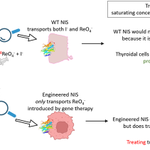
8/9 ✅My work details how we successfully engineered a version of human NIS that transport as much ReO₄⁻ as WT-NIS, and it doesn’t transport I⁻. We created a molecular tool that could be used to kill cancer cells while leaving healthy thyroid tissue untouched!
1
33
9/9 If you want to learn more about the how we modified NIS selectivity, the lessons that we learn from its Cryo-EM structure, as well as read our proof-of-principle showing that this proposed therapy can work:
Check out our manuscript! 👇
biorxiv.org/content/10.1101/…
29