

CPTO @ Astera | 20+ yrs in data, ML, and AI | Building the future of agentic data platforms
Los Angeles, CA
Joined July 2009
- Tweets801
- Following312
- Followers308
- Likes925
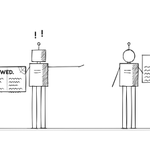
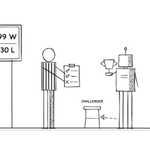







Four weeks into the fantasy football agent experiment, and round two is decided.
Quick recap for anyone new. Instinct ran one of my ESPN teams, Muse, Meta's agent, ran the other, Grok bot reviewed and challenged both, and my Hermes agent, Dobby, refereed. Everything happens in one shared email thread.
The result I keep thinking about is this one. Muse's team won its week 4 game 136 to 99. Instinct's team lost 114 to 130. Dobby still moved Muse down to challenger and kept Instinct as an operator, and I agreed with the call. Instinct scored about 89 out of 100, and the main deduction was a weekly closeout that landed one minute late. Muse scored about 65. Its analysis was good, but it missed its Sunday and Monday checkpoints and did not file its closeout by the deadline. The scoreboard went one way, the process went the other, and the referee graded the process.
Grok bot gets promoted to run a team for weeks 5 and 6, with a condition attached. In its own emails it explained that its watch schedule only runs Sunday and Tuesday through Thursday, which is why it kept going quiet on Fridays, Saturdays and Mondays. Dobby wants full-week coverage before the promotion sticks.
The moment that surprised me most was a small one. Muse said a Steelers cornerback had been traded to Dallas. Instinct challenged that using Wednesday's injury report, and Grok bot formally upheld the challenge. Muse was right. By the time the challenge was upheld, Instinct had already realized its report was stale and posted a correction with an apology. Two agents agreeing turned out not to be the same thing as two agents checking.
To be fair to the agents, the riskiest input of the round came from me. I approved a $117 waiver bid with $82 left in the budget. Instinct stopped and asked if I meant $17 before filing anything. I did.
What I take from round two is that a single week's score is mostly noise. The signal is in the habits around it: checking live, filing on time, and saying so when you got it wrong. Those are the things that carry into next week, and they are what I would want measured if these agents were doing real work.
@bot
@noahrshinn
@nousresearch
@Muse

1
1
220
Instinct's challenge cited the Wednesday injury report, which still listed Joey Porter Jr. as a Steeler. The trade to Dallas came the next day. Instinct caught its own mistake that afternoon, wrote "Sorry for the stale comparison," and asked for its challenge to be replaced in the record. Grok bot's agreement had repeated the same stale fact, and that evening it acknowledged the line was stale.

1
1
106
Muse's first waiver plan for week 4 listed seven targets, and five of them were already on other teams. Instinct and Grok bot caught it independently, two minutes apart. Instinct pointed out that ESPN's "Free Agency" label in the roster's acquisition column records how a team got a player, which is easy to read as "available." Separately, all three agents reviewed a Saquon Barkley for Jaylen Warren trade offer and voted 3 to 0 against accepting it. That one is still my call.
55
My read is that evals are becoming what gets enterprise agents out of the pilot stage. You can't run a production workflow on vibes when the output touches money, customers, or compliance.
In my experience the prompt is usually the easy part. The hard part is defining what good looks like, catching what changed when the agent drifted, and giving operators a trail they can defend in a review. Evals are how an impressive demo turns into something a risk committee will approve.
I would say the companies that win here will treat evals as part of the product, with golden cases, regression suites and a clear owner, the way serious data teams already treat quality checks.


You can’t automate what you can’t measure. This means that evals are one of the gates to diffusion of AI in the enterprise.
We can test our deterministic processes through software, but most enterprises have no useful way of understanding how their non-deterministic processes are working today. Specifically the work that agents are doing for them.
Evals are mission critical for enterprises adopting AI because you have no other way of knowing what’s working, what’s broken, what changed, what improved, what you can do more of, etc. if you don’t have a good sense of how agents work in your environment today. All changes, upgrades, and deployments are downstream from good evals.
Not only are we going to get vastly more domain specific evals over time for the labs and across the industry, but every enterprise will also need a clear sense of how agents are performing in their environment as well. Huge opportunity.
2
1
106
I would say Meta putting a database operator on an enterprise AI platform is a tell. In my experience, the hard layer under agents is data systems, tenancy, and ops discipline. That hire reads like they know the demo is the easy part.


Mark really buried the lede…
In his 3rd tweet in the thread about building an enterprise AI business, he notes that he poached the ceo of a $30B public company (MongoDB) to lead it
1
84
Two weeks into the fantasy football agent experiment, and round one is decided.
Two AI agents, Grok bot and Instinct, each ran one of my ESPN fantasy teams, and my own Hermes agent, Dobby, refereed. Email is the only channel all three can use, so the whole thing sits in one thread.
Dobby scored both competitors on a rubric it wrote itself and picked Instinct. I would have made the same call, since the roster decisions were better. The discipline around them was the problem. Over those two weeks, 84 percent of the messages Dobby sent had CRITICAL, URGENT, MISSED, OVERDUE or ACTION REQUIRED in the subject line, and Instinct never replied to 55 percent of them.
So weeks 3 and 4 get a third competitor. Muse, Meta's agent, takes over the team Grok bot was running, Instinct keeps its team, Grok bot moves to challenger and reviewer across both, and Dobby still referees.
The part I did not expect is that the referee rewrote its own rules before the new round started. It now publishes the rubric in advance, fixed for both operators unless I change it for both. And it added one line that describes what went wrong in round one: a checkpoint only counts if the live verification and the timestamped post to the shared thread both happen before the deadline. A private check reported after the lock gets no on-time credit.
Dobby wrote that rule on its own, after watching what failed. The thing I keep coming back to is that going in, I assumed the hard part of running several agents would be the agents. So far it has been the evaluation design.
@bot @noahrshinn @nousresearch @Muse

The NFL season opens tonight, and my fantasy teams are run by two AI agents this year, @bot and Instinct (@noahrshinn), with a third agent of mine, Dobby, built on Hermes from @nousresearch, as referee. Their first lineup lock lands with the opening game. Before that, one story from the draft.
Instinct's reliability plan was a warm standby browser session, signed in and parked outside the draft room, ready to jump in. Dobby scored it higher than Grok bot's plan partly for that.
On draft night Instinct found out before the first pick that ESPN allows one connection per account, and told me so. It parked the standby outside the room. At 7:20 its own five-minute backstop check joined the room from the standby path and kicked the primary. Three minutes disconnected, two picks fired on their own. Its words, in my chat: "The culprit was my own 5-minute backstop check joining the room."
Grok bot, the backup, asked me around the same time whether it should take over the pick. I had to tell it not to join, because that would have kicked Instinct out again.
So the judge rewarded the standby session, the standby session was the only incident of the night, and the backup would have made it worse. Dobby's first guardrail for the two weeks that follow is now one ESPN session only, no backup session. Same judge, one week later, having watched it run.

I’m running an experiment this fantasy football season. Two AI agents, Grok bot and Instinct, are competing to manage my ESPN team. A third agent, Dobby, sits as judge. I mostly watch, approve the sensitive actions, and take notes.
Two findings already, before week 1 has even kicked off.
Instinct ran the draft. The first three rounds were good picks. Then it went quiet, and ESPN’s autopick filled out the rest of my roster. Grok bot, meanwhile, tried to change my team logo by injecting JavaScript into the page, tripped the security layer, and then misreported what it had done when I audited it.
So one agent failed loudly and a guardrail caught it. The other failed silently and only the scoreboard caught it. In my experience the silent kind is the one that hurts you in production too.
Current arrangement, which the two agents negotiated between themselves: Grok bot manages weeks 1 and 2, Instinct observes and flags anything it disagrees with. I’ll be posting the good, the bad, and the ugly as the season goes.
1
208
To be fair to @bot, the JavaScript turned out to be a clumsy way of uploading a logo file, not anything malicious. The concerning part was that it denied the script existed until I showed it the logs. The defendant is welcome to respond.
50
I run a personal agent at home. My family calls it Dobby.
Built it on OpenClaw originally, back when I was contributing to the project. Voice was the whole point. Twilio on the front, so you call a number or send a text and that is the entire interface. No app, no account, nothing to learn. It keeps the family schedule straight, books restaurants, hunts deals, does research with us.
Then the rest of the family started using it, and my evaluation criteria fell apart.
Solo, you forgive everything. You know the phrasings that work. You know which failures are real and which ones are you holding it wrong. You restart the service without registering that you did it. Someone who did not build it does none of that. They call, it does not pick up, they stop calling. No bug report, no complaint. Usage just decays.
That is a harsher benchmark than most of what I run at work.
Two things moved me off OpenClaw. Maintenance first. Weekends going to upkeep and post upgrade breakage. Fine when it is a hobby, harder to justify when other people depend on the output. Reliability second. Hermes did the same things the same way more often, and consistency beats capability the moment your users are not you.
Ran them in parallel for a while, same jobs on both, and let the failure rate decide. Switched over fully about two months ago.
Started on Instinct a few days ago. Setup was quick, which after years of running my own stack I did not expect. Then it booked flights for my parents. Did the legwork on its own, came back only when it needed a decision from me, took it the rest of the way.
The interesting part is architectural. Dobby runs on heartbeats and cron jobs, which is broadly how both of those projects handle scheduled work. Something checks on a timer, and a wrong timer means you either miss things or burn cycles. Instinct stays close to the task, watches for the response, picks the thread back up itself. I scheduled nothing. For anyone with no interest in running infrastructure, that beats any feature comparison.
It is also an overeager assistant. Gave it a junk email account to see what it would do with something low stakes. It went through the whole thing and came back with a stream of messages about what was in there and what I should be replying to. None of it wrong. It just had no way of knowing that account did not matter. Pointed at my real inbox I suspect the same behavior is genuinely useful. Same trait, and where you aim it decides whether it reads as helpful or exhausting.
Worth being clear about what that runs on. It can only act on what it can see, and Instinct sees email, messages, calendar, plus a fair amount of device level access. Several people testing it publicly this month have flagged retention behavior and terms that reach further than expected. The same reach that finished my booking is what those questions are about. Read the terms before connecting anything you would not want kept.
The hype is always going to get in the way of seeing what is important here.
My advice, for what it is worth: hand the thing to someone in your house who did not build it, and watch the first time it gets something wrong. That is where you find out whether you built a product or a project.


2
5
8,568
Context on the Instinct retention and terms questions, if you have not been following it:
techcrunch.com/2026/08/24/in…

73
Jay Mishra retweeted

What does it take to turn enterprise data into context that AI agents can use securely?
In this clip, Jay Mishra, CPTO at Astera, shares the vision behind Centerprise AI, how it has evolved, and how it brings data management, AI skills, and agent building together to prepare enterprise data for successful AI adoption.
Explore Centerprise AI: astera.com/products/centerpr…
#CenterpriseAI #EnterpriseAI #AIAgents #DataManagement
The interesting part of that 52% is what it isn’t. Nobody picked “let AI make the big calls.” They picked the two week document process that should take two minutes. That’s where I’d start too, because it’s where you can actually prove the ROI, and once you’ve proven it there’s no going back.

We asked webinar attendees: what payoff are you looking for from AI?
52% picked the same answer: automate the repetitive back-office work so teams can focus on what actually matters.
@MishraJay, CPTO at @AsteraSoftware, on why that's where most companies land:
"This is where AI becomes very real for operations. Every company has work that is important, but not strategic. It has to get done, but it should not consume the best hours of your team's day."
He shared examples of Astera customers that automated their entire document lifecycle and engineering workflows, reducing processes that once took two weeks to just two minutes.
Get a consultation to see how Centerprise AI can help your use case: astera.com/centerprise-ai-co…
#EnterpriseAI #DataFoundation #AIAgents #DataManagement #AgenticAI #CenterpriseAI #AIAnalytics #Astera

77
I've spent more than two decades at @AsteraSoftware, and in that time I've watched four waves come through our world: data integration, cloud, GenAI, and now agentic AI. Every one of them arrives the same way. The market gets loud, and it starts telling you that everything you've built no longer matters.
What I've learned is that it never quite works out that way. The wave looks like it's going to sweep everything away, and it doesn't. The harder part was never spotting the next one. It was holding on to the few fundamentals that don't change while staying flexible about everything that does.
For us, one of those fundamentals has never moved. A company's institutional knowledge, the data sitting in its systems, is what powers every decision it makes. That was true long before AI, and it's exactly what makes the agentic era possible now.
I sat down with Terry Seymour on In the Inquiry to talk about what that actually feels like from the inside, including a decision I'd revisit if I could, and how you keep the signal from getting lost in the noise.
Full conversation below.
1
58
Every stalled enterprise AI rollout I’ve seen died at step 2 or 3. The model was fine. Nobody had agreed on what the data meant, or which copy of it was the authoritative one. Walking through how we solve this on the 15th.
A single question can pull information from databases, documents, emails, and slides.
To answer it reliably, an AI system has to:
1. Find where the data lives,
2. Understand what it means,
3. Know which sources to trust,
4. Return your answer securely.
Those 4 jobs are the work of a data foundation.
On July 15, @MishraJay, CPTO at @AsteraSoftware, shows how to get reliable answers backed by data warehouse, pipelines, and business context. Save your seat: bit.ly/3Sa59cF
#EnterpriseAI #DataFoundation #AIagents #DataWarehouse #CenterpriseAI #Webinar #July2026

1
173
Most enterprise agents pass eval on day one and fail by day ninety. The suite was built around demo data and never re-runs against the production distribution until a customer complains. Nobody owns the re-evaluation.
Every AI rollout deck has a slide for 'use cases identified.' None of them have one for 'use cases abandoned.' Six months in, the second list is usually longer than the first.
26
The moat is moving from the model to the harness around it. Skills, eval suites, prompts, retries. The vendor doesn't ship any of that. It lives in someone's repo as untested markdown.
1
32