

Unofficial NASA News Coverage Since 1996. Edited by @KeithCowing
Reston, VA
Joined December 2007
- Tweets143K
- Following1.6K
- Followers126K
- Likes22K




Pinned Tweet
FWIW @NASAAdmin many voices on space twitter have a faulty, incomplete, or politically biased understanding of space exploration history. Many things actually worked for that time. But this is "now" Things actually do change - often for the better - based on prior lessons learned. #AdAstra

Artemis II was not Apollo 8 either. At NASA, we are making the most of architecture decisions made, for better or worse, over decades. Regardless of the state of the lander, we must launch annually and keep moving in the direction of the Moon. Delaying for a perfect set of objectives doesn't make the rocket cost less, achieve the overall Artemis goals faster, or make anything safer.
When the LEM wasn't ready, NASA changed Apollo 8 from an Earth-orbit test of the lander to a mission around the Moon, moving the lander test to Apollo 9. When Gemini VI's Agena target failed, we pulled Gemini VII to the left and had Gemini VI to rendezvous with it. In both cases, NASA adapted to circumstances, made the most of what was available, and kept moving forward.
Some people choose to make this about their affinity for certain hardware, or equally, their distaste for certain hardware or people or companies, but it should be about what advances America's space program...and that is what Artemis III will do.
NASA Watch retweeted

It was a pleasure to visit @OhioAerospace and @NASAglenn alongside @SenJonHusted today.
We met with Ohio’s aerospace community and saw firsthand the work underway at Glenn supporting our missions, including advancing nuclear power in space and helping usher in a Nuclear NASA.
Ohio has helped America achieve the near impossible before, and the talent here will be essential as we return American astronauts to the Moon, build the Moon Base, and shape the future of space exploration.


NASA Watch retweeted

Program >> Mission
"we must launch annually and keep moving"
The idea of an ongoing campaign being served by a regular cadence of progress (via reliable, sacrosanct launch dates) is a refreshing return to how progress was made quickly 50 years ago.
Artemis II was not Apollo 8 either. At NASA, we are making the most of architecture decisions made, for better or worse, over decades. Regardless of the state of the lander, we must launch annually and keep moving in the direction of the Moon. Delaying for a perfect set of objectives doesn't make the rocket cost less, achieve the overall Artemis goals faster, or make anything safer.
When the LEM wasn't ready, NASA changed Apollo 8 from an Earth-orbit test of the lander to a mission around the Moon, moving the lander test to Apollo 9. When Gemini VI's Agena target failed, we pulled Gemini VII to the left and had Gemini VI to rendezvous with it. In both cases, NASA adapted to circumstances, made the most of what was available, and kept moving forward.
Some people choose to make this about their affinity for certain hardware, or equally, their distaste for certain hardware or people or companies, but it should be about what advances America's space program...and that is what Artemis III will do.
NASA Watch retweeted
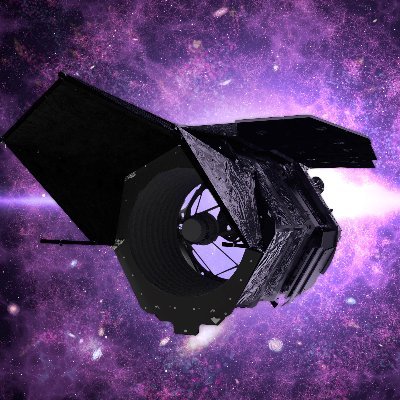
It's the final countdown 🎶
We're one step closer to Roman's first images! The observatory is now fully functional and the team is performing their final checks and calibrations before starting science observations.
go.nasa.gov/4A9menV
NASA Watch retweeted

Very interesting ASAP mtg today. Such a shame it's only by telephone, with no official recording. They're supposed to post official minutes, but the minutes from Dec 2025, Mar 2026, and June 2026 are missing. At least August 2026 is there.
Anyway ... 1/


Exclusive: New image shows Russian approach of U.S. satellite axios.com/2026/10/22/space-w…

NASA Watch retweeted
Today (22 October 2026) On Astrobiology.com
Early-career Graduate Students Host An Exclusive, NASA-funded Astrobiology Conference
astrobiology.com/2026/10/22/…
Resolving The Extended Interstellar Medium Of Infrared Galaxies I. Polycyclic Aromatic Hydrocarbon Emission
astrobiology.com/2026/10/22/…
The Science Case For An In-situ Measurement Platform In The Venus Clouds
astrobiology.com/2026/10/22/…
Assessment Of The Mass Loss And Radius Change Of 3I/ATLAS Based On Observed Production Rates
astrobiology.com/2026/10/22/…
How Life On Earth Experiences Climate Change
astrobiology.com/2026/10/22/…
Offworld Space Botany
astrobiology.com/2026/10/22/…
From Searching For Extraterrestrial Biosignatures To Exploring The Origins Of Life: A Prebiotic Chemistry Perspective
astrobiology.com/2026/10/22/…
Intimate Link Between Prebiotic Chemistry and Meteorites: Mechanisms of Organic Molecule Formation
astrobiology.com/2026/10/22/…
Beyond The Prebiotic Soup: Solid Organic Films And Protocell-Like Formation in Prebiotic Discharge Experiments
astrobiology.com/2026/10/22/…
Microbial Mats Influence The Isotopic Composition And Provenance of Soil Organic Matter In The McMurdo Dry Valleys, Antarctica
astrobiology.com/2026/10/22/…
#astrobiology #astrochemistry #interstellar #Biosignatures #Microgravity #SpaceBiology #originoflife #evolution #genomics #antarctica #microbiology #cryobiology

NASA Watch retweeted
I think it depends on the lens you are looking through:
- From Industry's Perspective: I have no issue with private capital and commercial industry making speculative investments in a future orbital or lunar economy. If companies want to raise the funding to launch missions to the Moon to prospect, extract resources, or manufacture, they are welcome to do so within the confines of the Outer Space Treaty, applicable law, and what few best practices have been established. In that respect, I don't see it as much different from the oil and gas industry prospecting for viable wells where permitted. I think we all agree that to have a bright future in space, beyond what taxpayers can fund, it is imperative to unlock its economic potential, and NASA is happy to help through Space Act Agreements, subject matter expertise, reimbursable work through our chambers and labs for testing, etc.
- From NASA's Perspective: That said, and this is very important, what NASA is doing on behalf of the taxpayers, the American people, and frankly all of humanity, does not depend on an economic or industrial justification. We are returning to the Moon and building a Base to feed that hunger for exploration, to realize its scientific potential, to inspire this nation as Apollo did, and most importantly, to dial in all the capabilities necessary for the next great leap to Mars. Just as in the past, the technologies we pioneer to "get there" will have direct benefits, including economic ones, back here on Earth. And if a lunar economy ignites along the way, all the better. But it is not a sure thing that the value extracted from lunar regolith will exceed all the associated costs. If/when the economics work out, that would certainly be exciting, but regardless, NASA still ventures on.
NASA Watch retweeted

Rumors of @sciam’s demise have been greatly exaggerated. We’re still here. And we’re still doing some of the best science journalism in the world.
Don’t take it from me, though—or from folks just going for easy social-media dunks; look at our coverage and decide for yourself.
NASA Watch retweeted

Fred Gregory is our Astronaut of the Day until October 26!
💫 Stop by to hear about his 3️⃣ Shuttle missions.
Explore more 💻: bit.ly/4vykkM2


American astronauts to the surface of the Moon by 2028 at 2 p.m. EDT, Friday, Oct. 23, at the agency’s Kennedy Space Center in Florida.
Learn where to watch online: nasa.gov/live
Participants in the briefing include:
- NASA Administrator Jared Isaacman
- NASA Associate Administrator Amit Kshatriya
- Jeremy Parsons, NASA’s Artemis program manager
The update will include details about NASA’s Artemis III mission that will send four astronauts to low Earth orbit next year to test critical systems needed for future lunar landings, and how plans to return American astronauts to the Moon by 2028 are progressing.
U.S. media interested in attending in person must apply online by 12 p.m., Friday, Oct. 16. To ask questions remotely, media must request the dial-in number from the Kennedy newsroom no later than one hour prior to the start of the update by emailing: [email protected]. NASA’s media accreditation policy is online.
As part of a Golden Age of innovation and exploration, NASA will send Artemis astronauts on increasingly difficult missions near the lunar South Pole to explore more of the Moon than ever before. In addition to providing economic benefits and advancing scientific discovery through its Moon missions, NASA will establish an enduring human presence on the lunar surface and build on the agency’s foundation for the first crewed mission to Mars.
@NASA @NASAArtemis @NASAMoonBase #Moon #Lunar #Artemis


NASA Watch retweeted
Letter from @NASA SMD AA Nicky Fox: Dear NASA Science Community, NASA Science wants to deliver science faster, so we’re changing how we compete and select missions. On Monday, October 26, we will host a virtual NASA Science Town Hall, from NASA Headquarters, to explain our new Competition Model 2.0 (CM 2.0), and answer your questions.
We have heard you. We have listened. We know that the burden of bringing great ideas forward has been too heavy for too long. It has taken years to move mission concepts through the current two-step process. This has often come with contract management challenges, unpredictability, and not enough funding. NASA is committed to doing better — and I’m excited to share with you how we’re making it happen.
I am so pleased that NASA Administrator Jared Isaacman has empowered the Science Mission Directorate to take action and make our mission selection process move more smoothly, efficiently, and effectively. The Administrator has directed us to accelerate the delivery of science, reduce the time and resources spent on long competitive processes, and focus funding on the highest-priority missions across every NASA Science division as quickly and affordably as possible. Predictability in delivering incredible science will be at the forefront of what we do.
We are committed to getting this right. Some of these changes will take time to fully implement. We will roll them out in stages, be thoughtful about them, and refine them with your input along the way. But time is also of the essence. By streamlining how missions are proposed, reviewed, and selected, we can make meaningful change right now. That streamlined approach is Competition Model 2.0, or CM2.0, and it is how we are answering the Administrator's call to get you to science faster.
Full memo: science.nasa.gov/directorate… @NASAScience_ @NASA @NASAAdmin

NASA Watch retweeted

CMSA is offering a free ride for active scientific payloads aboard the uncrewed test flight of the Lanyue lunar lander ahead of crewed Moon landing before 2030. Allocation is capped at 50 kg in total mass and 100 W in power draw, with zero launch fees charged to selected teams. Proposals are open to domestic universities, research institutes, and commercial firms through March 1, 2027.
#CNSPACE


Letter from @NASA SMD AA Nicky Fox: Dear NASA Science Community, NASA Science wants to deliver science faster, so we’re changing how we compete and select missions. On Monday, October 26, we will host a virtual NASA Science Town Hall, from NASA Headquarters, to explain our new Competition Model 2.0 (CM 2.0), and answer your questions.
We have heard you. We have listened. We know that the burden of bringing great ideas forward has been too heavy for too long. It has taken years to move mission concepts through the current two-step process. This has often come with contract management challenges, unpredictability, and not enough funding. NASA is committed to doing better — and I’m excited to share with you how we’re making it happen.
I am so pleased that NASA Administrator Jared Isaacman has empowered the Science Mission Directorate to take action and make our mission selection process move more smoothly, efficiently, and effectively. The Administrator has directed us to accelerate the delivery of science, reduce the time and resources spent on long competitive processes, and focus funding on the highest-priority missions across every NASA Science division as quickly and affordably as possible. Predictability in delivering incredible science will be at the forefront of what we do.
We are committed to getting this right. Some of these changes will take time to fully implement. We will roll them out in stages, be thoughtful about them, and refine them with your input along the way. But time is also of the essence. By streamlining how missions are proposed, reviewed, and selected, we can make meaningful change right now. That streamlined approach is Competition Model 2.0, or CM2.0, and it is how we are answering the Administrator's call to get you to science faster.
Full memo: science.nasa.gov/directorate… @NASAScience_ @NASA @NASAAdmin