

Official X account of the NCI Cancer Immunoprevention Network (CIP-Net)
Joined October 2018
- Tweets1.2K
- Following213
- Followers1.2K
- Likes1.3K






Pinned Tweet
The Cancer Immunoprevention Network (CIP-Net), established by the National Cancer Institute (NCI), advances the understanding of fundamental immunoprevention mechanisms, drives the discovery of novel strategies, and supports the preclinical development and testing of new interventions. More info: nci-cipnet.org
At today's #CIPNetSCMeeting, we thanked Dr. Haval Shirwan as he concluded his one-year term as rotating Chair. We are grateful for his inspiring leadership, dedication, and support of the network over the past year, and warmly welcome Dr. Shawn Demehri as the incoming Chair!
Co-Chair Dr. Alan Hutson @Amherst73 shared updates on network activities, followed by presentations from Dr. John Clifford of @theNCI, who introduced the PREVENT program, and Dr. Yurong Song of Frederick National Laboratory, who highlighted mouse model resources and the organoid platform available at the national laboratory.
Thank you to all our speakers and members for another engaging and productive meeting!


Cancer Immunoprevention Network retweeted

Explore systems immunology and T cell memory with #SITC! Join us Oct. 27 for the next webinar in the Computational IO Series and hear from experts about computational approaches advancing our understanding of immune responses. Register today! sitcancer.org/edu/webinars/c…

Excited to share the new MACS3 release (callpeak 41–64× faster) and paper from the @RoswellPark team led by @fooliu and Song Liu. MACS3 extends the widely used MACS peak caller to single-cell regulatory genomics, fully open source.
github.com/macs3-project/MAC…
doi.org/10.1093/gpbjnl/qzag0…


MACS 3.1.0 is released with a jaw-dropping 40-60x improvement in speed, thanks to @jmschreiber91's auto-optimize work! AI achieved in one weekend what I've been hoping for years! Now peak calling that once took minutes can be completed in seconds! github.com/macs3-project/MAC… 1/2

Cancer Immunoprevention Network retweeted

Functional heterogeneity of macrophages in distinct niches of hepatocellular carcinoma dlvr.it/TVwnh4

How can RNA biology advance precision radiation oncology? Join NCI’s free virtual workshop to explore RNA biomarkers, spatial transcriptomics & AI.
📅 Nov. 4–5, 2026 | 1–5 p.m. ET
Register: events.cancer.gov/dctd/preci…
#RadiationOncology #RNA
We are pleased to share the inaugural issue of the CIP-Net Newsletter!
This first issue highlights recent network activities, research initiatives, collaborative efforts, and key moments from our 2026 CIP-Net Annual Meeting in Buffalo. It also celebrates the contributions of our investigators, patient advocates, and the broader CIP-Net community.
Read the newsletter here: indd.adobe.com/view/e47a87f1…

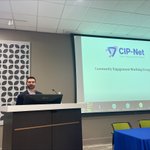
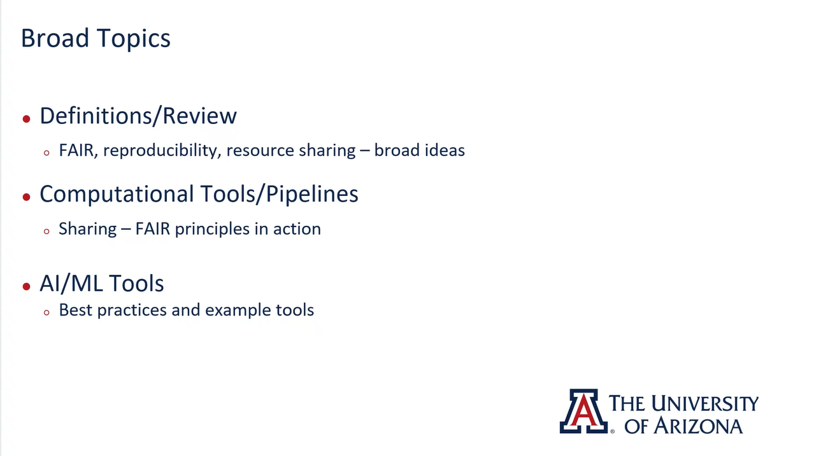
Today, the #CIPNet Resource Sharing Working Group, chaired by Dr. Anjana Bhardwaj and co-chaired by Dr. Henry Withers, met to advance resource sharing across the network, including lab-validated SOPs and other shareable resources.
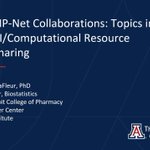
The meeting also featured a presentation by Dr. Bonnie LaFleur of @uarizona, fostering discussion and collaboration around computational and research resources across CIP-Net.
#CancerPrevention #CancerResearch #TeamScience



Cancer Immunoprevention Network retweeted

Read this recently published In Focus, “Targeting RAS for Pancreatic Cancer Interception,” in advance of #AACRpan26: aacrjournals.org/cancerdisco…

Cancer Immunoprevention Network retweeted
NEWS: NIH launches new resource accessible through PubMed to strengthen research replication and reproducibility.
Read the full story ➡️ bit.ly/4y7rXtA
Cancer Immunoprevention Network retweeted

New #JITC article: "IgM promotes antitumor immunity to a Tn-expressing solid tumor" doi.org/10.1136/jitc-2026-01…

Cancer Immunoprevention Network retweeted

A new in vitro system can stimulate the production of cells that resemble human #GerminalCenter B cells, which could assist efforts to study immune responses to #vaccines. Learn more in Science #Immunology: scim.ag/4xtAmqg

Cancer Immunoprevention Network retweeted

📝 #JAMAReview: #Cancer vaccines are being evaluated for treatment and prevention across multiple malignant neoplasms as advances in tumor immunology, antigen discovery, and vaccine delivery reshape the field.
This Review discusses how vaccines can stimulate adaptive immunity against neoantigens, nonmutated tumor proteins, or tumor-derived antigens, with current approved uses in melanoma, prostate cancer, and bladder cancer.
🔗 ja.ma/4hBPEEu

Cancer Immunoprevention Network retweeted

To postdocs advancing cancer research: thank you. My postdoc years studying cell death at Dana-Farber with Stan Korsmeyer shaped how I think about science to this day. My strongest suggestion: know very clearly exactly what question you are asking. shorturl.at/omXsP #NPAW

ALT Graphic Credit: National Postdoctoral Association. \n\nA timeline graphic showing the evolution of the U.S. PostDoc posiiton.
Cancer Immunoprevention Network retweeted

Tumor evolution shapes metastatic competence in colorectal cancer dlvr.it/TVZtNM

📢 Registration is open for the 4th Biennial Translational Advances in Cancer Prevention Agent Development (TACPAD) Virtual Meeting!
📅 September 28–30, 2026
💻 Virtual & free to attend
Join leading basic, translational, and clinical researchers to explore emerging advances in cancer prevention and interception—including immunoprevention, chemoprevention, biomarkers, novel agents, and prevention clinical trials.
Register: events.cancer.gov/cadrg/tacp…
#CancerPrevention #CancerResearch #TACPAD #CancerInterception #NCI
Cancer Immunoprevention Network retweeted
A self-amplifying nerve-fibroblast circuit drives colorectal cancer progression dlvr.it/TVWNmr

🌟 CIP-Net Featured Seminar: “No Cancer” Research
Dr. Philip Castle, Director of the @theNCI Division of Cancer Prevention (DCP), delivered an insightful and inspiring featured seminar on “No Cancer” Research, challenging us to think about what success in cancer research ultimately looks like: preventing cancer before it ever develops.
An onsite poll at the beginning of the seminar said it all: everyone wanted cancer to be prevented; no one chose to be diagnosed with cancer and then treated. It was a simple but powerful reminder of why prevention matters.
Dr. Castle discussed both the enormous potential and the unique challenges of cancer prevention. Prevention can be scientifically complex, require long-term investment and follow-up, and may not always provide the immediate financial incentives needed for the private sector to lead. Yet it is far too important to patients, families, and the communities we serve to be overlooked. This is why sustained public investment and a coordinated national effort are essential.
Under Dr. Castle's leadership, DCP continues to advance research across its major areas, including preventive agents, screening and early detection, and symptom science and prevention/management, with numerous programs and clinical research initiatives steadily moving the field forward.
Dr. Castle also recognized @RoswellPark for its strong commitment to clinical trials and its continued support of DCP's cancer prevention research.
To conclude his seminar, Dr. Castle recommended Harvey V. Fineberg’s thought-provoking paper, “The Paradox of Disease Prevention: Celebrated in Principle, Resisted in Practice.” The paper explores a fundamental paradox of prevention: although virtually everyone values preventing disease, prevention can be remarkably difficult to implement and sustain in practice. Its successes are often invisible, benefits may take years to emerge, financial incentives are not always aligned, and prevention is frequently held to a higher economic standard than treatment. Fineberg also outlines strategies for overcoming these barriers through better incentives, policy, communication, and systems that make prevention easier to adopt.
The paper strongly echoed a central message of Dr. Castle’s seminar: if we all prefer “no cancer” to treating cancer after it develops, how do we build a research, healthcare, and societal system that truly prioritizes prevention?
The seminar clearly resonated with the audience. The presentation was followed by a lively discussion and many thoughtful questions: a reflection of how motivated the #CIPNet community is to rethink cancer research around an ambitious but compelling goal: What if the best cancer outcome is simply “No Cancer”?


Drs. Kevin Howcroft and Robert Shoemaker of @theNCI delivered closing remarks to conclude a successful #CIPNet Annual Meeting!
Thank you to all our speakers, investigators, patient advocates, and attendees for the engaging discussions and valuable contributions. We look forward to coming together again at our next reunion!

Dr. Alan Hutson @Amherst73 of @RoswellPark presented updates on the work of the CIP-Net Data and Resource Coordinating Center (DRCC). As the host of this year’s Annual Meeting, he also shared some fun facts about Buffalo that many attendees may not have known!
The DRCC has proactively launched a range of initiatives to strengthen and connect the CIP-Net community—from harnessing AI tools to build automatically populated publication and AI webinar catalogs, to curating useful resources for members, particularly Early-Stage Investigators. The team has also developed podcast and newsletter series to expand community engagement and outreach.
Beyond these efforts, the DRCC provides analytical support to CIP-Net investigators and facilitates collaborations and resource sharing across the network.
Through these initiatives, the DRCC continues to bring the #CIPNet consortium together as a more connected, collaborative, and unified effort to advance cancer immunoprevention.


