
Your spinal fluids need replacing....💉💉💙💙
Joined September 2012
- Tweets677
- Following184
- Followers287
- Likes2K


Pano Kostouros retweeted
Yes, @YariLogos has major issues. He's not my friend. But on this particular point, he's right.
"𝐓𝐡𝐞𝐫𝐞 𝐰𝐢𝐥𝐥 𝐜𝐨𝐦𝐞 𝐚 𝐭𝐢𝐦𝐞 𝐰𝐡𝐞𝐧 𝐜𝐨𝐫𝐫𝐮𝐩𝐭𝐢𝐨𝐧 𝐚𝐧𝐝 𝐥𝐞𝐰𝐝𝐧𝐞𝐬𝐬 𝐚𝐦𝐨𝐧𝐠 𝐭𝐡𝐞 𝐲𝐨𝐮𝐭𝐡 𝐰𝐢𝐥𝐥 𝐫𝐞𝐚𝐜𝐡 𝐭𝐡𝐞 𝐮𝐭𝐦𝐨𝐬𝐭 𝐩𝐨𝐢𝐧𝐭. 𝐓𝐡𝐞𝐫𝐞 𝐰𝐢𝐥𝐥 𝐡𝐚𝐫𝐝𝐥𝐲 𝐛𝐞 𝐚𝐧𝐲 𝐯𝐢𝐫𝐠𝐢𝐧 𝐲𝐨𝐮𝐭𝐡 𝐥𝐞𝐟𝐭. 𝐓𝐡𝐞𝐲 𝐰𝐢𝐥𝐥 𝐬𝐞𝐞 𝐭𝐡𝐞𝐢𝐫 𝐥𝐚𝐜𝐤 𝐨𝐟 𝐩𝐮𝐧𝐢𝐬𝐡𝐦𝐞𝐧𝐭 𝐚𝐧𝐝 𝐰𝐢𝐥𝐥 𝐭𝐡𝐢𝐧𝐤 𝐭𝐡𝐚𝐭 𝐞𝐯𝐞𝐫𝐲𝐭𝐡𝐢𝐧𝐠 𝐢𝐬 𝐚𝐥𝐥𝐨𝐰𝐚𝐛𝐥𝐞 𝐟𝐨𝐫 𝐭𝐡𝐞𝐦 𝐭𝐨 𝐬𝐚𝐭𝐢𝐬𝐟𝐲 𝐭𝐡𝐞𝐢𝐫 𝐝𝐞𝐬𝐢𝐫𝐞𝐬. 𝐆𝐨𝐝 𝐰𝐢𝐥𝐥 𝐜𝐚𝐥𝐥 𝐭𝐡𝐞𝐦, 𝐡𝐨𝐰𝐞𝐯𝐞𝐫, 𝐚𝐧𝐝 𝐭𝐡𝐞𝐲 𝐰𝐢𝐥𝐥 𝐫𝐞𝐚𝐥𝐢𝐳𝐞 𝐭𝐡𝐚𝐭 𝐢𝐭 𝐰𝐢𝐥𝐥 𝐧𝐨𝐭 𝐛𝐞 𝐩𝐨𝐬𝐬𝐢𝐛𝐥𝐞 𝐟𝐨𝐫 𝐭𝐡𝐞𝐦 𝐭𝐨 𝐜𝐨𝐧𝐭𝐢𝐧𝐮𝐞 𝐬𝐮𝐜𝐡 𝐚 𝐥𝐢𝐟𝐞.
"𝐓𝐡𝐞𝐧 𝐢𝐧 𝐯𝐚𝐫𝐢𝐨𝐮𝐬 𝐰𝐚𝐲𝐬 𝐭𝐡𝐞𝐲 𝐰𝐢𝐥𝐥 𝐛𝐞 𝐥𝐞𝐝 𝐭𝐨 𝐆𝐨𝐝… 𝐭𝐡𝐚𝐭 𝐭𝐢𝐦𝐞 𝐰𝐢𝐥𝐥 𝐛𝐞 𝐛𝐞𝐚𝐮𝐭𝐢𝐟𝐮𝐥. 𝐓𝐡𝐚𝐭 𝐭𝐨𝐝𝐚𝐲 𝐭𝐡𝐞𝐲 𝐚𝐫𝐞 𝐬𝐢𝐧𝐧𝐢𝐧𝐠 𝐠𝐫𝐞𝐚𝐭𝐥𝐲, 𝐰𝐢𝐥𝐥 𝐥𝐞𝐚𝐝 𝐭𝐡𝐞𝐦 𝐭𝐨 𝐚 𝐝𝐞𝐞𝐩𝐞𝐫 𝐫𝐞𝐩𝐞𝐧𝐭𝐚𝐧𝐜𝐞. 𝐉𝐮𝐬𝐭 𝐥𝐢𝐤𝐞 𝐭𝐡𝐞 𝐜𝐚𝐧𝐝𝐥𝐞 𝐛𝐞𝐟𝐨𝐫𝐞 𝐢𝐭 𝐠𝐨𝐞𝐬 𝐨𝐮𝐭, 𝐢𝐭 𝐬𝐡𝐢𝐧𝐞𝐬 𝐬𝐭𝐫𝐨𝐧𝐠𝐥𝐲 𝐚𝐧𝐝 𝐭𝐡𝐫𝐨𝐰𝐬 𝐬𝐩𝐚𝐫𝐤𝐬; 𝐰𝐢𝐭𝐡 𝐢𝐭𝐬 𝐥𝐢𝐠𝐡𝐭, 𝐢𝐭 𝐞𝐧𝐥𝐢𝐠𝐡𝐭𝐞𝐧𝐬 𝐭𝐡𝐞 𝐬𝐮𝐫𝐫𝐨𝐮𝐧𝐝𝐢𝐧𝐠 𝐝𝐚𝐫𝐤𝐧𝐞𝐬𝐬; 𝐭𝐡𝐮𝐬, 𝐢𝐭 𝐰𝐢𝐥𝐥 𝐛𝐞 𝐭𝐡𝐞 𝐂𝐡𝐮𝐫𝐜𝐡'𝐬 𝐥𝐢𝐟𝐞 𝐢𝐧 𝐭𝐡𝐞 𝐥𝐚𝐬𝐭 𝐚𝐠𝐞. 𝐀𝐧𝐝 𝐭𝐡𝐚𝐭 𝐭𝐢𝐦𝐞 𝐢𝐬 𝐧𝐞𝐚𝐫."
— 𝑆𝘢𝑖𝘯𝑡 𝑆𝘦𝑟𝘢𝑝𝘩𝑖𝘮 𝘰𝑓 𝑉𝘺𝑟𝘪𝑡𝘴𝑎

Pano Kostouros retweeted

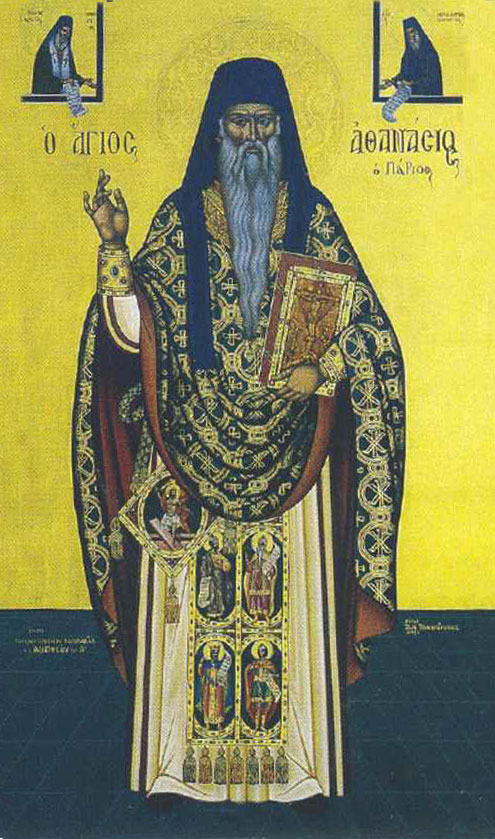
So it has recently become clear that a certain subset of people here still do not grasp the Orthodox understanding of original sin, nor are they even remotely familiar with the historical background of Orthodoxy in the 18th century, especially as it pertains to the Kollyvades movement and religious education. Blessed Neophytos Kafsokalyvitis (1689-1784), who is considered the leader of the Kollyvades movement and the first of the Kollyvades Fathers, had explicit disagreement with Eugenios Voulgaris on various matters, original sin being one of them. Now, recently I have been posting many works from Voulgaris, some of what I posted, are from his Theologikon, which are his earlier works. Since it has been shown that there is no doctrine of PSA in Voulgaris' works, they decided it's better to try and prove that we at least hold to the same views as the West on original sin, but this myth will also be dispelled.
"Mikko" imagined it absurd for Voulgaris to teach scholastic dogmatics and then to admit that it went against tradition to do such thing. Well, if he had actually read the letters of Voulgaris, instead of getting all his information from discord compilations of faulty OCR translations (which I'll show) then he would know that this in fact was the case. Voulgaris disavowed his early works, he was disgusted to have written them, and wished that they would never be published. This includes his treatment on original sin in which, when he was writing this work early in his life, he lovingly criticised Neophytos for not affirming that we transgressed with Adam. And as we can see from the letter (which he himself references in his book 'On Creation') that Voulgaris sent from Kozani in the 1740s, he was made aware that Neophytos did not believe in the Latin view of original sin, in fact, Neophytos argued that we do not participate in Adam's sin in any way and that we only inherit the consequences, this is the Orthodox position and as we will see, Saint Athanasios Parios, a student of both Neophytos and Voulgaris, will agree with Neophytos on this. Now according to Latinising detractors on X (Twitter), they would consider this view of Neophytos to be "filthy modernism". Yet, Neophytos' theology on original sin is what came to be vindicated by the Church, and obviously Neophytos cannot be considered a "modernist" nor did anyone ever accuse him of such a thing, in fact, a letter from Voulgaris in 1793 showed that he had now come to believe in the same view of original sin as Neophytos. Voulgaris no longer believed in his literalist/covenantal theory and finally, he began to soften his view on our state after the fall by choosing to refer to it as an ill-condition, as we see in his later confession of faith (1760); this was requested in order to refute a Jansenist who claimed Orthodox teach the same soteriology as they do, but the confession was still deemed too Latinised to be endorsed by the Synod of Constantinople and thus it never circulated. As I mentioned in a previous post, Eugenios Voulgarios was actually forced out of Mt Athos in 1759 and was accused of being a Latiniser for his views and his attempt to introduce a Western-style education to Mt Athos and the rest of Greece. In brief, the theology of the Kollyvades Fathers prevailed, Voulgaris would soften his views and today the Orthodox world as a whole commemorates the Kollyvades movement.
The reason why I made so many posts with a florilegium of quotes from Voulgaris was because I found it interesting that despite his Western education and scholastic methodology, he always found room to criticise deviations from Patristic tradition, even early on in his career, when he was the most "Latinised". What I also found interesting were: his defence of the essence-energy distinction, his defence of man having free will and needing to cooperate with divine grace by his own volition, his therapeutic view of the Passion of Christ and perhaps most strikingly; his view of linking nominalists back to Thomism. So with that being said, I never claimed all of his other early views to be infallible and I in fact highlighted the problems from the start. So with that being clarified, we can say with certainty that Voulgaris' view on many other things in his early works, including original sin, were incorrect and imprecise. He also made imprecisions as it relates to his scholastic method when writing about God's attributes. Overall however, we can still regard Voulgaris as an authority on Orthodox theology due to the fact that he retracted his early views, later in his life. So it is a great shame for people to quote Voulgaris' early views on original sin considering that he himself wished these works would never be published. Clearly, far too many are willing to expose the mistakes of their Fathers in order to push their subversive agenda in the Church.
As for Saint Athanasios Parios, he would explicitly reference the huge effort he made to edit the previous works of Voulgaris and to remove the Latin errors. Despite this, Parios would still give charity to Voulgaris and respect, as he was his former student. Scholars who studied the literature on 18th century Greek Orthodoxy also note the departure of Latin exegesis in the Epitome of Parios. What is absent in the Greek theological treatises on original sin is also the rigid Latin distinctions of reatus and culpa, Latin theology on original sin hinges on these distinctions. As it follows in both Augustine and Aquinus, guilt (reatus) without blame (culpa) is unjust, therefore, infants must be culpable of sinning in Adam. Augustine is very clear that all souls (before individualisation) were present with Adam and sinned in him. Aquinas denies this, as Augustine was relying heavily on Traducianism & Neoplatanism, but Aquinas still finds a way to make infants culpable by declaring their voluntariness in the sin through the will of the ancestor, as members of the same body (corporate theory). What is fascinating is that on the topic of original sin, Parios does not cite St Augustine a single time, despite the fact that Augustine was the most cited writer in the works of original sin that Voulgaris wrote. Parios instead chooses to cite Saint Theophylact of Ohrid as his main authority on the topic. Parios never labels Voulgaris as a heretic, but he was sad to see his works being so full of Latinising errors, and in the words of Parios:
"And when I had done this, [correcting the Theologikon] in a first and a second course of teaching, the book became a misshapen and unsightly monster, with so many deletions, other additions, and in very many places outright refutations."
Firstly, let's look at both Parios' view of original sin and how he refutes the view that humanity sinned in Adam:
"By what means did the transgression of our Forefather Adam spread and continue to spread to the entire [human] race?...
[death reigned] from Adam to Moses, even over those who had not sinned after the likeness of Adam's transgression. And again: as by the disobedience of one man the many were made sinners, so by the obedience of one the many will be made righteous. What is the 'all sinned'? asks the holy Theophylact. He answers: 'That is, on account of Adam (ἐπὶ τῷ Ἀδάμ) all sinned. For when he fell, even those who had not eaten from the tree became mortal from him, as though they themselves had fallen, because he had fallen'. But, as I said, the dogma is beyond dispute, as coming from the divine faith, and to spin out a long discourse on what is agreed is, I think, superfluous and vain. It is very reasonably asked, however, by what rationale the condemnation for the disobedience passed also to those who did not transgress, that is, who did not eat the forbidden fruit. For it is properly and primarily the soul that sins: Adam's soul sinned first by consenting to eat, and then the body ate. How then, they ask, did Adam's sin pass from his soul into the souls of his sons? For Adam's soul did not beget the soul of Abel and of Seth. Rather, just as in the beginning God created the soul by itself through His divine breath and joined it to the body formed from the earth, so too with Adam's sons: the soul of each one is brought in from God into the bodies formed from Adam's seed, as his was formed from the dust, and so always with those who follow. If, then, the soul is brought pure and sinless from God into newly formed bodies, how and from where does it afterwards become tainted in the forefather's sin? ...
even if we do not know what the most ancient and greatest Teachers say about this, [what their followers teach] seems adequate to me.
'By such generative power,' he says (Theophanes, companion of St Gennadios), 'the curse of the first-formed Adam reaches down to us, like wheat that is sown bare, without any covering, but which grows and comes to maturity with the ancient husks handed down from its parents, and these picture the ancient sin, which always follows the seeds.' What made, and still makes, the ancestral sin and penalty transmissible is above all the seed (nature), as a succession from that root...So by reason of the seed, as the sin that dwells with the flesh is passed on to us from those first ones, the soul too is tainted by it; by transmission, at once, not by its own activity...
See how excellently these most wise teachers explain the ancestral sin, and by what rationale it becomes transmissible to the whole race, in no way making the divine will the cause, as those mentioned above do. By no means [were we with Adam]. How is it possible that all the seeds of the race were contained in the Forefather? We should rather say that the generative power was in him, as it is in all living things.
(Note: At the time he was writing this, Parios seemingly does not have access to a large corpus of Greek Fathers on the topic of the mechanism by which sinful nature spreads. If he did, it is fair to assume his view would be fleshed out much more, but that is not entirely important.)
Refuting the idea that we transgressed with Adam and against the idea of imputation (in the form of a dialogue):
"Voulgaris: 'He subjected them, in the soul of the forefather, to the ordinance about abstaining from the tree, and through him made a covenant with the whole nature, extending His covenant over all men in the one first man, and resolving that whatever he chose should be reckoned to all.'
Parios: 'But if we refer the matter to the incomprehensible judgments of God, and grant that this alone, the divine will, is the solution of the difficulty, then it is finished; everything that follows is superfluous.'
Voulgaris: 'So God willed; seek no further reason. For who, as it says, has resisted His will?'
Parios: 'But is it then safe to say that for no reason at all, but by the divine vote alone, all who are from Adam shared, and share, in his ruin? And how, or where, will justice be preserved, if those who have sinned in nothing undergo penalties and punishments?'
Voulgaris: 'But they sinned in Adam.'
Parios: 'How, when they did not eat of the forbidden tree?'
Voulgaris: 'But the Creator of all so judged, that those born of him should be liable for whatever he sinned.'
Parios: 'How then does He say in the prophet Ezekiel —The soul that sins, it shall die. The son shall not bear the iniquity of the father, nor the father the iniquity of the son; the righteousness of the righteous shall be upon him, and the wickedness of the wicked shall be upon him? How does the same God legislate contrary things for those under Him, He who is hymned as just, the very fountain of justice? He who does all things with reason has never been found to punish anyone without reason. But great is the harmony of divine Scripture in all things, says the divine Cyril of Alexandria. For in Deuteronomy too He declares the same: Fathers shall not die for their children, nor shall sons die for their fathers; each shall die for his own sin.' [End.]"
"He willed, and brought the flood. He willed, and burned the cities of Sodom … But each of these was liable to God's just wrath, and suffered what their deeds deserved. And what they bring forward to establish this opinion of theirs, from the commandment about circumcision given to Abraham, by which God threatens destruction to those who will not keep it, has not a single likeness, as they call it, or parallel, to Adam's case at all. For how are the descendants of Abraham, who set aside God's covenant by not being circumcised, in the same case as us who are from Adam, who never touched the forbidden tree, when he alone transgressed the commandment given to him? How then did the penalty of Adam, who transgressed the commandment, become, and still become, the penalty of the race born from him, without some reason, that is, some cause? For both the commandment and its transgression are circumscribed and bounded: both were given and carried out while the forefathers were inside Paradise. Once they had come to be far from Paradise and its goods, each was doing his own deeds, using the natural law alone...
We believe, then, that holy baptism cleanses both the ancestral sin, which is unchosen, being a common consequence of nature, and all chosen sins without exception, if the one baptized happens to be of mature age."
Refuting the view of punishment as held by Calvin:
"[Calvin says] 'It had been predestined that Adam should be conquered by sin and perish, both he and all his descendants, and be subjected to eternal death'. 'Since we cannot attribute this to human nature', he says, 'it is evident that it depends on the wonderful counsel of God.'
[To this we say] for just as the Kingdom of heaven is, and is called, the wage owed for good works, so in countless places of divine Scripture eternal punishment is called the recompense of sins. For [the Scriptures] cry out more clearly than any trumpet that sinners, doing evil of their own free will, go of their own free will into punishment.
So God is angry with the people that has sinned, let 'anger' mean the bringing on of discipline. For the sin does not happen because of the punishment that follows; the punishment is brought on because of the sinning. So, lest we fall into such impieties, we believe that God's sovereignty rejects those whom it rejects not without cause but most justly, for the things they sinned willingly, with no one compelling them, and we never separate God's simple will from right order.
(Note: Eternal punishment is the result of freely chosen evil. When Parios means eternal punishment he says so: αἰώνιος κόλασις is "the recompense of sins", sins committed "of their own free will" [αὐθαιρέτως] here, and "willingly, with no one compelling them" [ἑκουσίως]. Nowhere in his treatment of ancestral sin does he call the inheritance from Adam "eternal punishment". What he names there is death & the deprivation of grace, which is a separate kind of condemnation and penalty, not eternal punishment.)
On the defence of free will and synergism:
"Predestination is a divine command from above, according to sure and unchangeable foreknowledge, calling the worthy to justification and eternal glory...He lays no necessity on the predestined, who are by nature rich in self-determination, but calls, justifies and glorifies those He knew from eternity as "called according to purpose", that is, those who choose the good and obey His divine commands. We must show, against the evil-minded, that [the elect] are chosen not arbitrarily nor without reason, but on account of their own virtue. So men are justified also by showing forth their own good works, and not by the absolute will and sovereignty of God alone, as the followers of Calvin babble."
"In truth by grace and choice is saved the saved, as says Macarius the Egyptian and the divinely inspired Damascene On Orthodox Faith (book 2, chapter 30): without His concurrence and aid impossible for us to will or do good; but in our power either to remain in virtue and follow God calling to this, or depart from virtue."
On wrath:
"'But here' says Clement, the most wise author of the Stromata, 'some attack us, saying that the Lord is not good, because of the rod, the threat and the fear. For how, they say, if the Lord loves mankind and is good, is He angry and does He punish? … Many of the passions are healed by punishment, and by the imposing of sterner commands … Reproof is like surgery of the soul. … Reproach is like medicine, dissolving the calluses of the passions … restoring man to health and truth. Admonition, then, is like the diet of a sick soul … And all these things tend to salvation and eternal health.'"
Against scholasticism and a correction of the Latinisation of Eugenios Voulgaris:
"I did not consider it fit to entitle the whole book "Theology" or "Theologikon", as these newer men, I mean the scholastics among the Latins, like to call it...since I want, and want very much, always and in everything to follow my divine Fathers, and not the novel inventions of these new, and newer, men."
"[Regarding John of Damascus] his work is 'scholastic', then, but not after the reckless abuse, now prevailing in divine matters, of the most absurd hypotheses and antitheses, and of the dialectic that has intruded from outside...It is not scholastic in that way, which the Fathers find abhorrent and repugnant...For our faith is not from the principles of reason, but comes from divine Revelation...
New dogmas are unacceptable even to hear...so it is not permitted to us to think or teach anything other than what has been handed down by the divine Apostles...Scholastic theology is not necessary: without it the Church of old flourished and shone in both respects, in piety and in life."
"A book came into my hands some years ago, bearing the title 'Theology' but no author's name … put together, it seemed, from the scholastics among the Latins, though clean of papal impurities. But somehow the book was full of other defects. … I found many things in it open to censure: some not correct, some said off-key, some set down in disorder, some wrong in other ways. This was [the book of] the most wise Eugenios, who drafted these things in his youth in Ioannina, and later would not even consider them worth remembering...
Since this scholastic form has spread among the Italians … our teacher too, imitating those newer men, worked this treatise out in a more scholastic manner. … On this it must be understood that one may use a newer method in theology, but by no means [newer] dogmas: innovation in dogma, being heresy itself, falls under anathema."
"What some of our own teachers say to this not only fails to touch the solution at all, but also falls into outlandish notions. Lord Eugenios wrote this when quite young, from Kozani, to Neophytos on Athos who had asked him about it. The reply is very long."
"[Unfortunately] the solutions that some [of our teachers] give of ancestral sin lead to outlandish notions."
(Note: In his own handwritten list of his works, Voulgaris calls the Theologikon an ἔκτρωμα, 'a miscarriage'. When Ioannis Pezaros wanted to publish it in the 1780s, Voulgaris discouraged him, thinking it would bring him shame and reproach. In a letter to the physician Andreas Konstantinides dated 7 January 1793, he discouraged publication by saying 'Do not shame my old age.' The phrase was reported by Sophocles Oikonomos, and Spyros Papageorgiou (1904) identified the letter. In letters of 1770–71 to Neophytos Kafsokalyvitis and Nikephoros Theotokis, Voulgaris admits his reserve towards dogmatic theology and his relative inability to reach the depth of patristic texts. It is also important to note that the works of St Nikodemos on original sin in the Rudder may be inspired by the more incorrect teachings of Voulgaris, and Parios actually warns readers that certain texts of the Rudder have been corrupted by those with a Latin agenda: '[It] would certainly have been useful, if they had stayed as the one who laboured on them set them out. But now, through the spite of the hater of good, an enemy has sown tares in them, seeds of his own evil-mindedness, and there is fear that whoever pores over them will reap no small harm instead of benefit.')
In conclusion, it is a complete fable to suggest that before the 20th century, Protestants, Catholics and Orthodox had the same view of original sin. Even Voulgaris himself found the Protestant view repugnant, not only because of certain extremists such as Matthias of Illyricum, but because the view itself, as he says, makes our good nature evil and necessitates that we cannot choose what is good from our own free will. That is what the reply of Patriarch Jeremias II to the Lutheran delegation also mentions: 'For we must first choose the good; and then He leads us to His own. He does not anticipate our choice, lest our free-will should be outraged. But when we have chosen, then great is the assistance he brings to us. I declare that everyone is capable of virtue. For whatever a person is not able to do, he is not able to do even if forced. But if a person is able when forced to do what he is doing, then it is by his own choice that he is not doing it.' There is no need to list out all Orthodox responses and condemnations of the Lutheran position nor to lay out in depth what the Protestant position is in terms of being held by Satan as guilty in nature because it obviously falls on its face and is not worthy of disproving similarity in a great effort, anyone who thinks there is similarity between that and the Orthodox position are not sane. Regarding the Roman Catholic view, that is the Papist view, their modern view of original sin comes much closer to the Orthodox view due to the fact that Rome has officially abandoned its historic understanding of original sin, that is, Rome no longer views infants as culpable as per their catechism: "Original sin does not have the character of a personal fault in any of Adam's descendants." This is a deviation from Aquinas who says: "A defect received through birth, apart from the will, would cease to be a guilty stain." So if anything, our views are now closer because Rome decided to follow Augustine, Aquinas & its previous councils less rigidly on the matter, although Aquinas already set the stage for not following Augustine on everything, but Aquinas did not drop the reatus/culpa distinction. Orthodoxy however, never had this issue because it never had the systemisation of reatus/culpa that existed in the West in the first place. Man inherits a fallen nature, one that has a loss of grace, and is liable to death, these are the condemnations that follow. Parios makes no such declaration of eternal suffering except when talking about the personal sins of adults. Nor do we view ourselves as having actually sinned in Adam, as Parios also refutes. I would argue that these are the two most major differences, as well as the defects being a consequence of nature itself, not relating to any committed or actual transmitted sin.

For those interested in the issue of nominalism and the Orthodox response to it:
youtube.com/watch?v=HtHnIMr4…
youtube.com/watch?v=8I59vWmF…
youtube.com/watch?v=G1lrYYqg…
Pano Kostouros retweeted

Christ heals you and transforms you to the degree that you believe He can. That’s it. The sky is literally the limit. But we don’t have faith in Him. We have faith in our own strength. We don’t think like little children or fools. We think we are wise and reasonable and aim low.


To be clear, Ockham made no distinction between Essence and Energy and Will in God. No understanding of the nous either. The nous can "see" God's Energy and Will sustaining a being, which then guides the discursive intellect to properly and peripatetically abstract its qualities and come to a universal (or common) notion that accurately reflects that being's identity in God.
Think of AI hallucination, and how an AI can accurately model or mimic human reasoning, but up to a point, it reveals itself to be completely delusional as it's not actually engaging with reality itself as a human mind does.

Yes, Orthodox ontology is centered around "individuals," aka "hypostases," with natures or essences discerned within them, however, we Orthodox would say that you and all the other Western confessions lack a clear and coherent understanding of the distinction between Nature/Person or essence/hypostasis and will which was lacking in Ockham as well.
The question is therefore not whether a nominalist can say, "A dog is a dog." Ockham certainly can claim this. He holds that only singular natures exist outside the mind, while the universal "dog" is a singular mental concept naturally signifying and predicable of many individual dogs. He grounds this predication in the individuals' intrinsic resemblance, not in one extra-mental universal dog-nature shared by them.
This is the problem. Firstly, what makes the resemblance across similar individuals essential rather than accidental and why is reality constituted such to even proclaim many-ness AND unity to begin with? If I can't discern this, then extra-mental essences are arbitrary. Secondly, why do these individuals possess the "same" intelligible constitution, such that our concept truly identifies what they are, rather than merely grouping together things that happen to resemble one another? This also paves the way for all the gender nonsense. If I can deceive human subjects into abstracting the accidental qualities of woman, then I am a woman by nature!
If the essences of beings do not truly and really "abide" in the individuals, AND if you have no way of truly participating in the deeper extra-mental meanings grounding these individuals and their essences, then you are predicating non-sense even if "accurately." That is the point Jay is making here.
xitter.gq/PeeksProduction/status…
We Orthodox would agree that an essence does not exist independently of the individual as a separately subsisting universal. The essence is not responsible for an individual being constituted as such. Rather, the individual possesses its nature in itself, while that nature is constituted according to the Divine Will for the being, or its logos-Energy. Thus, we can affirm the extra-mental reality of "kinds," but only in a qualified sense. Unless the nous (and not the discursive intellect abstracting peripatetically) can genuinely apprehend the Divine Energy and Will manifested in the creature, i.e. the formless logos according to which, for example, a dog is constituted, then the universal concept abstracted as "dogness" remains epistemically deficient. One may correctly denote something as a dog, yet still fail to know its nature in correspondence with God's intention for it.
That is the deeper problem here. Orthodox ontology does not fit neatly into the nominalist/realist divide because we affirm another mode of perception aside from the merely discursive one.
xitter.gq/PeeksProduction/status…
Pano Kostouros retweeted

Fr. Georges Florovsky on the Ecumenical Councils as charismatic events:
"In a certain sense the General Councils as inaugurated at Nicea may be described as “Imperial Councils,” die Reichskonzile, and this was probably the first and original meaning of the term “Ecumenical” as applied to the Councils.
(...)
It is significant that no attempt to develop a legal or canonical theory of “General Councils,” as a seat of ultimate authority, with specific competence and models of procedure, was made at that time, in the fourth century, or later, although they were de facto acknowledged as a proper instance to deal with the questions of faith and doctrine and as an authority on these matters. It will be no exaggeration to suggest that Councils were never regarded as a canonical institution, but rather as occasional charismatic events. Councils were not regarded as periodical gatherings which had to be convened at certain fixed dates. And no Council was accepted as valid in advance, and many Councils were actually disavowed, in spite of their formal regularity. It is enough to mention the notorious Robber Council of 449. Indeed, those Councils which were actually recognized as “Ecumenical,” in the sense of their binding and infallible authority, were recognized, immediately or after a delay, not because of their formal canonical competence, but because of their charismatic character: under the guidance of the Holy Spirit they have witnessed to the Truth, in conformity with the Scripture as handed down in Apostolic Tradition.
(...)
In other words, the ultimate authority and the ability to discern the truth in faith is vested in the Church which is indeed a “Divine institution,” in the proper and strict sense of the word, whereas no Council, and no “Conciliar institution,” is de jure Divino, except in so far as it happens to be a true image or manifestation of the Church herself. We may seem to be involved here in a vicious circle. We may be actually involved in it, if we insist on formal guarantees in doctrinal matters. But, obviously, such “guarantees” do not exist and cannot be produced, especially in advance. Certain “Councils” were actually failures, no more than conciliabula, and did err. And for that reason they were subsequently disavowed. The story of the Councils in the fourth century is, in this respect, very instructive. The claims of the Councils were accepted or rejected in the Church not on formal or “canonical” ground. And the verdict of the Church has been highly selective. The Council is not above the Church; this was the attitude of the Ancient Church. The Council is precisely a “representation.” This explains why the Ancient Church never appealed to “Conciliar authority” in general or in abstracto, but always to particular Councils, or rather to their “faith” and witness."
Fr. Georges Florovsky, The Authority of the Ancient Councils and the Tradition of the Fathers

Pano Kostouros retweeted
Father John Romanides is criticized for saying our spinal fluid plays a role in noetic prayer. He claimed there’s a short circuit between the heart and mind that keeps us spiritually sick and trapped in the intellect. Supposedly, before the Fall, spiritual energies flowed all throughout the body. But now, they are stuck in the brain.
This is what makes people slaves to sin. They are slaves to impulsive and passionate thoughts, illusions, and even imaginary gods, especially Christians who remain religious. They do not know God in their heart. They only worship their ideas about Him, and become Pharisees in the process. According to Romanides, religion is a symptom of our spiritual sickness.
So, a saint is someone who has been cured of this condition. They’ve freed themselves from their intellect. They’ve repaired the short circuit between the heart and mind by praying unceasingly. They’ve met God within and become a true theologian. Apparently, this is what prostrations are really for. Maybe all of this sounds like nonsense. But what if it’s not?
Satan, who loves to mimic God, seems to take the idea seriously. Satan’s mystery schools, which seduce people with half-truths, claim there is a psycho-spiritual “Christ Oil” the claustrum secrets. Then, it travels down the spine before going back up again. Yogis claim Kundalini energy is used to push it back up. Then, it activates the pineal gland, or third eye.
People really do experience these so-called Kundalini awakenings. However, they are obviously a counterfeit of the noetic prayer. This is why monks say we should pay attention to where we feel spiritual heat is coming from: above, below, or within. The saints have similar sensations. They feel their spines turn into a pillar of fire. They weep. But they don’t get proud.
They become even more humble. They don’t desire visions or the ability to work miracles. They just want to hide away in silence and stillness, and stay with God. They even begin to breathe deeper and slower, like some Yogis do. But they don’t remain an empty vessel for foreign spirits. They constantly refill themselves with the words Lord Jesus Christ, Son of God.


Pano Kostouros retweeted

True, this is what St Gregory of Nyssa says.
"Indeed, it is clear to every one that that subtle dialectic possesses a force that may be turned both ways, as well for the overthrow of truth as for the detection of falsehood...
We must always be apodictic in our Faith and walk with Christ!
"You may know that in the dispute between Barlaam and St Gregory, in which Barlaam proposed the dialectical method as a means of finding the truth, St Gregory Palamas invoked apodictic reasoning, demonstrability, as the highest criterion of truth. He says, as is well known, that disjunctive syllogisms sometimes make something non-existent exist, and sometimes the opposite, whereas the apodictic method is always unerring. However, St Gregory Palamas himself says that our Holy Fathers recommend that we use reason, but in what way? Divinely. In other words, the most important thing is spiritual experience, which sheds light upon reasoning. If we do not have illumination, and if we do not have dispassion and grace in our soul, our reasoning may lead us into delusions.
Reasoning, as a function of the whole human being, is not necessary only for monks, but it is absolutely essential. You will actually notice in the writings of the holy Fathers that they contain powerful reasoning. The greatness of the holy Fathers lies not only in their spiritual experience and in their love, their virtues and their illumination, but also in their power of reasoning. Look at Athanasius in his anti-heretical arguments. We have syllogisms in the theology of St Gregory the Theologian against Eunomius, Palamas has syllogisms, and Maximus has lots of them."
— Fr. John Romanides
"Bring forth therefore fruits meet for repentance"
— St. Matt. 3:8

Father Savvas Agioritis on the "peripatetic confusion" of the wandering and exiled nous in this life.
"When a person functions properly—meaning they are spiritually healed—then the noetic energy (that is, the activity of the nous) exists within the heart and there it prays unceasingly. Then the human being functions correctly.
However, when a person is unhealed and ruled by passions, this noetic energy, instead of in some way revolving within the heart, unfolds and becomes attached to the brain, to the rational faculty. In this rational faculty, in the brain, all meanings and thoughts come from the environment through the senses. All the senses and nerves—the optic nerve and so on—lead to the brain.
The noetic energy should be in the heart. When it becomes fixed in the brain, then the concepts of the brain descend into the heart and, one might say, a short circuit occurs. The person becomes confused and makes gods out of created things in his environment, receiving the influence of his brain and the mental images that exist in it from the senses. He makes idols. This is how idolatry happens.
When a person is healed, the noetic energy gathers in the heart and is directed toward God, Who has no relation to the environment. As we said, there is absolutely no similarity.
This is the therapy that the Church offers: that a person may break this short circuit, this confusion between reason and heart, and allow reason and the brain to deal with the environment through the senses, while the heart works for God."
Hieromonk Savvas Agioritis (Homily, Nov 9, 2014), A "Short Circuit" Leads to Idolatry
"How mistaken are those people who seek happiness outside of themselves, in foreign lands and journeys, in riches and glory, in great possessions and pleasures, in diversions and vain things, which have a bitter end! In the same thing to construct the tower of happiness outside of ourselves as it is to build a house in a place that is consistently shaken by earthquakes. Happiness is found within ourselves, and blessed is the man who has understood this. Happiness is a pure heart, for such a heart becomes the throne of God. Thus says Christ of those who have pure hearts: 'I will visit them, and will walk in them, and I will be a God to them, and they will be my people.' (II Cor. 6:16) What can be lacking to them? Nothing, nothing at all! For they have the greatest good in their hearts: God Himself!"
- Saint Nektarios of Aegina

Pano Kostouros retweeted
Protestant ecclesiology is an outgrowth of papal ecclesiology.
First, medieval theologians distinguished three concepts that, in their view, had been conflated in the term "Body of Christ": the natural human body of Jesus Christ, the Eucharistic mystery, and the Church.
The application of the concept of "body" to the Church was developed in accordance with the concept of "corporation" inherited from Roman law and distinguished from the body of Christ in the sense of the Eucharistic mystery. The Church as corpus would, in effect, become a juridical corporation. As explained by Ernst Kantorowicz, medieval theologians and jurists, in order to justify the continuity of the organic unity of an institution through time, distinguished three temporal modalities: aeternitas, aevum and tempus. Within the scope of aevum, the ecclesial corporation acquires the dimension of perpetuity common to angels and celestial intelligences, being neither eternal like God nor strictly temporal like individual men (cf. Vatican I: "the perpetuity of the primacy of blessed Peter in the Roman pontiffs"). It is in this sense of aevum that the epithet mysticum henceforth came to be applied to the Church. The Church as a legal corporation is what is denoted by the syntagma corpus mysticum. As Henri de Lubac demonstrated, the adjective mysticum, originally belonging to the sacramental sphere in the West, was gradually transferred to the legal sphere of the institution.
As a unitary juridical entity distinct from its constituent members, the Church as a corporation acquires the legal status of a persona ficta. Yet, insofar as the papal conception of the Church is monarchical, the persona ficta of the Church cannot but be the Pope himself. The Pope is, in this sense, the head of the ecclesial juridical corporation, endowed with a legal personality independent of its members. This legal personification of the Church implies a surreptitious separation and subsequent hypostatization of its dual divine-human reality, whose new relation of representation recalls the Nestorian notion of the "prosopic union" of the human and the divine in Christ.
Papal ecclesiology further articulated this legal and corporate notion through the dual conception of the Church as Ecclesia militans – the visible Church – and Ecclesia triumphans – the invisible Church. Submission and obedience to the Pope, as the foundation of membership in the visible corporate Church, became the necessary condition for access to the triumphant Church, the invisible and heavenly counterpart of the visible Church on earth.
Eucharistic communion ceases to be the operative means by which the faithful are incorporated into the Body of Christ. The body of Christ present in the Eucharistic mystery ceases to be the sacramental foundation of the Church and is relegated to a secondary role, becoming merely a sign of belonging to the corporate Church, whose foundation is obedience to the Pope.
Reformers such as Luther and Calvin would adopt this notion, though now to designate the Church as a mystical body (spirituale et arcanum Christi corpus) – spiritual and invisible –, as opposed to the Church as a political and visible body (corpus politicum dumtaxat).
This idea of the mystical and invisible Church would also be appropriated by the esoteric movements of the seventeenth century, such as Rosicrucianism, and later by Freemasonry.
The separation of the Church from the eucharistic body of Christ opened the door to the conception of an esoteric and mystical ecclesia distinct from the Body of Christ as such. Contrasted with the representation of the Catholic Church as a merely political and external institution, this notion would come to assume the contours of an ecclesia not confined to Christianity itself, but transcending it, with Christianity conceived as an exoteric religion.
In the context of the Protestant movements, the emphasis on understanding the Church as the invisible Church – the true corpus mysticum of Christ, distinct from and opposed to the corrupt papal institution – resulted in the impossibility of drawing institutional boundaries between Church and State, since the Church, as corpus mysticum interpreted in this new sense, possessed no visible earthly form. Thus, all political and institutional aspects of the Protestant denominations were necessarily left in the hands of the princes who protected the various congregations and, ultimately, in the hands of the state.


We must always be apodictic in our Faith and walk with Christ!
"You may know that in the dispute between Barlaam and St Gregory, in which Barlaam proposed the dialectical method as a means of finding the truth, St Gregory Palamas invoked apodictic reasoning, demonstrability, as the highest criterion of truth. He says, as is well known, that disjunctive syllogisms sometimes make something non-existent exist, and sometimes the opposite, whereas the apodictic method is always unerring. However, St Gregory Palamas himself says that our Holy Fathers recommend that we use reason, but in what way? Divinely. In other words, the most important thing is spiritual experience, which sheds light upon reasoning. If we do not have illumination, and if we do not have dispassion and grace in our soul, our reasoning may lead us into delusions.
Reasoning, as a function of the whole human being, is not necessary only for monks, but it is absolutely essential. You will actually notice in the writings of the holy Fathers that they contain powerful reasoning. The greatness of the holy Fathers lies not only in their spiritual experience and in their love, their virtues and their illumination, but also in their power of reasoning. Look at Athanasius in his anti-heretical arguments. We have syllogisms in the theology of St Gregory the Theologian against Eunomius, Palamas has syllogisms, and Maximus has lots of them."
— Fr. John Romanides
"Bring forth therefore fruits meet for repentance"
— St. Matt. 3:8
youtube.com/playlist?list=PL…
Enjoy it, everyone! St. Seraphim Rose pray for us!

Pano Kostouros retweeted

Excellent hymn from St. Symeon the New Theologian on the essence energies distinction. 1/2.


Any honest criticism would be appreciated. Thanks!
open.substack.com/pub/peeksp…