

photochemistry team : organic syntheses, publications and positions. Account of Dr. Norbert Hoffmann https://xitter.gq/t.co/HLwrIFdvtM
Strasbourg, France
Joined February 2019
- Tweets376
- Following573
- Followers1.5K
- Likes2.4K




Pinned Tweet
Our review on #photocycloadditions of #aromatic_compounds is now published
Photocycloadditions of benzene derivatives and their systematic application to #organic_synthesis
A. Desvals, N. Hoffmann
publish.csiro.au/ch/Fulltext…
#Photochemistry #spin_multiplicity #molecular_complexity

Photochemistry Team retweeted

Happy to see this publication finally online in @JOC_OL. A great and pleasant collaboration with @PhotochemistryT.
#chemistry #photochemistry

Photochemistry Team retweeted
Wow. Great to see that our review in collaboration with @Kaliguladw12 and @PhotochemistryT in @BeilsteinInst is among the top-cited article of 2024-2025 in this journal!
#chemistry #photochemistry #science

Photochemistry Team retweeted

Featured #OnTheCover of issue 34!
"Lithium zincate-enabled divergent one-pot dual C–C bond formation in thiophenes" by @WerleLab, @AlexVasseurL2CM & colleagues
Read the #OpenAccess Communication here 👉 buff.ly/8VhrEZr

Photochemistry Team retweeted

A detailed summary on non-covalent interaction for C-H functionalization using Pd catalysis is now out in @angew_chem.
Go give it a read.
Kudos to @ATom_Seb & @SUMANMA65031477.
Special thanks to Prof. Rafal @rafkow2d. onlinelibrary.wiley.com/doi/…

Inverse conjugate additions of acrylic amides and esters with F/Cl/O/N-nucleophiles and CF3+ reagents | Science Advances science.org/doi/10.1126/scia…

17
1,935
Photochemistry Team retweeted

This work on methyl sulfones (with tons of new data) is out in @NatureComms!
nature.com/articles/s41467-0…

Aromatic methyl sulfones are popular (>30 drugs). Heteroaromatic ones are not (lack of approaches). Not anymore!
A new reagent towards methyl sulfones in one step!
Today in @ChemRxiv bit.ly/3W0nWqA

Photochemistry Team retweeted

Visible Light-Mediated Decarboxylative Giese Addition Utilizing Thioxanthone or Thioxanthone-TfOH Complex as the Photocatalyst (Christoforos G. Kokotos @KokotosCG and co-workers @BatsikaChara, @naya_stini at @uoaofficial) #openaccess 🔓 onlinelibrary.wiley.com/doi/…

Red light excitation: illuminating photocatalysis in a new spectrum - Lucas Fortier et al. beilstein-journals.org/bjoc/…

Photochemistry Team retweeted

Félicitations à Nicolas Del Giudice, lauréat du #prix I-PhD, du Concours d'#innovation de l'Etat, #France2030 : Lauréat de la thématique Matériaux, Mécanique et procédés industriels avec le projet #Lumensium porté avec Laurent Douce, qui fait partie des 177 projets lauréats.

Photochemistry Team retweeted

Abstract submissions for oral and poster presentation for the #ICP2025 are now open! Fantastic venue to discuss latest developments and discoveries in photochemistry!

Abstract submissions for oral and poster presentations at #ICP2025 are now open!
Submit via our website icp2025.de by April 30, 2025. Find the program & details online.
We look forward to your contributions! 🧪🔦


Recent work on biomass derived monmers
M. Le Dot, M. A. Gomez Fernandez, A. Langovist, B. Carrière, P. Gerard, F. Dumur, N. Hoffmann, J. Lalevée
...Toward New Alternatives to Petroleum-Based Structures
Eur. Polym. J. 2024 215, 113259. doi.org/10.1016/j.eurpolymj.…

133
Halogen Atom Transfer-Induced Homolysis of C–F Bonds by the Excited-State Boryl Radical | Journal of the American Chemical Society pubs.acs.org/doi/10.1021/jac…

Enantioselective [2 + 2] Photocycloreversion Enables De Novo Deracemization Synthesis of Cyclobutanes | Journal of the American Chemical Society pubs.acs.org/doi/10.1021/jac…

Photochemistry Team retweeted

In our report @ScienceMagazine (bit.ly/4fpiyEJ), we @aprahamian used a U-tube as a filtration system & showed how a photoswitchable hydrazone-based anion receptor can be applied in the active pumping of KCl against a gradient (video is a simplistic rendering of process)
This Post is from an account that no longer exists. Learn more
Important Review on photocatalysis with metals
Visible Light-Induced Transition Metal Catalysis | Chemical Reviews pubs.acs.org/doi/10.1021/acs…

Photochemistry Team retweeted

It is with profound sadness that IOCB Prague announces the sudden passing of Prof. Josef Michl, a globally esteemed Czech chemist, on Monday, 13 May, at the age of 85. Prof. Michl led research groups at @IOCBPrague and @CUBoulder.
"He was one of the few true geniuses I have had the honor to meet," says Prof. @konvalinka_jan, director of IOCB Prague. "He mastered several world languages, had extensive knowledge of history and culture, and a deep understanding of the natural sciences. The science he did was not only brilliant but also beautiful, playful, and witty. Besides that, and above all, he was a kind and generous man. We will miss him dearly."
Dr. Zdeněk Havlas, Vice President of the @CzechAcademy and a long-time friend and colleague of Josef Michl, responded to the news of his passing: "The passing of Prof. Michl is a great loss both professionally and personally. He knew everything there was to know about chemistry and science in general. It was a joy to discuss with him. For the past 20 years, I traveled to Boulder annually for a month, not because of a lack of computing technology, but for discussions about work and life in general. This often took place while enjoying a plum cake, which he loved and which I baked for him at their home."
Prof. Josef Michl, Ph.D. (12 March 1939 in Prague – 13 May 2024 in Prague), was a distinguished figure in the field of chemistry with an extremely wide range of professional interests in which he achieved significant results and worldwide renown. He excelled as both a theoretician and an experimentalist, devoted, among other things, to macromolecular chemistry, photochemistry, molecular electronics, research towards the development of efficient solar cells, and the creation of molecular "building blocks" enabling, for example, the creation of nanorotors and nanomotors.
Josef Michl studied chemistry at @science_charles and completed his dissertation under the supervision of quantum chemist Rudolf Zahradník at the Institute of Physical Chemistry of the Czechoslovak Academy of Sciences. He earned his doctorate in 1965 and subsequently worked at the Universities of Houston and Austin. After a brief return to Czechoslovakia, he attended a summer school in quantum chemistry in Norway in 1968, from which he did not return following the Warsaw Pact invasion of Czechoslovakia in August 1968. He then served as an assistant professor in Denmark before moving to the United States, where he held positions at the University of Utah in Salt Lake City and the University of Texas at Austin. In 1991, he joined the University of Colorado at Boulder, where he led a research group until his death. From 2006, he also worked at IOCB Prague, where he received the prestigious ERC Advanced Grant in 2009.
In 1986, he was elected to @theNASciences, and in 1988, he became a member of the International Academy of Quantum Molecular Science and served as its president from 2012 to 2018. In 1995, he became a member of the Learned Society of the Czech Republic @ucena_spol. In 1999, he was elected to @americanacad. He authored over 600 scientific papers, several books, and numerous patents.
Throughout his illustrious career, Josef Michl received many prestigious awards, including the Alexander von Humboldt Award (1980), the Schrödinger Medal (1993), the Hammond Award (2015), the Neuron Award for Contribution to World Science (2016), the Medal of the Learned Society of the Czech Republic for Merit in the Development of Science (2019), and others. He also received honorary doctorates from @Georgetown University, @UniPardubice, and @MasarykUni.
uochb.cz/en/news/610/josef-m…

ALT Photo of Prof. Josef Michl, Ph.D. (12 March 1939 in Prague – 13 May 2024 in Prague), dated December 2023.
Continuous Flow Synthesis of Benzotriazin-4(3H)-ones via Visible Light Mediated Nitrogen-Centered Norrish Reaction | Organic Letters pubs.acs.org/doi/full/10.102…

7
473
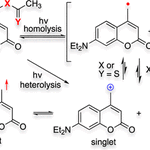
Important research work on radical and ionic intermediates
Crucial Roles of Leaving Group and Open-Shell Cation in Photoreaction of (Coumarin-4-yl)methyl Derivatives
Hai Dang Nguyen and Manabu Abe
Journal of the American Chemical Society pubs.acs.org/doi/full/10.102…

Photochemistry Team retweeted

Happy to share our latest work on photexcited nitroarenes just published in @NatureChemistry. Check out how we turn them into complex azepanes in just two steps. nature.com/articles/s41557-0…