






Trump essentially had a mandate to do 3 things:
(1) Improve cost of living / inflation.
(2) Fix the fiscal situation (which he attributed partially to waste, fraud, and abuse).
(3) Reduce illegal immigration.
“America First” also carried with it an implicit non-interventionist bias.
What did we get?
Climbing inflation, rates going vertical, oil at $100, ill-communicated tariffs, Trump family involvement in crypto/prediction market schemes, and a $1.5T defense bill + intervention in Venezuela and Iran.
He didn’t deliver on the mandate.
Not surprised by the reaction.

Florida Governor Ron DeSantis:
Some of these Republicans are saying, "Oh, well, the gas, don't worry. It's no big deal." Or they're trying to blame Biden.
No, no. Listen, we've just got to be honest. Gas is higher. It hurts people, working-class people, and it's higher because of the Iran conflict.
That's just the fact. If you can't admit that to voters, then you're gaslighting them, and they're not going to listen to you on other things.
$SOXX should be down MSD+ tomorrow. Maybe more.
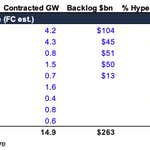
Texas, Georgia and Ohio are flipping blue. Together they hold ~35% of incremental data center GWs for 27/28.
Chips are useless without land, power and a shell. If state leadership slows that buildout, 2028 could come up ~15 GW (or more) short.
Much of the recent index-level earnings momentum is scarcity rent: aggressive pricing into shortages.
Take 15 GW out of 2028 and many of these components go from shortage to glut.
One more wrinkle worth flagging. The ~76 bps assumes the restructuring only lowered the partners' cut. It's possible the new terms also moved some AWS-sourced business off marketplace billing (Anthropic billing the customer directly, with a smaller or no fee). If so, part of the headwind is hiding in the drop in marketplace share (48% in 1H to ~40% in Q3), not just the take rate.
The timing is interesting... marketplace share has been steady at ~47-48% (47% in FY25, 48% in 9M25, 48% in 1H26), then fell ~8 pts in the same quarter Anthropic said partner terms changed.
With that said, I wouldn't put all of it there. Non-marketplace revenue grew ~69% Q/Q vs ~23% for marketplace (subscriptions and Claude Code are mostly direct), and AWS may recapture some of it as compute if those workloads still run on AWS.
BOTE: if ~1/3 of the share drop was reclassified AWS business losing its fee, the headwind goes to ~$410M, or ~125 bps for AWS. If all of it, ~$720M / ~220 bps.
My updated prior is that a restructured deal with Anthropic probably cost AWS ~100-150bps of Y/Y growth this Q.

The $ANT S-1/A gives us some insights into a restructured $AMZN deal, and the potential headwind that posed to AWS growth this past quarter.
It's possible that AWS & Anthropic restructured a deal this past quarter and that it partially explains the Q3 AWS miss (39% vs. the ~42% the buyside was looking for)... and the Anthropic S-1/A actually allows us to size this.
The filing says S&M as a % of revenue fell in Q3 partly due to "changes in the terms of our channel partner distribution arrangements." So something changed.
Anthropic books CSP marketplace sales gross and runs the partner's cut through S&M (that cut is AWS/Google/MSFT revenue).
Piecing it together:
(i) Share of revenue sold through CSP marketplaces was 48% in 1H26 and 44% for 9M26, which implies ~40% in Q3, or ~$6.8B.
(ii) S&M was $2.4B in Q3. Partner fees were ~$351M in 2025 ($43M of 2024 S&M less $33M of advertising, plus a reported $341M increase in partner fees), and the filing says they rose $4.8B Y/Y over 9M 2026. That leaves ~$530M of non-partner marketing over 9M 2026, or ~$207M in Q3 with a modest step-up through the year. This implies Q3 partner fees were ~$2.15B.
(iii) That puts the partners' cut at ~35% in Q2 vs ~32% in Q3. ~3.7 pts on ~$6.8B = ~$250M of fees partners didn't collect.
The $250M is across all CSPs, and the filing doesn't say which partner's terms changed (the $110B AWS compute agreement isn't described as amended; Google's & MSFT's are).
If AWS absorbed ~75-100% of it, that's ~55-75 bps of Y/Y growth.
So something was restructured, but the headwind looks quite manageable. I think it explains a piece of the miss, not the whole thing (as shown here, I think capacity timing is the larger culprit: xitter.gq/PrefShares/status/2116…).
Table attached.

Why AWS didn't grow 40% this Q.
The $ANT S-1/A gives us some insights into a restructured $AMZN deal, and the potential headwind that posed to AWS growth this past quarter.
It's possible that AWS & Anthropic restructured a deal this past quarter and that it partially explains the Q3 AWS miss (39% vs. the ~42% the buyside was looking for)... and the Anthropic S-1/A actually allows us to size this.
The filing says S&M as a % of revenue fell in Q3 partly due to "changes in the terms of our channel partner distribution arrangements." So something changed.
Anthropic books CSP marketplace sales gross and runs the partner's cut through S&M (that cut is AWS/Google/MSFT revenue).
Piecing it together:
(i) Share of revenue sold through CSP marketplaces was 48% in 1H26 and 44% for 9M26, which implies ~40% in Q3, or ~$6.8B.
(ii) S&M was $2.4B in Q3. Partner fees were ~$351M in 2025 ($43M of 2024 S&M less $33M of advertising, plus a reported $341M increase in partner fees), and the filing says they rose $4.8B Y/Y over 9M 2026. That leaves ~$530M of non-partner marketing over 9M 2026, or ~$207M in Q3 with a modest step-up through the year. This implies Q3 partner fees were ~$2.15B.
(iii) That puts the partners' cut at ~35% in Q2 vs ~32% in Q3. ~3.7 pts on ~$6.8B = ~$250M of fees partners didn't collect.
The $250M is across all CSPs, and the filing doesn't say which partner's terms changed (the $110B AWS compute agreement isn't described as amended; Google's & MSFT's are).
If AWS absorbed ~75-100% of it, that's ~55-75 bps of Y/Y growth.
So something was restructured, but the headwind looks quite manageable. I think it explains a piece of the miss, not the whole thing (as shown here, I think capacity timing is the larger culprit: xitter.gq/PrefShares/status/2116…).
Table attached.
The $ANT S-1/A gives us some insights into a restructured $AMZN deal, and the potential headwind that posed to AWS growth this past quarter.
It's possible that AWS & Anthropic restructured a deal this past quarter and that it partially explains the Q3 AWS miss (39% vs. the ~42% the buyside was looking for)... and the Anthropic S-1/A actually allows us to size this.
The filing says S&M as a % of revenue fell in Q3 partly due to "changes in the terms of our channel partner distribution arrangements." So something changed.
Anthropic books CSP marketplace sales gross and runs the partner's cut through S&M (that cut is AWS/Google/MSFT revenue).
Piecing it together:
(i) Share of revenue sold through CSP marketplaces was 48% in 1H26 and 44% for 9M26, which implies ~40% in Q3, or ~$6.8B.
(ii) S&M was $2.4B in Q3. Partner fees were ~$351M in 2025 ($43M of 2024 S&M less $33M of advertising, plus a reported $341M increase in partner fees), and the filing says they rose $4.8B Y/Y over 9M 2026. That leaves ~$530M of non-partner marketing over 9M 2026, or ~$207M in Q3 with a modest step-up through the year. This implies Q3 partner fees were ~$2.15B.
(iii) That puts the partners' cut at ~35% in Q2 vs ~32% in Q3. ~3.7 pts on ~$6.8B = ~$250M of fees partners didn't collect.
The $250M is across all CSPs, and the filing doesn't say which partner's terms changed (the $110B AWS compute agreement isn't described as amended; Google's & MSFT's are).
If AWS absorbed ~75-100% of it, that's ~55-75 bps of Y/Y growth.
So something was restructured, but the headwind looks quite manageable. I think it explains a piece of the miss, not the whole thing (as shown here, I think capacity timing is the larger culprit: xitter.gq/PrefShares/status/2116…).
Table attached.
The $ANT S-1/A gives us some insights into a restructured $AMZN deal, and the potential headwind that posed to AWS growth this past quarter.
It's possible that AWS & Anthropic restructured a deal this past quarter and that it partially explains the Q3 AWS miss (39% vs. the ~42% the buyside was looking for)... and the Anthropic S-1/A actually allows us to size this.
The filing says S&M as a % of revenue fell in Q3 partly due to "changes in the terms of our channel partner distribution arrangements." So something changed.
Anthropic books CSP marketplace sales gross and runs the partner's cut through S&M (that cut is AWS/Google/MSFT revenue).
Piecing it together:
(i) Share of revenue sold through CSP marketplaces was 48% in 1H26 and 44% for 9M26, which implies ~40% in Q3, or ~$6.8B.
(ii) S&M was $2.4B in Q3. Partner fees were ~$351M in 2025 ($43M of 2024 S&M less $33M of advertising, plus a reported $341M increase in partner fees), and the filing says they rose $4.8B Y/Y over 9M 2026. That leaves ~$530M of non-partner marketing over 9M 2026, or ~$207M in Q3 with a modest step-up through the year. This implies Q3 partner fees were ~$2.15B.
(iii) That puts the partners' cut at ~35% in Q2 vs ~32% in Q3. ~3.7 pts on ~$6.8B = ~$250M of fees partners didn't collect.
The $250M is across all CSPs, and the filing doesn't say which partner's terms changed (the $110B AWS compute agreement isn't described as amended; Google's & MSFT's are).
If AWS absorbed ~75-100% of it, that's ~55-75 bps of Y/Y growth.
So something was restructured, but the headwind looks quite manageable. I think it explains a piece of the miss, not the whole thing (as shown here, I think capacity timing is the larger culprit: xitter.gq/PrefShares/status/2116…).
Table attached.
$AMZN
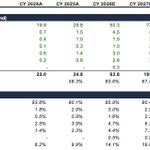
Lots of hand-wringing about AWS growing 39% Y/Y vs. expectations of closer to ~42%. However, the long-term portion of $AMZN's unearned revenue (attributable to AWS) jumped ~$2B Q/Q in Q3, vs. roughly flat in prior Q3s.
Add the change in unearned revenue back...
and "billings" grew ~45-46% Y/Y.
To me, it looks like some capacity is set to land in the next few months and there were pre-payments, but Amazon wasn't able to recognize because it wasn't placed into service in Q3.
-----
"We add a lot of capacity every quarter. The amount that we add every quarter is not equal. We are adding different amounts each quarter." - Andy Jassy
and later...
"The amount of capacity we add each quarter will vary, but at this scale to be projecting growing over 40% year-over-year in each of 2027 and 2028 is pretty significant."

On the marketing estimate: the filing gives total S&M and the Y/Y change in partner fees, so non-partner spend over 9M is pinned at ~$530M. The only real judgment is how it's phased across Q1-Q3. I stepped it up modestly through the year (28% / 33% / 39% of the 9M), which seems potentially conservative considering the amended S1 highlights that advertising spend was front-end loaded in Q1 and Q2 this year...
The answer also isn't super sensitive to that choice. An even split gets you ~$220M / ~67 bps. A steeper step-up ~$270M / ~81 bps. Phasing it in line with revenue to ~$305M gets you to ~92 bps of headwind (all assuming 100% AWS).
Either way, it's likely a sub-1-pt headwind.


Has to be hard trying to figure out what’s going on in markets if you’re just now learning what a buyside bogey is.

$AMZN
Lots of hand-wringing about AWS growing 39% Y/Y vs. expectations of closer to ~42%. However, the long-term portion of $AMZN's unearned revenue (attributable to AWS) jumped ~$2B Q/Q in Q3, vs. roughly flat in prior Q3s.
Add the change in unearned revenue back...
and "billings" grew ~45-46% Y/Y.
To me, it looks like some capacity is set to land in the next few months and there were pre-payments, but Amazon wasn't able to recognize because it wasn't placed into service in Q3.
-----
"We add a lot of capacity every quarter. The amount that we add every quarter is not equal. We are adding different amounts each quarter." - Andy Jassy
and later...
"The amount of capacity we add each quarter will vary, but at this scale to be projecting growing over 40% year-over-year in each of 2027 and 2028 is pretty significant."
$GOOGL clicks grew 8% and 15% on a 2-Y; continued mid-teens growth.
I’m more likely to believe management’s argument that FX, FIFA timing, Asian advertisers, and AI Overviews were the culprit affecting monetization — vs. any type of meaningful headwind from agentic/LLM.
Probably an overreaction here.

prefshares retweeted

Excited about our new Bee devices launching today. They turn your conversations into summaries, to-dos, and reminders, so the details are there when you need them.
Bee Frontier goes on your wrist or clips to your clothing, and Bee Eclipse snaps to the back of your phone to catch what you'd otherwise forget throughout your day, whether it's notes from a class you're taking, the details of a trip you're planning, or an idea that comes to you in the car.
They connect to Alexa+ and Amazon.com, so the things you mention are easy to find later. And you're always in control…one button turns it on or off, a light shows when it's on, audio is never stored, and only you can see your data.
Think folks are gonna find this really handy. aboutamazon.com/news/devices…
prefshares retweeted


Thank you @PrefShares for engaging with a constructive and thoughtful response. (anyone curious to read my original piece, go here: mbi-deepdives.com/aws-vibes/)
Let me take your points in turn.
Retail. I like Amazon’s retail business too, and I agree there are losses buried in ex-AWS. But the profit engine in core retail today is advertising, and I think it’s fair to say ads carries a question mark right now. Consumer agents on one side, the FTC case, the auction-mechanics issues or the bid shading possibilities I’ve written about on the other (see here: mbi-deepdives.com/amzn_ads/)
My base case is still that Amazon figures it out, but it’s not unreasonable to wonder that there is a legitimate fat tail risk to Amazon’s ability to COMPOUND core retail profits which can (should?) weigh on the multiple we may want to put on these profits. Also on $WMT, I haven’t met an $AMZN shareholder yet who thinks WMT is attractive at ~28x LTM EBIT.
Okay, let me now get to AWS.
Cost curve. On the $NVDA discount, I think the argument runs into NVIDIA itself. The hyperscalers are the only customers also building chips to displace it, so NVIDIA has every reason not to hand them a structural cost advantage, and it hasn’t: equity in the neoclouds, capacity backstop, or direct financing for OpenAI to buy gigawatts with no hyperscaler in between…Jensen has made it abundantly clear he doesn’t want to operate in a world where Hyperscalers call the shot. Whatever discount the hyperscalers get, NVIDIA likely hands back to the marginal producer in cheaper capital and risk sharing.
Power is a few percent of a gigawatt-year’s revenue, so cheaper PPAs are worth maybe a point or two, and unlikely to be a needle mover for overall economics. And cost of capital advantage is shared by all Hyperscalers, and also an advantage that is directly being largely negated by NVIDIA with their balance sheet support to neoclouds.
I do agree it’s not obvious to me either why neoclouds have a DURABLE advantage over hyperscalers. But the capacity they’ve bult and are building is pretty real. If AI demand disappoints or we hit a digestion period, the neocloud equities will get obliterated but the gigawatts stay, get repriced, and pressure everyone, hyperscalers included. The concern again is that NVIDIA has an obvious interest in keeping its buyer side VERY fragmented.
Short-term margins. No argument there. Everyone selling compute today is making money hand over fist. The question is whether 2026 is representative of medium and long-term economics. If it is, AWS isn’t $1.3T; it’s comfortably over $2T.
Bedrock as a capital-light royalty. Not sure I agree with your framing, and I think the simplest way is to follow the token. When an enterprise buys a Claude token on Bedrock, it’s generated on a Trainium chip, in an AWS data center, that AWS paid for. That chip is already in my gigawatt count. So whatever AWS keeps on that token I don't see it as a royalty on someone else’s capital, it’s just a markup on its own. Capital-light royalties do exist in AI, but they accrue to whoever owns the weights: Anthropic earns one when $GOOGL sells Claude through Vertex or $MSFT sells it through Foundry (their chips, their utilization risk, Anthropic’s cut). More importantly, let’s notice who will set the royalty rate. The enterprise pays roughly Anthropic’s list price on Bedrock, so AWS’s cut comes out of Anthropic’s margin and Anthropic, which can serve the identical token through its own API, Vertex or Foundry, decides how big that cut is (if not today, they will over time). A royalty where the payer sets both the product price and the royalty rate SHOULD/WILL be a thin one.
Enterprise / other AI. I agree with all six of your points. Those points are why that bucket earns ~2 points over its cost of capital in my model rather than zero. I know 2 points may seem a little low, but the invested capital in that bucket is $468B in 2035, so that’s ~$10B a year of economic profit. I’m hesitant to extrapolate to much more. All six advantages are more or less shared by AWS, Azure and GCP, so they’re a moat against neoclouds and the labs’ direct APIs, but probably not much against each other. The neoclouds know serving hyperscalers and labs isn’t durable, which is precisely why they’re trying to move into this segment as well. And the labs themselves are building first-party products for the same customers. Five to ten points of excess return on a ~$500B base would be $25–50B a year of rent on an input with growing number of alternatives. I’ll admit I am far from certain where that shakes out (could be anywhere between 1 and 5 points IMO).
Core cloud. Fair it’s hard to separate from AI, and AI is clearly helping it. That’s why core grows ~21% in 2026 in my model, well above the ~13% it had slowed to before AI, when optimization was the story. My model still triples the core to ~$360B by 2035. But yes, reasonable people can land above me here.
The key point I was trying to drive home is the exercise actually helped me tone DOWN my own bearish “vibes” on AWS a bit once I realized market is actually fairly skeptical about AWS capex being value additive. The objective of making the assumptions explicit is to see if I perceive any vehement disagreement with what the market is underwriting. Following the exercise, I just realized I do not have such strong disagreement. Market and I are more or less likely on the same boat in evaluating AWS long-term future.
Thanks again. Always a pleasure to have diligent readers.
